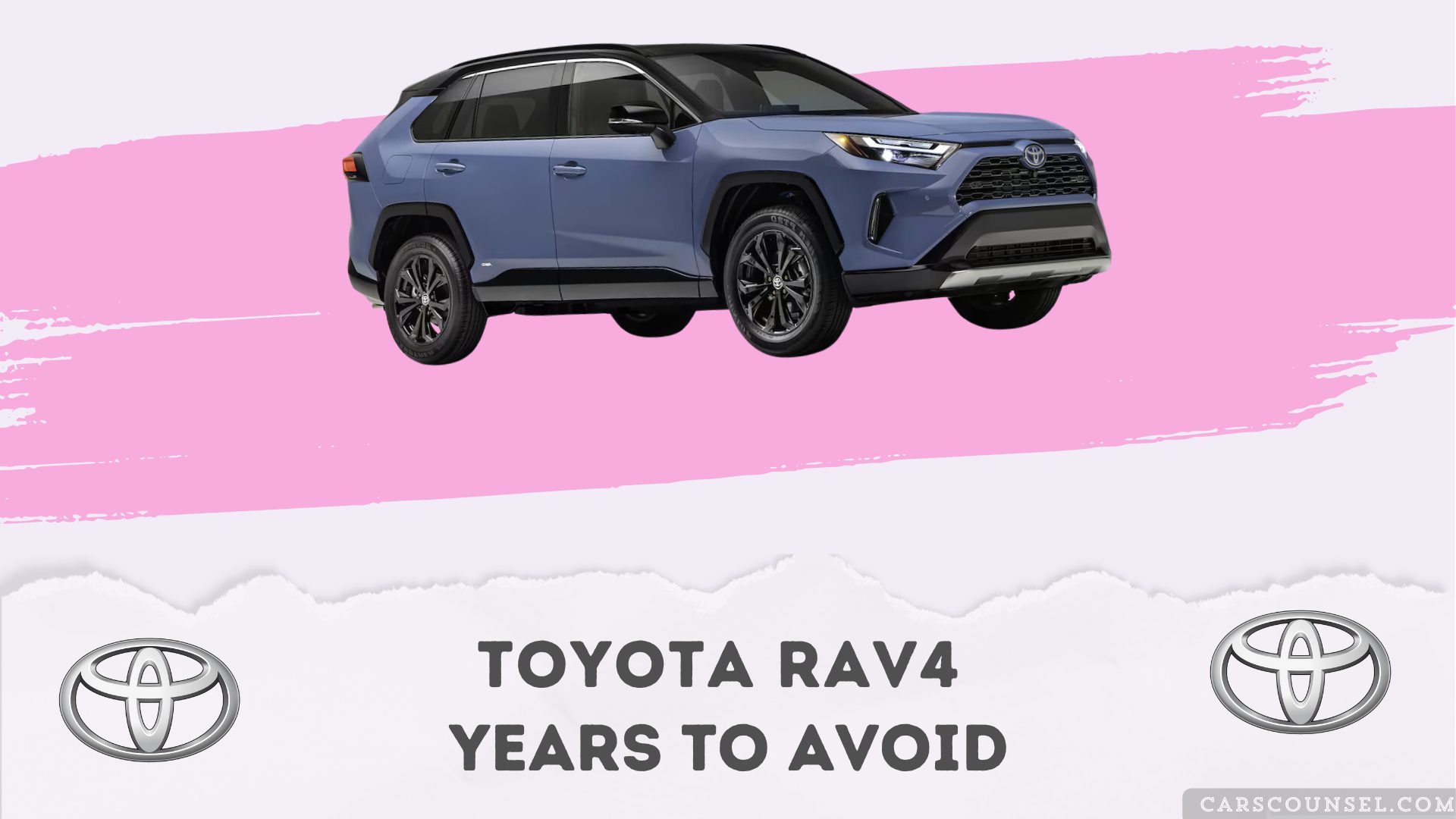
The best Toyota RAV4 years are 2016 through 2018, offering mature fourth-generation reliability. Buyers should avoid 2001 through 2003 and 2006 through 2008 models due to severe engine control and excessive oil consumption defects.
These rankings are comparative, and no used SUV is entirely flawless. Long-term reliability heavily depends on strict maintenance records, previous ownership care, and whether critical manufacturer recalls were completed on time.
Reliability varies significantly by generation and powertrain. The naturally aspirated four-cylinder engines are generally robust, while early hybrid systems and specific automatic transmissions require careful inspection for known defects.
Quick Navigation
Best and Worst Toyota RAV4 Years at a Glance
| Model Year or Range | Verdict | Main Reason | Buyer Guidance |
|---|---|---|---|
| 2024-2025 | Too New to Judge | Limited long-term data | Wait for history |
| 2020-2023 | Good Choice | Mature 5th gen | Check hybrid cables |
| 2019 | Approach Carefully | 1st year redesign, recalls | Verify fuel tank recall |
| 2016-2018 | Best Choice | Mature 4th gen, highly reliable | Verify maintenance |
| 2014-2015 | Good Choice | Sorted 4th gen | Check for rust |
| 2013 | Good With Inspection | 1st year 4th gen, shudder | Test for trans shudder |
| 2011-2012 | Good With Inspection | Late 3rd gen | Check steering shaft |
| 2009-2010 | Approach Carefully | Acceleration recalls | Verify recall completion |
| 2006-2008 | Avoid | 2.4L oil burning, V6 leaks | Look for 2014 or newer |
| 2004-2005 | Good With Inspection | Late 2nd gen | Verify ECM replacement |
| 2001-2003 | Avoid | ECM defect destroys trans | Avoid entirely |
| 1996-2000 | Good With Inspection | 1st gen, aging | Inspect thoroughly |
Key Takeaways
- The 2016-2018 models offer the best balance of modern safety and proven fourth-generation reliability.
- Avoid 2001-2003 and 2006-2008 models due to catastrophic engine control and excessive oil consumption defects.
- The 2019 model is a first-year redesign with fuel tank and hybrid battery recalls requiring verification.
- Always verify if the transmission ECM and steering shaft recalls were completed on older models.
- Recent fifth-generation hybrid models require inspection for battery cable corrosion in cold climates.
- Always check the VIN for open recalls before purchasing any used Toyota SUV.
How We Evaluated the Toyota RAV4 Model Years
Our analysis considers official recalls, manufacturer service campaigns, consumer complaints, and powertrain differences across generations. We weigh the severity and recurrence of mechanical issues against the overall ownership experience.
Consumer complaints are not confirmed failure rates, and a single recall does not automatically make a vehicle unreliable. Recent model years have less long-term ownership history.
Ultimately, a Best Choice designation means a model year is comparatively stronger than its neighbors. It does not guarantee a trouble-free ownership experience, and a pre-purchase inspection remains essential.
Best Toyota RAV4 Years
2016-2018 (Best Choice)
The 2016 through 2018 models represent the most mature and dependable era of the fourth-generation RAV4. Toyota resolved earlier torque converter complaints, resulting in a highly reliable powertrain and excellent safety ratings.
These years offer advanced driver assistance and minimal mechanical issues. Buyers should prioritize examples with complete service records and carefully inspect the undercarriage for surface rust, especially in snowy regions.
Best Year by Buyer Type
The 2016-2018 models remain the Best Overall choice for used buyers seeking maximum reliability, modern safety features, and proven durability without the premium cost of the newest redesign.
For buyers wanting the latest hybrid technology and rugged styling, the 2020-2023 models serve as a Best Modern Alternative, pending verification of hybrid battery cable condition.
Years to Approach Carefully
2019 (Approach Carefully)
The 2019 RAV4 introduced a complete redesign on a new global platform. As a first-year model, it experienced early production issues, including a cracked fuel tank recall on hybrids and transmission gear hunting.
Only consider this year if the seller provides definitive documentation that all fuel system and hybrid battery recalls were professionally completed by a dealership.
2009-2010 (Approach Carefully)
These third-generation models were heavily impacted by the massive manufacturer unintended acceleration recalls involving floor mats and sticky pedals. They also share the 2.4-liter engine’s tendency for excessive oil consumption.
Buyers must verify the VIN to ensure all acceleration-related recalls were completed and meticulously check the engine oil level before purchasing.
Worst Toyota RAV4 Years
2006-2008 (Avoid)
The early third-generation models equipped with the 2.4-liter four-cylinder engine are plagued by severe excessive oil consumption due to defective piston rings. This leads to engine starvation and catastrophic failure.
Additionally, V6 models from these years suffer from leaking rubber oil cooler lines. The combination of engine destruction risks and expensive repairs makes these years a strict Avoid.
2001-2003 (Avoid)
The early second-generation models feature a notorious Engine Control Module defect. The faulty ECM causes harsh transmission shifting, which rapidly destroys the automatic transmission and requires expensive replacements.
Unless the seller provides verifiable documentation that the ECM and transmission were both replaced with updated parts, these years represent a massive financial risk and should be avoided.
Toyota RAV4 Reliability by Generation
First Generation (1996-2000)
Built on a compact car architecture, which shares related heritage with the Toyota Corolla, this generation established the RAV4 as a pioneering compact SUV. Early years require strict rust and aging component inspections.
Second Generation (2001-2005)
Toyota increased the size and power of the RAV4. While the later years are reasonable, the 2001-2003 models are heavily impacted by the catastrophic ECM and transmission defects that plague this generation.
Third Generation (2006-2012)
The third generation introduced a V6 option and a third row. While the V6 is robust, the four-cylinder engines suffer from severe oil burning, and early models face steering shaft and acceleration recalls.
Fourth Generation (2013-2018)
The fourth generation dropped the V6 and third row, focusing on efficiency. Early models struggled with torque converter shudder, but the 2016-2018 models represent the most refined and dependable versions of this platform.
Fifth Generation (2019-Present)
The latest generation moved to the TNGA platform, offering hybrid options and rugged styling. It features modern technology, though early hybrid models faced fuel tank and battery cable corrosion issues.
Common Toyota RAV4 Problems
Engine Oil Consumption
Affecting primarily 2006 through 2010 models with the 2.4-liter four-cylinder engine, defective piston rings allow oil to enter the combustion chamber. This causes rapid oil depletion and can destroy the engine if ignored.
Transmission ECM Failure
Many 2001 through 2003 models experience a faulty Engine Control Module. This defect causes harsh shifting and erratic behavior, ultimately destroying the automatic transmission and requiring a complete drivetrain replacement.
Torque Converter Shudder
Certain 2013 and 2014 models experience a noticeable vibration or shudder during light acceleration. This requires a transmission software update and, in severe cases, a torque converter replacement to resolve.
Hybrid Battery Cable Corrosion
Some 2019 and newer hybrid models in cold climates experience corrosion on the high-voltage battery cable filter. This can trigger a check engine light and disable the hybrid system, requiring cable replacement.
What to Check Before Buying a Used Toyota RAV4
- Verify the VIN for any open manufacturer recalls, especially the fuel tank and acceleration campaigns.
- Check the engine oil level and review maintenance records on 2006-2010 four-cylinder models for oil consumption.
- Demand documentation of the ECM and transmission replacement on 2001-2003 models if applicable.
- Test the transmission for shudder or harsh shifting on 2013-2014 models during light acceleration.
- Inspect the high-voltage battery cables on hybrid models for signs of corrosion or damage.
- Scan for hidden diagnostic trouble codes using a Toyota-specific OBD2 scanner.
Related Buying Guides
- Toyota Highlander years to avoid: A midsize SUV alternative sharing related architecture, offering an available third row and V6 power for larger families.
- Honda CR-V years to avoid: The direct compact SUV competitor, offering superior interior packaging and a more comfortable daily ride, though with a different reliability history.
Frequently Asked Questions
Which year RAV4 is most reliable?
The 2016 through 2018 models are widely considered the most reliable choices. They feature the matured fourth-generation platform, a dependable powertrain, and avoid the severe engine and transmission defects found in earlier years.
What year RAV4 should you not buy?
You should avoid the 2001 through 2003 and 2006 through 2008 models. These specific years suffer from catastrophic ECM transmission failures and severe four-cylinder excessive oil consumption issues that lead to engine destruction.
How long do Toyota RAV4s last?
Well-maintained examples can reach exceptionally high mileage. Longevity depends heavily on strict maintenance records, rust prevention, and whether critical components like the transmission ECM and piston rings were properly addressed or updated.
Does the Toyota RAV4 have transmission problems?
The 2001-2003 models frequently experience transmission destruction due to a faulty ECM. Later generations, particularly the 2013-2014 models, may experience torque converter shudder, but the 2016 and newer models feature highly reliable transmissions.
Are Toyota RAV4s expensive to maintain?
Maintenance costs are average for compact SUVs. However, replacing a destroyed transmission, rebuilding an engine due to oil consumption, or fixing high-voltage hybrid battery cables can lead to unexpectedly high repair bills.
Is the new RAV4 hybrid reliable?
The fifth-generation RAV4 hybrid offers excellent fuel economy and shares its powertrain with proven Toyota hybrids. However, buyers in cold climates must inspect the high-voltage battery cables for corrosion, which can disable the system.
Choosing the Right Toyota RAV4 Model Year
The safest used purchases are the 2016-2018 models, which offer the best balance of modern safety features and proven fourth-generation durability. These years avoid the severe engine and transmission defects of earlier generations.
Avoid the 2001-2003 and 2006-2008 models entirely due to critical drivetrain risks. Always verify the VIN for open recalls, demand complete service records, and arrange an independent pre-purchase inspection before buying.

