The Nissan Leaf is a front-wheel-drive electric hatchback produced from model year 2011 through 2025 in its first two generations. Towing capacity for the Leaf is not uniform.
Official ratings depend on the market, the model year, and the specific trim configuration.
This guide provides year-by-year towing specifications where manufacturer data exists, along with payload limits, hitch requirements, and critical safety notes.
In many regions, including North America, Nissan does not approve the Leaf for towing.
Owner manuals for U.S.-spec Leafs across all model years explicitly state that towing a trailer may result in an accident involving injury or death.
However, select European and Australian-market documentation assigns modest braked and unbraked trailer weight limits.
Understanding these differences helps owners make informed decisions.
Exceeding any manufacturer-rated limit can damage the electric drive unit, overload the regenerative braking system, and void warranty coverage.
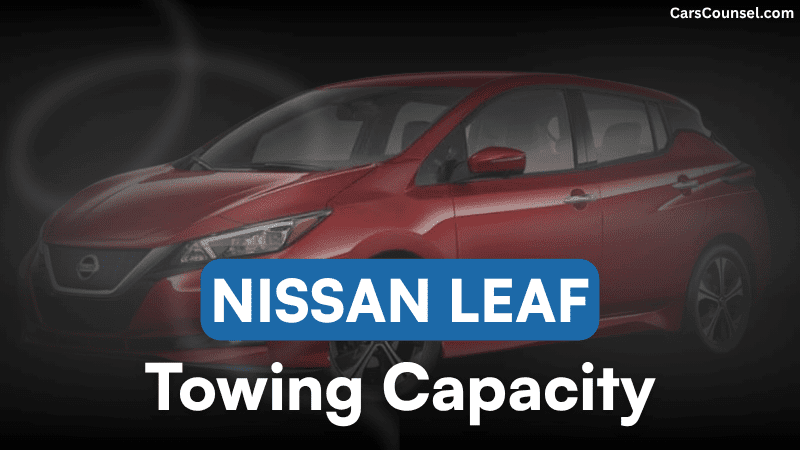
2025 Nissan Leaf Towing Capacity
| Specification | Detail |
|---|---|
| Engine Options | 110 kW or 160 kW AC synchronous electric motor |
| Drivetrain | Front-wheel drive (FWD) |
| Maximum Towing Capacity (Braked) | 975 kg (2,150 lbs) in select European markets; N/A in North America |
| Conventional Towing Capacity (Unbraked) | 750 kg (1,653 lbs) in select European markets; N/A in North America |
| Fifth-Wheel / Gooseneck Capacity | N/A |
| Maximum Payload Capacity | 453 kg (999 lbs) |
| Gross Combined Weight Rating (GCWR) | Not published by manufacturer |
| Tongue Weight Limit | 75–100 kg (165–220 lbs) per European hitch specifications |
| Hitch Class | Class I (1-1/4-inch receiver); aftermarket only |
| Factory Tow Package | Not available |
The 2025 Nissan Leaf offers a maximum braked towing capacity of 975 kg in European markets where towing is certified. North American owner manuals continue to advise against any trailer towing.
Models equipped with the 160 kW motor and 62 kWh battery share the same chassis architecture as lower-trim variants, so aftermarket hitches can be installed.
Payload capacity is rated at 453 kg, which includes passengers, cargo, and any tongue weight transferred from a trailer.
2024 Nissan Leaf Towing Capacity
| Specification | Detail |
|---|---|
| Engine Options | 110 kW electric motor (40 kWh); 160 kW electric motor (62 kWh) |
| Drivetrain | Front-wheel drive (FWD) |
| Maximum Towing Capacity (Braked) | N/A in North America; up to 975 kg in select European markets |
| Conventional Towing Capacity (Unbraked) | N/A in North America; up to 750 kg in select European markets |
| Fifth-Wheel / Gooseneck Capacity | N/A |
| Maximum Payload Capacity | 441 kg (972 lbs) |
| Gross Combined Weight Rating (GCWR) | Not published by manufacturer |
| Tongue Weight Limit | 75–100 kg per aftermarket hitch rating |
| Hitch Class | Class I (1-1/4-inch receiver); aftermarket only |
| Factory Tow Package | Not available |
The 2024 Leaf does not carry an official tow rating in North America. The owner manual contains a direct warning against trailer towing. In Europe, the same vehicle platform may be approved for up to 975 kg braked.
Payload capacity is listed at 441 kg, which limits how much tongue weight the vehicle can safely handle when a hitch-mounted carrier is used.
2023 Nissan Leaf Towing Capacity
| Specification | Detail |
|---|---|
| Engine Options | 110 kW electric motor (40 kWh); 160 kW electric motor (62 kWh) |
| Drivetrain | Front-wheel drive (FWD) |
| Maximum Towing Capacity (Braked) | N/A in North America; up to 975 kg in select European markets |
| Conventional Towing Capacity (Unbraked) | N/A in North America; up to 750 kg in select European markets |
| Fifth-Wheel / Gooseneck Capacity | N/A |
| Maximum Payload Capacity | 409–437 kg (902–963 lbs) depending on trim |
| Gross Combined Weight Rating (GCWR) | Defined in owner manual but no numeric value assigned for trailer towing |
| Tongue Weight Limit | 75–100 kg per aftermarket hitch rating |
| Hitch Class | Class I (1-1/4-inch receiver); aftermarket only |
| Factory Tow Package | Not available |
The 2023 Nissan Leaf has no factory tow rating in the U.S. market. The owner manual defines GCWR and trailer tongue weight loading but simultaneously warns against any trailer towing. Payload ranges from 409 to 437 kg depending on trim, which constrains how much weight can be carried on a hitch.
2022 Nissan Leaf Towing Capacity
| Specification | Detail |
|---|---|
| Engine Options | 110 kW electric motor (40 kWh); 160 kW electric motor (62 kWh) |
| Drivetrain | Front-wheel drive (FWD) |
| Maximum Towing Capacity (Braked) | N/A in North America; up to 975 kg in select European markets |
| Conventional Towing Capacity (Unbraked) | N/A in North America; up to 750 kg in select European markets |
| Fifth-Wheel / Gooseneck Capacity | N/A |
| Maximum Payload Capacity | 437 kg (963 lbs) |
| Gross Combined Weight Rating (GCWR) | Not published |
| Tongue Weight Limit | 75–100 kg per aftermarket hitch rating |
| Hitch Class | Class I or Class II (2-inch receiver); aftermarket only |
| Factory Tow Package | Not available |
The 2022 Leaf shares its platform with the 2018–2024 generation. Aftermarket hitch options exist, including a Class II EcoHitch rated at 2,000 lbs gross trailer weight and 300 lbs tongue weight. The vehicle itself, however, is not factory-rated for towing in North America. Owners must verify the lower of the hitch rating and any applicable vehicle limit before towing.
2021 Nissan Leaf Towing Capacity
| Specification | Detail |
|---|---|
| Engine Options | 110 kW electric motor (40 kWh); 160 kW electric motor (62 kWh) |
| Drivetrain | Front-wheel drive (FWD) |
| Maximum Towing Capacity (Braked) | N/A in North America; up to 975 kg in select European markets |
| Conventional Towing Capacity (Unbraked) | N/A in North America; up to 750 kg in select European markets |
| Fifth-Wheel / Gooseneck Capacity | N/A |
| Maximum Payload Capacity | 463 kg (1,022 lbs) for S Plus trim |
| Gross Combined Weight Rating (GCWR) | Not published |
| Tongue Weight Limit | 75–100 kg per aftermarket hitch rating |
| Hitch Class | Class I (1-1/4-inch receiver); aftermarket only |
| Factory Tow Package | Not available |
The 2021 Leaf e+ models feature a 62 kWh battery and 160 kW motor. Towing is not supported by Nissan in North American documentation. Payload capacity reaches 463 kg on the S Plus trim, providing limited capacity for hitch-mounted accessories when the vehicle is not fully occupied.
2020 Nissan Leaf Towing Capacity
| Specification | Detail |
|---|---|
| Engine Options | 110 kW electric motor (40 kWh); 160 kW electric motor (62 kWh) |
| Drivetrain | Front-wheel drive (FWD) |
| Maximum Towing Capacity (Braked) | N/A in North America; up to 975 kg in select European markets |
| Conventional Towing Capacity (Unbraked) | N/A in North America; up to 750 kg in select European markets |
| Fifth-Wheel / Gooseneck Capacity | N/A |
| Maximum Payload Capacity | 553 kg (1,220 lbs) |
| Gross Combined Weight Rating (GCWR) | Not published |
| Tongue Weight Limit | 75–100 kg per aftermarket hitch rating |
| Hitch Class | Class I (1-1/4-inch receiver); aftermarket only |
| Factory Tow Package | Not available |
The 2020 Nissan Leaf has a payload capacity of 553 kg, the highest in the second-generation range. Towing is not rated in North America. In markets where towing is permitted, the Leaf can pull a light trailer with proper trailer brakes. Heavy loads reduce electric driving range by 30 to 60 percent.
2019 Nissan Leaf Towing Capacity
| Specification | Detail |
|---|---|
| Engine Options | 110 kW electric motor (40 kWh); 160 kW electric motor (62 kWh) |
| Drivetrain | Front-wheel drive (FWD) |
| Maximum Towing Capacity (Braked) | N/A in North America; up to 975 kg in select European markets |
| Conventional Towing Capacity (Unbraked) | N/A in North America; up to 750 kg in select European markets |
| Fifth-Wheel / Gooseneck Capacity | N/A |
| Maximum Payload Capacity | 463 kg (1,020 lbs) |
| Gross Combined Weight Rating (GCWR) | Not published |
| Tongue Weight Limit | 75–100 kg per aftermarket hitch rating |
| Hitch Class | Class I (1-1/4-inch receiver); aftermarket only |
| Factory Tow Package | Not available |
The 2019 Leaf e+ introduced a 62 kWh battery and 160 kW motor, but towing approval remained absent from North American specifications. Payload is 463 kg, which includes the weight of all occupants and cargo. Aftermarket hitch installations are possible but do not change the vehicle’s official tow rating.
2018 Nissan Leaf Towing Capacity
| Specification | Detail |
|---|---|
| Engine Options | 110 kW electric motor (40 kWh) |
| Drivetrain | Front-wheel drive (FWD) |
| Maximum Towing Capacity (Braked) | N/A in North America; 0 kg rated in some Australian specifications |
| Conventional Towing Capacity (Unbraked) | N/A |
| Fifth-Wheel / Gooseneck Capacity | N/A |
| Maximum Payload Capacity | 447 kg (985 lbs) |
| Gross Combined Weight Rating (GCWR) | Not published |
| Tongue Weight Limit | Not rated |
| Hitch Class | Class I (1-1/4-inch receiver); aftermarket only |
| Factory Tow Package | Not available |
The second-generation Leaf debuted for model year 2018 with a 40 kWh battery. Towing is not recommended in any official review or owner manual for this model year. Payload is 447 kg. Range drops significantly when a hitch-mounted cargo carrier adds aerodynamic drag and weight.
2017 Nissan Leaf Towing Capacity
| Specification | Detail |
|---|---|
| Engine Options | 80 kW electric motor (30 kWh) |
| Drivetrain | Front-wheel drive (FWD) |
| Maximum Towing Capacity (Braked) | 0 kg in North America; 1,000 kg in some Australian-market documentation |
| Conventional Towing Capacity (Unbraked) | 0 kg in North America; 600 kg in some Australian-market documentation |
| Fifth-Wheel / Gooseneck Capacity | N/A |
| Maximum Payload Capacity | Not published |
| Gross Combined Weight Rating (GCWR) | Not published |
| Tongue Weight Limit | Not rated |
| Hitch Class | Class I (1-1/4-inch receiver); aftermarket only |
| Factory Tow Package | Not available |
The 2017 Leaf, the final model year of the first-generation design, used a 30 kWh battery in most markets. Australian specifications sometimes list a 1,000 kg braked towing capacity for this year. North American data sources consistently show no towing rating. Aftermarket hitches are available but intended for bike racks and light cargo carriers rather than trailer towing.
2016 Nissan Leaf Towing Capacity
| Specification | Detail |
|---|---|
| Engine Options | 80 kW electric motor (24 kWh or 30 kWh) |
| Drivetrain | Front-wheel drive (FWD) |
| Maximum Towing Capacity (Braked) | N/A in North America |
| Conventional Towing Capacity (Unbraked) | N/A in North America |
| Fifth-Wheel / Gooseneck Capacity | N/A |
| Maximum Payload Capacity | 447 kg (986 lbs) |
| Gross Combined Weight Rating (GCWR) | Not published |
| Tongue Weight Limit | Not rated |
| Hitch Class | Class I (1-1/4-inch receiver); aftermarket only |
| Factory Tow Package | Not available |
The 2016 Nissan Leaf offered a 30 kWh battery option alongside the standard 24 kWh pack. Towing is not recommended or rated for this model year in North America. Payload capacity is 447 kg. The vehicle can accept an aftermarket Class I hitch for accessory use only.
2015 Nissan Leaf Towing Capacity
| Specification | Detail |
|---|---|
| Engine Options | 80 kW electric motor (24 kWh) |
| Drivetrain | Front-wheel drive (FWD) |
| Maximum Towing Capacity (Braked) | N/A in North America |
| Conventional Towing Capacity (Unbraked) | N/A in North America |
| Fifth-Wheel / Gooseneck Capacity | N/A |
| Maximum Payload Capacity | 431 kg (950 lbs) |
| Gross Combined Weight Rating (GCWR) | Not published |
| Tongue Weight Limit | 68 kg (150 lbs) per Class I aftermarket hitch |
| Hitch Class | Class I (1-1/4-inch receiver); aftermarket only |
| Factory Tow Package | Not available |
The 2015 Leaf continues the first-generation platform with a 24 kWh battery. A Class I hitch is available from Curt Manufacturing, rated for 150 lbs tongue weight and 1,500 lbs gross trailer weight. The hitch rating exceeds any known vehicle tow rating, so the vehicle limit always governs.
2014 Nissan Leaf Towing Capacity
| Specification | Detail |
|---|---|
| Engine Options | 80 kW electric motor (24 kWh) |
| Drivetrain | Front-wheel drive (FWD) |
| Maximum Towing Capacity (Braked) | N/A in North America |
| Conventional Towing Capacity (Unbraked) | N/A in North America |
| Fifth-Wheel / Gooseneck Capacity | N/A |
| Maximum Payload Capacity | Not published |
| Gross Combined Weight Rating (GCWR) | Not published |
| Tongue Weight Limit | Not rated |
| Hitch Class | Class I (1-1/4-inch receiver); aftermarket only |
| Factory Tow Package | Not available |
The 2014 Nissan Leaf is not rated for towing in any major market. Nissan recommends that the vehicle itself be towed only with the front wheels off the ground or on a flatbed truck. Aftermarket hitches exist but are limited to light accessory use.
2013 Nissan Leaf Towing Capacity
| Specification | Detail |
|---|---|
| Engine Options | 80 kW electric motor (24 kWh) |
| Drivetrain | Front-wheel drive (FWD) |
| Maximum Towing Capacity (Braked) | N/A in North America |
| Conventional Towing Capacity (Unbraked) | N/A in North America |
| Fifth-Wheel / Gooseneck Capacity | N/A |
| Maximum Payload Capacity | Not published |
| Gross Combined Weight Rating (GCWR) | Not published |
| Tongue Weight Limit | Not rated |
| Hitch Class | Class I (1-1/4-inch receiver); aftermarket only |
| Factory Tow Package | Not available |
The 2013 Leaf shares the same platform and towing limitations as the 2011–2012 models. No factory tow rating exists for North America. Aftermarket hitch installations are documented for carrying bike racks only.
2012 Nissan Leaf Towing Capacity
| Specification | Detail |
|---|---|
| Engine Options | 80 kW electric motor (24 kWh) |
| Drivetrain | Front-wheel drive (FWD) |
| Maximum Towing Capacity (Braked) | 0 kg in North America; 1,000 kg in Australian-market documentation |
| Conventional Towing Capacity (Unbraked) | 0 kg in North America; 600 kg in Australian-market documentation |
| Fifth-Wheel / Gooseneck Capacity | N/A |
| Maximum Payload Capacity | Not published |
| Gross Combined Weight Rating (GCWR) | Not published |
| Tongue Weight Limit | Not rated |
| Hitch Class | Class I (1-1/4-inch receiver); aftermarket only |
| Factory Tow Package | Not available |
The 2012 Nissan Leaf, the first full model year of production, has a braked towing capacity of 1,000 kg and an unbraked capacity of 600 kg in Australian-market specifications. North American documentation does not include any trailer towing approval. The vehicle has a 160 mm ground clearance and a kerb weight of approximately 1,525 kg.
2011 Nissan Leaf Towing Capacity
| Specification | Detail |
|---|---|
| Engine Options | 80 kW electric motor (24 kWh) |
| Drivetrain | Front-wheel drive (FWD) |
| Maximum Towing Capacity (Braked) | N/A in all markets |
| Conventional Towing Capacity (Unbraked) | N/A in all markets |
| Fifth-Wheel / Gooseneck Capacity | N/A |
| Maximum Payload Capacity | Not published |
| Gross Combined Weight Rating (GCWR) | Not published |
| Tongue Weight Limit | Not rated |
| Hitch Class | Not available |
| Factory Tow Package | Not available |
The 2011 Nissan Leaf was the debut model year, released in limited markets including Japan and select U.S. states. No towing capacity is published for any configuration. Early owner manuals make no provision for trailer towing or hitch installation.
Towing Equipment and Setup Considerations
The Nissan Leaf was not engineered with a factory tow package in any market. All towing equipment is aftermarket. Proper component selection is critical for safe operation.
Hitch class is the first decision point. For the Leaf, only Class I hitches are widely available, typically with a 1-1/4-inch receiver opening. Some aftermarket suppliers offer a Class II 2-inch receiver rated at 2,000 lbs gross trailer weight and 300 lbs tongue weight. The vehicle, not the hitch, sets the operational limit.
Trailer brakes are essential for any trailer load approaching the vehicle limit. In markets where the Leaf is rated for towing, braked trailer limits are significantly higher than unbraked limits. A trailer brake controller must be installed if the trailer has electric brakes.
Weight distribution is not applicable to the Leaf. Weight-distributing hitches are not recommended for unibody vehicles without a factory tow package. The Leaf uses a torsion beam rear suspension, and the vehicle structure is not designed to handle the torsional forces a weight-distributing hitch generates.
Tongue weight must be included in the payload calculation. For example, a 2024 Leaf with a 441 kg payload limit carrying four 75 kg passengers has only 141 kg remaining for cargo, hitch, and tongue weight combined. A hitch-mounted cargo carrier and its contents can easily exceed this remainder.
Tire load ratings must be verified against the loaded vehicle weight. The Leaf uses P205/55R16 or P215/50R17 tires depending on trim. Tire pressure must be adjusted to the loaded condition per the door placard.
Range degradation is the most significant operational concern when towing with an electric vehicle. A Leaf towing a small trailer can experience a 30 to 60 percent reduction in range, particularly at highway speeds. This reduction must be factored into route planning and charging stops.
| Towing Setup Aspect | Light Accessory Use | Trailer Towing |
|---|---|---|
| Hitch Class | Class I (1-1/4-inch) | Class I or Class II (2-inch) |
| Tongue Weight | Below 68 kg (150 lbs) | 75–100 kg (165–220 lbs) |
| Trailer Brakes | Not required for bike racks | Required for braked trailer rating |
| Weight-Distributing Hitch | Not applicable | Not recommended |
| Range Impact | 5–15 percent reduction | 30–60 percent reduction |
| Owner Manual Compliance | Generally accepted | Contradicts North American manual warnings |
If you’re researching Nissan towing capacity, be sure to explore our detailed guides on models like the Nissan Versa, Nissan Xterra, Nissan Kicks, and Nissan Altima. Knowing your vehicle’s towing limits is essential for safe and efficient hauling. Our expert resources break down towing capacity by model, explain key factors like engine power and braked vs unbraked limits, and help you choose the right setup so you can tow with confidence and avoid unnecessary strain on your vehicle.
Frequently Asked Questions (FAQ)
What is the maximum towing capacity of a Nissan Leaf?
The maximum braked towing capacity for a Nissan Leaf is 975 kg (2,150 lbs) in select European markets where towing is certified. In North America, no towing capacity is officially listed, and owner manuals explicitly warn against trailer towing.
Can a Nissan Leaf tow a small trailer?
Mechanically, a Leaf can tow a small, lightweight trailer using an aftermarket hitch, and some owners do so successfully. However, North American owner manuals state the vehicle is not intended for towing, and doing so may void warranty coverage for drivetrain or battery-related damage.
How much can a Nissan Leaf tow with a tow package?
Nissan does not offer a factory tow package for the Leaf in any market or model year. All towing equipment must be sourced from the aftermarket. The absence of a factory tow package means no official tow rating applies in North America.
What trailer weight is safe for a Nissan Leaf?
In markets where towing is rated, the Leaf can safely tow up to 975 kg (2,150 lbs) braked or 750 kg (1,653 lbs) unbraked. In markets without a rating, owners who choose to tow should stay well below 680 kg (1,500 lbs) gross trailer weight, use trailer brakes, and monitor battery temperature closely.
Does the Nissan Leaf have a factory hitch option?
No. The Nissan Leaf has never been offered with a factory-installed hitch receiver. All hitches are aftermarket, with Class I or Class II receivers available from manufacturers such as Curt, EcoHitch, and EVolution Australia.
Can I install a weight-distributing hitch on a Nissan Leaf?
A weight-distributing hitch is not recommended for the Nissan Leaf. The vehicle uses a unibody construction with a torsion beam rear suspension, and it was not engineered to accept the torsional forces generated by weight-distribution systems.
How does towing affect Nissan Leaf range?
Towing a trailer can reduce the Leaf’s driving range by 30 to 60 percent, depending on trailer weight, aerodynamic profile, speed, and terrain. A small utility trailer may reduce range less, but any added load places higher sustained current draw on the battery.
Conclusion
The Nissan Leaf towing capacity ranges from zero in North America to 975 kg braked in select European markets. Configuration is the determining factor. Model year, battery size, motor output, and regional certification all affect whether the vehicle is approved for trailer towing. The 62 kWh Leaf e+ models produce 160 kW and 340 Nm of torque, providing the most capable platform for light towing where permitted. However, Nissan’s consistent position in North American owner manuals is that the Leaf should not be used for towing. Owners who operate outside of manufacturer limits assume full responsibility for any resulting damage to the electric drive unit, battery pack, or braking system. Always verify specifications using the owner manual specific to your vehicle’s model year and market before attaching any trailer or hitch-mounted load.
Key Takeaways
- The Nissan Leaf has no official towing capacity in North America for any model year; owner manuals explicitly warn against towing.
- In European markets, select Leaf models are rated for up to 975 kg (2,150 lbs) braked and 750 kg (1,653 lbs) unbraked.
- Aftermarket hitches are available in Class I (150 lbs tongue weight) and Class II (300 lbs tongue weight), but the hitch rating does not override the vehicle’s lack of certification.
- Towing, even light loads, reduces electric driving range by 30 to 60 percent, requiring careful trip planning and charging stop adjustments.
- No Nissan Leaf of any generation or market was ever equipped with a factory tow package; all towing equipment is owner-installed and aftermarket.