The Ford C-MAX is a compact hybrid multi-purpose vehicle sold in the U.S. market from the 2013 through 2018 model years.
It was offered exclusively as a hybrid or plug-in hybrid powertrain configuration, with no conventional gasoline-only engine option for North American buyers.
The U.S.-market C-MAX used a single engine family across all production years. Knowing whether a specific vehicle uses a timing belt or timing chain affects maintenance planning and long-term engine reliability.
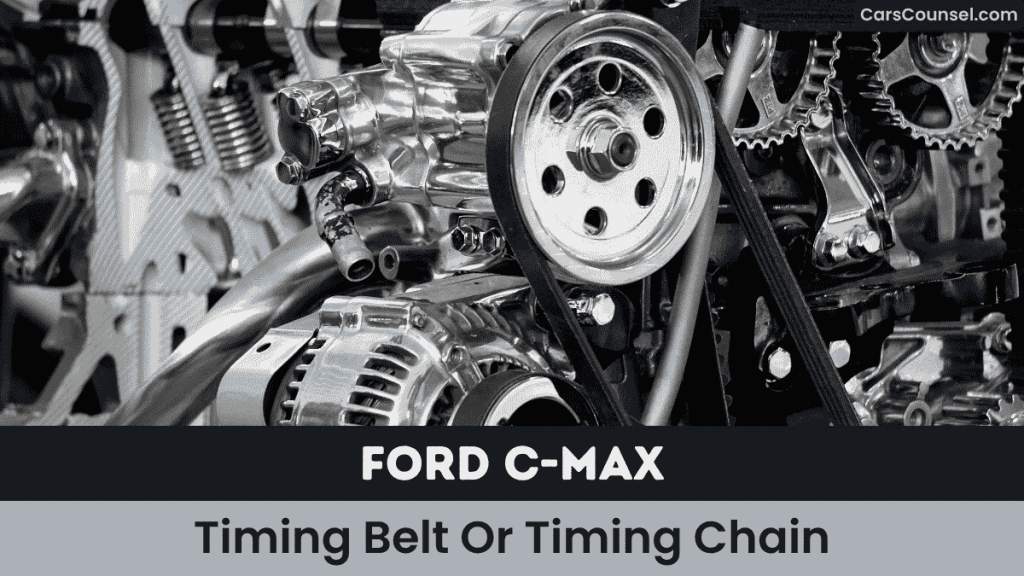
Timing system identification is important because belt-equipped engines require scheduled replacement, while chain-equipped engines are generally designed to last the lifetime of the engine with proper oil maintenance.
Quick Navigation
Does the Ford C-MAX Have a Timing Belt or Timing Chain?
All U.S.-market Ford C-MAX models use a timing chain. No timing belt variant was offered for the North American lineup across any model year from 2013 to 2018. Always verify by engine code and model year before scheduling service.
2018 Ford C-MAX Timing Belt Or Timing Chain
| Specification | Detail |
|---|---|
| Engine Option(s) | 2.0L DOHC Atkinson-cycle inline-4 hybrid (1,999 cc) |
| Timing System | Timing Chain |
| Interference Engine | Yes |
| Replacement Interval | No scheduled interval; designed for engine lifetime |
| Maintenance Notes | Maintain regular oil change intervals; inspect chain guides if high-mileage noise develops at cold start |
The 2018 model year was the final production year for the C-MAX in the U.S. market.
Only the Hybrid variant was offered; the Energi plug-in model was discontinued after 2017. The 2.0L Atkinson-cycle engine carries an interference designation, meaning a failed timing chain can cause valve-to-piston contact.
2017 Ford C-MAX Timing Belt Or Timing Chain
| Specification | Detail |
|---|---|
| Engine Option(s) | 2.0L DOHC Atkinson-cycle inline-4 hybrid (1,999 cc) |
| Timing System | Timing Chain |
| Interference Engine | Yes |
| Replacement Interval | No scheduled interval; designed for engine lifetime |
| Maintenance Notes | The 2017 model year was the last year for the C-MAX Energi PHEV variant; both Hybrid and Energi use the same timing system |
Same timing system as previous model year. Both the Hybrid and Energi plug-in variants share the same 2.0L Atkinson-cycle engine and timing chain configuration. No interval-based chain replacement is listed in the Ford service schedule.
2016 Ford C-MAX Timing Belt Or Timing Chain
| Specification | Detail |
|---|---|
| Engine Option(s) | 2.0L DOHC Atkinson-cycle inline-4 hybrid (1,999 cc) |
| Timing System | Timing Chain |
| Interference Engine | Yes |
| Replacement Interval | No scheduled interval; designed for engine lifetime |
| Maintenance Notes | VCT solenoid maintenance becomes relevant above 80,000 miles; oil cleanliness directly affects camshaft timing accuracy on this engine |
Consistent oil change intervals are particularly important on the 2016 C-MAX. Ford issued multiple Technical Service Bulletins related to Variable Camshaft Timing (VCT) solenoid performance on the 2.0L hybrid engine, where dirty oil is a primary cause of timing-related fault codes.
2015 Ford C-MAX Timing Belt Or Timing Chain
| Specification | Detail |
|---|---|
| Engine Option(s) | 2.0L DOHC Atkinson-cycle inline-4 hybrid (1,999 cc) |
| Timing System | Timing Chain |
| Interference Engine | Yes |
| Replacement Interval | No scheduled interval; designed for engine lifetime |
| Maintenance Notes | Same timing configuration as 2013-2014; no engine or timing system changes documented for this model year |
Same timing system as previous model year. The 2015 C-MAX Hybrid and Energi continue the same Duratec 2.0L Atkinson-cycle engine with a lifetime timing chain. No timing-related engineering revisions were documented between the 2014 and 2015 production runs.
2014 Ford C-MAX Timing Belt Or Timing Chain
| Specification | Detail |
|---|---|
| Engine Option(s) | 2.0L DOHC Atkinson-cycle inline-4 hybrid (1,999 cc) |
| Timing System | Timing Chain |
| Interference Engine | Yes |
| Replacement Interval | No scheduled interval; designed for engine lifetime |
| Maintenance Notes | Engine assembled in Chihuahua, Mexico; valvetrain uses intake variable camshaft timing (iVCT); chain tensioner and guide condition should be assessed if engine noise develops on startup |
The 2014 C-MAX uses the same 2.0L Atkinson-cycle engine introduced at launch. The engine timing system remained unchanged from the first model year. No Ford service bulletin documents a scheduled chain replacement interval for this generation.
2013 Ford C-MAX Timing Belt Or Timing Chain
| Specification | Detail |
|---|---|
| Engine Option(s) | 2.0L DOHC Atkinson-cycle inline-4 hybrid (1,999 cc) |
| Timing System | Timing Chain |
| Interference Engine | Yes |
| Replacement Interval | No scheduled interval; designed for engine lifetime |
| Maintenance Notes | First U.S. model year; both C-MAX Hybrid and C-MAX Energi use identical engine and timing system; 12.3:1 compression ratio; DOHC with 4 valves per cylinder and iVCT on the intake camshaft |
The 2013 Ford C-MAX launched in the U.S. market exclusively with the 2.0L Atkinson-cycle hybrid engine and a timing chain. Both the standard Hybrid and the Energi plug-in variant share identical engine architecture. This is an interference engine, so maintaining chain integrity is critical.
Timing Belt vs Timing Chain on the Ford C-MAX
A timing belt is a rubber-reinforced component that synchronizes the rotation of the crankshaft and one or more camshafts. Belts are lighter and quieter than chains but degrade over time due to heat and friction, requiring scheduled replacement typically between 60,000 and 105,000 miles.
A timing chain performs the same synchronization function using a metal link chain. The 2.0L Atkinson-cycle engine in the C-MAX uses a timing chain, which Ford designates as a lifetime component under normal operating conditions. It does not appear on Ford’s scheduled maintenance interval list for this vehicle.
The primary maintenance difference is cost planning. A timing belt replacement is a scheduled expense with labor typically running several hundred dollars. A timing chain involves no scheduled replacement cost but requires consistent oil quality to protect the chain, tensioner, and guide rails.
Worn chain components can produce a rattling or slapping noise on cold startup. This symptom typically indicates chain stretch, tensioner wear, or guide degradation. On an interference engine like the C-MAX’s 2.0L, ignoring this symptom risks valve-to-piston contact if the chain fails.
Ford C-MAX Timing System Maintenance
The timing chain in the C-MAX 2.0L Atkinson-cycle engine carries no scheduled replacement mileage in Ford’s published maintenance schedule. Ford designates it as a lifetime component. However, “lifetime” is contingent on regular oil maintenance and a lack of tensioner or guide wear.
A rattle or knocking sound on cold engine startup is a common early indicator of timing chain slack or tensioner wear. The noise typically disappears within seconds as oil pressure builds. Persistent startup noise warrants inspection of the chain, tensioner, and plastic guide rails.
Oil quality directly affects timing chain longevity on this engine. The C-MAX’s Variable Camshaft Timing (VCT) system relies on clean oil to operate the camshaft phaser solenoids correctly. Contaminated or degraded oil delays VCT response and can cause timing-related fault codes such as P0012 or P0024.
Inspection of the chain assembly is advisable when performing other high-mileage engine work, particularly after 100,000 miles. Replacement is necessary if chain slack exceeds specification, tensioner travel is exhausted, or guide rails show significant wear.
| Timing Belt | Timing Chain |
|---|---|
| Scheduled replacement interval | No scheduled interval |
| Rubber construction | Metal link construction |
| Quieter operation | Slightly more audible |
| Lower replacement cost | Higher replacement cost if chain fails |
| Not used on U.S. C-MAX | Used on all U.S. C-MAX model years |
If you’re researching whether a Ford uses a timing belt or timing chain, be sure to explore our detailed guides on models like the Ford Edge, Ford EcoSport, Ford Crown, and Ford Bronco. Knowing your vehicle’s timing system is important for maintenance planning, repair cost awareness, and long-term engine reliability. Our expert resources explain timing belt vs timing chain setups by model, common replacement intervals, warning signs of wear, and what owners should know to avoid costly engine damage.
Frequently Asked Questions
Does the Ford C-MAX have a timing belt or timing chain? All U.S.-market Ford C-MAX models from 2013 to 2018 use a timing chain. No belt-equipped engine was offered in the North American lineup.
When should a Ford C-MAX timing chain be replaced? Ford does not publish a scheduled replacement interval for the C-MAX timing chain. Replacement is condition-based, not mileage-based. Inspect if startup noise or VCT-related fault codes develop.
Does the Ford C-MAX timing chain need maintenance? The chain has no service interval, but regular oil changes are essential. Clean oil protects the VCT solenoids, chain tensioner, and guide rails from premature wear on the 2.0L hybrid engine.
Is the Ford C-MAX an interference engine? Yes. All U.S.-market C-MAX engines are interference-type. A timing chain failure can allow pistons to contact open valves, resulting in severe internal engine damage.
How much does Ford C-MAX timing chain replacement cost? Timing chain repair on the 2.0L Atkinson-cycle engine is labor-intensive. Parts and labor combined typically range from $800 to $1,800 depending on the repair facility, region, and whether related components such as tensioners and guides are replaced simultaneously.
What engine does the U.S. Ford C-MAX use? All U.S.-market C-MAX models use the 2.0L DOHC Atkinson-cycle inline-4 hybrid engine producing 141 hp. It is paired with an electric motor in both the Hybrid and Energi configurations.
Conclusion
All Ford C-MAX models sold in the U.S. market from 2013 through 2018 use a timing chain. No model year or drivetrain variant within the North American lineup used a timing belt. The engine and timing system configuration remained unchanged across the entire production run.
Engine-specific verification is still recommended before scheduling any timing system service. Timing chain maintenance on this platform focuses on oil quality, VCT solenoid condition, and awareness of startup noise as an early warning indicator.
Always verify timing system details using the owner’s manual or manufacturer service information before scheduling repairs.