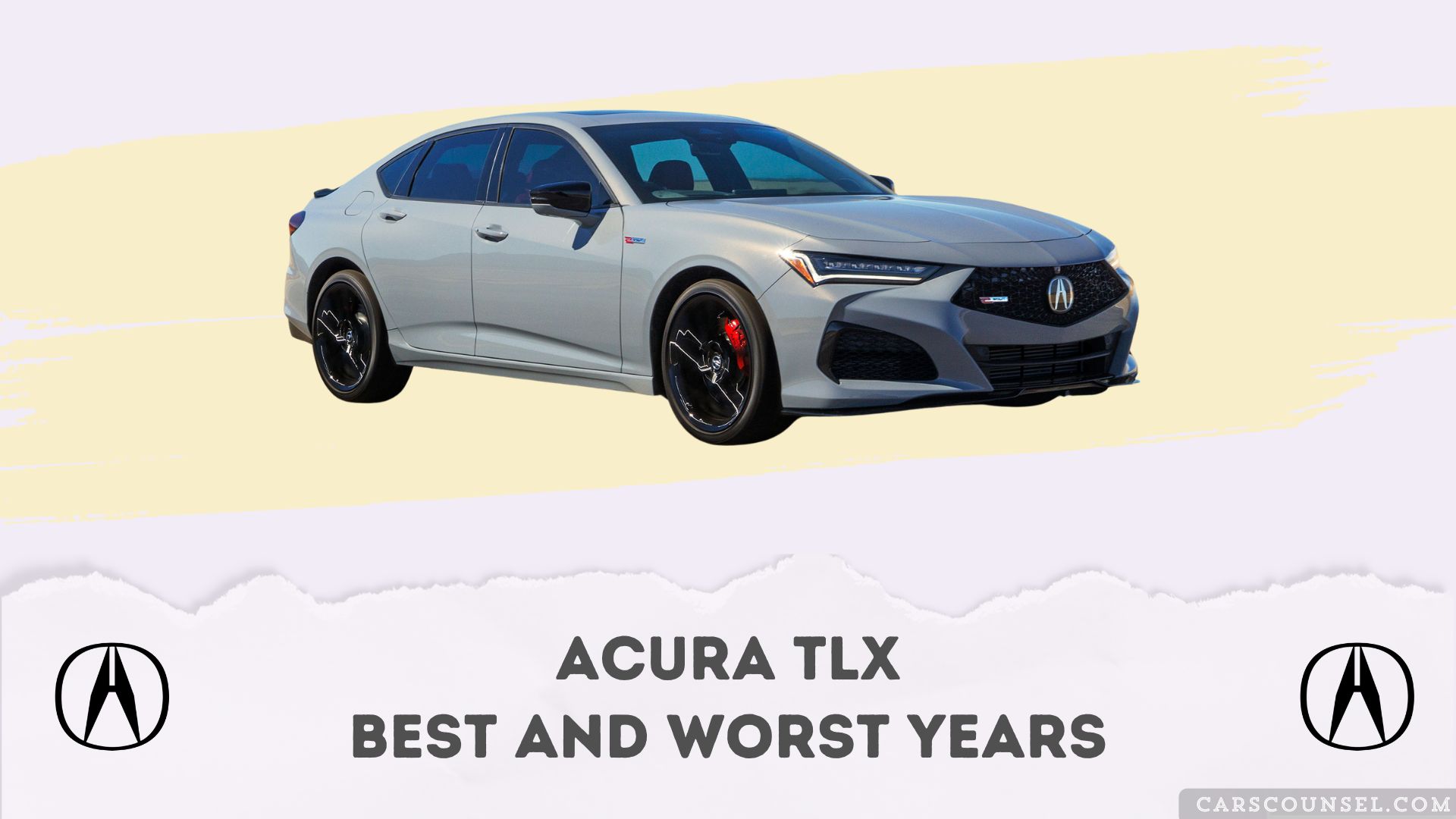
The best Acura TLX model years are 2019 and 2020, offering a mature first-generation platform with refined powertrains and fewer reported issues. Buyers should avoid the 2015 model year due to significant transmission and electrical problems.
Rankings are comparative, meaning no used vehicle is entirely flawless. Maintenance history, current condition, and open recalls play a massive role in long-term ownership satisfaction.
Significant differences exist between the four-cylinder dual-clutch models and the V6 versions. The second generation introduced in 2021 also brought a completely new turbocharged powertrain lineup.
Quick Navigation
Best and Worst Acura TLX Years at a Glance
| Model Year | Verdict | Main Reason | Buyer Guidance |
|---|---|---|---|
| 2015 | Avoid | First-year transmission and electrical issues | Look for later models |
| 2016 | Approach Carefully | Lingering powertrain refinement concerns | Verify service records |
| 2017-2018 | Good Choice | Improved reliability over early models | Check for open recalls |
| 2019-2020 | Best Choice | Mature first-generation platform | Prioritize V6 configurations |
| 2021 | Good With Inspection | First year of major redesign | Test infotainment and electronics |
| 2022-2024 | Too New to Judge | Limited long-term ownership data | Review warranty coverage |
Key Takeaways
- The 2019 and 2020 models represent the strongest first-generation options.
- Avoid the 2015 model year due to early production transmission complaints.
- The 2.4L four-cylinder uses a unique dual-clutch transmission, while the V6 uses a traditional automatic.
- The 2021 redesign introduced turbocharged engines and a new 10-speed automatic.
- Always verify the VIN for open recalls, particularly regarding fuel system components.
- An independent pre-purchase inspection is essential for any used luxury sedan.
How We Evaluated the Acura TLX Model Years
Our analysis reviews official recalls, manufacturer service campaigns, and consumer complaint databases. We weigh powertrain differences, generation changes, and repair complexity.
Complaints are not confirmed failure rates, and a recall does not automatically make a vehicle unreliable. Recent models have limited long-term exposure, and our ratings indicate comparatively stronger options.
Best Acura TLX Years
2019-2020
These years represent the final iterations of the first generation. Acura had resolved most early software and transmission mapping issues. The V6 paired with the nine-speed automatic is particularly robust.
2017-2018
These models offer a solid balance of value and reliability. Most initial powertrain grievances were addressed through software updates. Buyers should ensure all recall work has been completed.
Best Year by Buyer Type
- Best Overall: 2020 (Peak first-generation refinement)
- Best Budget Option: 2017 (Depreciated but mechanically improved)
- Best Modern Alternative: 2023 (Turbocharged performance, though long-term data is still developing)
- Best Enthusiast Choice: 2022 Type S (High-output turbo V6 configuration)
Years to Approach Carefully
2016
While improved over the launch year, the 2016 model still exhibits some lingering transmission hesitation and infotainment quirks. A thorough test drive is necessary to evaluate shifting behavior.
2021
As the first year of the second generation, the 2021 model introduced new turbocharged engines and updated electronics. Some owners reported early infotainment bugs. Verify that all software updates have been applied.
Worst Acura TLX Years
2015
The inaugural model year is plagued by the highest volume of complaints. The eight-speed dual-clutch transmission in four-cylinder models is prone to jerky shifting and premature wear.
The nine-speed automatic in V6 models also suffered from hard shifts and hunting for gears. Electrical gremlins and infotainment failures further diminish its used-car appeal.
Acura TLX Reliability by Generation
First Generation (2015-2020)
This generation offered a four-cylinder with an eight-speed dual-clutch transmission or a V6 with a nine-speed automatic. Early years struggled with transmission calibration, but later models received vital software updates.
Second Generation (2021-Present)
Acura abandoned the dual-clutch and ZF nine-speed for a proprietary 10-speed automatic paired with turbocharged engines. While mechanically sound, early second-generation models require scrutiny for software and electronic stability. Buyers interested in the high-performance variant should consult our guide on the Acura TLX Type S best and worst years.
Common Acura TLX Problems
Transmission Calibration
Early first-generation models faced criticism for hesitant or jerky shifting. This affected both the dual-clutch four-cylinder and the ZF nine-speed V6. Later models received software updates to mitigate these concerns.
Infotainment and Electronics
The dual-screen setup in the first generation was a frequent source of owner frustration. Users reported laggy touch response and Bluetooth connectivity drops. The second generation moved to a more conventional system.
Fuel System Components
Certain model years were included in broader manufacturer recalls regarding fuel pump assemblies. Buyers must check the specific VIN to ensure the remedy has been performed.
What to Check Before Buying a Used Acura TLX
- Verify the VIN for open safety and emissions recalls.
- Review service records for transmission fluid changes and software updates.
- Test the dual-clutch or nine-speed automatic for smooth, hesitation-free shifting.
- Inspect the infotainment system for touch response and Bluetooth pairing.
- Check for uneven tire wear, which can indicate SH-AWD system maintenance needs.
- Arrange an independent pre-purchase inspection to check for fluid leaks and suspension wear.
Related Buying Guides
- Acura TSX years to avoid – Look back at the compact predecessor that helped shape Acura’s sport sedan lineage.
- Acura ILX best and worst years – Consider a smaller, more budget-friendly entry point into the Acura brand.
- Honda Accord years to avoid – Explore the mainstream platform sibling that shares underlying architecture with the TLX.
Frequently Asked Questions
Is the Acura TLX a reliable car?
The TLX is generally reliable, especially from 2018 onward. Early first-generation models had transmission calibration issues, but later years and the current generation offer solid dependability with proper maintenance.
What is the best Acura TLX year to buy?
The 2019 and 2020 model years are the best choices. They represent the most refined versions of the first generation, featuring resolved transmission software and strong V6 reliability.
Why should I avoid the 2015 Acura TLX?
The 2015 model year is the first production year and has the highest complaint volume. Owners frequently report jerky transmission behavior, electrical gremlins, and frustrating infotainment interfaces.
Does the Acura TLX have transmission problems?
Early 2015 and 2016 models experienced shifting hesitation and rough gear changes. Acura issued software updates to address these issues, making 2017 and later models significantly smoother and more reliable.
Is the Acura TLX expensive to maintain?
Maintenance costs are typical for a premium brand. Routine services are reasonably priced, but out-of-warranty repairs for complex components like the SH-AWD system or turbochargers can be costly.
Should I buy the 4-cylinder or V6 TLX?
The V6 is generally preferred for its smoother traditional automatic transmission and stronger power delivery. The four-cylinder uses a unique dual-clutch transmission that requires careful inspection on older models.
Choosing the Right Acura TLX Model Year
Target the 2019 and 2020 model years for the most dependable first-generation experience. Avoid the 2015 launch year entirely due to widespread transmission and electrical complaints.
If considering the newer turbocharged second generation, prioritize certified pre-owned examples with updated software. Always verify the VIN for open recalls and secure an independent inspection before finalizing your purchase.

