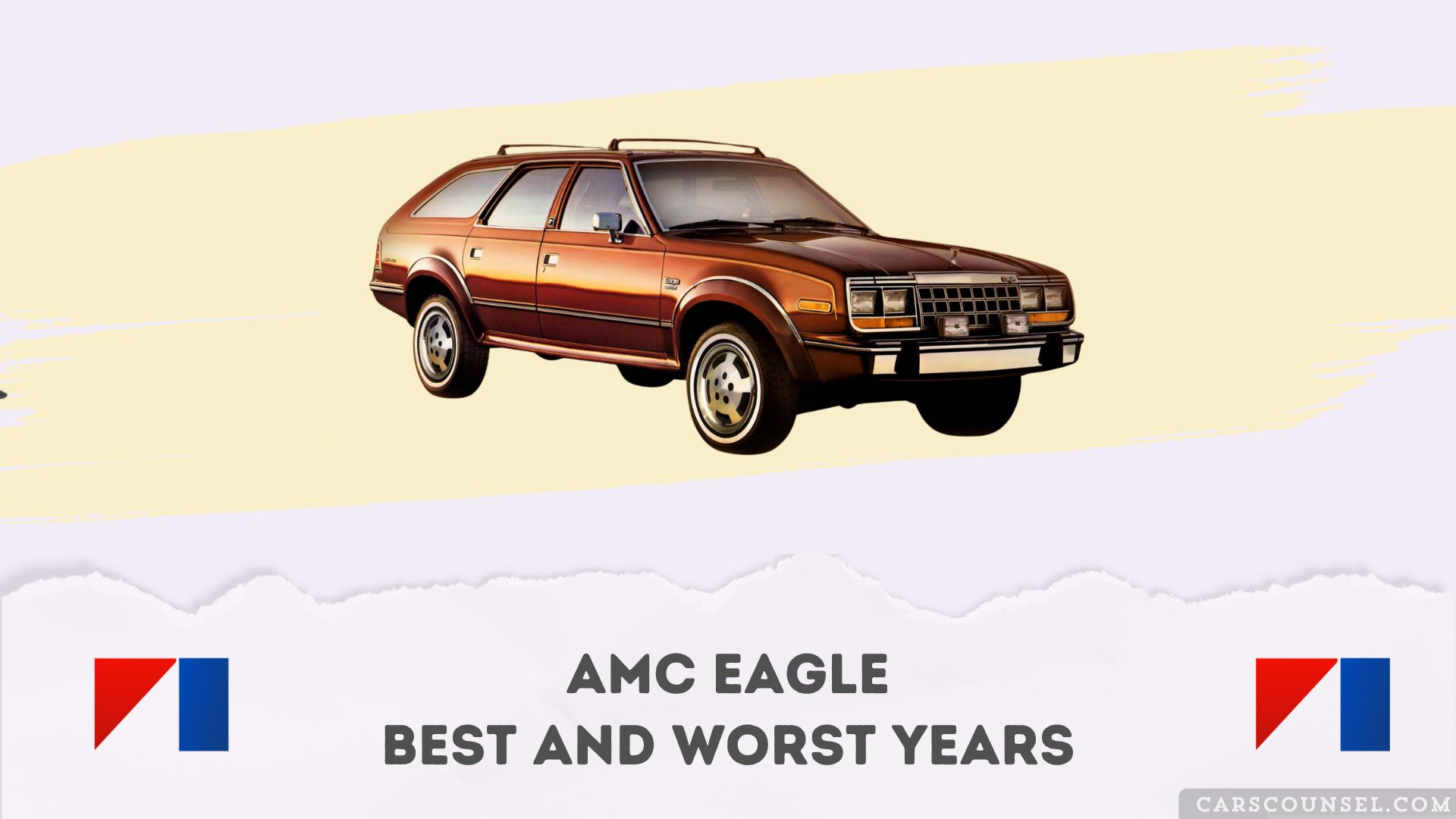
The best AMC Eagle years for collectors are the 1980–1981 models with the original Quadra-Trac system, and the 1985–1987 models with reliable mechanical four-wheel drive. Buyers should approach 1982–1984 models carefully due to problematic vacuum-operated front axles.
These rankings are comparative, and no classic AMC is flawless. Long-term survival depends entirely on rust prevention, meticulous maintenance, and the availability of scarce replacement parts.
Meaningful differences exist between the early full-time four-wheel-drive systems and the later part-time setups. Body styles also shifted dramatically, with coupes and sedans disappearing before the final wagon-only years.
Quick Navigation
Best and Worst AMC Eagle Years at a Glance
| Model Year or Range | Verdict | Main Reason | Buyer Guidance |
|---|---|---|---|
| 1980–1981 | Best Enthusiast Choice | Original Quadra-Trac full-time 4WD | Verify transfer case condition |
| 1982–1984 | Approach Carefully | Vacuum-operated front axle disconnect | Inspect 4WD engagement system |
| 1985–1987 | Best Older Choice | Reliable mechanical shift-on-the-fly 4WD | Check for structural rust |
| 1988 | Mixed | First Chrysler year, Wagon only | Verify transitional build quality |
Key Takeaways
- The 1985–1987 models offer the most reliable mechanical four-wheel-drive system for regular classic use.
- The 1980–1981 models are highly collectible due to the innovative but complex Quadra-Trac full-time system.
- Approach 1982–1984 models with caution, as the vacuum-operated front axle disconnect is prone to failure.
- Severe structural rust is the single greatest threat to the AMC Eagle, regardless of the model year.
- The 4.2-liter inline-six engine is generally robust but requires careful attention to carburetor and oil leak issues.
How We Evaluated the AMC Eagle Model Years
Our analysis examines generational shifts, drivetrain evolution, and long-term classic car ownership patterns. We also weigh the impact of AMC’s corporate transition and the availability of replacement parts.
Consumer reports and enthusiast forums highlight recurring mechanical concerns. However, a single forum complaint does not confirm a model-wide defect, and classic car reliability depends heavily on previous owner care.
Best AMC Eagle Years
1985–1987: Best Older Choice
These models benefit from the updated shift-on-the-fly four-wheel-drive system. This mechanical setup eliminated the problematic vacuum actuators found on earlier models, providing much more reliable off-road and snow traction.
The 4.2-liter inline-six was well sorted by this time. Buyers should still prioritize rust-free examples, as structural corrosion remains the primary enemy of any surviving Eagle.
1980–1981: Best Enthusiast Choice
The launch years feature the innovative Quadra-Trac full-time four-wheel-drive system. This 4WD setup used a viscous clutch to send torque to the wheels with the most grip.
While highly desirable to collectors, the BorgWarner 1339 transfer case is heavy and complex. Rebuild parts are scarce, making a well-maintained example essential for long-term enjoyment.
Best Year by Buyer Type
The 1987 Eagle Wagon is the Best Overall choice for classic daily use, offering the most refined mechanicals before the corporate takeover. The 1981 Sundancer convertible is the Best Enthusiast Choice for collectors seeking extreme rarity.
Years to Approach Carefully
1982–1984: Approach Carefully
AMC introduced a part-time four-wheel-drive system with vacuum-operated front hub locking. These vacuum actuators are notorious for failing, leaving the front axle disengaged when four-wheel drive is needed.
Repairing the vacuum lines and actuators can be frustrating due to age and parts scarcity. Many owners eventually convert these systems to manual locking hubs for better reliability.
1988: Mixed
This was the first year under Chrysler ownership, and the lineup was reduced to the station wagon only. Build quality and parts sourcing were in a transitional phase.
While mechanically similar to the 1987 models, the 1988 Eagle Wagon lacks the pure AMC lineage that collectors prefer. It remains a solid choice if the price and condition are right.
AMC Eagle Reliability by Generation
Classic AMC Era (1980–1987)
Built on the compact Hornet platform, the Eagle pioneered the crossover segment years ahead of competitors like Subaru. The 4.2-liter inline-six is legendary for its durability, often outlasting the unibody chassis.
Chrysler Transition (1988)
Following the corporate buyout, the Eagle continued solely as a wagon under the newly formed Jeep-Eagle division. While largely a carryover, it marks the end of the original American Motors production run.
Common AMC Eagle Problems
Corrosion Problems
Rust is the ultimate enemy of the AMC Eagle. The unibody structure, floor pans, and rear wheel arches trap moisture and road debris, leading to severe structural compromise if left untreated.
Drivetrain and Vacuum Systems
The 1982–1984 models rely on vacuum lines to engage the front axle. These lines crack and degrade over time, causing the four-wheel-drive system to fail silently when traction is needed most.
Engine and Fuel System
The 4.2-liter inline-six is robust but prone to oil leaks from the valve cover and rear main seal. Early models with complex feedback carburetors can suffer from poor drivability and stalling.
What to Check Before Buying a Used AMC Eagle
Verify the structural integrity of the floor pans, rockers, and rear wheel arches for severe rust. Test the four-wheel-drive system to ensure the front axle engages properly without grinding.
Inspect the engine bay for excessive oil leaks and verify the carburetor operates smoothly. Check the transfer case for unusual noises and ensure the transmission shifts firmly.
Related Buying Guides
- Classic Ford Bronco best and worst years: A rugged, body-on-frame alternative for buyers wanting a more traditional and capable vintage 4×4.
- Subaru Outback years to avoid: A modern unibody crossover alternative for buyers needing all-wheel-drive comfort without the classic car maintenance.
- Jeep Wrangler years to avoid: The spiritual successor to AMC’s off-road legacy, offering modern parts availability and open-air driving.
Frequently Asked Questions
What is the most reliable AMC Eagle engine?
The 4.2-liter inline-six is the most reliable and desirable engine. It offers excellent low-end torque and legendary durability, provided it is maintained and protected from severe oil leaks.
Why are 1982–1984 AMC Eagles problematic?
These years use a vacuum-operated front axle disconnect system. The vacuum lines and actuators degrade over time, frequently causing the four-wheel-drive system to fail when traction is needed most.
Is the AMC Eagle a good daily driver?
A well-maintained 1985–1987 model can serve as a unique classic daily driver. However, poor fuel economy, weak brakes, and lack of modern safety features make it better suited for weekend use.
How bad is rust on the AMC Eagle?
Rust is a severe and often fatal concern for all AMC Eagles. The unibody structure, floor pans, and rear wheel arches are highly vulnerable and can compromise the vehicle’s structural integrity.
What should I look for when buying a classic AMC Eagle?
Prioritize structural condition over mileage or model year. A rust-free example with a functional four-wheel-drive system and a well-sorted 4.2-liter engine is always the safest investment.
Are AMC Eagle parts hard to find?
Mechanical parts for the 4.2-liter engine and Chrysler transmissions are generally available. However, Eagle-specific trim, interior pieces, and Quadra-Trac transfer case components are becoming increasingly scarce.
Which AMC Eagle Year Should You Buy?
Target the 1985–1987 models for the most reliable mechanical four-wheel-drive system and refined engine. The 1980–1981 models are the smartest choice for serious collectors seeking the original Quadra-Trac setup.
Approach 1982–1984 models with caution due to vacuum system failures. Always arrange an independent inspection to verify structural integrity and four-wheel-drive engagement before purchasing any classic Eagle.

