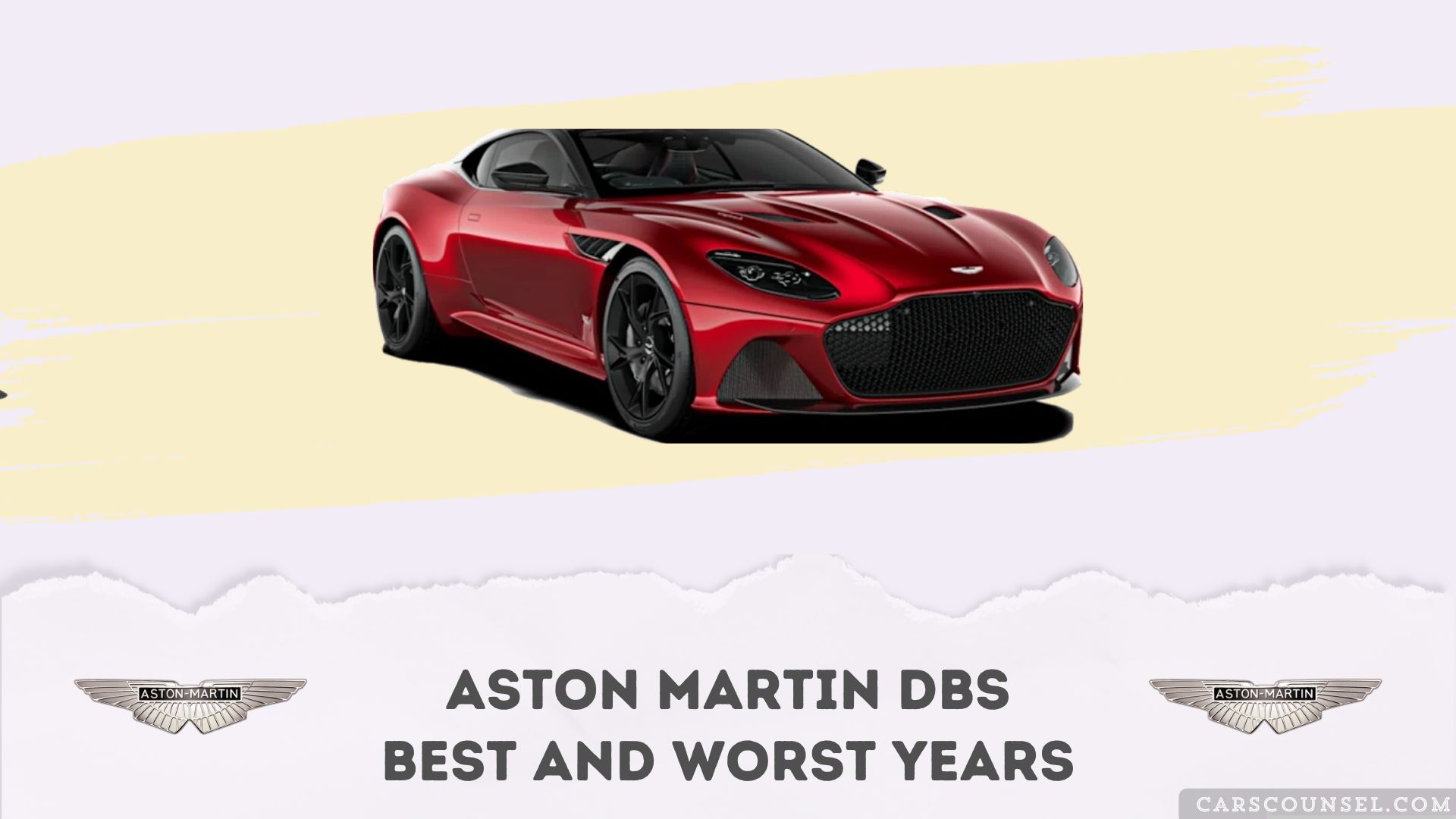
The best Aston Martin DBS model years are 2011 and 2012, which feature mature electronics and exclusive special editions. Buyers should approach the 2008 through 2010 models carefully due to early production quirks and manual transmission clutch wear.
Because the DBS is a low-volume exotic grand tourer, no model year is entirely free of high maintenance costs. Individual condition, strict service history, and recall completion are far more critical than the specific badge year.
Meaningful differences exist between the early manual transmission examples and the later Touchtronic automatic models. The manual cars are highly collectible but require expensive clutch replacements, while the automatics demand careful fluid servicing.
Quick Navigation
Best and Worst Aston Martin DBS Years at a Glance
| Model Year | Verdict | Main Reason | Buyer Guidance |
|---|---|---|---|
| 2008-2010 | Approach Carefully | Early production electronics and manual clutch wear. | Verify recall completion and clutch life. |
| 2011-2012 | Best Enthusiast Choice | Final production years with exclusive special editions. | Inspect carbon ceramic brakes and service history. |
| 2019-Present | Too New to Judge | Low production volume and limited long-term data. | Rely on warranty and specialist inspection. |
Key Takeaways
- The 2011 and 2012 models are the strongest choices, offering refined electronics and highly collectible Carbon and Ultimate editions.
- The 2008 through 2010 model years require careful inspection due to early navigation glitches and manual clutch wear.
- All DBS models feature standard carbon ceramic brakes, which are exceptionally expensive to replace when worn.
- Aston Martin issued a recall for the throttle pedal arm on certain 2008-2012 models, which must be verified.
- Long-term reliability depends entirely on meticulous, documented maintenance by authorized dealers or recognized exotic car specialists.
- Always verify the VIN for open recalls and arrange a pre-purchase inspection focusing on the drivetrain and suspension.
How We Evaluated the Aston Martin DBS Model Years
Our analysis considers NHTSA recall records, manufacturer service campaigns, and specialist ownership reports for the VH platform. We evaluate the impact of low production volumes, exotic material repair costs, and the complexities of the 5.9-liter V12 engine.
Traditional reliability metrics do not apply to a hand-built grand tourer. Verifiable service history, recall completion, and current mechanical condition provide the only accurate picture of long-term ownership for these rare model years.
Best Aston Martin DBS Years
2011-2012 Aston Martin DBS
The 2011 and 2012 model years represent the final and most refined iteration of the second-generation DBS. Aston Martin addressed early electrical gremlins, resulting in significantly more stable infotainment and navigation systems compared to the launch vehicles.
These final years also introduced the highly desirable Carbon Edition and Ultimate Edition. Buyers must ensure the carbon ceramic brake system has been inspected, as rotor replacement on these low-volume exotics requires a massive financial investment.
Best Year by Buyer Type
Best Enthusiast Choice: 2008-2012 Manual Transmission
For collectors seeking the ultimate analog driving experience, the six-speed manual configuration offers genuine novelty. Its rarity and direct connection to the 5.9-liter V12 drivetrain make it a highly rewarding weekend show car, despite the heavy clutch pedal.
Years to Approach Carefully
Approach Carefully: 2008-2010 Aston Martin DBS
As the inaugural model years of the modern DBS, the 2008 through 2010 examples experienced typical startup growing pains. Early vehicles are more susceptible to navigation system malfunctions and slow map loading, which can frustrate daily use.
Manual transmission examples from this era are particularly vulnerable to premature clutch wear. Buyers must confirm that the throttle pedal arm recall has been performed and carefully inspect the clutch engagement before purchasing.
Worst Aston Martin DBS Years
No Aston Martin DBS model year carries a strict Avoid verdict. However, the 2008 model year remains the most challenging due to its status as a first-year production vehicle with early VH platform electronics.
While later models are preferable, a well-maintained 2008 example with a fully documented service history can still be a viable option. Buyers must simply exercise greater diligence during the pre-purchase inspection process.
Aston Martin DBS Reliability by Generation
First Generation (1967-1972)
The original DBS is a classic grand tourer that predates modern reliability standards. It is strictly a collector vehicle requiring specialized vintage restoration support and is not suitable for regular driving.
Second Generation (2008-2012)
The second-generation DBS rides on Aston Martin’s proprietary VH platform, sharing its underlying architecture and 5.9-liter V12 engine with the DB9 and the Aston Martin Vantage. It is available as a coupe or Volante convertible.
Throughout its production run, Aston Martin continuously refined the software and hardware. The introduction of the Touchtronic 2 automatic transmission and standard carbon ceramic brakes significantly altered the vehicle’s weight, torque management, and overall service complexity.
Third Generation (2019-Present)
The modern DBS Superleggera utilizes a twin-turbocharged 5.2-liter V12 and a ZF eight-speed automatic transmission. Because it is an ultra-low-volume exotic vehicle, long-term reliability data remains limited, and ownership costs are exceptionally high.
Common Aston Martin DBS Problems
Throttle Pedal Arm Recall
Certain 2008-2012 models are subject to a critical safety recall regarding the accelerator pedal arm. The component may fracture due to a manufacturing defect, leading to a sudden loss of motive power and increasing the risk of a crash.
Carbon Ceramic Brake Wear
The DBS features standard carbon ceramic brakes that provide exceptional stopping power. However, when the rotors and pads reach the end of their service life, replacement costs are astronomical, prompting some owners to pursue aftermarket steel rotor conversions.
Manual Transmission Clutch Wear
Early manual transmission examples are prone to premature clutch wear, particularly when driven aggressively or in stop-and-go traffic. Replacing the heavy twin-plate clutch assembly requires specialized labor and represents a major financial expense for new owners.
Navigation and Electrical Glitches
Owners frequently report slow map loading, outdated software, and confusing menus on the early Garmin-based navigation systems. These infotainment issues are largely confined to the 2008-2010 model years and rarely affect the vehicle’s core drivability.
What to Check Before Buying a Used Aston Martin DBS
- Verify the VIN for open recalls, especially the critical throttle pedal arm campaign.
- Confirm that all scheduled maintenance has been performed by an authorized dealer or recognized exotic specialist.
- Inspect the carbon ceramic brake rotors for micro-cracking and measure their remaining service life.
- Test the manual transmission clutch for slippage, heavy pedal feel, or difficult engagement.
- Check the front carbon fiber splitter and lower aero components for severe stone chipping or driveway scraping.
- Arrange an independent pre-purchase inspection focusing on the V12 engine, suspension bushings, and transaxle.
Related Buying Guides
- Aston Martin Vantage best and worst years: A verified platform sibling that shares the underlying VH architecture and early V8/V12 powertrains, offering a more agile and slightly more accessible entry into the brand.
- Aston Martin DB11 best and worst years: The modern grand tourer that replaced the Vanquish and serves as the direct architectural predecessor to the current DBS Superleggera generation.
Frequently Asked Questions
Is the Aston Martin DBS reliable?
It offers exceptional performance, but traditional reliability metrics do not apply. Ownership requires meticulous, expensive maintenance, and buyers must be prepared for sudden, high-cost repairs involving exotic materials like carbon ceramics.
What is the most common DBS problem?
Wear items on the manual transmission clutch and the astronomical replacement cost of the standard carbon ceramic brake system are the most frequent financial concerns reported by owners and specialists.
Are Aston Martin DBS parts hard to find?
Yes, mechanical and cosmetic parts can be challenging to source. As a low-volume exotic manufacturer, owners sometimes face extended wait times for specific interior trim pieces, carbon fiber body panels, and specialized engine components.
Can I daily drive an Aston Martin DBS?
It is capable of daily driving, but the low front splitter, heavy clutch, and firm ride make it impractical for rough roads or steep driveways. Most owners reserve them for weekend grand touring.
Does the DBS hold its value?
The second-generation DBS has largely finished its initial depreciation curve. Well-maintained manual examples and rare special editions like the Carbon Black are currently appreciating among serious collectors.
What should I check before buying?
Always verify the VIN for the throttle pedal arm recall. Confirm the remaining life of the carbon ceramic brakes, test the clutch engagement, and review the complete service history for V12 maintenance.
Choosing the Right Aston Martin DBS Model Year
The 2011 and 2012 model years offer the most refined experience, benefiting from mature electronics and exclusive special editions. They represent the strongest choices for collectors seeking a naturally aspirated V12 grand tourer.
The 2008 through 2010 launch years require careful scrutiny. While not strictly unreliable, they carry a higher burden of early-production navigation glitches and manual clutch wear that must be verified through comprehensive service records.
Always check the VIN for open recalls and ensure the vehicle has received all critical manufacturer updates. An independent pre-purchase inspection by a recognized exotic car specialist is essential for evaluating the high-cost wear items.

