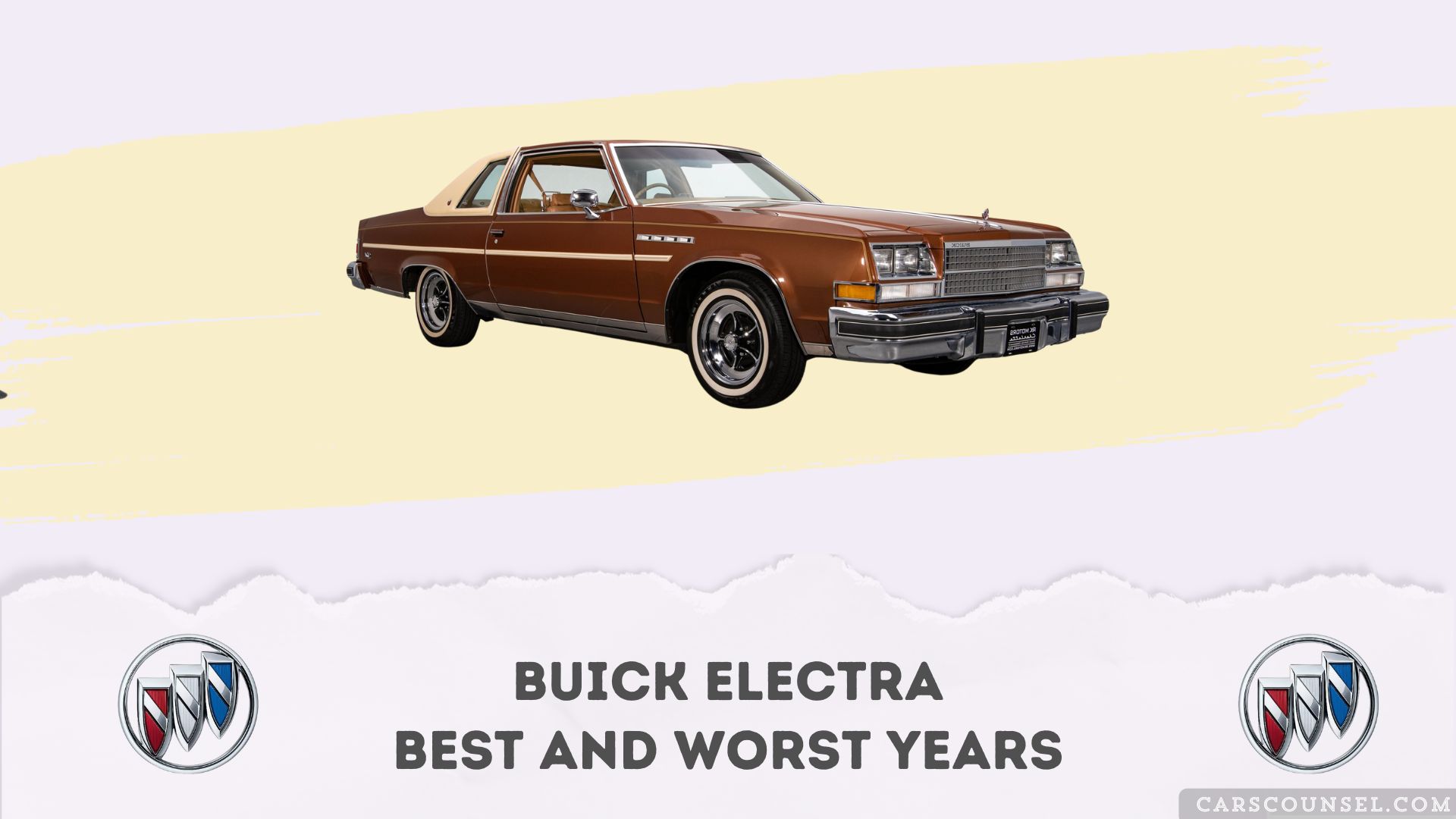
The best Buick Electra years are 1965 through 1970, offering peak full-size styling and powerful V8 engines. Buyers should approach 1971 through 1973 carefully due to smog-era power reductions, and inspect 1985 through 1990 front-wheel-drive models for early transaxle concerns.
Rankings are comparative, meaning no classic vehicle is flawless. Maintenance history, rust prevention, and overall condition matter far more than the model year alone when evaluating a vintage luxury cruiser.
Meaningful differences exist between the rear-wheel-drive V8 classics and the later front-wheel-drive V6 models. Engine choices, transmission durability, and chassis layouts vary significantly across these distinct generations.
Quick Navigation
Best and Worst Buick Electra Years at a Glance
| Model Year | Verdict | Main Reason | Buyer Guidance |
|---|---|---|---|
| 1965-1970 | Best Choice | Peak V8 performance and classic styling | Prioritize rust inspection |
| 1971-1976 | Approach Carefully | Smog-era power loss and heavy bumpers | Check engine compression |
| 1977-1984 | Mixed | Downsized RWD platform with varied engines | Verify V8 maintenance |
| 1985-1990 | Approach Carefully | FWD transition with early transaxle risks | Test shifting carefully |
Key Takeaways
- 1965-1970: Best Choice for classic V8 performance and luxury.
- 1971-1973: Approach Carefully due to severe power reductions.
- 1985-1990: Approach Carefully for early front-wheel-drive transaxle wear.
- Powertrain: Later models switched from RWD V8s to FWD V6s.
- Inspection: Rust and original drivetrain matching are critical.
How We Evaluated the Buick Electra Model Years
Our analysis considers manufacturer service campaigns, historical reliability data, and enthusiast consensus for every Buick model. We weigh powertrain differences, generation changes, and repair complexity heavily.
Complaints are not failure rates, and a recall does not automatically make a year unreliable. Recent classic car values depend heavily on surviving condition rather than factory defect counts.
Best Buick Electra Years
1965-1967
The 1965 through 1967 models represent a styling and engineering high point. These rear-wheel-drive cruisers feature the robust V8 derivatives and the powerful 401 and 425 cubic-inch engines.
Owners praise the Wildcat 445 torque and plush interiors. While rust remains a primary enemy, mechanically sorted examples offer an unmatched classic luxury experience.
1968-1970
The 1968 through 1970 models maintain excellent build quality while introducing the 430 and eventually the massive 455 cubic-inch V8. These engines deliver effortless highway cruising.
Styling remained sleek before the heavy federal bumper mandates. These years are highly sought after by collectors seeking peak full-size Buick performance.
Best Buick Electra Years by Buyer Type
Best Enthusiast Choice: 1967
The 1967 model year stands out with its distinct styling and available 425 cubic-inch V8. It offers the perfect blend of aggressive luxury and mechanical simplicity.
Best Budget Cruiser: 1977-1979
The downsized 1977 through 1979 models are often more affordable. They retain rear-wheel drive and offer V8 options, though they lack the sheer presence of the 1960s giants.
Years to Approach Carefully
1971-1973
The 1971 through 1973 models suffered from early emissions regulations. Compression ratios dropped significantly, resulting in noticeably sluggish performance compared to the preceding years.
Additionally, the introduction of heavy five-mph bumpers altered the sleek exterior styling. Buyers should prioritize examples with upgraded exhaust or rebuilt carburetors.
1985-1987
The transition to front-wheel drive in 1985 brought packaging benefits but introduced early transaxle vulnerabilities. The early V6 engines are adequate but lack classic V8 charm.
Inspect these front-wheel-drive models for harsh shifting, differential whine, and suspension wear. The later 3.8L engines improved matters significantly.
Worst Buick Electra Years
No Buick Electra year universally demands a strict avoid verdict if priced correctly. However, buyers researching years to avoid should note the 1980 to 1984 models represent the most challenging era.
These malaise-era cars struggled with early fuel injection systems and heavy smog equipment. Finding pristine, unmolested examples today is exceptionally difficult for serious collectors.
Buick Electra Reliability by Generation
First and Second Generations (1959-1970)
These massive rear-wheel-drive vehicles are mechanically simple and robust. The primary reliability concern is body integrity, as rust can compromise the frame and suspension mounting points.
Third and Fourth Generations (1971-1984)
Reliability declined as emissions equipment grew complex. The V8s are durable, but early computer-controlled carburetors and the troublesome V6 require specialized knowledge to maintain properly.
Fifth Generation (1985-1990)
The front-wheel-drive platform introduced new failure points, particularly in the constant velocity joints and automatic transaxles. The later V6 is notably more reliable than earlier powerplants.
Common Buick Electra Problems
Rust and Corrosion
Rust is the most severe threat to classic Electras. Inspect the lower quarter panels, rocker panels, trunk floors, and the frame rails near the rear suspension mounts carefully.
Carburetor and Emissions Issues
Models from the 1970s and early 1980s often suffer from neglected emissions systems. Vacuum leaks, stuck chokes, and failing early electronic feedback carburetors cause rough idling and stalling.
Front-Wheel-Drive Transaxle Wear
The 1985 through 1990 front-wheel-drive models can experience premature transaxle wear. Listen for whining noises during turns and check for delayed or harsh engagements.
What to Check Before Buying a Used Buick Electra
- Inspect the frame and body mounts for severe rust or structural compromise.
- Verify the engine and transmission match the original build sheet.
- Test the operation of all power windows, seats, and vacuum-operated accessories.
- Check for excessive blue smoke on startup, indicating worn valve stem seals.
- Ensure the classic THM400 or THM425 transmissions shift smoothly without slipping.
- Confirm the air conditioning system blows cold, as vintage repairs are costly.
Related Buying Guides
- Buick Century best and worst years: Explore the mid-size sibling that shared engines but offered a smaller footprint.
- Buick Envision best and worst years: See how modern Buick crossovers compare to the classic luxury ethos.
Frequently Asked Questions
What is the most reliable Buick Electra engine?
The 401 and 425 cubic-inch V8s from the mid-1960s are exceptionally robust. Later, the 3.8L V6 introduced in the late 1980s proved highly durable for front-wheel-drive models.
Are 1970s Buick Electras good daily drivers?
They can be, but they lack modern safety features and fuel efficiency. You must accept heavy steering, large dimensions, and the need for frequent vintage maintenance before daily driving one.
Did the Buick Electra have airbags?
No, the Buick Electra was discontinued after 1990. Dual front airbags did not become mandatory in the United States until the mid-1990s, so no Electra features them.
Why did Buick replace the Electra?
Buick replaced the Electra nameplate with the Park Avenue in 1991. The Park Avenue was essentially a continuation of the front-wheel-drive luxury formula the Electra established in 1985.
How do I check for open recalls on a classic car?
Open recalls on vehicles this old are generally closed or expired. However, you can still run the VIN through the NHTSA database to view historical safety campaigns and manufacturer bulletins.
Is the Buick Electra 225 different from the standard Electra?
Yes, the 225 designation referred to the car’s overall length in inches, denoting the top-tier luxury trim. Standard Electras were slightly shorter and featured fewer premium appointments.
Which Buick Electra Year Should You Buy?
The 1965 through 1970 models remain the definitive Buick Electra experience, offering unmatched V8 performance and iconic styling. Prioritize rust-free examples with documented mechanical sorting.
Approach the smog-era 1970s and early front-wheel-drive models carefully. Always verify the VIN, arrange an independent inspection, and budget for the realities of classic car ownership.

