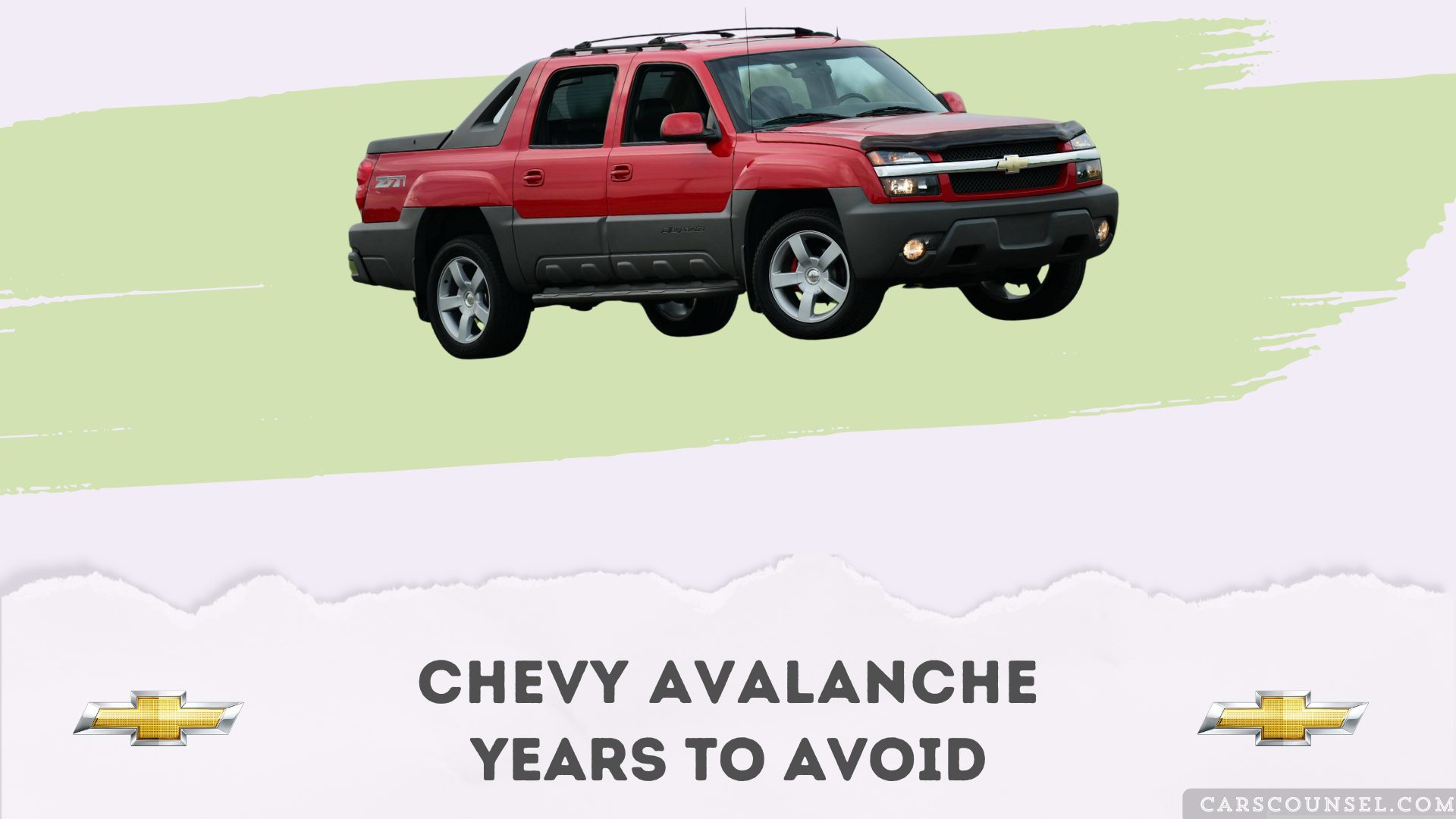
The best Chevy Avalanche year is 2013, offering the most refined electronics and powertrain. Avoid the 2007 and 2010 models due to severe engine issues.
Rankings are comparative, and no used vehicle is flawless. Maintenance history, rust, and overall condition heavily influence individual reliability.
Reliability varies significantly between the GMT800 and GMT900 generations. The 5.3L V8 engine requires strict maintenance to prevent specific valvetrain failures.
Quick Navigation
Best and Worst Chevy Avalanche Years at a Glance
| Model Year | Verdict | Main Reason | Buyer Guidance |
|---|---|---|---|
| 2002-2004 | Approach Carefully | Early GMT800 issues like dashboard cracking and instrument cluster failures | Inspect dash and gauges |
| 2005-2006 | Good Older Choice | Refined GMT800 platform, but early AFM systems require monitoring | Verify oil consumption |
| 2007 | Avoid | First-year GMT900 redesign with severe 5.3L AFM lifter and transmission issues | Look for later years |
| 2008-2009 | Approach Carefully | Ongoing AFM concerns and HVAC evaporator core leaks | Check AC and engine lifters |
| 2010 | Avoid | High volume of oil consumption and AFM lifter failure complaints | Seek 2011+ models |
| 2011-2012 | Good Choice | Improved reliability over early GMT900 years, though AFM remains a factor | Review maintenance records |
| 2013 | Best Late-Generation Choice | Final production year with the most refined GMT900 electronics and powertrain | Strongest overall option |
Key Takeaways
- Avoid 2007 and 2010 models due to severe 5.3L V8 engine issues.
- The 2013 model is the best overall choice as the final production year.
- Early 2002-2004 models require careful inspection for cracked dashboards.
- All 5.3L V8 engines with AFM need strict maintenance to prevent lifter failure.
- Always verify open recalls using the VIN before purchasing.
How We Evaluated the Chevy Avalanche Model Years
Knowing which years to avoid is critical for used buyers. We track complaints and recalls across the entire Chevy lineup.
We analyze official recalls, manufacturer service campaigns, and consumer complaint databases. We also track generation changes and powertrain revisions.
Complaints are not confirmed failure rates. A recall does not automatically make a year unreliable. Recent years have less ownership history.
Best means comparatively stronger, not flawless. Condition and maintenance always dictate individual vehicle reliability.
Best Chevy Avalanche Years
2013 (Best Late-Generation Choice)
The 2013 Avalanche is the final production year. It benefits from years of GMT900 platform refinements and updated electronics.
While the 5.3L V8 still uses Active Fuel Management, late-model examples generally show better build quality. It remains the strongest overall option.
2011-2012 (Good Choice)
These years offer improved reliability over earlier GMT900 models. General Motors addressed several early electrical and transmission concerns.
Buyers must still monitor oil consumption closely. Verify that previous owners followed strict oil change intervals.
2005-2006 (Good Older Choice)
These represent the final and most refined years of the GMT800 generation. The chassis and suspension are generally robust.
Some 2005 models introduced early Active Fuel Management. Inspect these engines carefully for lifter noise or oil burning.
Best Chevy Avalanche Year by Buyer Type
Best Overall: 2013. It offers the most refined GMT900 electronics and powertrain calibration.
Best Budget Option: 2005-2006. These GMT800 models are mechanically rugged and generally affordable.
Best Towing Configuration: 2011-2013 with the available 6.2L V8 and heavy-duty trailering package.
Years to Approach Carefully
2008-2009 (Approach Carefully)
These years sit in the middle of the GMT900 generation. They avoid the first-year redesign issues of 2007 but still suffer from AFM concerns.
HVAC evaporator core leaks are also common here. Replacing the core requires complete dashboard removal, making repairs expensive.
2002-2004 (Approach Carefully)
Early GMT800 models are famous for exterior cladding fade and severe dashboard cracking. The plastic materials degrade quickly in sunlight.
Instrument cluster stepper motors frequently fail, causing gauges to stick or read incorrectly. Inspect all gauges before buying.
Worst Chevy Avalanche Years
2007 (Avoid)
The 2007 model marks the first year of the GMT900 redesign. First-year models often suffer from new-platform electrical and build issues.
More importantly, the 5.3L V8 experienced widespread Active Fuel Management lifter failures. This can lead to catastrophic engine damage.
2010 (Avoid)
The 2010 model year shows a high volume of oil consumption complaints. The piston rings and AFM system struggle to maintain proper lubrication.
Owners report frequent check engine lights and misfires. Seek a 2011 or newer model to avoid these specific engine headaches.
Chevy Avalanche Reliability by Generation
First Generation (2002-2006)
The first generation uses the GMT800 platform. It shares related architecture with the Chevy Silverado 1500 and Chevy Tahoe.
These trucks are mechanically rugged but suffer from interior material defects. Expect cracked dashes and failing gauge cluster motors.
Second Generation (2007-2013)
The GMT900 platform brought modern styling and improved safety features. However, the 5.3L V8 engine introduced complex cylinder deactivation.
Later production years saw better transmission tuning and electronic stability. Always verify if an AFM disabler was installed by previous owners.
Common Chevy Avalanche Problems
Active Fuel Management Lifter Failure
The 5.3L V8 uses Active Fuel Management to deactivate cylinders. This system relies on complex hydraulic lifters that frequently collapse or fail.
When a lifter fails, it can destroy the camshaft and require a complete engine rebuild. Strict oil change intervals are mandatory.
Dashboard Cracking and Cladding Fade
First-generation models suffer from severe dashboard cracking. The plastic compound reacts poorly to UV exposure and heat.
The exterior Z71 cladding also fades to a chalky gray color. Restoring the trim requires specialized plastic restorers or painting.
Instrument Cluster Stepper Motor Failure
Early models use small stepper motors to move the analog gauge needles. These motors routinely burn out or stick.
Owners often see the speedometer or fuel gauge drop to zero while driving. Rebuilding the cluster is a common and necessary repair.
HVAC Evaporator Core Leaks
Second-generation models are prone to evaporator core leaks. The component develops pinhole leaks over time, causing a loss of refrigerant.
Unfortunately, accessing the core requires removing the entire dashboard. This makes the labor cost significantly higher than standard AC repairs.
Repair-Cost Overview
| Problem | Commonly Affected Years | Approximate Repair Range | Important Notes |
|---|---|---|---|
| AFM Lifter / Engine Repair | 2007-2013 | $2,500 – $4,500 | Requires engine teardown or replacement |
| HVAC Evaporator Core | 2007-2013 | $800 – $1,200 | Requires complete dashboard removal |
| Instrument Cluster Rebuild | 2002-2006 | $200 – $400 | Aftermarket rebuild services are common |
| Dashboard Replacement | 2002-2006 | $400 – $800 | Used or overlay covers are often used |
Repair costs vary significantly by region, labor rate, and parts choice. Dealer repairs typically cost more than independent shops. Damage severity and vehicle configuration also impact final pricing.
What to Check Before Buying a Used Chevy Avalanche
- Verify the VIN for open recalls and service campaigns.
- Check for documentation of AFM lifter replacement or disabler installation.
- Inspect the dashboard for severe cracking or sun damage.
- Test all instrument cluster gauges for proper movement.
- Check AC cooling performance to rule out evaporator leaks.
- Inspect exterior plastic cladding for severe UV fading.
- Listen for valvetrain ticking during a cold start.
- Arrange an independent pre-purchase inspection.
If you are cross-shopping other used vehicles, research is vital. Review our guides on the Chevy Colorado, Chevy Sonic, Chevy Cobalt, and Chevy Cruze.
Related Buying Guides
- Chevy Silverado years to avoid – The Avalanche shares its underlying GMT platform and powertrains with the Silverado 1500.
- Chevy Tahoe years to avoid – Tahoe models share the same chassis architecture and 5.3L V8 engine family.
- Chevy Suburban years to avoid – The Suburban offers similar passenger space and towing capability on the same GMT platform.
Frequently Asked Questions
What is the best year for a Chevy Avalanche?
The 2013 model is the best choice. As the final production year, it features the most refined electronics and powertrain calibration of the GMT900 generation.
What years of the Chevy Avalanche should I avoid?
Avoid the 2007 and 2010 models. Both years show high rates of 5.3L V8 Active Fuel Management lifter failures and excessive oil consumption.
Does the Chevy Avalanche have transmission problems?
Early models use the 4L60-E transmission, which requires regular maintenance. Later models use the stronger 6L80, though engine issues remain the primary concern.
Why do Chevy Avalanche dashboards crack?
First-generation dashboards use a plastic compound that degrades under UV exposure and heat. This causes severe cracking across the top surface.
What is the Active Fuel Management issue?
AFM deactivates cylinders to save fuel. The complex hydraulic lifters frequently collapse or fail, potentially causing severe internal engine damage.
Is the Chevy Avalanche a reliable truck?
The Avalanche is mechanically rugged but requires strict maintenance. The 5.3L V8 engine demands frequent oil changes to prevent expensive valvetrain failures.
Which Chevy Avalanche Year Should You Buy?
Focus your search on the 2013 model year. It offers the best combination of modern features and late-generation reliability.
If you prefer an older truck, the 2005 and 2006 models are solid choices. Just inspect the dashboard and gauge cluster carefully.
Avoid the 2007 and 2010 models due to severe engine concerns. Always verify the VIN and arrange an independent inspection before buying.

