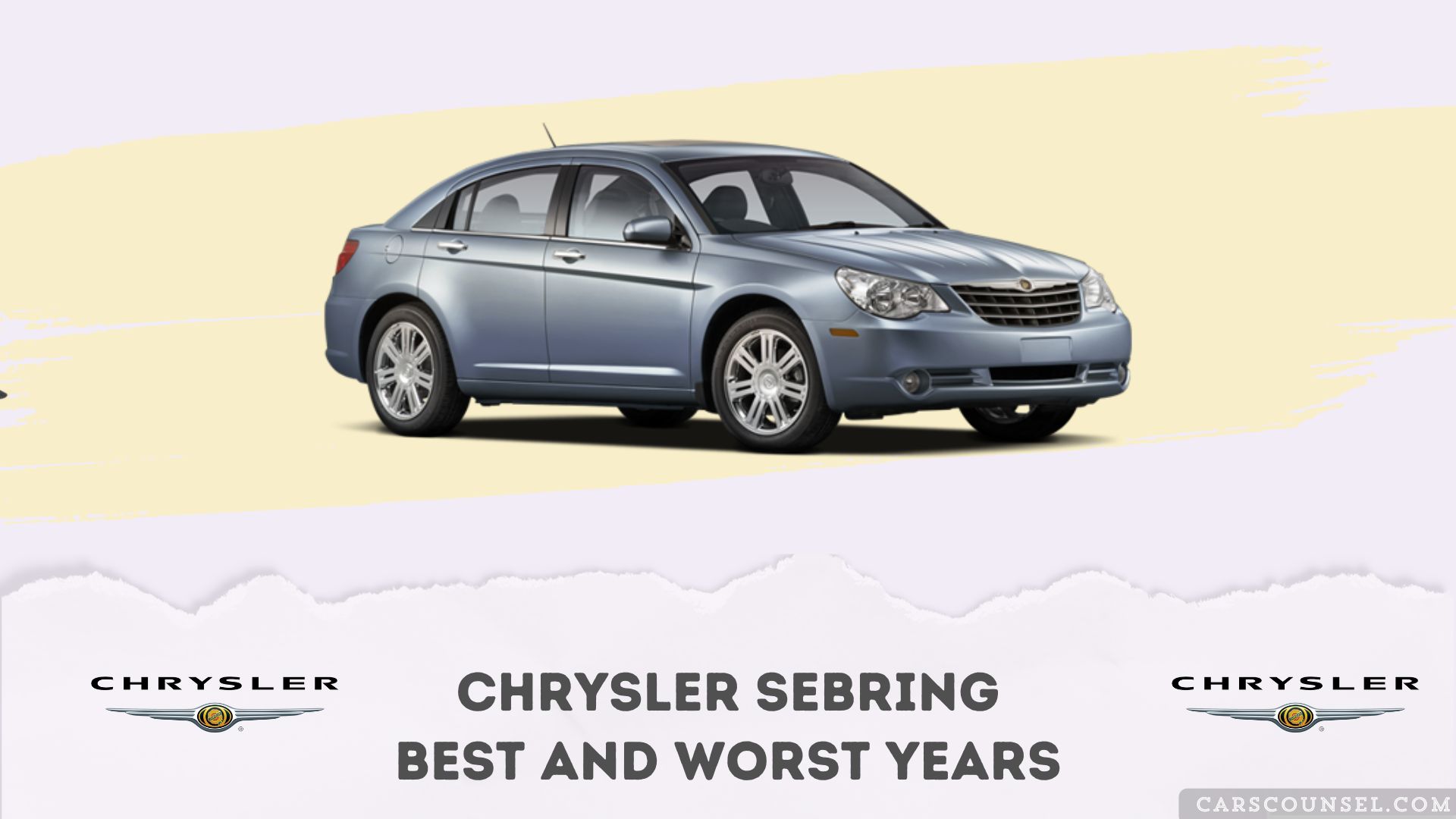
The best Chrysler Sebring years are the 2009 and 2010 models, which offer improved reliability and safety. Buyers should avoid the 2001 and 2002 model years due to severe engine sludge problems that often lead to catastrophic failure.
These rankings are comparative, meaning no used Sebring is entirely flawless. Routine maintenance, rust prevention, and a thorough pre-purchase inspection remain essential for any model year you consider adding to your driveway.
Reliability varies significantly by engine choice and body style. The troublesome 2.7-liter V6 is the primary culprit behind the worst years, while the 2.4-liter four-cylinder and 3.5-liter V6 offer much better long-term durability.
Quick Navigation
Best and Worst Chrysler Sebring Years at a Glance
| Model Year or Range | Verdict | Main Reason | Buyer Guidance |
|---|---|---|---|
| 2009–2010 | Best Late-Generation Choice | Mature platform, better safety | Prioritize 2.4L or 3.5L engines |
| 1999–2000 | Best Older Choice | Fewer 2.7L engine complaints | Verify timing belt and rust |
| 2007–2008 | Mixed | First years of third generation | Check for TIPM electrical faults |
| 2003–2006 | Approach Carefully | Lingering 2.7L sludge risks | Demand strict maintenance records |
| 2001–2002 | Avoid | Catastrophic 2.7L engine failure | Skip these years entirely |
Key Takeaways
- The 2009 and 2010 models represent the safest used options with modernized safety features.
- Avoid 2001 and 2002 models equipped with the 2.7-liter V6 due to notorious oil sludge buildup.
- The 2.4-liter inline-four and 3.5-liter V6 are significantly more reliable than the 2.7-liter V6.
- Third-generation models (2007–2010) may suffer from Totally Integrated Power Module (TIPM) electrical failures.
- Always verify open recalls and service history before purchasing any used Chrysler product.
How We Evaluated the Chrysler Sebring Model Years
Our analysis examines official safety recalls, government investigations, and consumer complaint patterns. We also weigh powertrain differences, generation changes, and repair complexity.
Consumer complaints are not confirmed defects or failure rates. A recall does not automatically make a vehicle unreliable, and recent models simply have less long-term ownership data available.
Best Chrysler Sebring Years
2009–2010: Best Late-Generation Choice
The final years of the Sebring benefit from a mature third-generation platform. Chrysler addressed many early electrical gremlins, and safety ratings improved significantly with standard side airbags.
Buyers should still prioritize the 2.4-liter four-cylinder or the 3.5-liter V6. These engines avoid the catastrophic sludge issues that plagued earlier V6 designs.
1999–2000: Best Older Choice
First-generation models from the late 1990s avoid the worst of the 2.7-liter engine plague. The 2.5-liter V6 and four-cylinder options from this era are generally more robust if maintained properly.
These older vehicles require strict rust inspections and suspension checks. Finding a well-preserved example with documented service history is crucial for long-term enjoyment.
Best Year by Buyer Type
The 2010 model is the Best Overall choice for daily commuting, offering the most refined third-generation experience. Budget buyers seeking a classic cruiser might find the 2000 convertible to be the Best Older Choice, provided the 2.7-liter engine is avoided.
Years to Approach Carefully
2007–2008: Mixed
The launch of the third generation brought modernized styling but introduced first-year redesign quirks. Owners frequently report issues with the Totally Integrated Power Module (TIPM), which controls various electrical accessories.
2003–2006: Approach Carefully
While slightly improved over the disastrous 2001 launch, these second-generation models still carry the 2.7-liter V6 risk. Purchase one only if you have comprehensive records proving frequent oil changes and cooling system maintenance.
Worst Chrysler Sebring Years
2001–2002: Avoid
The early second-generation models are notorious for catastrophic 2.7-liter V6 engine failures. An internal design flaw allows coolant to leak into the oil, creating thick sludge that destroys internal components.
Repairing this engine often costs more than the vehicle is worth. The high volume of NHTSA complaints and severe reliability risks make these years strictly avoidable.
Chrysler Sebring Reliability by Generation
First Generation (1995–2000)
Available as a coupe and convertible, these early models shared architecture with Mitsubishi. They are generally simpler to work on but suffer from age-related wear and rust.
Second Generation (2001–2006)
This era introduced the sedan body style alongside the coupe and convertible. It is heavily defined by the problematic 2.7-liter V6, making engine selection the most critical factor for buyers.
Third Generation (2007–2010)
Built on a modified platform related to the Chrysler 200 lineage, this generation improved ride quality. The convertible returned in 2008, but electrical gremlins remained a common complaint.
Common Chrysler Sebring Problems
Engine Problems
The 2.7-liter V6 is infamous for oil sludge and timing chain failures. Coolant leaks from the water pump often mix with oil, accelerating engine destruction.
Electrical System Faults
Third-generation models frequently suffer from TIPM failures. This module controls fuel pumps, wipers, and lighting, leading to unpredictable accessory behavior and starting issues.
What to Check Before Buying a Used Chrysler Sebring
Verify the VIN to ensure all open recalls are completed. Inspect the engine oil cap for milky residue, which indicates coolant mixing and impending sludge failure.
Test all power windows, locks, and wipers to rule out TIPM faults. Check the undercarriage thoroughly for structural rust, especially on older convertible models.
Related Buying Guides
- Chrysler 200 best and worst years: The Sebring’s direct successor offers a more modern mid-size sedan experience.
- Chrysler 300 best and worst years: A larger, more powerful alternative for buyers wanting rear-wheel-drive sedan dynamics.
- Chrysler Town & Country best and worst years: A practical minivan alternative for families needing more passenger space.
Frequently Asked Questions
What is the most reliable Chrysler Sebring engine?
The 2.4-liter inline-four and the 3.5-liter V6 are the most reliable options. They avoid the catastrophic oil sludge and timing chain issues that plague the 2.7-liter V6.
Why is the 2002 Chrysler Sebring considered unreliable?
The 2002 model year suffers from severe 2.7-liter V6 engine failures. Coolant leaks into the oil create sludge, leading to complete engine destruction at relatively low mileage.
Do Chrysler Sebrings have transmission problems?
While automatic transmissions can fail, they are generally less problematic than the 2.7-liter engine. Rough shifting is often linked to neglected fluid changes rather than inherent design flaws.
What causes electrical issues in the Chrysler Sebring?
Third-generation models frequently experience Totally Integrated Power Module (TIPM) failures. This central computer controls multiple accessories, and its failure causes erratic wiper, lighting, and starting behavior.
How long can a Chrysler Sebring last?
Well-maintained examples with the 2.4-liter or 3.5-liter engine can reach high mileage. Longevity depends heavily on avoiding the 2.7-liter V6 and strictly following service intervals.
Is the Chrysler Sebring a good used car?
It can be a decent budget commuter if you choose the right year and engine. The 2009 and 2010 models with the 2.4-liter engine offer the safest used ownership experience.
Which Chrysler Sebring Year Should You Buy?
Target the 2009 and 2010 models for the most refined and safest experience. Always prioritize the 2.4-liter or 3.5-liter engines to avoid catastrophic repair bills.
Avoid the 2001 and 2002 model years entirely due to severe engine defects. Always verify the VIN for open recalls and arrange an independent pre-purchase inspection before buying.

