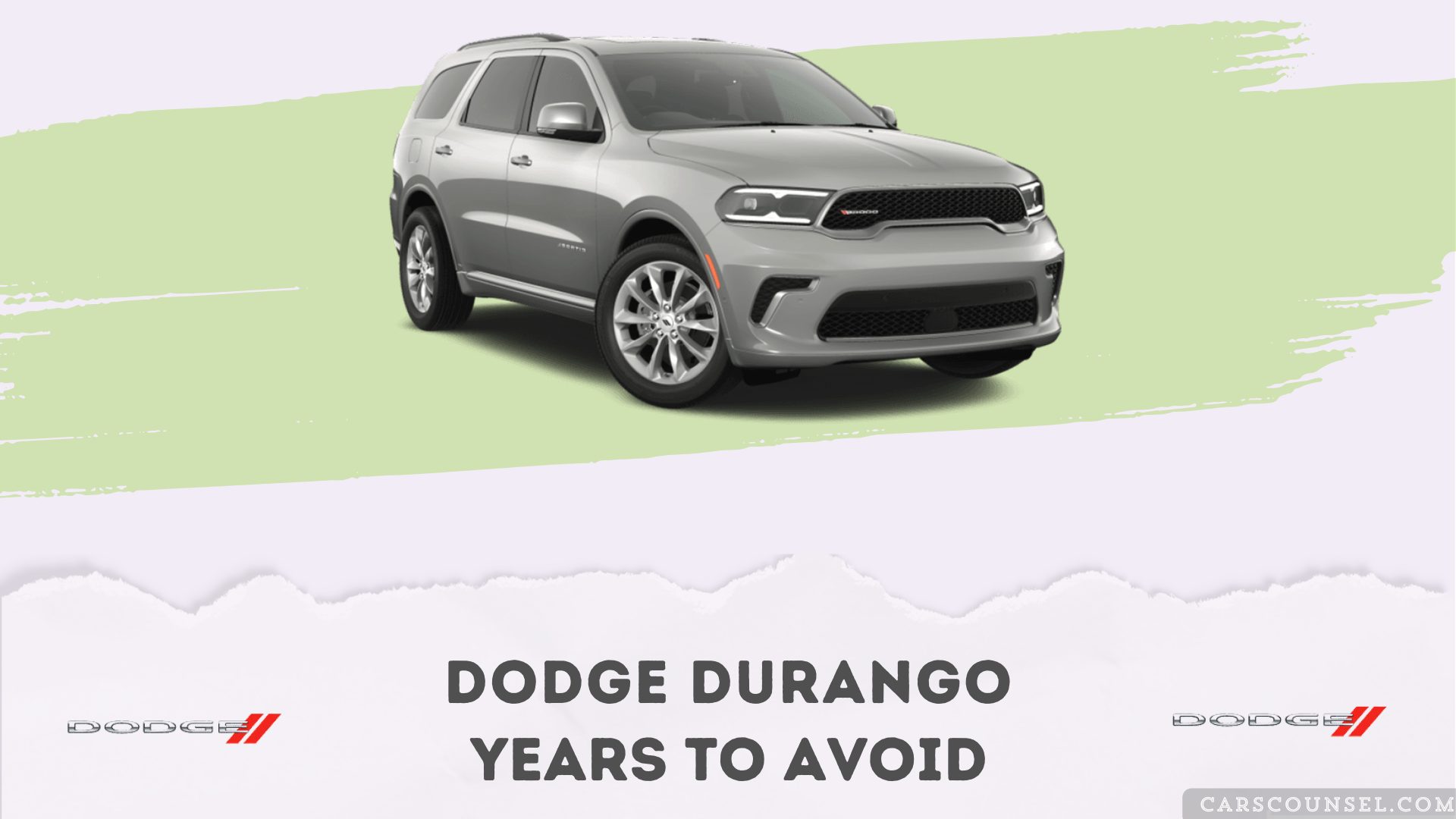
The best Dodge Durango model years are 2018 through 2020, offering sorted electronics and a mature platform. Buyers should strictly avoid the 2011 through 2014 model years due to severe electrical gremlins and early-production engine casting flaws.
These rankings are comparative. No used SUV is flawless, and maintenance history matters more than mileage. A well-serviced vehicle from a cautious year often outlasts a neglected example from a recommended year.
Meaningful differences exist between the V6 and V8 configurations. The 3.6-liter V6 has specific cooling system vulnerabilities, while the 5.7-liter V8 requires exhaust manifold inspections.
Quick Navigation
Best and Worst Dodge Durango Years at a Glance
| Model Year | Verdict | Main Reason | Buyer Guidance |
|---|---|---|---|
| 2021-2025 | Too New to Judge | Updated platform and tech | Wait for long-term reliability data |
| 2018-2020 | Best Older Choice | Facelift, mature electronics | Inspect for standard wear and HEMI exhaust bolts |
| 2015-2017 | Good With Inspection | ZF 8-speed intro, better interior | Check TIPM replacements and taillight housings |
| 2011-2014 | Avoid | TIPM failures, V6 cylinder head flaws | High risk of expensive electrical and engine repairs |
Key Takeaways
- 2018 through 2020 models provide the most reliable ownership experience for older used examples.
- Avoid 2011 through 2014 models due to widespread Totally Integrated Power Module (TIPM) failures.
- The 3.6-liter V6 in early models suffers from cylinder head casting flaws causing overheating.
- The 5.7-liter HEMI V8 frequently breaks exhaust manifold bolts across most generations.
- Recent models from 2021 onward lack sufficient long-term ownership data for definitive verdicts.
- Always verify open recalls and service history using the vehicle identification number.
How We Evaluated the Dodge Durango Model Years
Our analysis considers official recalls, manufacturer service campaigns, and consumer complaint patterns for Dodge vehicles. We evaluate powertrain differences and repair complexity.
As detailed in our broader years to avoid coverage, complaints are not confirmed failure rates. Recent models have limited long-term exposure, and our best choices represent comparatively stronger options.
Best Dodge Durango Years
2018 to 2020
These years represent the Best Older Choice. The platform received a mid-cycle refresh, improving infotainment and interior materials. Most early-production electrical gremlins were resolved by this point.
Buyers should still inspect the 5.7-liter V8 for broken exhaust manifold bolts. Routine maintenance records are essential to verify transmission fluid service and transfer case health.
Best Dodge Durango Year by Buyer Type
Best Overall Value: 2019
The 2019 model year offers a strong balance of modern technology and proven reliability. It avoids the depreciation of newer models while providing updated safety features and a refined cabin.
Best Family Alternative: 2020
The 2020 model year includes standard third-row seating and improved driver assistance features. It remains a mature, dependable choice for families needing towing capability without first-year redesign risks.
Years to Approach Carefully
2015 to 2017
These years earn a Good With Inspection verdict. Dodge introduced the ZF 8-speed automatic transmission, which is generally robust but requires specific fluid maintenance.
The interior received a major upgrade, but some models still experience failing LED racetrack taillights. Verify that the TIPM was replaced under recall if equipped with the earlier fuel pump relay setup.
Worst Dodge Durango Years
2011 to 2014
These first-generation redesign years carry an Avoid verdict. The 3.6-liter Pentastar V6 suffers from a cylinder head casting flaw that leads to misfires and overheating.
Electrical reliability is poor due to failing Totally Integrated Power Modules. This component controls the fuel pump and numerous accessories, leaving owners stranded with no-start conditions.
Additionally, early Uconnect systems are prone to freezing and require expensive replacements. The high frequency of severe electrical and engine repairs makes these years a poor investment.
Dodge Durango Reliability by Generation
Third Generation (2011 to Present)
The modern Durango shares related architecture with the Jeep Grand Cherokee. This unibody platform provides car-like handling and strong towing capacity.
Early third-generation models struggled with electrical integration and engine casting flaws. Later models refined the powertrain and introduced the reliable ZF 8-speed transmission, significantly improving long-term durability.
Common Dodge Durango Problems
Electrical and TIPM Failures
Models from 2011 to 2014 frequently experience Totally Integrated Power Module failures. Symptoms include random stalling, a non-functioning fuel pump, and erratic accessory behavior.
Replacing the TIPM is expensive and often requires dealership programming. Later models relocated the fuel pump relay to an external fuse box to mitigate this specific failure point.
HEMI Exhaust Manifold Bolts
The 5.7-liter V8 is notorious for breaking exhaust manifold studs. This issue affects multiple model years and causes a loud ticking noise during cold starts.
Ignored broken bolts can lead to exhaust leaks and damaged cylinder heads. Repair requires drilling out broken studs, which is labor-intensive and costly.
LED Taillight Housing Separation
Owners of 2014 through 2020 models report the racetrack LED taillight housings separating. Moisture intrusion follows, leading to complete assembly failure.
This is primarily a cosmetic and weather-sealing issue, but replacement assemblies are expensive. Inspect the rear light seams for visible gaps or condensation before purchase.
Repair-Cost Overview
| Problem | Commonly Affected Years | Approximate Repair Range | Important Notes |
|---|---|---|---|
| TIPM Replacement | 2011-2014 | $1,000 – $1,400 | Requires programming; external relay kits offer a cheaper bypass. |
| HEMI Exhaust Bolts | 2011-Present | $600 – $1,000 | Cost increases if studs break deep inside the cylinder head. |
| V6 Cylinder Head | 2011-2013 | $1,500 – $2,500 | Often requires replacing the entire cylinder head assembly. |
Repair costs vary significantly by region, labor rate, and parts choice. Dealership repairs typically cost more than independent mechanics. Always get a detailed quote before authorizing major engine or electrical work.
What to Check Before Buying a Used Dodge Durango
- Verify the VIN for open recalls, especially regarding the fuel pump relay and Uconnect security updates.
- Listen for a loud ticking noise on cold startup, indicating broken HEMI exhaust manifold bolts.
- Test all power accessories, windows, and locks to rule out intermittent TIPM or wiring issues.
- Inspect the rear LED taillights for moisture, condensation, or separating housing seams.
- Check the coolant condition and monitor the temperature gauge during a long test drive.
- Review service records for transmission fluid changes and transfer case maintenance.
- Arrange an independent pre-purchase inspection to scan for hidden diagnostic trouble codes.
Related Buying Guides
- Jeep Grand Cherokee years to avoid: The Durango shares related architecture with the Grand Cherokee, making its reliability history highly relevant for cross-shoppers.
- Dodge Charger years to avoid: If you prefer a sedan with the same HEMI V8 options, check which Charger model years suffer from similar transmission and electrical faults.
- Ford Explorer years to avoid: The Explorer is a direct three-row competitor. Learn which generations struggle with carbon buildup and water pump failures.
Frequently Asked Questions
What is the most reliable Dodge Durango year?
The 2019 model year is comparatively the most reliable older option. It features a mature platform, updated infotainment, and avoids the severe electrical flaws of early third-generation models.
Do Dodge Durangos have transmission problems?
Early models with the Mercedes-sourced 5-speed and Chrysler 6-speed transmissions had some shifting complaints. The ZF 8-speed introduced in 2015 is generally robust when properly maintained.
Why are 2011 to 2014 Durangos considered unreliable?
These years suffer from widespread Totally Integrated Power Module failures and 3.6-liter V6 cylinder head casting flaws. These issues lead to expensive, stranded-owner repairs.
Is the Dodge Durango good for towing?
Yes, properly equipped V8 models can tow up to 8,900 pounds. Ensure the vehicle has the factory towing package and an auxiliary transmission cooler for heavy loads.
Do all Durangos have rusting hood issues?
Many 2011 and newer models experience paint bubbling on the aluminum hood due to improper factory primer. This is primarily cosmetic but can be expensive to repaint.
Should I buy a V6 or V8 Durango?
The V6 offers better fuel economy but is prone to early cylinder head issues. The V8 provides superior towing power but requires exhaust manifold bolt inspections.
Which Dodge Durango Year Should You Buy?
Target the 2018 through 2020 model years for the best balance of modern features and proven reliability. These models avoid the severe electrical and engine casting flaws of earlier years.
Avoid the 2011 through 2014 models entirely. If you must consider a 2015 to 2017 model, verify that the TIPM recall was addressed and inspect the taillights.
Always check the VIN for open recalls and hire an independent mechanic for a pre-purchase inspection. Proper maintenance is the ultimate deciding factor for any used SUV.

