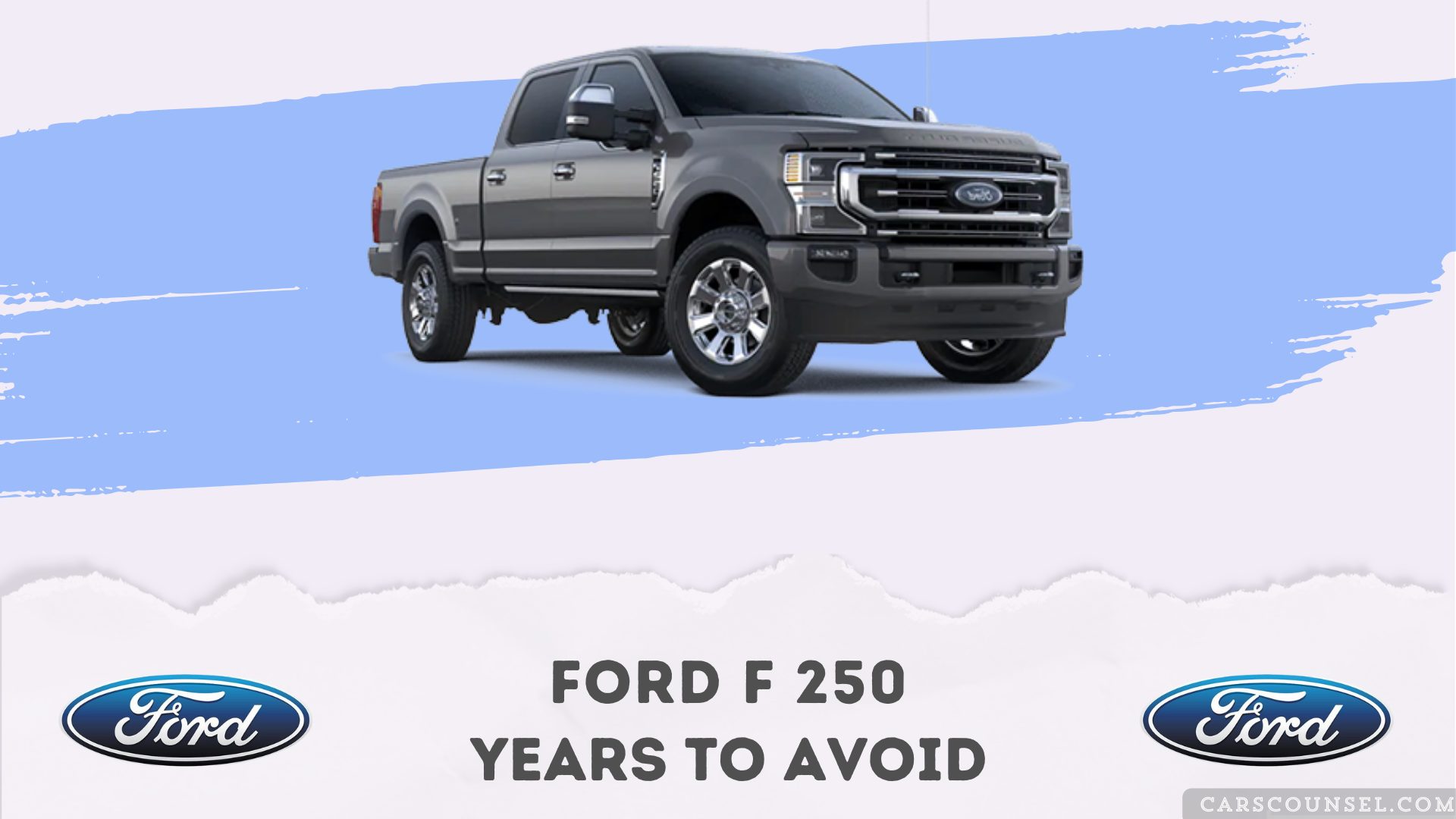
The best Ford F-250 years are 2015 and 2016 for diesel buyers, and 1999 through 2003 for the 7.3L Power Stroke. The worst years to avoid are 2004 through 2010, which suffer from catastrophic 6.0L and 6.4L diesel engine failures.
Rankings are comparative, and no used heavy-duty truck is flawless. Maintenance history, previous ownership, and overall condition matter more than mileage alone.
Reliability varies drastically by engine. Gasoline models differ from diesel models, and early third-generation trucks have different risk profiles than later refreshed versions.
Quick Navigation
Best and Worst Ford F-250 Years at a Glance
| Model Year | Verdict | Main Reason | Buyer Guidance |
|---|---|---|---|
| 1999-2003 (7.3L Diesel) | Best Older Choice | Proven diesel durability | Inspect for rust and age |
| 1999-2003 (Gas) | Mixed | Spark plug blowouts | Verify cylinder head repairs |
| 2004-2007 (6.0L Diesel) | Avoid | Major engine failures | Requires extensive modifications |
| 2008-2010 (6.4L Diesel) | Avoid | Emissions and engine issues | High repair costs |
| 2011-2014 (6.7L Diesel) | Mixed | Early production bugs | Review service records |
| 2011-2016 (Gas) | Good Choice | Reliable 6.2L V8 engine | Inspect suspension components |
| 2015-2016 (6.7L Diesel) | Best Choice | Refined diesel powertrain | Top pick for heavy towing |
| 2017-2019 | Approach Carefully | Death wobble complaints | Test highway steering stability |
| 2020-2022 (Gas) | Good Choice | Robust 7.3L V8 engine | Check for spark plug recalls |
| 2020-2022 (6.7L Diesel) | Mixed | Injection pump failure risk | Confirm pump replacement |
| 2023-Present | Too New to Judge | Limited ownership history | Monitor long-term reliability |
Key Takeaways
- The 2015 and 2016 models offer the most refined 6.7L Power Stroke diesel experience.
- Avoid 2004 through 2010 diesel models due to severe 6.0L and 6.4L engine flaws.
- Gasoline models are generally more reliable but lack the towing capacity of diesels.
- The 2017 through 2019 model years are plagued by steering death wobble complaints.
- Recent 2020 through 2022 diesel trucks carry risks from the CP4.2 injection pump.
- Always check for open recalls and verify the VIN before purchasing.
- An independent pre-purchase inspection is critical for any used Super Duty.
How We Evaluated the Ford F-250 Model Years
Our analysis considers official recalls, NHTSA investigations, and manufacturer service campaigns. We review consumer complaints, powertrain differences, and generation changes. We also weigh repair complexity and long-term ownership exposure.
Complaints are not failure rates, and a recall does not automatically make a year unreliable. Recent models have less ownership history. Best means comparatively stronger, not flawless.
Best Ford F-250 Years
2015-2016 (Best Choice)
The 2015 and 2016 model years represent the peak of the third generation. Ford resolved many early 6.7L Power Stroke turbocharger and fuel system issues.
These years offer excellent towing capability with comparatively lower repair risks. The 6.2L gasoline V8 is also a solid, reliable option for lighter duties.
Buyers should still inspect suspension components and verify maintenance records.
1999-2003 7.3L Power Stroke (Best Older Choice)
The 7.3L Power Stroke remains a favorite among enthusiasts and heavy-duty buyers. Its cast-iron block and forged internals provide exceptional longevity.
However, these trucks are now over two decades old. Rust, aging wiring, and worn suspension components are the primary concerns.
Find a well-maintained example with documented service history for the best experience.
Best Year by Buyer Type
- Best Overall: 2015-2016 (6.7L Diesel)
- Best Older Choice: 1999-2003 (7.3L Diesel)
- Best Gas Alternative: 2011-2016 (6.2L Gas)
- Best Modern Gas: 2020-2022 (7.3L Gas)
Years to Approach Carefully
2017-2019 (Approach Carefully)
The fourth-generation refresh introduced severe steering and suspension complaints. Many owners report the dreaded death wobble at highway speeds.
Ford issued technical service bulletins and steering damper kits to address the issue. Buyers must test drive these trucks over uneven pavement.
Verify if the steering damper and updated suspension components have been installed.
2020-2022 6.7L Diesel (Mixed)
These recent diesel models feature the updated 6.7L engine but use the Bosch CP4.2 high-pressure fuel pump.
If this pump fails, it sends metal shavings into the fuel injectors and engine, causing catastrophic damage.
Only purchase if the previous owner installed a disaster prevention kit or replaced the pump.
Worst Ford F-250 Years
2004-2007 6.0L Power Stroke (Avoid)
The 6.0L Power Stroke is notorious for head gasket failures, EGR cooler leaks, and oil cooler blockages.
Repairing these issues requires extensive engine teardowns, leading to massive repair bills.
Unless the truck has been professionally bulletproofed with upgraded head studs, avoid these years entirely.
2008-2010 6.4L Power Stroke (Avoid)
Ford replaced the 6.0L with the 6.4L, which introduced cracked pistons, failing fuel pumps, and severe emissions system clogging.
The complex twin-turbo setup and regeneration cycles cause excessive heat and fluid dilution.
These models are generally considered financial liabilities for used buyers today.
Ford F-250 Reliability by Generation
First Generation (1999-2007)
This era introduced the Super Duty nameplate. The 7.3L diesel is legendary, while the 6.0L is a major liability.
Gasoline models with the Triton engines suffer from spark plug blowouts. Read our guide on Ford V10 years to avoid for more on these engines.
Second Generation (2008-2010)
This short generation featured the troubled 6.4L Power Stroke. The exterior received a major update, but powertrain reliability plummeted.
Gasoline models retained the Triton engines, which still require careful spark plug inspection.
Third Generation (2011-2016)
Ford introduced the 6.2L Boss gasoline V8 and the new 6.7L Power Stroke diesel.
The 6.7L was designed in-house and proved much more reliable than its predecessors, especially after 2015.
Fourth Generation (2017-2022)
This generation brought aluminum bodies and the 7.3L Godzilla gasoline V8.
While the gas engines are robust, the diesel models face steering wobble and fuel pump controversies.
Fifth Generation (2023-Present)
The current generation features revised styling and an updated high-output 6.7L diesel option.
Long-term reliability data is still accumulating for these newest trucks.
Common Ford F-250 Problems
Engine Problems
The 6.0L and 6.4L diesel engines suffer from catastrophic internal and emissions failures.
Gasoline Triton engines are prone to spark plugs ejecting from the cylinder heads.
The newer 7.3L Godzilla V8 has seen some reports of broken spark plug electrodes.
Steering and Suspension Problems
The death wobble affects many 2017 through 2019 models.
This violent shaking occurs when hitting bumps at highway speeds, requiring steering damper upgrades.
Front suspension components like track bars and tie rods wear prematurely under heavy loads.
Fuel System Problems
The 2020 through 2022 diesel models use a high-pressure fuel pump that can fail catastrophically.
Earlier 6.4L models struggle with clogged diesel particulate filters and EGR coolers.
Repair-Cost Overview
| Problem | Commonly Affected Years | Approximate Repair Range | Important Notes |
|---|---|---|---|
| 6.0L Bulletproofing | 2004-2007 | $4,000 – $8,000 | Required for long-term diesel reliability |
| Spark Plug Extraction | 1999-2003 (Gas) | $500 – $1,500 | Cost increases if cylinder heads are damaged |
| Steering Damper Kit | 2017-2019 | $400 – $800 | Often needed to mitigate death wobble |
| CP4.2 Pump Replacement | 2020-2022 (Diesel) | $1,500 – $2,500 | Prevents catastrophic engine damage |
Costs vary by region, labor rate, parts choice, vehicle configuration, and damage severity. Dealer and independent shop rates also differ significantly.
What to Check Before Buying a Used Ford F-250
- Verify the VIN for open safety recalls and service campaigns.
- Review maintenance records, especially for diesel oil and fuel filter changes.
- Inspect the undercarriage for severe rust or structural damage.
- Test drive at highway speeds to check for steering wobble or vibrations.
- Scan the OBD-II port for pending diagnostic trouble codes.
- Check for fluid leaks around the engine and transmission bell housing.
- Verify if a CP4.2 disaster prevention kit is installed on newer diesels.
- Arrange an independent pre-purchase inspection by a diesel specialist.
Related Buying Guides
- Ford F-150 years to avoid: A smaller alternative for buyers who do not need maximum heavy-duty towing capacity.
- Chevy Silverado years to avoid: A direct competitor for buyers cross-shopping heavy-duty trucks from other manufacturers.
Frequently Asked Questions
What is the most reliable Ford F-250 diesel engine?
The 7.3L Power Stroke (1999-2003) and the refined 6.7L Power Stroke (2015-2016) are the most reliable diesel options. The 6.0L and 6.4L should be avoided.
Why do 2017-2019 F-250s have steering problems?
These models suffer from death wobble, a violent shaking caused by suspension and steering geometry flaws. Ford released updated steering dampers to help mitigate the issue.
Are gasoline F-250s more reliable than diesels?
Gasoline models generally have fewer catastrophic engine failures and lower repair costs. However, they lack the torque and towing capability of the Power Stroke diesels.
What is the CP4.2 fuel pump issue?
The 2020-2022 6.7L diesels use a pump that can fail and send metal shavings into the engine. Buyers should verify if a disaster prevention kit is installed.
Do all older F-250s have spark plug issues?
The 5.4L and 6.8L Triton engines from 1999-2003 are prone to spark plug blowouts. The 7.3L diesel and newer engines do not share this specific design flaw.
How can I check if a used F-250 is safe to buy?
Always run the VIN for open recalls, review service records, and hire an independent mechanic for a pre-purchase inspection to check for hidden damage or deferred maintenance.
Which Ford F-250 Year Should You Buy?
Target the 2015 and 2016 models for the best balance of modern features and reliable 6.7L diesel performance. Enthusiasts should hunt for well-preserved 1999-2003 7.3L examples.
Avoid the 2004 through 2010 diesel trucks entirely due to severe engine and emissions flaws. Exercise caution with 2017-2019 models because of steering wobble complaints.
Always verify the VIN, confirm maintenance history, and secure an independent inspection before finalizing your purchase.

