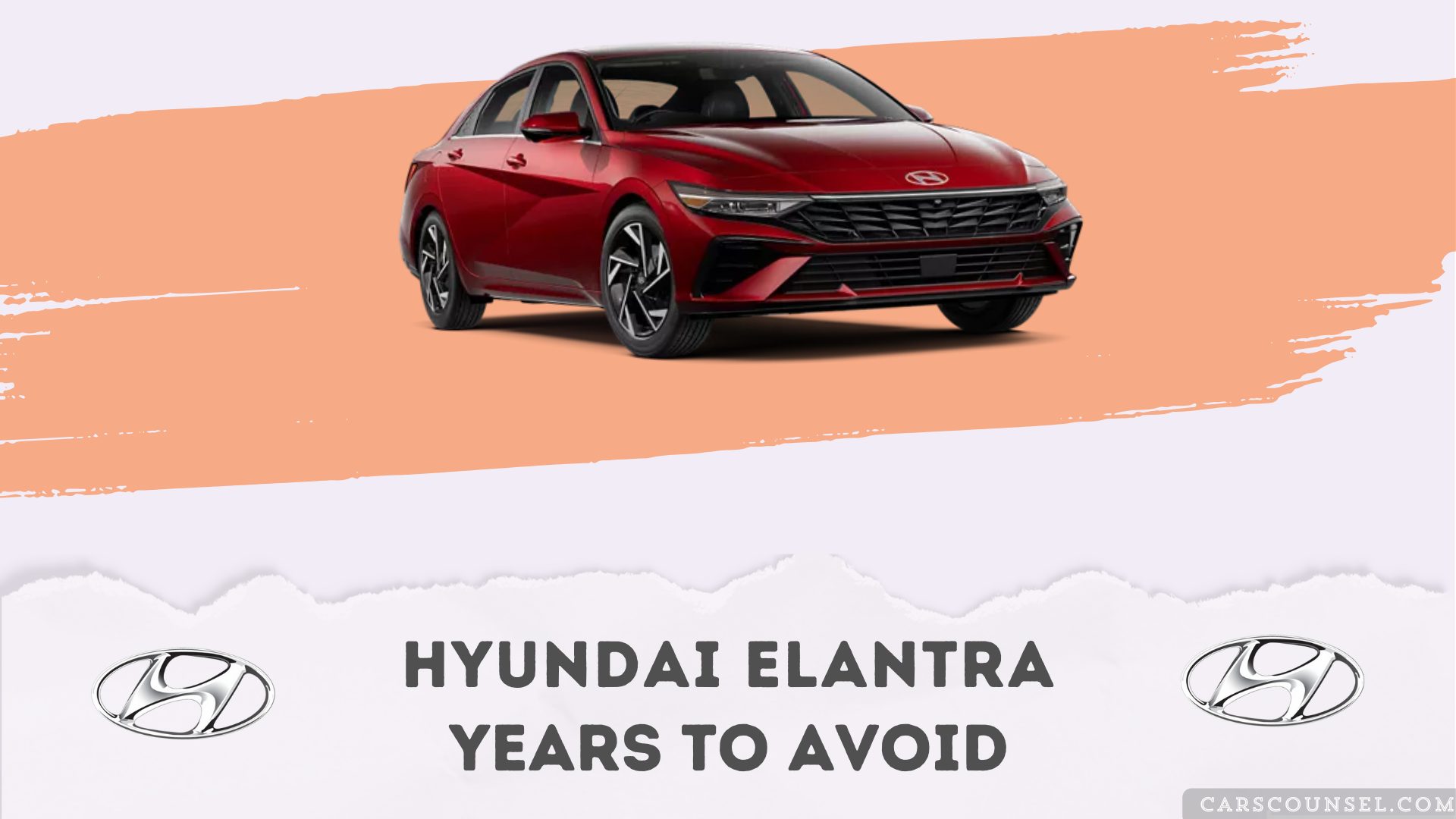
The best Hyundai Elantra years are 2021 through 2024 and 2007 through 2010. Buyers should strictly avoid 2011 through 2016 models due to severe 1.8L Nu engine ticking, excessive oil consumption, and premature engine failure.
Rankings are comparative, meaning no used compact sedan is entirely flawless. Long-term reliability depends heavily on strict maintenance records, recall completion, and overall vehicle condition.
Significant differences exist between generations. The transition from the robust Beta engines to the problematic early Nu engines heavily impacts long-term ownership costs and mechanical reliability.
Quick Navigation
Best and Worst Hyundai Elantra Years at a Glance
| Model Year Range | Verdict | Main Reason | Buyer Guidance |
|---|---|---|---|
| 2021–2024 | Best Late-Generation Choice | Modern platform, strong safety | Verify recall status. |
| 2017–2020 | Good Choice | Improved 2.0L engine, good tech | Listen for engine ticking. |
| 2011–2016 | Avoid | 1.8L Nu engine failure risk | Look at newer or older models. |
| 2007–2010 | Best Older Choice | Robust Beta II engine | Check steering and ABS recalls. |
| 2001–2006 | Approach Carefully | Age and electrical gremlins | Inspect for rust and timing belt. |
Key Takeaways
- Strongest Choices: The 2021–2024 models offer the newest safety tech, while 2007–2010 provide solid older reliability.
- Years to Avoid: The 2011–2016 models suffer from widespread 1.8L Nu engine ticking and excessive oil consumption.
- Powertrain Distinction: The Beta II engine (2007-2010) is highly robust, while the early Nu engines (2011-2016) are prone to internal failure.
- Major Verified Concern: ABS module defects have prompted multiple fire-risk recalls across several generations.
- Recent-Year Limitation: The 2021+ redesign is promising but lacks long-term ownership data.
- Inspection Reminder: Always verify the VIN for open recalls and arrange an independent pre-purchase inspection.
How We Evaluated the Hyundai Elantra Model Years
Our analysis examines official safety recalls, manufacturer service campaigns, and long-term ownership patterns. We weigh the severity of mechanical failures against repair complexity. For broader context, see our years to avoid hub.
Consumer complaints indicate owner frustration but do not automatically confirm a widespread mechanical defect. Similarly, a safety recall does not inherently make a specific model year unreliable if properly repaired.
Because recent redesigns possess limited ownership history, our top recommendations reflect comparative strength and proven maturity rather than absolute perfection.
Best Hyundai Elantra Years
2021–2024 (Best Late-Generation Choice)
These seventh-generation models introduced a completely new platform and updated powertrains. The 2.0L MPI and 1.6L Turbo engines have shown excellent early reliability compared to the previous decade.
Buyers gain modern safety features, improved fuel economy, and a much more refined interior. However, long-term evidence remains limited, so verifying open recalls and securing an extended warranty is highly recommended.
2007–2010 (Best Older Choice)
These fourth-generation models avoided the problematic Nu engines entirely. The 2.0L Beta II powertrain is generally robust and capable of high mileage, provided it received strict maintenance and timely timing belt services.
Buyers must carefully inspect for structural rust and verify that all steering and ABS recalls were completed. Finding a well-maintained, low-mileage example represents a solid budget-friendly option for daily driving.
Best Year by Buyer Type
Best Overall Value: 2019 Hyundai Elantra
The 2019 model year sits perfectly in the reliability curve. It features the sorted 2.0L Nu engine, excellent safety ratings, and mature infotainment software without steep new-car depreciation.
Best Family Alternative: Hyundai Sonata
Buyers needing maximum rear passenger space, a larger trunk, and a smoother highway ride should consider the Hyundai Sonata. It shares the brand’s modern architecture while offering vastly superior comfort.
Years to Approach Carefully
2017–2020 (Good Choice)
These sixth-generation models feature updated styling and improved interior materials. The 2.0L Nu engine is an improvement over the 1.8L, but some owners still report mild ticking and oil consumption.
Test driving is essential to ensure the engine sounds normal and the transmission shifts smoothly. Buyers should strictly verify that all ABS module and engine software update recalls were completed by a dealer.
2001–2006 (Approach Carefully)
These third-generation models are now quite old. While the Beta engine is tough, age-related electrical gremlins, failing sensors, and structural rust are common issues that require careful evaluation.
A thorough independent inspection is mandatory to check the timing belt service history, suspension components, and overall structural condition before purchasing.
Worst Hyundai Elantra Years
2011–2016 (Avoid)
This entire generation is heavily affected by the notorious 1.8L Nu engine defect. Manufacturing debris and piston ring issues can cause severe oil consumption, loud engine ticking, and complete engine seizure.
Combined with widespread stalling complaints and transmission hesitation, these years present massive financial risks. The cost of a replacement engine often exceeds the vehicle’s value, making them a poor investment.
Hyundai Elantra Reliability by Generation
Third and Fourth Generations (2001–2010)
When evaluating the Hyundai brand’s compact efforts, these generations are defined by their simple, robust Beta engines. The 2007–2010 models are the most sorted and reliable of this era.
Fifth Generation (2011–2016)
This generation introduced the problematic 1.8L Nu engine to save weight and improve fuel economy. Unfortunately, severe mechanical vulnerabilities heavily impacted long-term reliability and resulted in massive class-action lawsuits.
Sixth and Seventh Generations (2017–Present)
The sixth generation brought a larger 2.0L Nu engine that improved durability. The current seventh generation introduced a massive redesign with highly improved powertrains and excellent early ownership data.
Common Hyundai Elantra Problems
Engine Problems (Nu Engine Ticking)
Affecting primarily 2011 through 2016 models with the 1.8L engine. Manufacturing debris and faulty piston rings can block oil passages, leading to severe ticking, excessive oil consumption, and complete engine failure.
Airbag and Safety-System Problems (ABS Fires)
Affecting multiple generations, including 2007 through 2011 and some later models. Internal shorts in the Anti-Lock Brake System module can cause electrical fires even when the vehicle is parked and turned off.
Steering and Suspension Problems (EPS Failures)
Found on various models, particularly 2007 through 2010 and some 2017 models. The electric power steering system can fail or lose assist, causing the steering wheel to become extremely heavy and difficult to turn.
What to Check Before Buying a Used Hyundai Elantra
- Verify Recall Status: Enter the VIN on the NHTSA website to confirm all ABS and engine recalls are closed.
- Check Engine Service History: Ensure the engine knock sensor software update was performed and oil changes were strictly documented.
- Listen for Engine Ticking: Start the engine cold and listen for loud, rhythmic ticking noises that indicate internal rod bearing wear.
- Test the Steering: Turn the wheel lock-to-lock to check for electric power steering hesitation, binding, or warning lights.
- Arrange Inspection: Hire an independent mechanic to evaluate engine compression, suspension, and overall structural condition.
Related Buying Guides
- Hyundai Tucson: A compact SUV alternative for buyers who need higher ground clearance, more cargo space, and available all-wheel drive for inclement weather.
- Hyundai Veloster: A unique hatchback alternative for buyers who prioritize sporty styling, agile handling, and a more engaging driving experience over traditional sedan practicality.
Frequently Asked Questions
What are the worst years for the Hyundai Elantra?
The 2011 through 2016 model years are the worst. They suffer from severe 1.8L Nu engine ticking, excessive oil consumption, and premature engine failure.
What is the most reliable Hyundai Elantra year?
The 2022 model year is widely considered the most reliable modern choice. It features the sorted Smartstream powertrains, excellent safety ratings, and mature infotainment software.
Does the Hyundai Elantra have transmission problems?
The 2011 through 2016 models have some 6-speed automatic transmission hesitation and shifting issues. The newer IVT and traditional automatics on later models are generally much more robust.
Why is my Hyundai Elantra engine ticking?
The Nu engines are prone to rod bearing failure and piston ring issues due to manufacturing debris and oil starvation. This causes loud ticking and requires complete engine replacement.
Are Hyundai Elantras expensive to fix?
Routine maintenance is generally affordable, but Nu engine replacements and severe electrical gremlins on older models can result in massive, unexpected out-of-pocket expenses for owners.
How long do Hyundai Elantras last?
Well-maintained examples with the Beta engine can reach high mileage. Longevity depends heavily on maintenance, condition, rust, use, and repair history, particularly regarding strict engine service.
Which Hyundai Elantra Year Should You Buy?
For the best balance of modern safety and proven reliability, target the 2021 through 2024 models. These examples feature the highly improved Smartstream engines and excellent safety technology.
Alternatively, the 2007 through 2010 models provide excellent budget-friendly value with the robust Beta II engine. Strictly avoid the 2011 through 2016 model years due to severe engine failure risks.
Finally, arrange an independent pre-purchase inspection to assess engine health, transmission operation, and recall completion. Proper maintenance remains the most critical factor for long-term compact sedan longevity.

