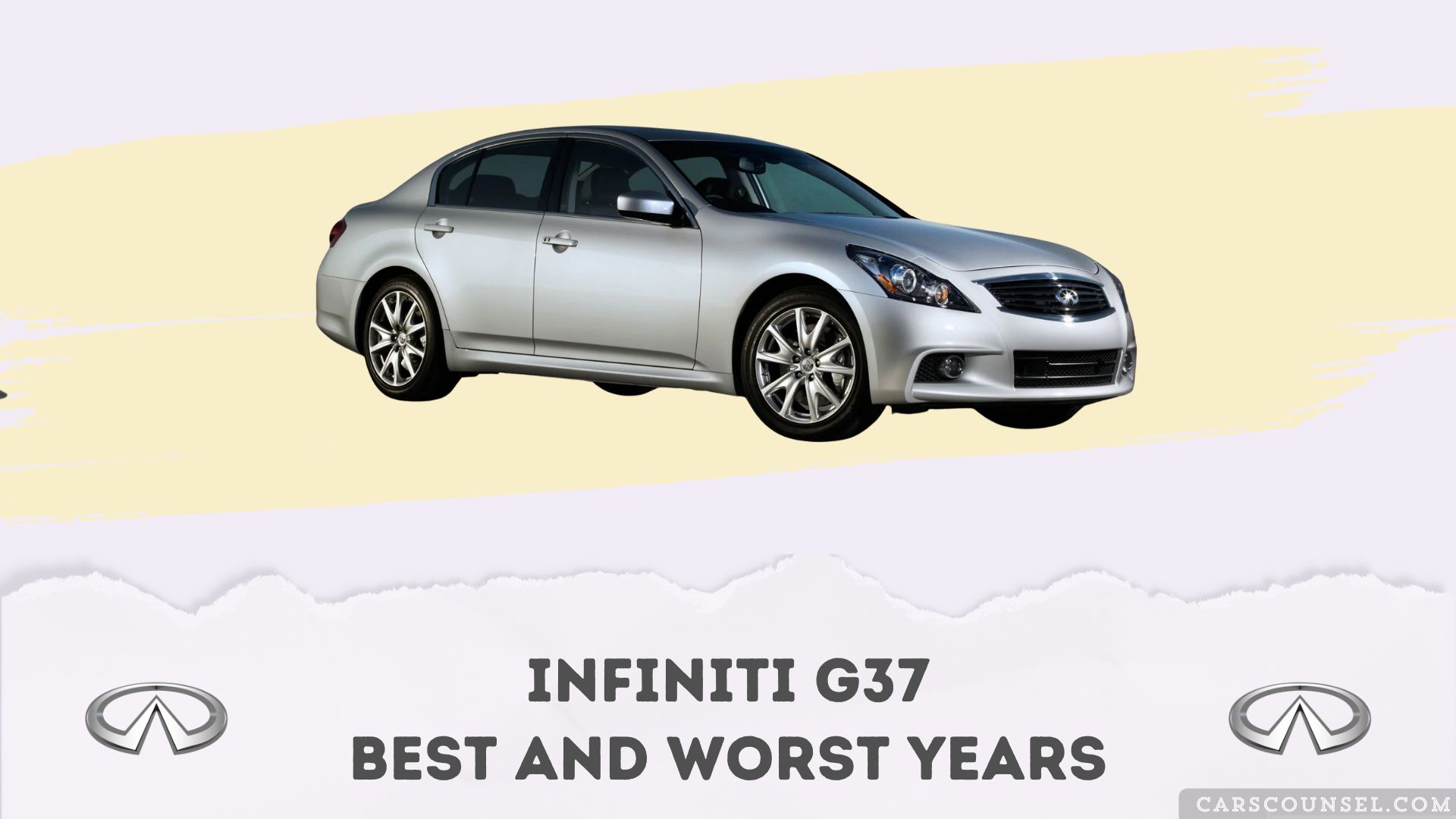
The best Infiniti G37 years are 2012 and 2013, offering a mature platform with fewer complaints. Buyers should avoid the 2008 and 2009 models due to high rates of steering column lock failures and early-production teething issues.
These rankings are comparative, and no used vehicle is flawless. A thorough pre-purchase inspection and strict adherence to maintenance schedules remain essential for long-term reliability.
Meaningful differences exist between body styles and trims. The AWD sedan and manual-transmission coupes require specific inspection points compared to standard automatic rear-wheel-drive models.
Quick Navigation
Best and Worst Infiniti G37 Years at a Glance
| Model Year Range | Verdict | Main Reason | Buyer Guidance |
|---|---|---|---|
| 2012-2013 | Best Choice | Mature platform with resolved early-production issues | Prioritize examples with complete service records |
| 2010-2011 | Good With Inspection | Updated styling and tech, but lingering component risks | Verify steering lock replacement and oil gallery gasket condition |
| 2008-2009 | Avoid | High rate of steering lock failures and early VQ37 engine concerns | Look for 2012 or newer models instead |
Key Takeaways
- The 2012 and 2013 model years are the strongest choices for a used G37.
- Avoid 2008 and 2009 models due to Electronic Steering Column Lock (ESCL) failures.
- The 3.7L V6 engine requires strict oil change intervals to prevent oil gallery gasket failure.
- Dashboard melting and sunroof drain clogs are common issues across most years.
- Recent model years do not apply, as the G37 was replaced by the Q50 and Q60 in 2014.
- Always verify open recalls and VIN-specific service campaigns before purchasing.
How We Evaluated the Infiniti G37 Model Years
Our analysis considers official recalls, manufacturer service campaigns, consumer complaints, and powertrain differences across the G37 production run.
Complaints are not failure rates, nor are they confirmed defects. A recall does not automatically make a year unreliable, and recent years have less ownership history. Best means comparatively stronger, not flawless.
Best Infiniti G37 Years
2012-2013: Best Choice
The 2012 and 2013 model years represent the most mature versions of the G37. Infiniti resolved many early-production electrical and engine assembly concerns by this point.
These years benefit from updated infotainment systems and improved interior materials. While the core 3.7L V6 remains the same, manufacturing consistency improved significantly.
Buyers should still verify that the correct oil filter was used during services to protect the oil gallery gasket. Overall, these are the most dependable options available.
Best Year by Buyer Type
Best Overall: 2013
The final production year offers the most refined experience, featuring all mid-cycle updates and the lowest concentration of major component failures.
Best Enthusiast Choice: 2012-2013 Sport 6MT
The six-speed manual coupe or sedan provides the purest driving experience. Ensure the clutch and differential have been properly maintained.
Years to Approach Carefully
2010-2011: Good With Inspection
The 2010 and 2011 models received exterior and interior refreshes, including updated navigation systems and revised bumpers.
However, they still carry some risk regarding the Electronic Steering Column Lock. Some vehicles from these years may also exhibit early signs of dashboard material degradation.
These years can be good purchases if the steering lock module has already been replaced or bypassed, and if a pre-purchase inspection confirms engine health.
Worst Infiniti G37 Years
2008-2009: Avoid
The inaugural 2008 and 2009 model years suffer from the highest concentration of Electronic Steering Column Lock failures. This defect can strand drivers by preventing the vehicle from starting.
These early years also show higher rates of water pump impeller cracking and interior trim issues. The VQ37VHR engine was still in its initial production phase.
Given the availability of later, more reliable models, buyers are better served by skipping these early years entirely.
Infiniti G37 Reliability by Generation
The G37 exists as a single generation spanning the 2008 through 2013 model years. It replaced the G35 and shares its underlying architecture with the Nissan 370Z.
In 2014, Infiniti changed its naming convention. The sedan was replaced by the Q50, while the coupe and convertible became the Q60.
Because it is a single generation, reliability is dictated more by mid-cycle manufacturing improvements than by complete redesigns. Later years consistently outperform earlier ones.
Common Infiniti G37 Problems
Electronic Steering Column Lock (ESCL) Failure
The ESCL module can fail, preventing the push-button start from engaging. This issue is most prevalent in 2008 through 2010 models but can occur later.
Many owners opt for an aftermarket bypass module or an official replacement to prevent being stranded.
Oil Gallery Gasket Failure
The 3.7L V6 engine uses a specific paper gasket for the oil gallery. If an incorrect oil filter is installed, the gasket can blow out under pressure.
This leads to rapid oil starvation and catastrophic engine failure. Strict adherence to manufacturer oil specifications is critical.
Dashboard Melting and Cracking
Exposure to intense heat and sunlight can cause the dashboard material to melt, become sticky, or crack. This is primarily a cosmetic issue but can cause severe glare.
Infiniti previously offered a warranty extension program for affected vehicles in warmer climates.
Sunroof Drain Clogs
The sunroof drain tubes can become clogged with debris. When this happens, water backs up and leaks into the cabin or trunk.
This can damage the Bose amplifier or other electronic modules located in the rear cargo area.
What to Check Before Buying a Used Infiniti G37
- Verify the VIN for open recalls and completed service campaigns.
- Confirm the Electronic Steering Column Lock has been replaced or bypassed.
- Review service records to ensure only OEM-specified oil filters were used.
- Inspect the dashboard for melting, stickiness, or severe cracking.
- Test the sunroof drains by pouring a small amount of water into the channels.
- Check the trunk and cargo area for signs of water intrusion or amplifier corrosion.
- Listen for abnormal valvetrain rattle during a cold start.
- Arrange an independent pre-purchase inspection to check for oil leaks and suspension wear.
Related Buying Guides
- Infiniti Q50 best and worst years: The direct sedan successor to the G37, featuring updated technology and new powertrain options.
- Infiniti QX50 best and worst years: A practical crossover alternative for buyers who want Infiniti luxury but need more cargo space than a coupe.
- Infiniti QX56 best and worst years: A full-size SUV alternative for buyers who require maximum passenger capacity and heavy towing capability.
- Infiniti QX80 best and worst years: The modern successor to the QX56, offering premium luxury and commanding road presence for large families.
Frequently Asked Questions
What is the most reliable Infiniti G37 year?
The 2013 model year is generally the most reliable. As the final production year, it benefits from all mid-cycle refinements and resolved early-production electrical issues.
Does the Infiniti G37 have steering lock problems?
Yes, the Electronic Steering Column Lock is a known failure point, primarily in 2008 through 2010 models. It can prevent the vehicle from starting.
How long do Infiniti G37 engines last?
The 3.7L V6 can reach high mileage if maintained strictly. Using the correct OEM oil filter is mandatory to prevent oil gallery gasket failure and engine destruction.
Is the Infiniti G37 expensive to maintain?
Maintenance costs are moderate for a luxury sports sedan. Routine services are reasonable, but neglecting specific components can lead to severe engine damage.
Did Infiniti fix the dashboard melting issue?
Infiniti previously offered a warranty extension for melting dashboards. Buyers should check the VIN to see if the vehicle qualified for and received the replacement.
Should I buy a G37 sedan or coupe?
The choice depends on your needs. The sedan offers more practicality and available all-wheel drive, while the coupe provides a shorter wheelbase and sportier driving dynamics.
Choosing the Right Infiniti G37 Model Year
The 2012 and 2013 model years offer the best ownership experience, featuring a mature platform and fewer electrical gremlins. Buyers should avoid the 2008 and 2009 models due to steering lock and early-engine concerns.
Regardless of the year, strict maintenance is non-negotiable. Always verify the service history, ensure the correct oil filters were used, and arrange an independent inspection before purchasing.

