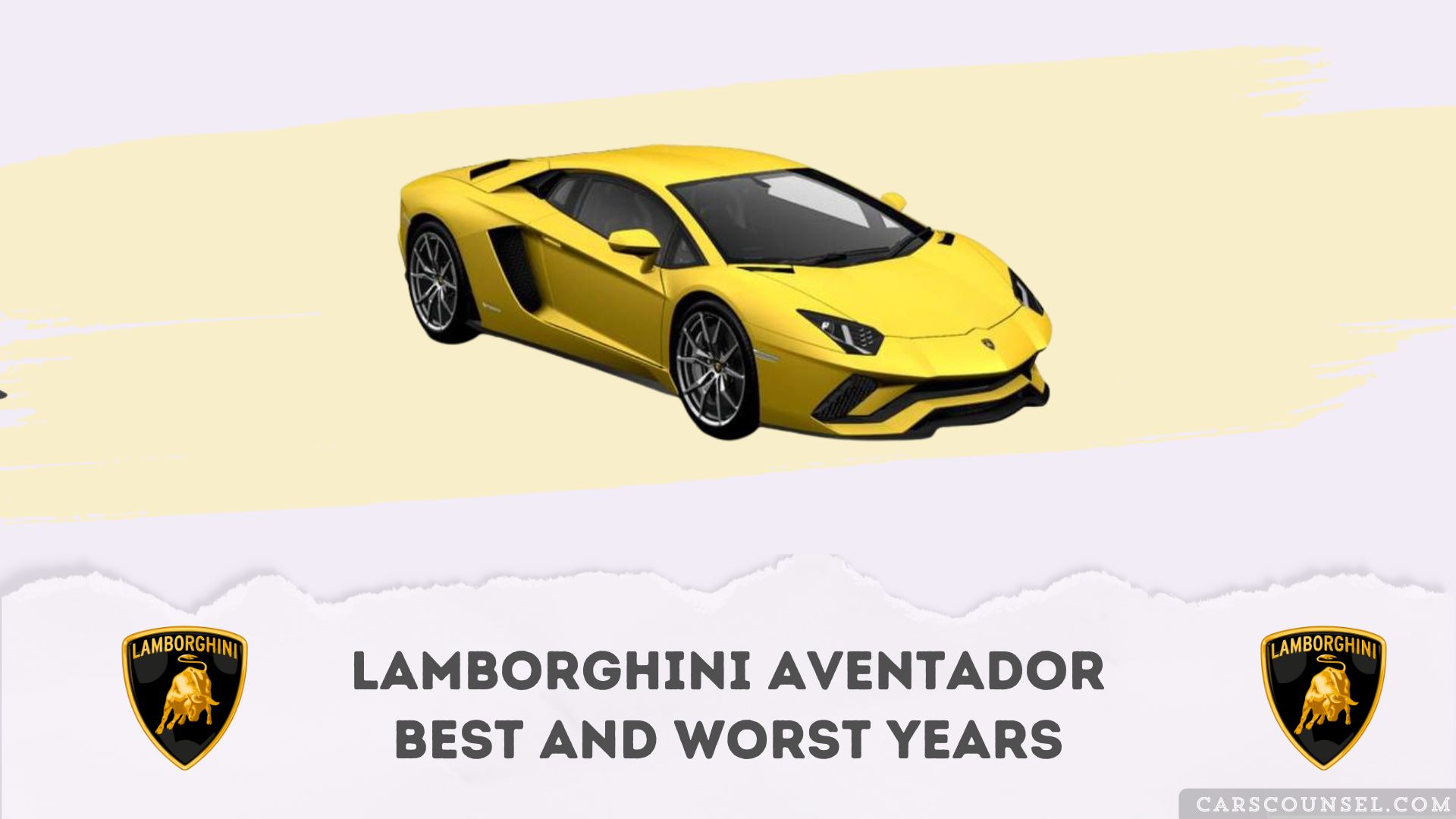
The best Lamborghini Aventador years are 2017 through 2022, featuring the Aventador S and SVJ models with improved steering and software. Buyers should approach the 2012 and 2013 model years carefully due to early production recalls and stiff suspension tuning.
These rankings are comparative. No supercar is flawless, and high-performance vehicles require meticulous maintenance. A thorough service history and independent inspection matter more than the model year alone when evaluating any used exotic car.
Meaningful differences exist across the lineup. The Aventador S introduced four-wheel steering, while the SVJ added advanced aerodynamics. Transmission tuning and suspension setups also vary significantly between the base LP 700-4 and later performance variants.
Quick Navigation
Best and Worst Lamborghini Aventador Years at a Glance
| Model Year | Verdict | Main Reason | Buyer Guidance |
|---|---|---|---|
| 2012-2013 | Approach Carefully | Early production recalls and stiff ride | Verify recall completion and clutch wear |
| 2014-2016 | Good Choice | Matured LP 700-4 and SV introduction | Inspect single-clutch transmission health |
| 2017-2021 | Best Choice | Aventador S and SVJ refinements | Check for four-wheel steering functionality |
| 2022 | Too New to Judge | Ultimae final edition limited run | Expect collector-grade pricing and storage |
Key Takeaways
- The 2017 and newer models offer the most refined driving experience with updated software and steering systems.
- Early 2012 models require careful inspection for fuel system recalls and transmission actuator health.
- The single-clutch automated manual transmission requires specific driving techniques to prevent premature clutch wear.
- Routine maintenance is extremely expensive, with major services easily exceeding several thousand dollars.
- Always verify the VIN for open recalls and demand a complete service history from an authorized dealer.
How We Evaluated the Lamborghini Aventador Model Years
Our analysis considers official recalls, manufacturer service campaigns, and long-term ownership data. We evaluate powertrain differences, generation changes, and repair complexity across the entire production run.
Consumer complaints are not confirmed failure rates. A recall does not automatically make a vehicle unreliable, and recent models have less long-term ownership history. Best means comparatively stronger, not flawless.
Best Lamborghini Aventador Years
2017-2021: Aventador S and SVJ
The 2017 introduction of the Aventador S brought crucial four-wheel steering and improved aerodynamics. This generation refined the single-clutch transmission software, making daily driving slightly more manageable while retaining extreme performance.
The SVJ variant pushed these boundaries further with active aerodynamics. These later years represent the peak of the naturally aspirated V12 platform before hybrid assistance became necessary for emissions compliance.
2014-2016: Late LP 700-4 and SV
By 2014, Lamborghini resolved many early production teething issues. The LP 700-4 platform was mature, and the introduction of the Superveloce (SV) offered track-focused buyers an extreme, lightweight option.
These years are a good choice for enthusiasts who prefer the raw, unassisted feel of the earlier chassis before four-wheel steering was introduced. Clutch life remains the primary inspection priority.
Best Lamborghini Aventador Year by Buyer Type
Best Overall: 2018 Aventador S
The 2018 Aventador S balances modern refinements with extreme performance. It includes the updated infotainment system, four-wheel steering, and improved suspension magnetorheological dampers compared to the base LP 700-4.
Best Enthusiast Choice: 2016 Aventador SV
The 2016 SV is the ultimate track-focused iteration of the original generation. It strips away sound deadening and adds aggressive aerodynamics, appealing to buyers who prioritize raw driving dynamics over comfort.
Years to Approach Carefully
2012-2013: Early LP 700-4 Models
The inaugural 2012 model year experienced several growing pains. Early examples were subject to a fuel leak recall involving the fuel tank flange. The suspension tuning was also notably harsher than later iterations.
While not inherently flawed, these early cars require strict verification of recall completion. The single-clutch transmission in these years also exhibited jerkier low-speed behavior before later software updates smoothed the shifts.
Worst Lamborghini Aventador Years
The Aventador does not have a universally terrible model year that demands strict avoidance. However, certain model years require extra scrutiny due to first-year production status and specific safety recalls.
Buyers looking at 2012 examples must ensure the fuel flange recall was performed. Without documented proof of this repair and a pristine clutch replacement history, these early models present higher financial risks.
Lamborghini Aventador Reliability by Generation
First Generation: LP 700-4 (2012-2016)
The original LP 700-4 established the modern Lamborghini flagship formula. It features a 6.5-liter V12 and an all-wheel-drive system. Early years are more susceptible to electrical glitches and stiff ride complaints.
Second Generation: Aventador S and SVJ (2017-2022)
The S and SVJ generations introduced four-wheel steering and the LDVI control unit. This central processor vastly improved traction control and transmission mapping, making these cars significantly more predictable and reliable.
For those exploring other exotic options, the Lamborghini Huracán offers a naturally aspirated V10 alternative, while the hybrid Lamborghini Revuelto represents the brand’s modern electrified flagship.
Common Lamborghini Aventador Problems
Transmission and Clutch Wear
The seven-speed ISR automated manual transmission uses a single-clutch design. This setup provides lightning-fast shifts at high speeds but can suffer from premature clutch wear if frequently driven in stop-and-go traffic.
Replacement clutches are exceptionally expensive. Buyers must review service records to determine when the clutch was last replaced and how much life remains in the current unit.
Fuel System Recalls
Early models were subject to a recall regarding the fuel tank flange. If the flange cracks, it can cause a fuel leak, presenting a fire hazard. Ensure this specific repair was completed by an authorized dealer.
Electrical and Infotainment Glitches
Owners of early generations occasionally report flickering instrument clusters and infotainment screen freezes. Later models received updated hardware and software that largely resolved these nuisance issues, though complex electronics always require diagnostic scanning.
Repair-Cost Overview
| Maintenance Task | Approximate Cost | Important Notes |
|---|---|---|
| Annual Oil Change | $300 – $500 | Requires specific high-performance synthetic oil |
| Major Scheduled Service | $4,000 – $6,000 | Includes spark plugs, fluids, and comprehensive inspection |
| Clutch Replacement | $8,000 – $12,000 | Varies heavily based on dealer labor rates and parts |
| Brake Pad and Rotor Set | $5,000 – $8,000 | Carbon-ceramic brakes last longer but are costly to replace |
These costs vary significantly by region, labor rates, and whether you use an authorized dealer or an independent exotic car specialist. Always budget for unexpected expenses when owning a high-performance V12 supercar.
What to Check Before Buying a Used Lamborghini Aventador
- Verify the VIN for open safety recalls, especially the fuel flange and hood hinge campaigns.
- Demand complete service records to confirm major services and clutch replacements were performed on schedule.
- Inspect the single-clutch transmission for smooth engagement and check the remaining clutch life via diagnostic software.
- Test the magnetorheological suspension in all driving modes to ensure no dampers are leaking or failing.
- Scan the vehicle for hidden electrical fault codes that might indicate failing control modules or sensors.
- Arrange a pre-purchase inspection with an authorized Lamborghini dealer or a highly qualified independent exotic mechanic.
Related Buying Guides
- Lamborghini Urus best and worst years: Explore the brand’s high-performance SUV alternative for buyers needing daily practicality.
- Lamborghini Countach best and worst years: Discover the historical predecessor that inspired the Aventador’s aggressive wedge design.
- Lamborghini Sian best and worst years: Learn about the limited-run hybrid hypercar that bridges the gap between the Aventador and modern electrification.
Frequently Asked Questions
What is the best Lamborghini Aventador year to buy?
The 2017 and newer Aventador S models are the best choices. They feature crucial four-wheel steering, updated software, and improved suspension tuning compared to the earlier LP 700-4 generations.
Is the Lamborghini Aventador reliable?
Reliability is relative for a V12 supercar. While later models are mechanically robust, they require meticulous, expensive maintenance. Neglecting scheduled services will quickly lead to catastrophic repair bills.
How much does it cost to maintain an Aventador?
Maintenance is extremely costly. Expect to pay hundreds for an oil change, thousands for major services, and over ten thousand dollars for a clutch replacement. Budgeting for annual upkeep is essential.
Did the Aventador have any major recalls?
Yes, early models had a fuel tank flange recall, and later SVJ models had recalls for hood hinges and wheel centering bolts. Always verify the VIN to ensure all campaigns were completed.
Is the single-clutch transmission a problem?
The ISR single-clutch transmission is not inherently defective, but it is very harsh at low speeds. It also requires expensive clutch replacements if frequently subjected to stop-and-go traffic or aggressive launch control.
Will an Aventador appreciate in value?
Limited editions like the SVJ and Ultimae often appreciate or hold value well. Standard base models typically depreciate, though the final naturally aspirated V12 status may support long-term collector interest.
Which Lamborghini Aventador Year Should You Buy?
Target the 2017 or newer Aventador S and SVJ models for the most refined and technologically advanced driving experience. These years offer superior steering and software compared to the earlier generations.
Approach 2012 and 2013 models with caution, ensuring all fuel system recalls were addressed. Regardless of the year, demand a complete service history and always arrange an independent pre-purchase inspection.