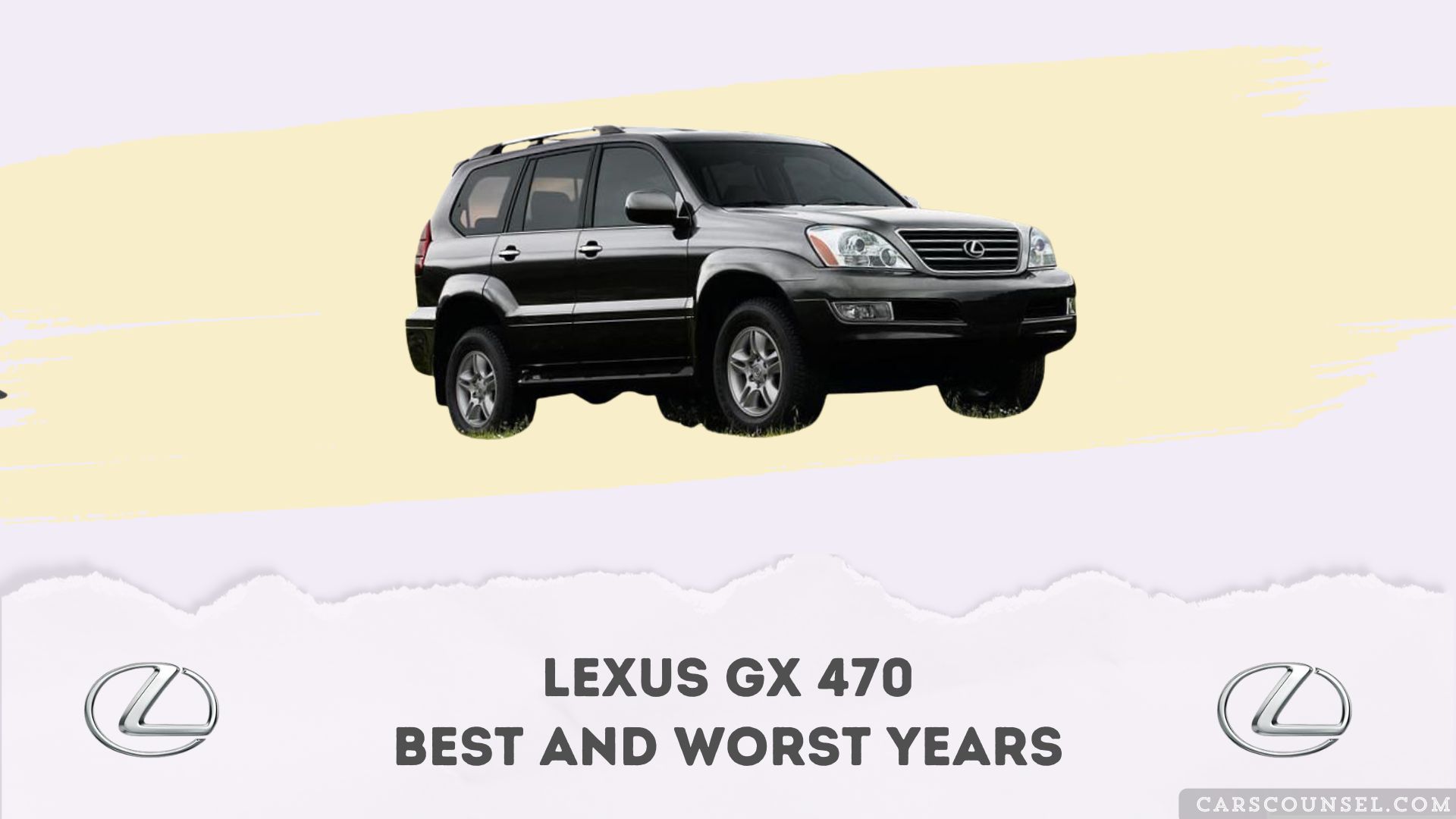
The 2008 and 2009 Lexus GX 470 model years are the best choices, offering the most refined version of the well-regarded 4.7-liter V8. Buyers should carefully inspect 2003 to 2005 models for aging air suspension and deferred timing belt maintenance.
These rankings are comparative. While the GX 470 is known for its robust powertrain, no used luxury SUV is flawless. Long-term reliability heavily depends on strict maintenance records and overall vehicle condition.
Buyers researching the best and worst years will note meaningful differences across the generation. The 2006 refresh introduced variable valve timing, while older models require closer inspection of age-related components.
Quick Navigation
Best and Worst Lexus GX 470 Years at a Glance
| Model Year Range | Verdict | Main Reason | Buyer Guidance |
|---|---|---|---|
| 2008-2009 | Best Late-Generation Choice | Most refined, updated features | Verify dashboard and air pump condition |
| 2006-2007 | Good Choice | Strong VVT-i V8 performance | Inspect for dashboard cracking |
| 2003-2005 | Good With Inspection | Older, pre-refresh examples | Confirm timing belt and air suspension |
Key Takeaways
- The 2008 and 2009 model years are the strongest choices for a used GX 470.
- No model year is universally classified as an outright avoid.
- The 4.7-liter V8 is known for its longevity but requires a costly timing belt replacement every 90,000 miles.
- Secondary air injection pump failures are a known, expensive issue across all years.
- Dashboard cracking and melting are widespread cosmetic complaints, especially in sunbelt states.
- Always verify the VIN for open recalls and service history before purchasing.
How We Evaluated the Lexus GX 470 Model Years
We analyzed official NHTSA records, manufacturer service campaigns, and long-term ownership data. We separate confirmed mechanical defects from cosmetic complaints and age-related wear.
Complaints are not failure rates, and a recall does not automatically make a vehicle unreliable. We focus on verified long-term ownership patterns for this discontinued model.
Best Lexus GX 470 Years
2008-2009: Best Late-Generation Choice
The final two production years represent the most refined version of the first-generation GX. Lexus had resolved most early-build quirks, and the 263-horsepower VVT-i V8 was fully proven.
These years offer the best balance of modern luxury and proven off-road capability. Buyers should still inspect the dashboard for cracking and test the secondary air injection system.
2006-2007: Good Choice
The 2006 refresh introduced variable valve timing, boosting output to 263 horsepower. These years are highly capable and generally reliable, making them excellent options for budget-conscious buyers.
The primary concern remains the dashboard material, which is prone to cracking and melting in hot climates. A thorough pre-purchase inspection is highly recommended.
Best Year by Buyer Type
- Best Overall: 2009 (Most refined, latest production year)
- Best Budget Option: 2006 (First year of the VVT-i engine refresh)
- Best Enthusiast Choice: 2008 (Mature platform with robust aftermarket support)
Years to Approach Carefully
2003-2005: Good With Inspection
Early GX 470 models feature the older 235-horsepower non-VVT-i engine. While the block is highly regarded for its strength, these vehicles are now over two decades old.
Buyers must verify that the timing belt and water pump were replaced. The rear air suspension is also likely to have failed or been converted to aftermarket coil springs.
Common Lexus GX 470 Problems
Secondary Air Injection System
The secondary air pump and valves are prone to corrosion and failure, often triggering a check engine light and limp mode. This affects all model years.
Replacement requires OEM or high-quality approved updated parts to ensure emissions compliance and proper engine operation.
Dashboard Cracking and Melting
Many owners report severe dashboard cracking, bubbling, and melting, particularly on 2006-2009 models exposed to intense sunlight. This is a cosmetic but highly frustrating issue.
Toyota previously offered a warranty enhancement program, but it has expired. Owners typically use dash covers or seek specialized replacement components.
Rear Air Suspension Failure
The factory rear air springs frequently develop leaks as the rubber ages, causing the rear end to sag. Dealership replacement is expensive.
Many owners opt for approved aftermarket coil-spring conversion kits to eliminate the air suspension entirely and improve long-term reliability.
Steering Rack and Shaft Clunk
A noticeable clunking sensation in the steering wheel is common across the 120-series platform. It typically stems from the intermediate steering shaft or rack.
While not usually a sudden safety hazard, it degrades the premium driving experience and requires replacement of the worn steering components.
What to Check Before Buying a Used Lexus GX 470
- Verify the timing belt and water pump were replaced within the last 90,000 miles.
- Check the VIN for any open recalls or unfinished service campaigns.
- Test the secondary air injection system for proper operation and codes.
- Inspect the dashboard for severe cracking, bubbling, or melting.
- Cycle the rear air suspension to ensure it raises and lowers correctly.
- Listen for clunking noises in the steering column during low-speed turns.
- Scan the ECU for hidden diagnostic trouble codes.
- Arrange an independent pre-purchase inspection focusing on the frame and suspension.
Related Buying Guides
- Lexus GX 460 years to avoid – Explore the successor model to see if the newer V8 platform suits your needs.
- Toyota 4Runner years to avoid – The 4Runner shares related body-on-frame architecture but offers a different ownership experience.
- Lexus GX 550 best and worst years – Investigate the modern twin-turbo alternative for the latest luxury and technology.
Frequently Asked Questions
What is the best year for a used Lexus GX 470?
The 2009 model year is the best choice. As the final production year, it offers the most refined version of the 4.7-liter V8 with the fewest early-build quirks.
Are there any Lexus GX 470 years to avoid?
No model year carries an outright avoid verdict. However, 2003 to 2005 examples require strict verification of timing belt service and air suspension condition due to their age.
What is the most common problem with the GX 470?
Secondary air injection pump failures and dashboard cracking are the most frequently reported issues. Both can be costly to repair using official dealership channels.
Does the Lexus GX 470 have a timing belt or chain?
The 4.7-liter V8 uses a timing belt. It is an interference engine, making strict adherence to the 90,000-mile replacement interval critical to prevent catastrophic engine damage.
Is the Lexus GX 470 good for off-roading?
Yes, it features a robust full-time four-wheel-drive system with a low-range transfer case and a locking center differential, making it highly capable on rough terrain.
How long can a Lexus GX 470 last?
Well-maintained examples frequently reach high mileage. Longevity depends entirely on strict adherence to fluid changes, timing belt service, and rust prevention.
Which Lexus GX 470 Year Should You Buy?
The 2008 and 2009 Lexus GX 470 model years offer the best combination of proven reliability and updated features. The 4.7-liter V8 has a strong reputation for longevity when properly maintained.
Buyers must prioritize vehicles with documented timing belt service and functional suspension components. Always perform a VIN check and arrange an independent inspection before finalizing your purchase.


Comments are closed.