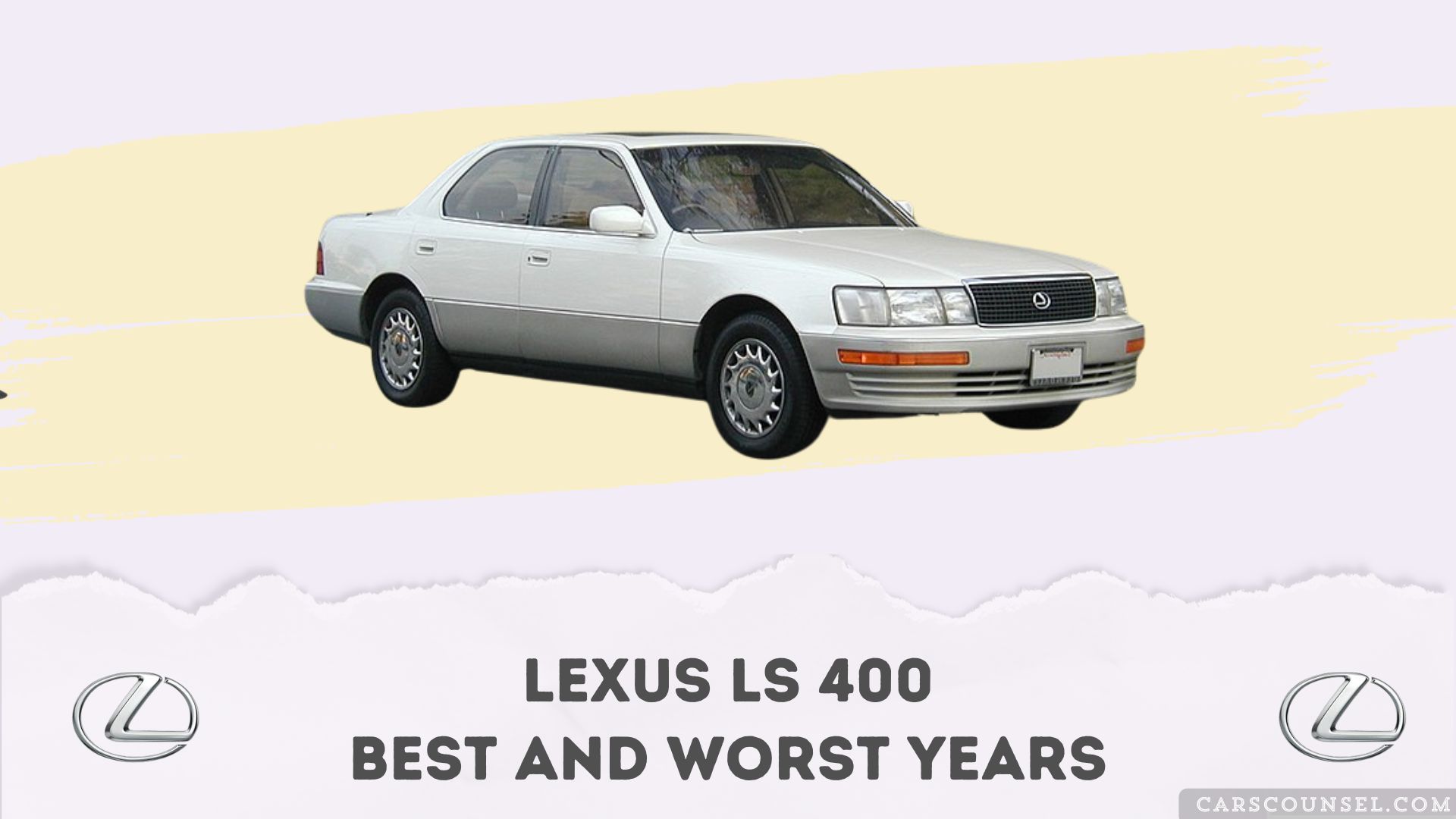
The best Lexus LS years are 2001-2006 (LS 430) and 1995-2000 (LS 400) for their legendary V8 reliability. Avoid early 2007-2009 LS 460 models due to expensive air suspension and brake actuator failures.
Rankings are comparative, and no luxury vehicle is flawless. Proper maintenance, rust-free condition, and verified service history matter more than the badge for long-term ownership costs.
Meaningful differences exist between the naturally aspirated V8s of older generations and the modern twin-turbo V6 and hybrid powertrains. Air suspension and complex electronics require careful inspection on all trims.
Quick Navigation
Best and Worst Lexus LS Years at a Glance
| Model Year Range | Verdict | Main Reason | Buyer Guidance |
|---|---|---|---|
| 1990-1994 | Good With Inspection | Legendary engine but aging electronics. | Check headlight connectors and suspension. |
| 1995-2000 | Best Older Choice | Peak reliability; 1998+ adds VVT-i. | Prioritize 1998-2000 for modernized power. |
| 2001-2006 | Best Choice | 3UZ-FE V8 is exceptionally robust. | 2004-2006 offers updated styling. |
| 2007-2009 | Approach Carefully | Early 4th-gen brake and suspension issues. | Verify recall completion and repairs. |
| 2010-2017 | Good Choice | Refined 4th-gen with sorted mechanicals. | Inspect control arms and water pumps. |
| 2018-2020 | Approach Carefully | Early twin-turbo V6 and infotainment complaints. | Test drive for transmission smoothness. |
| 2021-Present | Too New to Judge | Limited long-term ownership data available. | Rely on certified pre-owned warranties. |
Key Takeaways
- The 2001-2006 LS 430 and 1995-2000 LS 400 are the strongest choices for long-term reliability.
- Early 2007-2009 LS 460 models require caution due to costly air suspension and brake actuator failures.
- The 1UZ-FE and 3UZ-FE V8 engines are legendary, but aging wiring and electronics need inspection.
- Later models with air suspension demand strict maintenance records to avoid massive repair bills.
- Recent twin-turbo V6 and hybrid models lack long-term durability data.
- Always check the VIN for open recalls and arrange an independent pre-purchase inspection.
How We Evaluated the Lexus LS Model Years
Our analysis considers official recalls, manufacturer programs, consumer complaints, and powertrain differences across generations. We weigh repair severity and recurrence heavily.
Complaints are not failure rates, and a recall does not automatically make a year unreliable. Recent years have less ownership history. Best means comparatively stronger, not flawless.
Best Lexus LS Years
2001-2006 (LS 430)
The third-generation LS 430 represents the pinnacle of Lexus reliability. The 4.3-liter 3UZ-FE V8 is exceptionally robust, easily reaching high mileage with basic maintenance.
The 2004-2006 facelifted models are particularly desirable. They offer updated styling, improved transmissions, and refined interior materials without sacrificing mechanical durability.
1995-2000 (LS 400)
The second-generation LS 400 remains a benchmark for luxury sedan engineering. The 4.0-liter 1UZ-FE V8 is famously overbuilt and smooth.
Models from 1998 to 2000 are the most sought after. They received variable valve timing, boosting power to 290 horsepower while maintaining outstanding reliability.
2010-2017 (LS 460)
Later fourth-generation models resolved many early production issues. The 4.6-liter V8 provides excellent performance, and the interior remains remarkably quiet.
Buyers should prioritize examples with documented suspension and water pump services. Avoid neglected examples, as deferred maintenance on complex systems becomes expensive quickly.
Best Year by Buyer Type
Best Overall: 2004-2006 LS 430
These years combine legendary V8 reliability with modernized safety features and updated styling. They offer the best balance of classic durability and daily usability.
Best Enthusiast Choice: 1998-2000 LS 400
Enthusiasts prize the late second-generation models for their analog feel, bulletproof 1UZ-FE engine, and classic design. Finding an unmodified, low-mileage example is a rare treat.
Best Modern Alternative: 2013-2017 LS 460
For buyers needing modern technology, the late fourth-generation models provide advanced safety systems and refined infotainment while avoiding the costly teething issues of early versions.
Years to Approach Carefully
2007-2009 LS 460 (Approach Carefully)
Early fourth-generation models introduced complex new systems that suffered from premature failures. The brake actuator and air suspension are notorious for expensive, out-of-warranty repairs.
Only consider these years if the seller has documented proof of recent suspension and brake system overhauls. Otherwise, the repair costs can easily exceed the vehicle’s value.
2018-2020 LS 500 (Approach Carefully)
The transition to the twin-turbocharged V6 brought impressive power but introduced new complexities. Early models reported transmission hunting and infotainment frustrations.
Long-term durability data for the forced-induction engine remains limited compared to the naturally aspirated V8s. Rely heavily on certified pre-owned warranties for these years.
1990-1994 LS 400 (Good With Inspection)
While the engine is legendary, first-generation models are now over thirty years old. Aging wiring, brittle plastics, and obsolete electronics require significant restoration effort.
These are excellent project cars or weekend cruisers, but they demand a dedicated owner willing to source rare replacement parts.
Worst Lexus LS Years
The 2007 and 2008 LS 460 models carry the highest repair risks in the lineup. These early fourth-generation vehicles introduced a new platform plagued by costly electrical and chassis defects.
The brake actuator failure is a severe safety and financial concern, often requiring thousands of dollars to replace. Additionally, the standard air suspension system frequently leaks and fails prematurely.
Dashboard materials in these years are also prone to melting and cracking in hot climates. Buyers are strongly advised to look at the 2010+ models or the older LS 430 instead.
Lexus LS Reliability by Generation
First Generation (1990-1994)
The original LS 400 shocked the automotive world with its build quality. The 1UZ-FE V8 is nearly indestructible, but aging headlight connectors and early electronics require careful inspection today.
Second Generation (1995-2000)
This generation refined the formula, adding more power and better sound insulation. The 1998 mid-cycle refresh introduced variable valve timing, making these the most desirable classic daily drivers.
Third Generation (2001-2006)
Badged as the LS 430, this era is widely considered the most reliable luxury sedan ever built. The 3UZ-FE V8 and conventional suspension components offer unmatched longevity for dedicated owners.
Fourth Generation (2007-2017)
The LS 460 brought massive technological leaps, including available air suspension and advanced safety features. While powerful, complex electronics and early brake actuator issues tarnished its overall reliability record.
Fifth Generation (2018-Present)
The current LS 500 abandoned the V8 for a twin-turbo V6 and hybrid options. It offers cutting-edge technology and striking design, but long-term mechanical durability remains unproven.
Common Lexus LS Problems
Air Suspension Failures
Many LS 460 and LS 500 models feature adaptive air suspension. The air struts and compressors frequently fail between 80,000 and 100,000 miles, resulting in a sagging ride and costly repairs.
Brake Actuator Issues
The 2007-2009 LS 460 is notorious for premature brake actuator failures. This critical component regulates braking pressure, and its failure triggers dashboard warning lights and requires an expensive replacement.
Dashboard and Interior Melting
Owners in hot climates frequently report melting, sticky, or cracking dashboards on 2006-2011 models. Lexus issued a warranty enhancement program for some years, but many vehicles remain unprotected today.
Water Pump and Cooling System Leaks
The 4.6-liter V8 in the LS 460 uses a plastic water pump housing that becomes brittle over time. Coolant leaks can lead to overheating and severe engine damage if ignored.
Repair-Cost Overview
| Problem | Commonly Affected Years | Approximate Repair Range | Important Notes |
|---|---|---|---|
| Air Suspension Strut | 2007-2017 | $1,200 – $2,500 per corner | OEM parts are expensive; aftermarket options exist. |
| Brake Actuator | 2007-2009 | $1,800 – $2,800 | Requires specialized calibration after installation. |
| Water Pump | 2007-2017 | $800 – $1,400 | Labor intensive due to engine bay packaging. |
| Lower Control Arms | 2007-2017 | $600 – $1,200 per axle | Bushings wear out, causing clunking noises. |
Repair costs vary significantly by region, labor rate, parts choice, and vehicle configuration. Dealer rates will be substantially higher than independent luxury specialists. Always get multiple quotes before proceeding.
What to Check Before Buying a Used Lexus LS
- Verify the VIN for open recalls, especially regarding brake actuators and fuel systems.
- Inspect the air suspension by cycling through ride heights and checking for sagging overnight.
- Test the brake pedal feel and listen for unusual pump noises from the actuator.
- Check the dashboard and door panels for melting, stickiness, or severe cracking.
- Review service history for timing belt, water pump, and spark plug replacements.
- Scan for hidden diagnostic codes using a high-end bidirectional scanner.
- Inspect the lower control arm bushings for tearing or excessive play.
- Arrange an independent pre-purchase inspection with a Lexus specialist.
Related Buying Guides
- Lexus LS 430 best and worst years: Dive deeper into the legendary third generation and its specific model-year nuances.
- Lexus LS 460 years to avoid: Learn exactly which fourth-generation models carry the highest repair risks.
- Lexus ES 250 best and worst years: Investigate the compact luxury sedan option for better fuel economy and city driving.
- Lexus ES 300 best and worst years: Review the classic V6 predecessor that prioritized ride comfort over sporty handling.
- Lexus GX 460 years to avoid: Check out our guide on the rugged, body-on-frame SUV sibling.
- Lexus ES 350 years to avoid: Explore reliability patterns for the popular front-wheel-drive luxury alternative.
Frequently Asked Questions
What is the most reliable Lexus LS year?
The 2001-2006 LS 430 is widely considered the most reliable. Its 3UZ-FE V8 engine and conventional mechanicals offer unmatched longevity with minimal major defect patterns.
Is the Lexus LS 400 bulletproof?
The 1UZ-FE engine in the LS 400 is exceptionally durable, but no thirty-year-old car is flawless. Aging wiring, brittle plastics, and obsolete electronics require careful inspection and maintenance.
How long do Lexus LS 460 air suspensions last?
Factory air struts typically fail between 80,000 and 120,000 miles. Replacement is expensive, leading many owners to convert to conventional coil springs using aftermarket kits.
Did Lexus fix the LS 460 brake actuator problem?
Lexus issued recalls and warranty enhancements for early models, but the underlying design remains vulnerable. Always verify the repair history and check for dashboard warning lights.
Are newer Lexus LS 500 models reliable?
Long-term data is still limited. While the twin-turbo V6 is powerful, early models reported transmission tuning issues and infotainment frustrations compared to the older V8 generations.
Should I buy a Lexus LS with air suspension?
Only if the seller provides documentation of recent strut and compressor replacements. Otherwise, budget for a potential conversion to standard coil springs to avoid recurring repair bills.
Which Lexus LS Year Should You Buy?
The 2001-2006 LS 430 and 1995-2000 LS 400 remain the undisputed champions of reliability. Their naturally aspirated V8 engines and robust engineering offer incredible longevity.
Avoid the 2007-2009 LS 460 unless you have documented proof of major suspension and brake repairs. Later fourth-generation models are safer bets for modern luxury.
Regardless of the year, always verify the VIN for open recalls, demand meticulous service records, and arrange an independent inspection before signing any paperwork.

