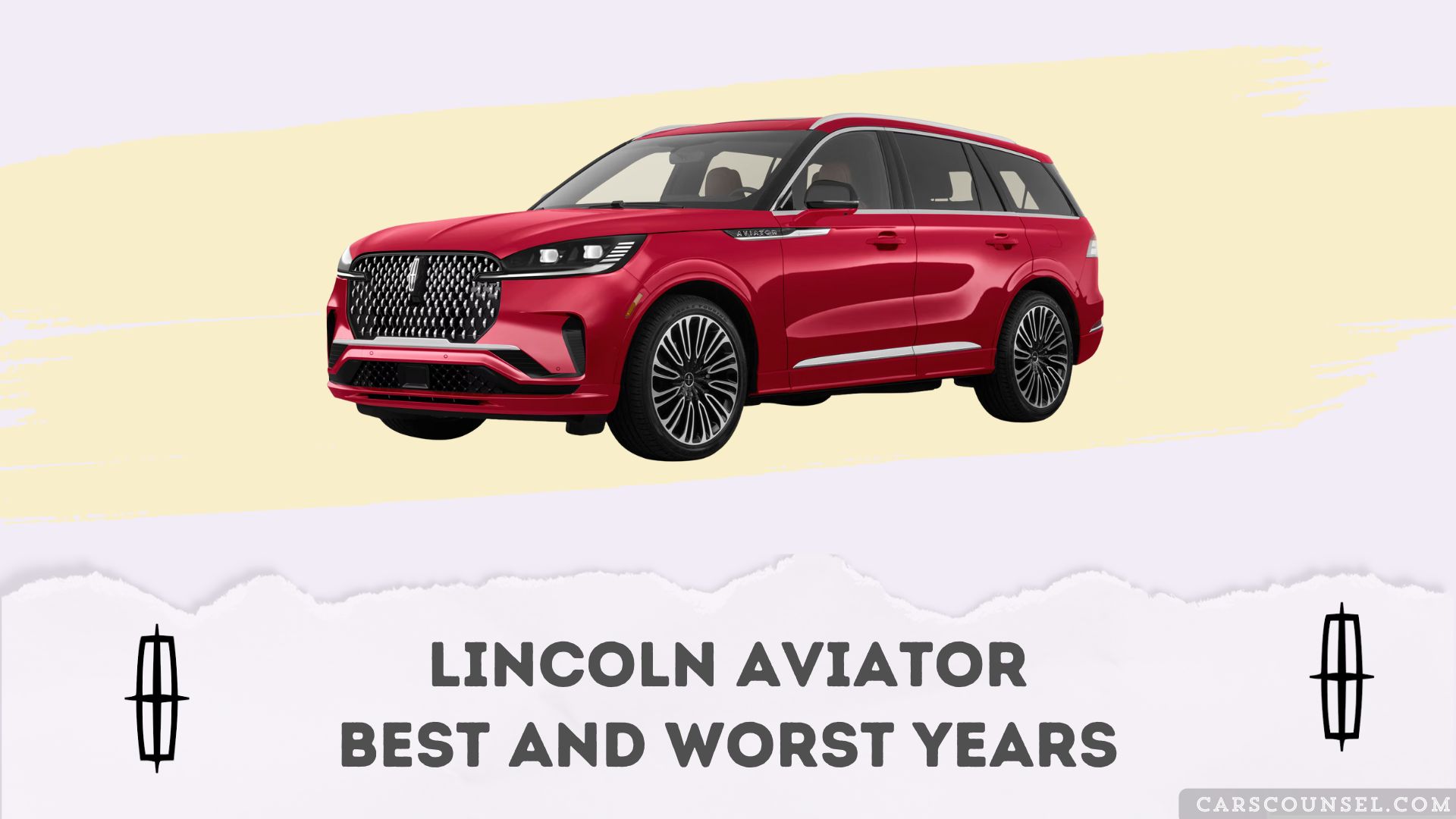
The 2022 to 2024 Lincoln Aviator models are the best choices, benefiting from resolved electronics and mature build quality. The 2020 launch year requires strict avoidance due to severe electrical defects, while 2003 to 2005 models demand careful inspection for age-related wear.
Rankings for used luxury SUVs are comparative, and no model year is flawless. Long-term dependability relies entirely on meticulous maintenance records, recall completion, and the overall condition of the vehicle rather than just the factory build date.
Meaningful differences exist between the standard twin-turbo V6 and the Grand Touring plug-in hybrid configurations. The ten-speed automatic transmission and complex air suspension systems also require specialized diagnostic equipment and strict service intervals to remain reliable.
Quick Navigation
Best and Worst Lincoln Aviator Years at a Glance
| Model Year | Verdict | Main Reason | Buyer Guidance |
|---|---|---|---|
| 2025-2026 | Too New to Judge | Limited long-term exposure | Wait for reliability data |
| 2022-2024 | Best Late-Generation Choice | Refined electronics and build | Verify recall completion |
| 2021 | Approach Carefully | Improved over 2020 but flawed | Inspect infotainment and HVAC |
| 2020 | Avoid | Severe electrical and build defects | Seek newer model years |
| 2003-2005 | Approach Carefully | Age and timing chain risks | Require specialist inspection |
Key Takeaways
- The 2022 to 2024 model years represent the most refined second-generation production run.
- The 2020 launch year suffers from widespread electrical failures and poor build quality.
- First-generation 2003-2005 models face severe age-related wear and plastic timing chain guide risks.
- The Grand Touring plug-in hybrid adds significant powertrain complexity and potential repair costs.
- Always verify the VIN to ensure all official safety campaigns and software updates were completed.
- A thorough pre-purchase inspection by a Lincoln specialist is mandatory for any air suspension-equipped model.
How We Evaluated the Lincoln Aviator Model Years
Our analysis considers official NHTSA records, manufacturer service campaigns, and long-term ownership consensus. We evaluate running changes, powertrain configurations, and known engineering traits of the Ford CD6 platform.
Complaints are not failure rates, and a recall does not automatically make a year unreliable. Best means comparatively stronger for a used vehicle, not trouble-free. Recent years have less long-term exposure but benefit from mature engineering.
Best Lincoln Aviator Years
2022-2024 Lincoln Aviator
These late-production years benefit from fully sorted SYNC 4 infotainment software and improved assembly quality. Manufacturing refinements addressed the severe electrical gremlins and panel gap issues that plagued the initial launch. The standard twin-turbo V6 provides excellent performance.
Buyers should still expect typical luxury SUV maintenance costs. While these models are comparatively stronger, verifying that all module software updates were applied remains critical. Documented service history is the most important factor for any late-production example.
Best Year by Buyer Type
Best Overall Choice
The 2022 to 2024 model years offer the best combination of late-production refinement, updated infotainment, and mature build quality. They avoid the severe first-year teething problems of the 2020 launch.
Best Enthusiast Choice
The Grand Touring plug-in hybrid provides massive torque and electric-only commuting capability. However, buyers must accept significantly higher powertrain complexity and potential long-term battery replacement costs.
Years to Approach Carefully
2021 Lincoln Aviator
The 2021 model year showed marginal improvement over the disastrous 2020 launch but still suffered from lingering electrical faults and SYNC 4 glitches. Owners report intermittent battery drain issues and HVAC blend door failures.
Despite these concerns, the fundamental CD6 platform architecture remained sound. Buyers must verify that all body control module updates were performed by a dealer. Budget for potential infotainment screen replacements and air suspension diagnostics.
2003-2005 Lincoln Aviator
First-generation models are now classic vehicles requiring specialized knowledge to maintain. The 4.6-liter V8 engine is notorious for plastic timing chain cassette failures, which can cause catastrophic engine damage if neglected.
Rust, aging wiring harnesses, and obsolete electronic components define ownership. Buyers should approach these models as weekend cruisers or restoration projects, requiring thorough marque expert inspections before purchase. Parts availability is increasingly limited.
Worst Lincoln Aviator Years
2020 Lincoln Aviator
The 2020 relaunch year experienced catastrophic build quality issues and severe electrical defects. Owners reported massive battery drain, malfunctioning digital gauge clusters, and phantom emergency brake engagements. The vehicle received an unusually high number of safety recalls.
Despite software updates, the 2020 model year remains fundamentally compromised by early production assembly flaws. Buyers should strictly avoid this year in favor of the heavily revised 2022 and later models, which feature significantly improved wiring harnesses and module programming.
Lincoln Aviator Reliability by Generation
Second Generation (2020-Present)
The modern Aviator rides on the Ford CD6 platform, sharing its underlying architecture with the Ford Explorer. However, the Lincoln features distinct luxury tuning, exclusive powertrain calibrations, and a much more complex electrical architecture.
A major refresh occurred for the 2025 model year, introducing updated exterior styling and revised interior screens. Late-production models from 2022 onward benefit significantly from resolved software bugs and improved supplier quality for interior materials.
First Generation (2003-2005)
The original Aviator was a short-lived luxury variant of the third-generation Explorer. It featured a unique 302-horsepower DOHC V8 engine and a five-speed automatic transmission. Production ended quickly due to poor sales and the impending redesign of the underlying Ford platform.
Common Lincoln Aviator Problems
Infotainment and Electrical Glitches
The SYNC 4 system in early second-generation models requires specific software updates to function reliably. Owners report frozen screens, random reboots, and severe parasitic battery drain. Ensuring the body control module has the latest calibration is essential for proper operation.
Air Suspension Failures
The optional adaptive air suspension provides a smooth ride but is prone to premature compressor and air strut leaks. Replacing these components is highly expensive and requires specialized calibration equipment. Inspecting the ride height sensors and air lines is a critical pre-purchase step.
Timing Chain Guide Wear (First Generation)
The 4.6-liter DOHC V8 in 2003-2005 models uses plastic timing chain cassettes that become brittle and break over time. This issue causes severe engine rattling on cold starts and can lead to complete engine failure. Listening for startup noise is mandatory.
HVAC Blend Door Actuator Failures
Broken temperature blend door actuators cause incorrect cabin temperatures and loud clicking noises from behind the dashboard. This problem affects both generations and requires extensive dashboard disassembly to repair. Testing all climate control zones is necessary before purchase.
What to Check Before Buying a Used Lincoln Aviator
- Commission an independent inspection to evaluate the air suspension and chassis components.
- Verify the VIN to ensure all official safety recalls and software campaigns were completed.
- Test the infotainment system for screen freezes and verify the BCM software is updated.
- Inspect the air struts for leaks and test the adaptive damping system over rough pavement.
- Check the battery health and test for parasitic drain after the vehicle enters sleep mode.
- Review service history to verify consistent maintenance of the twin-turbo V6 or plug-in hybrid system.
- Listen for timing chain rattle on cold starts if evaluating a first-generation model.
Related Buying Guides
- Lincoln MKT best and worst years – Explore the discontinued luxury wagon alternative that offers massive interior space and a unique powertrain lineup.
- Lincoln MKC best and worst years – Investigate a smaller, more practical compact luxury crossover alternative for urban commuting.
Frequently Asked Questions
Is the Lincoln Aviator reliable?
The Aviator shows mixed reliability, with later second-generation years demonstrating significant improvement over the problematic 2020 launch. Age-related wear and complex electrical systems now pose the biggest threats to long-term dependability.
What year of the Lincoln Aviator is most dependable?
The 2022 to 2024 model years are generally considered the most dependable due to late-production manufacturing refinements and fully sorted infotainment software. All years require meticulous maintenance to remain roadworthy today.
What year should you avoid?
Buyers should avoid the 2020 model year due to severe first-year build quality issues, massive electrical defects, and an unusually high number of safety recalls. Prioritize 2022 or newer examples instead.
What are the most common problems?
Unresolved infotainment software bugs, parasitic battery drain, and expensive air suspension failures are the most severe threats. First-generation models also suffer from catastrophic plastic timing chain guide failures.
How long does a Lincoln Aviator last?
A properly maintained Aviator can reach high mileage, particularly with the robust standard twin-turbo V6. Longevity depends entirely on rust prevention, suspension upkeep, and the timely completion of all official safety campaigns.
Should I buy an extended warranty?
An extended warranty is highly recommended for second-generation models due to the high cost of air suspension and electrical module repairs. Verify that the aftermarket provider covers complex luxury SUV electronics.
Choosing the Right Lincoln Aviator Model Year
The 2022 to 2024 Lincoln Aviator represents the best production years for buyers seeking late-platform refinement and modern luxury features. The 2020 launch year requires strict avoidance due to severe electrical and build quality defects.
Success with any used Aviator depends entirely on documented service history and recall completion. Buyers must prioritize a thorough pre-purchase inspection to evaluate the air suspension, infotainment calibration, and critical electrical modules before purchasing.

