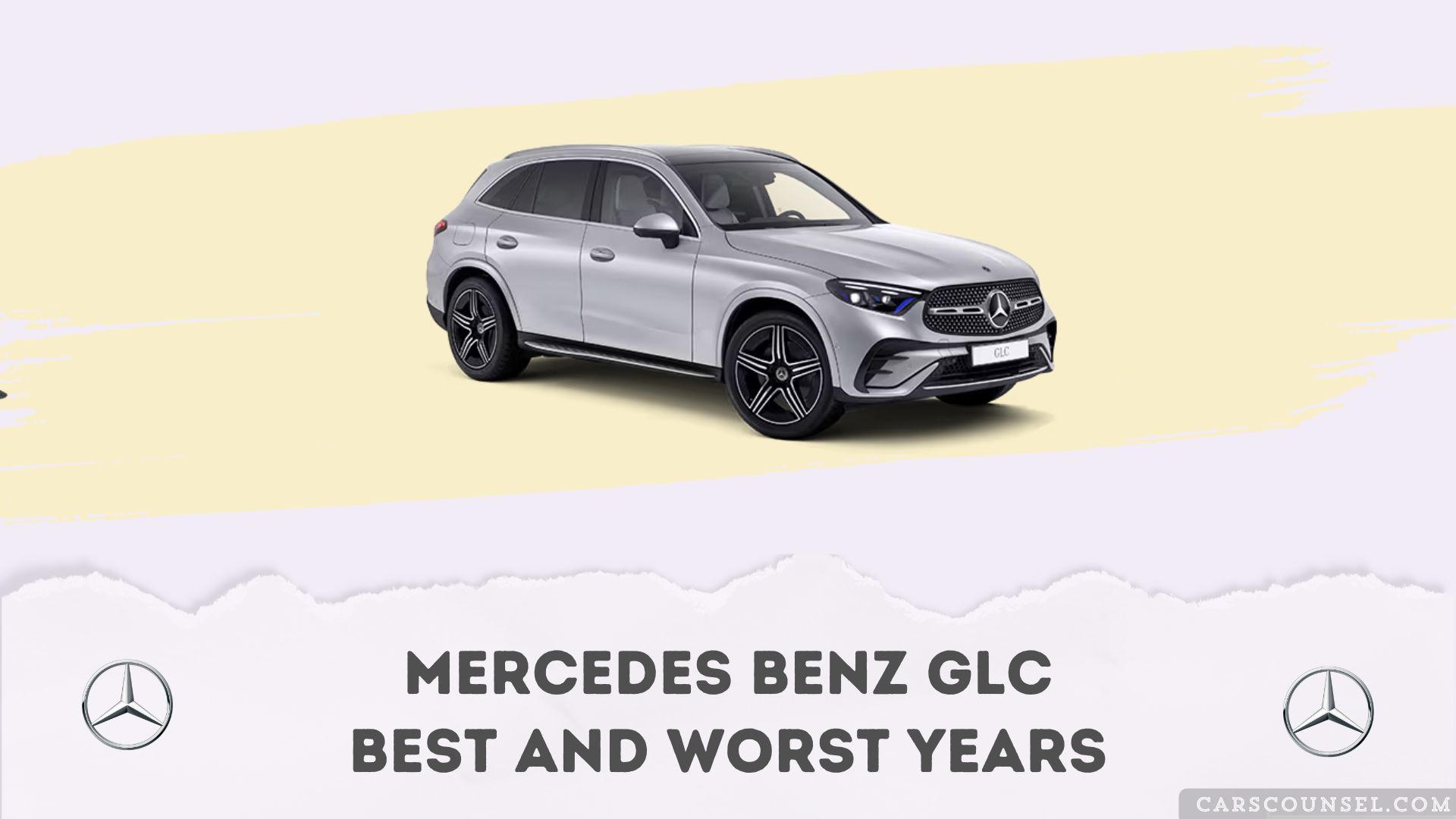
The best Mercedes-Benz GLC years are the 2021 and 2022 models, which offer refined technology and improved powertrain reliability. Buyers should approach the 2016 and 2017 model years carefully due to early-production engine and electrical concerns.
Rankings are comparative, and no used luxury SUV is entirely flawless. Long-term reliability heavily depends on strict maintenance, previous ownership care, and overall vehicle condition.
Meaningful differences exist between the first-generation M274 and M264 engines, as well as the newer second-generation models. Understanding these powertrain and technology shifts is essential for buyers.
Quick Navigation
Best and Worst Mercedes-Benz GLC Years at a Glance
| Model Year | Verdict | Main Reason | Buyer Guidance |
|---|---|---|---|
| 2023-2025 | Too New to Judge | Second generation with limited long-term data | Verify warranty status and build quality |
| 2021-2022 | Best Late-Generation Choice | Mature facelift with sorted MBUX and M264 engine | Top recommendation for used buyers |
| 2020 | Good Choice | Facelift year with updated tech but early 48V system | Check for mild-hybrid electrical updates |
| 2018-2019 | Good Choice | Mature first-generation platform before major refresh | Inspect for M274 engine maintenance |
| 2016-2017 | Approach Carefully | First production years with timing chain and electrical issues | Require strict service history verification |
Key Takeaways
- The 2021 and 2022 models represent the strongest used options, combining sorted technology with reliable powertrains.
- Early first-generation models (2016-2017) require careful inspection for specific engine component wear.
- The 2020 model year introduced a mild-hybrid system that demands specialized diagnostic checks.
- Second-generation models (2023 and newer) remain too new to establish definitive long-term reliability patterns.
- Always verify open recalls and complete service records before purchasing any used luxury SUV.
How We Evaluated the Mercedes-Benz GLC Model Years
Our analysis considers official recalls, manufacturer service campaigns, and consumer complaints. We evaluate powertrain differences, generation changes, and repair complexity.
Complaints are not failure rates, nor are they confirmed defects. A recall does not automatically make a year unreliable, and recent years simply have less ownership history. Best means comparatively stronger, not flawless.
Best Mercedes-Benz GLC Years
2021 and 2022
These years represent the peak of the first-generation facelift. The MBUX infotainment system is fully integrated, and the M264 turbocharged engine with EQ Boost is well-sorted.
While the 48-volt mild-hybrid system requires attention, these models offer the best balance of modern luxury and comparative reliability for used buyers.
2018 and 2019
For buyers preferring the older COMAND interface and the M274 engine, these late first-generation years are solid choices. Most early-production teething issues were resolved by this point.
Buyers should still verify that timing chain and camshaft adjuster services were performed if the vehicle has higher mileage.
Best Mercedes-Benz GLC Year by Buyer Type
- Best Overall: 2022 (Most refined first-generation model with updated safety features).
- Best Budget Option: 2019 (Lower depreciation while avoiding early first-generation risks).
- Best Modern Alternative: 2024 (For buyers wanting the newest X254 platform under certified pre-owned warranty).
Years to Approach Carefully
2020
The 2020 model year introduced the major facelift and the M264 engine. While a strong vehicle, first-year facelift models can experience minor electrical integration bugs.
Ensure the MBUX software is updated to the latest version and that the 12-volt battery has been tested recently.
2023 to 2025
The completely redesigned second generation brings advanced technology and the new GLC 350e plug-in hybrid. However, long-term reliability data remains limited.
These years are excellent when covered by a factory warranty, but used buyers should proceed cautiously regarding out-of-warranty repair costs.
Worst Mercedes-Benz GLC Years
2016 and 2017
As the first years of the X253 generation, these models are more prone to early-production issues. The M274 engine in these years has documented vulnerabilities regarding timing chain stretch and camshaft adjuster failures.
Additionally, early infotainment and electrical gremlins were more prevalent. Buyers should only consider these years if comprehensive maintenance records prove that major engine components have been addressed.
Mercedes-Benz GLC Reliability by Generation
First Generation (2016-2022)
This generation replaced the GLK and established the GLC nameplate. Early years struggled with powertrain calibration, but the 2020 facelift significantly improved the interior and engine refinement.
It shares related architecture with the C-Class sedan, meaning many mechanical components are shared across the Mercedes-Benz lineup.
Second Generation (2023-Present)
The current generation features a completely new interior, advanced driver assistance systems, and electrified powertrains. It is too new to judge for long-term durability.
Common Mercedes-Benz GLC Problems
Engine Timing Chain and Camshaft Adjusters
Affecting primarily the 2016-2019 models with the M274 engine, premature wear to the timing chain and camshaft adjusters can occur. Symptoms include a rattling noise on cold starts and check engine lights.
Additionally, carbon buildup on the fuel injectors can occasionally cause rough idling on higher-mileage examples.
Severe cases of oil consumption may require inspection of the piston rings and cylinder walls.
Repairing this issue is labor-intensive and requires specialized tools. Verify if this service has already been completed on older examples.
12-Volt Battery and Electrical Drains
Across multiple years, owners report premature 12-volt battery failure. Complex electrical systems and modules can cause parasitic drains when the vehicle is parked.
Replacing the battery requires proper coding and registration to the vehicle’s battery management system to prevent further electrical glitches.
Mild-Hybrid System Faults (2020+)
Models equipped with the EQ Boost 48-volt system may occasionally display warning messages regarding the mild-hybrid system. While often resolved via software updates, persistent faults require dealer diagnosis.
What to Check Before Buying a Used Mercedes-Benz GLC
- Verify the VIN for any open recalls or incomplete airbag or software campaigns.
- Review service records specifically for timing chain, cam phaser, and transmission fluid services.
- Test the MBUX or COMAND infotainment system for freezing, lag, or Bluetooth connectivity drops.
- Inspect the engine bay for oil leaks around the valve cover and oil filter housing.
- Listen for any rattling from the engine during a cold start to rule out timing chain wear.
- Test the brake pedal feel for any unusual pulsation or softness during the test drive.
- Listen for unusual whining noises from the rear fuel pump during startup or heavy acceleration.
- Scan the vehicle for hidden diagnostic trouble codes using an advanced Mercedes-specific scanner.
- Arrange an independent pre-purchase inspection by a certified technician.
Related Buying Guides
- Mercedes-Benz GLB best and worst years: A practical look at the boxier, family-focused compact crossover alternative.
- Mercedes-Benz GLA best and worst years: Explore the subcompact luxury option for buyers who prioritize city maneuverability over cargo space.
- Mercedes-Benz GLE best and worst years: Step up to the midsize luxury segment for those needing more towing capacity and passenger room.
- Mercedes-Benz GL best and worst years: Review the older full-size predecessor for buyers seeking maximum three-row utility on a budget.
Frequently Asked Questions
What is the most reliable Mercedes-Benz GLC year?
The 2022 model year is comparatively the most reliable. It represents the final and most refined year of the first-generation facelift before the complete redesign.
Are Mercedes-Benz GLC models expensive to maintain?
Yes, luxury compact SUVs carry higher maintenance costs. Routine services, synthetic fluids, and specialized electronic diagnostics cost more than mainstream brands.
Did the Mercedes-Benz GLC have transmission problems?
While the 9G-Tronic transmission is generally robust, some early models experienced rough shifting due to faulty solenoids or fluid degradation. Proper transmission fluid services are critical for longevity.
Why are the 2016 and 2017 GLC years problematic?
These first-year models suffered from early-production M274 engine vulnerabilities, including timing chain wear and camshaft adjuster failures, alongside minor electrical bugs.
Is the GLC 350e plug-in hybrid reliable?
The newer plug-in hybrid models offer great efficiency but introduce complex high-voltage components. Long-term reliability data is still developing.
Should I avoid buying a used Mercedes-Benz GLC?
You do not need to avoid them entirely. Focus on the 2021 or 2022 models, verify the service history, and secure a pre-purchase inspection to ensure a smooth ownership experience.
Which Mercedes-Benz GLC Year Should You Buy?
For used buyers, the 2021 and 2022 Mercedes-Benz GLC models offer the strongest combination of modern technology and comparative reliability.
Buyers on a stricter budget can find good value in the 2019 models, provided the engine maintenance is well-documented. Approach the 2016 and 2017 model years with caution.
Always verify the VIN for open recalls, review complete service records, and arrange an independent inspection before finalizing your purchase.

