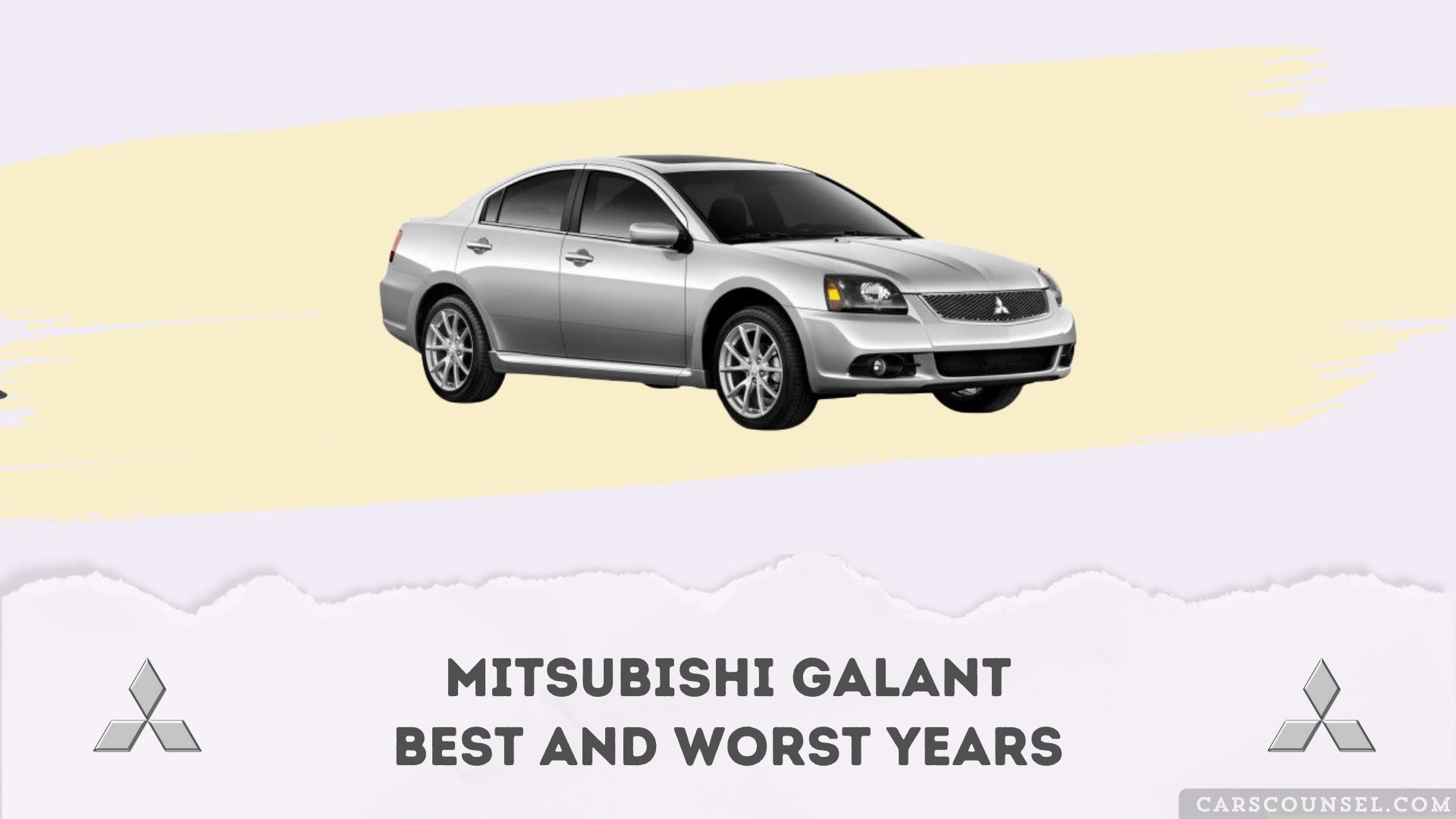
The best Mitsubishi Galant years are 2009-2012, offering the most refined version of the final generation. Buyers should approach 1999-2003 models carefully due to higher rates of automatic transmission and electrical complaints.
Rankings are comparative, and no used vehicle is flawless. A thorough maintenance history and a pre-purchase inspection matter more than the model year alone when evaluating reliability.
Reliability varies significantly by engine. The 2.4-liter four-cylinder is generally more durable than the V6, which is more prone to transmission and cooling system concerns in older models.
Quick Navigation
Best and Worst Mitsubishi Galant Years at a Glance
| Model Year or Range | Verdict | Main Reason | Buyer Guidance |
|---|---|---|---|
| 2009-2012 | Best Late-Generation Choice | Refined final production years | Prioritize maintenance records |
| 2005-2008 | Good Choice | Solid daily driver | Inspect for clear coat peeling |
| 2004 | Good With Inspection | First year of generation | Verify transmission service history |
| 1999-2003 | Approach Carefully | Higher complaint volume | Test automatic transmission thoroughly |
| 1994-1998 | Good With Inspection | Aging classic | Expect age-related wear |
| 1985-1993 | Best Enthusiast Choice | VR-4 turbo appeal | Budget for high maintenance |
Key Takeaways
- 2009-2012 models represent the most dependable choices for daily commuting.
- 1999-2003 years show elevated complaints regarding automatic transmissions.
- The 2.4-liter four-cylinder engine is generally preferred over the V6 for long-term reliability.
- Clear coat peeling is a widespread cosmetic issue across most 2000s models.
- Always verify open recalls and service history using the vehicle VIN.
How We Evaluated the Mitsubishi Galant Model Years
Our analysis considers official recalls, manufacturer programs, and consumer complaints. We weigh defect severity, repair complexity, and long-term ownership exposure to determine reliability.
Complaints are not failure rates, and a recall does not automatically make a year unreliable. Recent years have less ownership history, and Best means comparatively stronger, not flawless.
Best Mitsubishi Galant Years
2009-2012 (Best Late-Generation Choice)
The final production years benefit from established manufacturing processes. The 2.4-liter four-cylinder engine is relatively robust, making these models solid daily drivers.
Inspect for clear coat peeling, which is a widespread cosmetic concern rather than a mechanical failure. Verify that all maintenance recalls were completed by previous owners.
1985-1993 (Best Enthusiast Choice)
Early models, particularly the turbocharged all-wheel-drive VR-4, hold legendary status among enthusiasts. They offer incredible performance and rally-bred engineering.
However, they require a dedicated maintenance budget and specialized knowledge. These are not recommended as basic commuter vehicles for the average used car buyer.
Best Year by Buyer Type
Best Overall: 2012
As the final model year, it benefits from all mid-cycle updates and bug fixes, offering the most dependable version of the platform.
Best Budget Option: 2006-2008
These years offer a great balance of affordability and reliability. Buyers must budget for potential cosmetic paint correction due to clear coat failure.
Years to Approach Carefully
1999-2003 (Approach Carefully)
These early eighth-generation models show elevated complaint volumes regarding automatic transmissions and electrical gremlins.
The V6 engines also require strict timing belt maintenance to prevent catastrophic failure. Thorough pre-purchase inspections are mandatory for these years.
Worst Mitsubishi Galant Years
1999 (Avoid)
As the first year of a major redesign, the 1999 model experienced the most teething issues.
Owners reported frequent automatic transmission slipping and interior build quality problems, earning it an Avoid verdict for buyers seeking hassle-free transportation.
Mitsubishi Galant Reliability by Generation
1999-2005
This generation introduced more rounded styling and available V6 power. It shares underlying architecture with the Mitsubishi Eclipse.
Buyers should verify transmission service records and inspect for aging rubber components. The V6 requires strict adherence to timing belt intervals.
2004-2012
Built on the PS platform, this generation focused on interior space and ride comfort. It shares related architecture with the Mitsubishi Outlander.
While mechanically sound, this generation is notorious for severe clear coat peeling on the hood, roof, and trunk.
Common Mitsubishi Galant Problems
Clear Coat Peeling
Affects most 1999-2012 models. The factory clear coat fails prematurely, leading to white, peeling patches on horizontal panels.
This is a cosmetic issue that does not affect mechanical reliability, but repainting the vehicle can be expensive.
Automatic Transmission Slipping
Primarily affects 1999-2003 V6 models. Owners report harsh shifting, slipping gears, and eventual transmission failure.
Always test the transmission when cold and hot. Verify that the fluid was changed at the manufacturer-recommended intervals.
Sun Visor Failures
A highly specific but common annoyance on 2004-2012 models. The internal clips break, causing the visors to fall while driving.
This is a minor interior defect, but replacement parts can be difficult to source in good condition.
Repair-Cost Overview
| Problem | Commonly Affected Years | Approximate Repair Range | Important Notes |
|---|---|---|---|
| Clear Coat Repaint | 1999-2012 | $1,500 – $3,500 | Full panel respray required |
| Transmission Rebuild | 1999-2003 | $2,500 – $4,000 | V6 models most affected |
| Timing Belt Kit | 1999-2012 (V6) | $600 – $900 | Must be replaced every 60k miles |
Costs vary by region, labor rate, parts choice, and vehicle configuration. Always consult a local independent shop for accurate estimates.
What to Check Before Buying a Used Mitsubishi Galant
- Verify the VIN for open recalls.
- Inspect paint for severe clear coat failure.
- Test automatic transmission for harsh shifts.
- Check timing belt service history on V6 models.
- Inspect interior sun visors and clips.
Related Buying Guides
- Mitsubishi Pajero best and worst years: A capable off-road alternative for buyers needing more utility.
- Mitsubishi Mirage best and worst years: A budget-friendly compact option for strict commuters.
- Finding the right vehicle requires understanding broader reliability trends across Mitsubishi models.
- Explore our complete database of years to avoid before signing a purchase agreement.
Frequently Asked Questions
What is the most reliable Mitsubishi Galant year?
The 2012 model year is the most reliable, benefiting from late-generation refinements and a proven 2.4-liter four-cylinder engine.
Do Mitsubishi Galants have transmission problems?
Yes, particularly the 1999-2003 V6 models. The four-cylinder models and later generations experience far fewer automatic transmission complaints.
Why is the paint peeling on my Galant?
Mitsubishi used a defective clear coat formulation on many 1999-2012 vehicles. It fails under UV exposure, causing white peeling patches.
Is the Mitsubishi Galant a good used car?
It can be a good budget commuter if you choose a 2009-2012 four-cylinder model and accept the likelihood of cosmetic paint issues.
How long do Mitsubishi Galants last?
Well-maintained four-cylinder examples can reach high mileage. Longevity depends heavily on rust prevention, transmission care, and strict adherence to service intervals.
Did the Galant share parts with the Eclipse?
The 1999-2005 Galant shares its underlying ST-22 platform and several mechanical components with the contemporary Eclipse, though their body styles differ significantly.
Best Mitsubishi Galant Years for Used Buyers
The 2009-2012 models offer the best balance of reliability and comfort for daily commuting. Avoid the 1999 model year due to early redesign issues.
Always prioritize the 2.4-liter four-cylinder engine over the V6 for lower maintenance costs. Verify the VIN, inspect for clear coat damage, and arrange an independent inspection.

