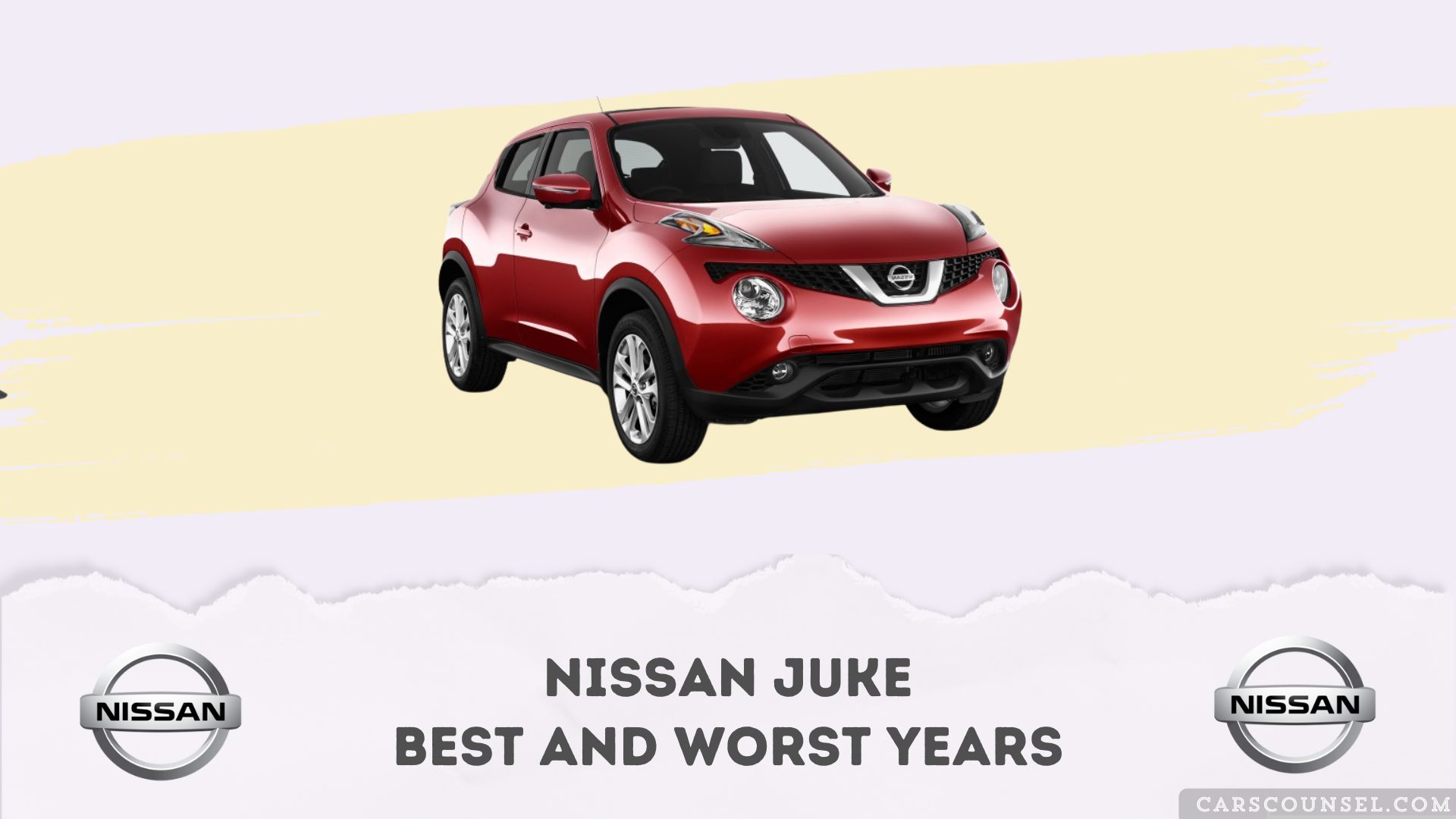
The best Nissan Juke model years in the United States are 2015 through 2017. These facelifted models offer sorted electronics and a mature powertrain. Buyers should approach the 2011 through 2013 launch years carefully due to timing chain and fuel system defects.
Rankings are comparative, as no turbocharged subcompact crossover is entirely flawless. Proper maintenance history, immediate repair of fluid leaks, and a thorough pre-purchase inspection remain essential for any used vehicle.
Significant differences exist between drivetrains and transmissions. The continuously variable transmission requires strict fluid maintenance, while the manual transmission is limited to early front-wheel-drive configurations and offers a more engaging drive.
Quick Navigation
Best and Worst Nissan Juke Years at a Glance
| Model Year | Verdict | Main Reason | Buyer Guidance |
|---|---|---|---|
| 2011-2013 | Approach Carefully | Timing chain stretch, fuel sensor recall | Verify recall and chain noise |
| 2014 | Good Choice | Nismo introduced, mid-cycle updates | Check CVT and turbo health |
| 2015-2017 | Best Older Choice | Facelift, refined styling, sorted tech | Top pick for US buyers |
Key Takeaways
- The 2015 through 2017 model years offer the most balanced ownership experience in the US market.
- Approach the 2011 through 2013 models with caution due to timing chain stretch and early CVT vulnerabilities.
- The Juke was discontinued in the US after 2017 and replaced by the Kicks.
- The 1.6L turbocharged engine requires strict oil change intervals to protect the timing chain and turbocharger.
- Always verify the VIN for open recalls and test the transmission extensively.
- Consult our guide on years to target for more details on problematic vehicles.
How We Evaluated the Nissan Juke Model Years
Our analysis considers official NHTSA recalls, manufacturer service campaigns, and consumer complaint patterns across the broader Nissan lineup. We evaluate powertrain differences, generation changes, and repair complexity.
Complaints are not confirmed failure rates, and a recall does not automatically ruin a vehicle’s reputation. Our top picks represent comparatively stronger options rather than flawless guarantees.
Best Nissan Juke Years
2015-2017 (Best Older Choice)
These years represent the final and most refined versions of the US-market Juke. The 2015 facelift brought updated styling, improved interior materials, and standard rear-view cameras. The 1.6L turbo engine and CVT were largely sorted, provided previous owners followed strict maintenance schedules.
Best Year by Buyer Type
Best Overall
The 2016 Juke SV or SL combines the mature first-generation platform with modern conveniences and excellent urban maneuverability.
Best Enthusiast Choice
The 2015-2017 Nismo RS offers a sport-tuned suspension, upgraded brakes, and increased horsepower for driving enthusiasts seeking a unique hot hatch experience.
Best Practical Alternative
Buyers needing more cargo space and rear legroom should consider the Nissan Rogue, which offers a much larger footprint and family-friendly utility.
Years to Approach Carefully
2011-2013 (Approach Carefully)
The launch years of the US-market Juke suffer from early production vulnerabilities. The 1.6L MR16DDT engine is prone to timing chain stretch if oil changes are delayed. Additionally, these years were subject to a major fuel pressure sensor recall that must be verified.
Worst Nissan Juke Years
There are no Nissan Juke model years that warrant a strict Avoid verdict. However, the 2011 model year is the least favorable. As a first-year launch, it experienced the highest concentration of timing chain and CVT complaints, making it riskier than the updated later models.
Nissan Juke Reliability by Generation
First Generation F15 (2011-2017)
The US market only received the first-generation F15 Juke. It features a 1.6L turbocharged engine paired with a CVT or a six-speed manual. While the second generation launched globally in 2019, it was never sold in the United States, where Nissan replaced the Juke with the Kicks.
Common Nissan Juke Problems
Timing Chain Stretch
The 2011 through 2013 models equipped with the 1.6L turbo engine can experience timing chain stretch and guide failure. Symptoms include a rattling noise on cold starts and check engine lights. Strict adherence to 5,000-mile oil change intervals is critical.
CVT Overheating and Failure
The Xtronic CVT is vulnerable to overheating, especially during aggressive driving or in hot climates. Nissan issued warranty extensions for some CVTs, but buyers must verify the transmission fluid was changed every 30,000 miles to prevent catastrophic failure.
Turbocharger and Oil Leaks
The turbocharger relies on a small oil feed line that can become clogged with sludge. This leads to turbo failure and expensive replacements. Inspecting for oil leaks and verifying consistent maintenance is mandatory.
What to Check Before Buying a Used Nissan Juke
- Verify the VIN for open NHTSA recalls, including the critical fuel pressure sensor campaign.
- Listen for timing chain rattle during a cold start on 2011 through 2013 models.
- Check the CVT fluid condition and verify a strict 30,000-mile service history.
- Inspect the turbocharger and oil feed lines for sludge or weeping.
- Test the AWD system to ensure the rear differential engages properly.
- Arrange an independent pre-purchase inspection with a qualified technician.
Related Buying Guides
- Nissan Kicks: The direct successor for US buyers, offering a more modern interior, better fuel efficiency, and standard safety technology without the turbocharged maintenance requirements.
- Nissan Rogue: A compact SUV alternative for families who need significantly more rear passenger space, cargo volume, and a smoother highway ride.
- Nissan Frontier: A mid-size pickup alternative for buyers transitioning from a subcompact commuter car to a vehicle with serious towing and off-road capability.
Frequently Asked Questions
Which Nissan Juke year is the most reliable?
The 2015 through 2017 model years are the most reliable. They benefit from a mid-cycle facelift, refined electronics, and a mature powertrain that has largely addressed the early launch-year vulnerabilities.
Does the Nissan Juke have transmission problems?
The Xtronic CVT is prone to overheating and premature failure if the fluid is neglected. Buyers must verify that the transmission fluid was changed every 30,000 miles to ensure longevity and prevent expensive replacements.
Why was the Nissan Juke discontinued?
Nissan discontinued the Juke in the United States after the 2017 model year. The brand streamlined its subcompact lineup, replacing the quirky Juke with the more practical and globally focused Kicks crossover.
Is the second-generation Juke available in the US?
No, the second-generation Juke is not available in the United States. While it launched in Europe and other global markets in 2019, Nissan chose to sell the Kicks exclusively in the North American subcompact segment.
What is the difference between the Juke and Juke Nismo?
The Nismo and Nismo RS trims feature sport-tuned suspensions, aggressive body kits, and upgraded engines producing up to 215 horsepower. They offer a much more engaging driving experience but share the same fundamental maintenance requirements.
Are older Nissan Juke models reliable?
The 2011 through 2013 models require careful inspection. Buyers must check for timing chain stretch, verify the fuel pressure sensor recall completion, and ensure the CVT has a flawless maintenance history before purchasing.
Choosing the Right Nissan Juke Model Year
Target the 2015 through 2017 model years for a refined, reliable subcompact crossover experience with sorted styling and mature powertrain components.
Approach the 2011 through 2013 launch years with caution due to timing chain and fuel system defects. Always verify the VIN for unrepaired recalls and secure an independent inspection.

