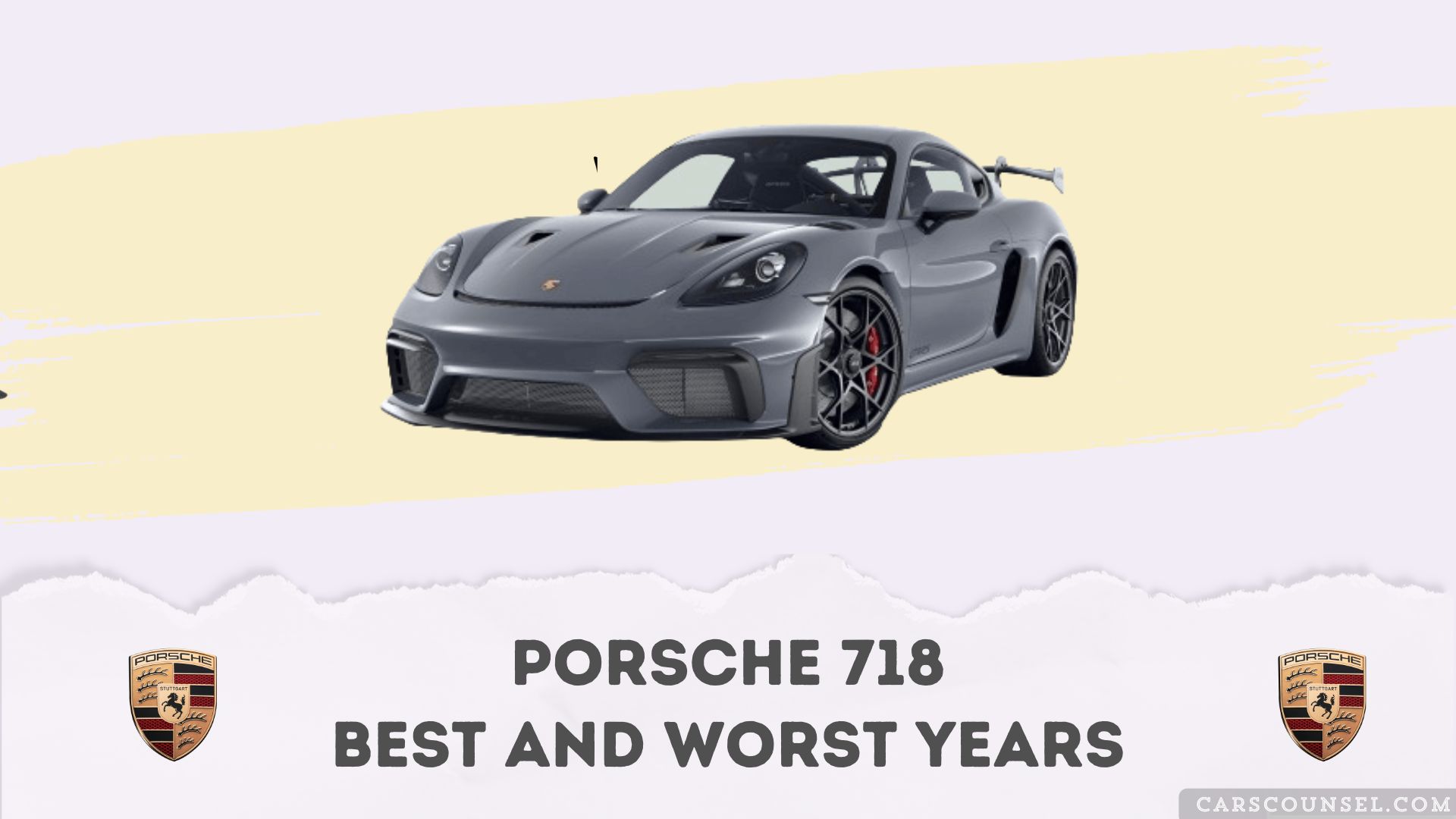
The best Porsche 718 years are 2020 through 2024, prized for the return of the naturally aspirated 4.0L flat-six engine in GTS, Spyder, and GT4 trims. The 2017 model year is the weakest link due to first-year turbocharged platform quirks and track cooling limitations.
Rankings are comparative, and no used sports car is flawless. Maintenance history, prior track use, and overall condition matter far more than the badge on the hood when evaluating any specific example.
Meaningful differences exist between body styles and engines. The Cayman coupe offers a stiffer chassis for track use, while the Boxster provides open-air driving. Turbo-four engines suit daily driving, while naturally aspirated flat-six engines deliver superior track performance and sound.
Quick Navigation
Best and Worst Porsche 718 Years at a Glance
| Model Year | Verdict | Main Reason | Buyer Guidance |
|---|---|---|---|
| 2020–2024 | Best Choice | Return of the 4.0L NA flat-six in top trims; mature platform. | Prioritize GTS 4.0, Spyder, or GT4 for the best experience. |
| 2018–2019 | Good Choice | Refined turbo-four engines; reliable for street use. | Great daily drivers, but base models lack adequate track cooling. |
| 2017 | Approach Carefully | First year of the 982 generation; early turbo platform quirks. | Inspect service records and verify infotainment and sensor function. |
Key Takeaways
- 2020–2024 models are the strongest choices, especially those equipped with the 4.0L naturally aspirated flat-six engine.
- 2017 models require extra scrutiny due to first-year production quirks and cooling limitations on base trims.
- The Cayman coupe provides superior chassis rigidity for track use, while the Boxster offers a classic open-air experience.
- Base and S trims (2017–2019) use turbocharged flat-four engines that are reliable but lack the sound and track cooling of higher trims.
- Porsche C40 specification oil is required for many newer engines; buyers must verify correct maintenance.
- Always check the VIN for open recalls and arrange an independent pre-purchase inspection.
How We Evaluated the Porsche 718 Model Years
Our analysis considers official NHTSA recalls, manufacturer service campaigns, consumer complaint patterns, and powertrain evolution across the 982 generation. We weigh the severity and recurrence of mechanical issues against the vehicle’s intended use.
Complaints are not failure rates, and a recall does not automatically make a year unreliable. Recent models have less long-term ownership data, and “Best” means comparatively stronger, not flawless.
Best Porsche 718 Years
2020–2024: Best Choice
The 2020 model year marked a major turning point for the 718 lineup. Porsche reintroduced the naturally aspirated 4.0L flat-six engine in the GTS, Spyder, and Cayman GT4 trims. This engine delivers linear power, an iconic exhaust note, and excellent reliability.
The platform is fully mature, and Porsche resolved most early-generation infotainment and sensor quirks. These years offer the ultimate 718 experience for enthusiasts and track drivers.
Best Year by Buyer Type
- Best Overall: 2020+ GTS 4.0 (Perfect balance of daily comfort and track capability).
- Best Enthusiast Choice: 2020+ Cayman GT4 or Spyder (Pure naturally aspirated performance).
- Best Budget Option: 2018–2019 Base or S (Reliable turbo-four performance at a lower entry price).
- Best Daily Driver: 2021+ Boxster T (Open-air cruising with modern tech and a manual transmission option).
Years to Approach Carefully
2017: Approach Carefully
The 2017 model year launched the 982 generation and the controversial switch to turbocharged flat-four engines in the Base and S trims. While generally reliable on the street, first-year models experienced more electrical and infotainment gremlins than later years.
More importantly, Base and S trims lack the upgraded cooling systems found in higher performance variants. If driven hard on a track, these early models are prone to overheating and entering limp mode. They are fine for street use but require careful inspection.
Worst Porsche 718 Years
There are no strictly “Avoid” years in the 718 lineup, as Porsche’s overall build quality remains high. However, the 2017 model year is the weakest link. It carries the stigma of the initial turbo-four transition and lacks the auditory satisfaction of later flat-six engines.
It also suffers from track cooling limitations on base trims. Buyers seeking a flawless sports car experience will find much more to love in the 2020 and newer models.
Porsche 718 Reliability by Generation
982 Generation (2017–Present)
The current 982 generation replaced the 981 in 2017. Early years relied on 2.0L and 2.5L turbocharged flat-four engines. While efficient and torquey, they faced criticism for their muted exhaust note.
In 2020, Porsche split the powertrain strategy. Base and S trims kept the turbo-fours, while GTS, Spyder, and GT4 models received a 4.0L naturally aspirated flat-six. The later years of this generation are exceptionally reliable, provided strict maintenance schedules are followed.
If you prefer a classic front-engine layout from the brand’s history, the Porsche 944 offers a completely different vintage experience.
Common Porsche 718 Problems
Track Cooling Limitations
Base and S trims from 2017 through 2024 use a smaller radiator setup compared to the GT4 and GTS models. During extended track sessions or high-stress canyon driving, coolant and oil temperatures can spike, causing the ECU to pull timing or trigger limp mode.
This is a design limitation for street-biased trims, not a mechanical defect, but track buyers must budget for aftermarket cooling upgrades.
PCM and Infotainment Glitches
Early 982 models (2017–2018) feature the Porsche Communication Management (PCM) system, which can suffer from slow boot times, screen freezing, or Bluetooth connectivity drops. Software updates from the dealer usually resolve these issues, but buyers should test all screen functions during a pre-purchase inspection.
Strict Oil Specifications
Modern 718 engines, particularly the turbocharged variants and the 4.0L flat-six, require specific Porsche C40 approved oil. Using generic oil or extending oil change intervals beyond the manufacturer’s severe duty schedule can lead to premature wear or voided warranties. Buyers must verify that previous owners used the correct fluids.
Repair-Cost Overview
| Problem | Commonly Affected Years | Approximate Repair Range | Important Notes |
|---|---|---|---|
| Brake Pad and Rotor Replacement | All | $1,200 – $2,500 | Prices vary heavily based on ceramic vs. steel rotors. |
| PCM Software Update / Fix | 2017–2018 | $150 – $300 | Often covered if under warranty or a service campaign. |
| Coolant System Flush | All | $250 – $400 | Requires specific bleeding procedures and OEM coolant. |
| Clutch Replacement (Manual) | All | $2,500 – $4,000 | Labor intensive due to mid-engine layout. |
Costs vary significantly by region, labor rates, parts choice, and whether you use a dealership or an independent Porsche specialist. Always get a localized quote.
What to Check Before Buying a Used Porsche 718
- Verify the VIN: Check for open NHTSA recalls and verify the original build specification.
- Review Service History: Confirm that Porsche C40 oil was used and changes were done on time.
- Inspect for Track Abuse: Check for worn suspension bushings, curb rash on wheels, and aftermarket cooling modifications.
- Test the PCM: Ensure the infotainment screen responds quickly and connects to Bluetooth without freezing.
- Check for Overheating Codes: Have a specialist scan the ECU for historical limp mode or over-temperature events.
- Arrange an Independent Inspection: Always use a qualified Porsche technician for a pre-purchase inspection.
Related Buying Guides
- Porsche 718 Spyder best and worst years: Explore the open-top, naturally aspirated flagship of the 718 lineup.
- Porsche 911 best and worst years: The iconic rear-engine sports car that sits a tier above the 718 in performance and price.
- Porsche Taycan best and worst years: The brand’s electric sports sedan for buyers wanting modern EV performance.
- Toyota GR86 best and worst years: A highly capable, budget-friendly alternative for track-focused driving on a tighter budget.
Frequently Asked Questions
Are Porsche 718 models reliable?
Yes, the 718 Cayman and Boxster are generally very reliable sports cars. The 2020 and newer models with the 4.0L flat-six engine are particularly robust, provided they receive strict, timely maintenance using approved fluids.
Why is the 2017 Porsche 718 the weakest year?
The 2017 model was the first year of the 982 generation and the turbo-four transition. It experienced more early electrical quirks and lacks the upgraded cooling systems needed for track use, making it less desirable than later years.
Do Porsche 718 Base models overheat?
Base and S trims can overheat during extended track sessions due to smaller radiators. For normal street driving, overheating is extremely rare. Track buyers should plan for aftermarket cooling upgrades.
Is the Porsche 718 GTS 4.0 worth the premium?
Absolutely. The GTS 4.0 replaces the turbo-four with a naturally aspirated flat-six, offering superior sound, linear power delivery, and better standard cooling. It is widely considered the sweet spot of the modern 718 lineup.
Should I buy a Cayman or a Boxster?
Choose the Cayman if you prioritize chassis rigidity, track performance, and cargo space behind the seats. Choose the Boxster if you prefer open-air driving and a slightly more relaxed, classic sports car experience.
What is the most critical maintenance item?
Frequent oil changes using Porsche C40 approved oil is critical. The mid-engine layout and high-performance nature of these engines demand strict adherence to the manufacturer’s severe duty maintenance schedule.
Which Porsche 718 Year Should You Buy?
Target the 2020 through 2024 model years for the best ownership experience. The return of the 4.0L naturally aspirated flat-six in the GTS, Spyder, and GT4 trims elevates these cars to modern classic status.
Avoid the 2017 model year if you plan to track the car or want the most refined infotainment system. Regardless of the year, always verify the maintenance history, check for open recalls, and secure an independent pre-purchase inspection.

