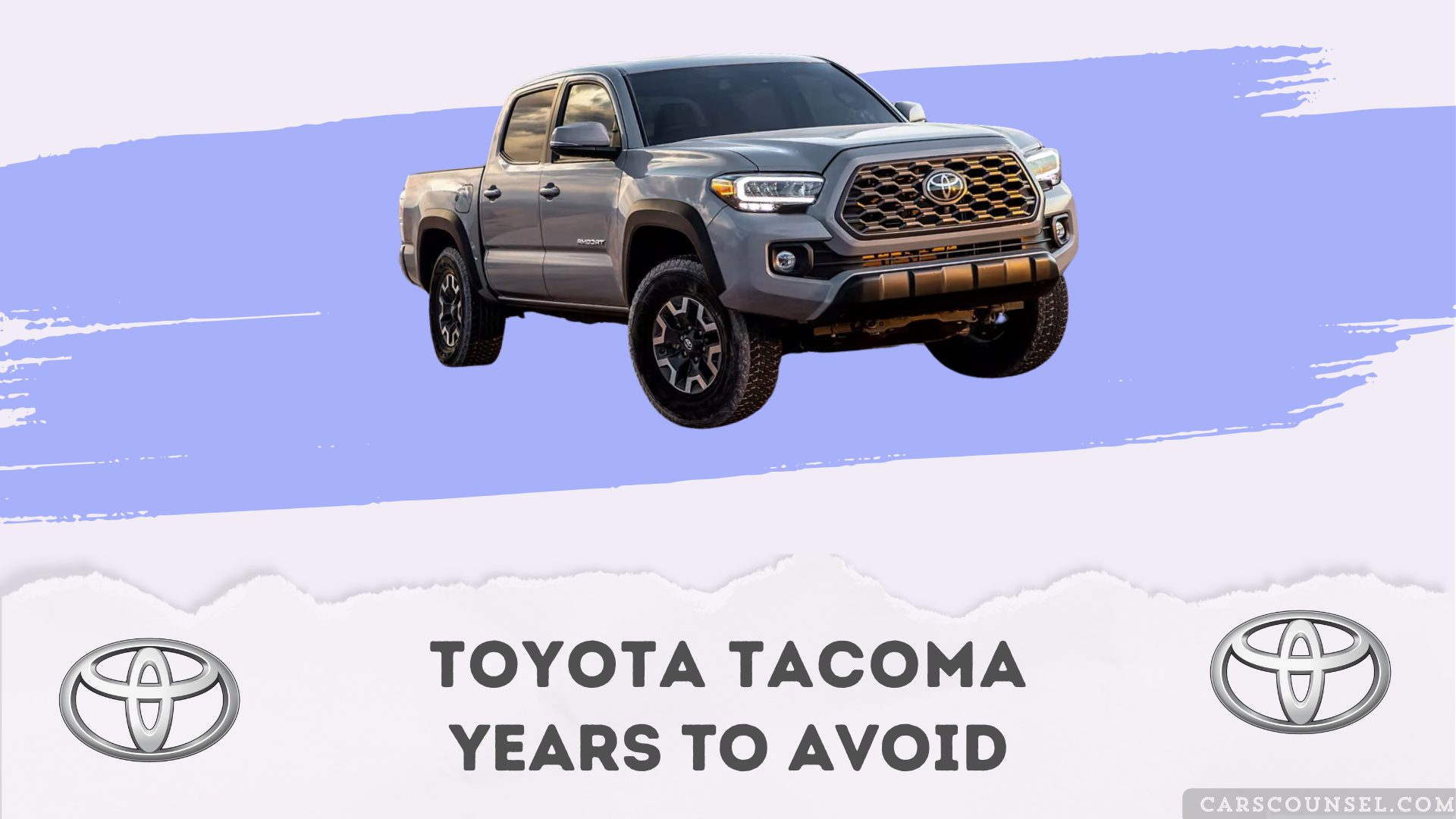
The best Toyota Tacoma years are 2020 through 2023 for modern features, and 2013 through 2015 for older V6 reliability. Buyers should avoid 2005 through 2010 models due to severe, unrepairable frame rust risks.
These rankings are comparative, and no used truck is entirely flawless. Long-term reliability heavily depends on strict maintenance records, previous ownership care, and whether critical manufacturer recalls were completed on time.
Reliability varies significantly by generation and powertrain. The naturally aspirated 4.0-liter V6 is notably robust, while early third-generation automatic transmissions require software updates to resolve shifting complaints.
Quick Navigation
Best and Worst Toyota Tacoma Years at a Glance
| Model Year or Range | Verdict | Main Reason | Buyer Guidance |
|---|---|---|---|
| 2024-2025 | Too New to Judge | 4th gen redesign, new turbo/hybrid | Wait for long-term data |
| 2020-2023 | Best Late-Generation Choice | Mature 3rd gen, sorted transmission | Verify maintenance |
| 2018-2019 | Good Choice | Improved 3rd gen tuning | Check for differential leaks |
| 2016-2017 | Approach Carefully | Early 6-speed transmission hunting | Verify transmission TSB |
| 2013-2015 | Best Older Choice | Late 2nd gen, reliable 4.0L V6 | Inspect for rust |
| 2011-2012 | Good With Inspection | Mid 2nd gen, solid powertrain | Inspect frame thoroughly |
| 2005-2010 | Avoid | Severe frame rust, expired settlement | Look for 2013 or newer |
| 1995-2004 | Good With Inspection | 1st gen, aging rubber and ball joints | Inspect suspension |
Key Takeaways
- The 2020-2023 models offer the best balance of modern safety and sorted third-generation reliability.
- Avoid 2005-2010 models entirely due to catastrophic frame rust and expired manufacturer replacement programs.
- The 2013-2015 models are the most dependable older choices, featuring the robust 4.0-liter V6 engine.
- Always verify if the transmission software update was performed on 2016-2017 V6 automatic models.
- Recent fourth-generation models have less long-term ownership history, making them harder to fully evaluate.
- Always check the VIN for open recalls before purchasing any used Toyota truck.
How We Evaluated the Toyota Tacoma Model Years
Our analysis considers official recalls, manufacturer service campaigns, consumer complaints, and powertrain differences across generations. We weigh the severity and recurrence of mechanical issues against the overall ownership experience.
Consumer complaints are not confirmed failure rates, and a single recall does not automatically make a vehicle unreliable. Recent model years have less long-term ownership history, making them harder to evaluate.
Ultimately, a Best Choice designation means a model year is comparatively stronger than its neighbors. It does not guarantee a trouble-free ownership experience, and a pre-purchase inspection remains essential.
Best Toyota Tacoma Years
2020-2023 (Best Late-Generation Choice)
The 2020 through 2023 models represent the most mature and dependable era of the third-generation Tacoma. Toyota resolved earlier transmission shifting complaints, resulting in a much smoother six-speed automatic experience.
These years offer excellent off-road capability and modern safety features. Buyers should prioritize examples with complete service records and carefully inspect the undercarriage for surface rust, especially in snowy regions.
2013-2015 (Best Older Choice)
The final years of the second generation are widely regarded as the most reliable older Tacomas. The legendary 4.0-liter V6 engine is exceptionally durable, and Toyota had addressed most early electrical complaints.
These models offer a great balance of affordability and capability. Ensure the vehicle has a clean history regarding frame rust and verify that all suspension components are in good condition.
Best Year by Buyer Type
The 2020-2023 models remain the Best Overall choice for used buyers seeking modern safety features, refined daily driving, and proven third-generation reliability without the premium cost of the newest redesign.
For buyers on a stricter budget or those wanting a simpler engine, the 2013-2015 models serve as the Best Older Choice, provided the frame is thoroughly inspected for corrosion.
Years to Approach Carefully
2016-2017 (Approach Carefully)
The early third-generation models introduced a new 3.5-liter V6 and a six-speed automatic transmission. The 2016 and 2017 models specifically suffered from gear hunting and harsh shifting complaints.
Toyota released technical service bulletins and software updates to address this. You can buy these years if the dealership has verified the transmission software update and valve body inspections were completed.
2011-2012 (Good With Inspection)
These mid-second-generation models feature the robust 4.0-liter V6 but fall within the extended window of potential frame corrosion concerns. While less severe than earlier years, structural inspection remains mandatory.
Only consider these years if a professional inspection confirms the frame is solid. Buyers must also verify that all aging suspension components and lower ball joints are within safe tolerances.
1995-2004 (Good With Inspection)
The first-generation Tacomas are beloved for their simplicity and off-road prowess. However, these trucks are now quite old, and aging rubber components, lower ball joint wear, and potential frame corrosion require careful inspection.
Budget accordingly for potential suspension and brake overhauls. Only consider these years if the vehicle has been garage-kept and possesses a verifiable history of strict maintenance and rust prevention.
Worst Toyota Tacoma Years
2005-2010 (Avoid)
The early second-generation models are affected by a massive frame rust corrosion issue that led to a major class-action settlement. Because this manufacturer frame replacement program has largely expired, buyers face immense financial risk.
Frames on these years can rust from the inside out, compromising structural integrity and safety. Unless the seller provides definitive documentation of a professionally replaced frame, these years are a strict Avoid.
Toyota Tacoma Reliability by Generation
First Generation (1995-2004)
Built on a traditional compact truck architecture, which shares related heritage with the Toyota 4Runner, this generation established the Tacoma’s rugged reputation. Early years require strict lower ball joint and frame inspections.
Second Generation (2005-2015)
Toyota vastly increased the size and power of the Tacoma, introducing the robust 4.0-liter V6. While the 2013-2015 models are excellent, the 2005-2010 years are heavily impacted by severe frame rust vulnerabilities.
Third Generation (2016-2023)
The third generation introduced a 3.5-liter V6 and updated styling. Early models struggled with transmission shifting software, but the 2020-2023 models represent the most refined and dependable versions of this platform.
Fourth Generation (2024-Present)
The latest generation moved to a turbocharged four-cylinder and hybrid powertrains on a new global platform. It offers modern technology and improved efficiency, though long-term reliability data is still accumulating.
Common Toyota Tacoma Problems
Frame Rust and Corrosion
Affecting primarily 2005 through 2010 models, the steel frames are highly susceptible to severe internal rust and perforation. This compromised structural integrity and led to an extensive, now mostly expired, manufacturer frame replacement program.
Transmission Gear Hunting
Many 2016 and 2017 models with the 3.5-liter V6 and six-speed automatic experience excessive gear hunting and harsh shifts. This requires a dealership software update and, in some cases, valve body replacement to resolve.
Sticky Accelerator Pedal
Certain 2009 and 2010 models were included in a massive manufacturer recall for accelerator pedals that could stick or become trapped. Buyers must verify this critical safety recall was completed on affected vehicles.
Clear Coat Peeling
Many 2005 through 2015 models, particularly in white and red colors, suffer from premature clear coat failure. This exposes the base paint to the elements, leading to fading and potential surface corrosion.
What to Check Before Buying a Used Toyota Tacoma
- Verify the VIN for any open manufacturer recalls, especially the sticky pedal and airbag campaigns.
- Inspect the entire steel frame with a flashlight and pick for severe rust or perforation on 2005-2015 models.
- Demand documentation of the frame replacement program for 2005-2010 models if applicable.
- Test the transmission for harsh shifts or excessive gear hunting on 2016-2017 V6 models.
- Check for lower ball joint play and suspension wear on first-generation models.
- Scan for hidden diagnostic trouble codes using a Toyota-specific OBD2 scanner.
Related Buying Guides
- Toyota 4Runner years to avoid: A rugged SUV alternative sharing related body-on-frame heritage, offering enclosed cargo space and superior off-road capability.
- Toyota Tundra years to avoid: A full-size pickup alternative for buyers who need maximum towing capacity, heavy payload ratings, and a larger crew cab.
- Nissan Frontier years to avoid: A direct midsize truck competitor offering a standard V6 engine and a more comfortable daily ride, though with less off-road prestige.
Frequently Asked Questions
Which year Tacoma is most reliable?
The 2020 through 2023 models are widely considered the most reliable modern choices. They feature the matured third-generation platform and avoid the transmission shifting issues found in the earlier 2016 and 2017 models.
What year Tacoma should you not buy?
You should avoid the 2005 through 2010 models. These specific years suffer from severe frame rust vulnerabilities, and the manufacturer frame replacement program has largely expired, leaving buyers with massive financial risk.
How long do Toyota Tacomas last?
Well-maintained examples with the 4.0-liter V6 can reach exceptionally high mileage. Longevity depends heavily on strict maintenance records, rust prevention, and whether critical frame and suspension components were properly addressed.
Does the Toyota Tacoma have transmission problems?
The 2016 and 2017 V6 automatic models frequently experience gear hunting and harsh shifts. This was largely resolved by a manufacturer software update and valve body revisions in later third-generation models.
Are Toyota Tacomas expensive to maintain?
Maintenance costs are average for midsize pickups. However, repairing severely rusted frames, replacing failed lower ball joints, or fixing early third-generation transmission issues can lead to unexpectedly high repair bills.
What is the most common problem with a Tacoma?
The most widespread historical issue is severe frame rust on 2005 through 2010 models. More recently, owners of 2016 and 2017 V6 models frequently report transmission gear hunting and harsh shifting complaints.
Choosing the Right Toyota Tacoma Model Year
The safest used purchases are the 2020-2023 models for modern buyers and the 2013-2015 models for budget shoppers. These years offer the best balance of refined daily driving and proven mechanical durability.
Avoid the 2005-2010 models entirely due to critical frame rust programs. Always verify the VIN for open recalls, demand complete service records, and arrange an independent pre-purchase inspection before buying.

