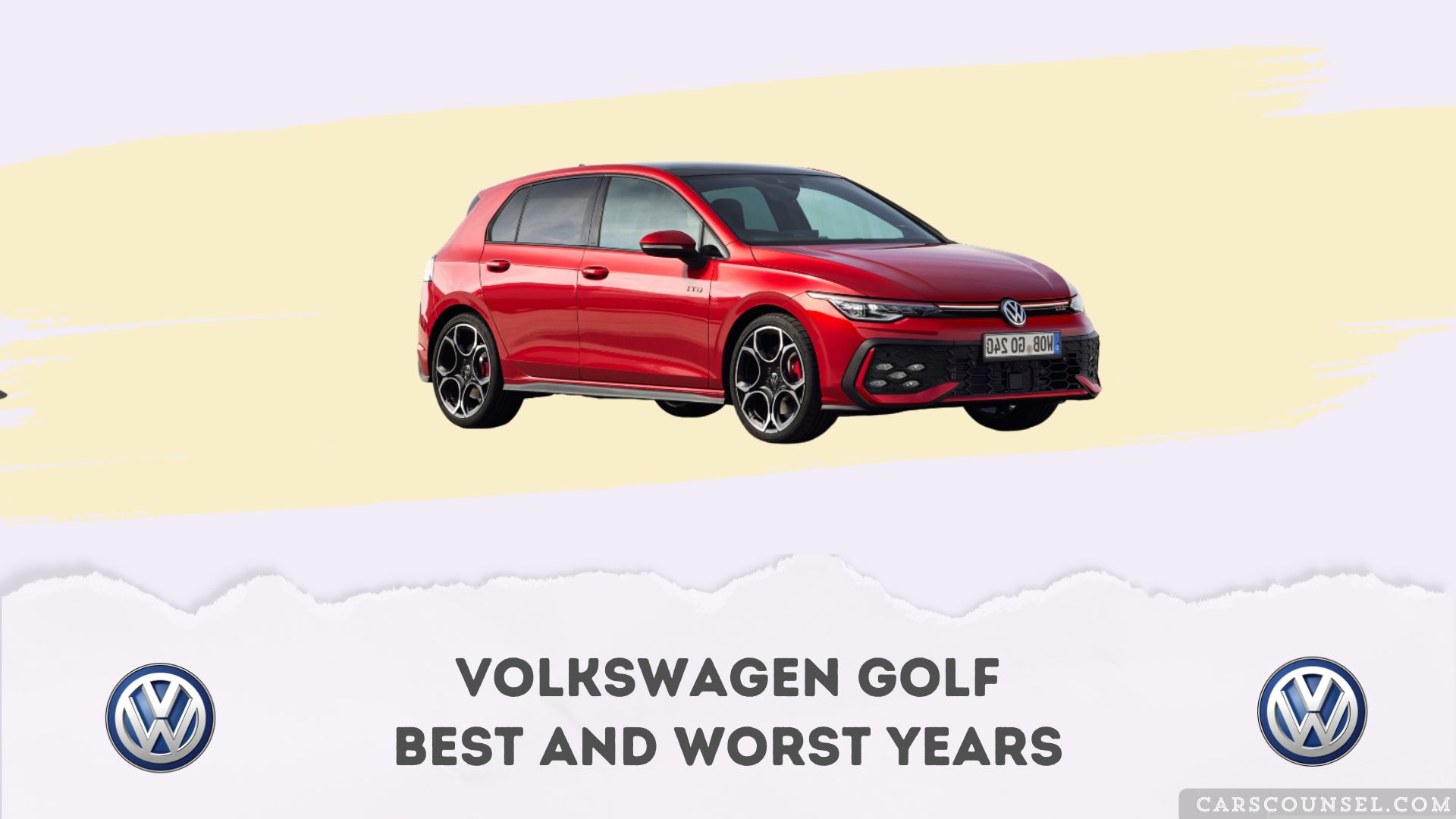
The best Volkswagen Golf GTI years are the 2015-2021 models, offering a reliable turbocharged engine and refined daily driving. Buyers should avoid the 1993-1997 models due to poor US-market performance and early reliability issues.
Rankings are comparative, and no vintage or modern hot hatch is entirely flawless. Maintenance history, previous ownership, and rust prevention heavily influence long-term reliability and ownership costs.
Significant differences exist between the early naturally aspirated engines and the modern turbocharged configurations. Each generation requires specific inspection priorities, particularly regarding timing components and carbon buildup.
Quick Navigation
Best and Worst Volkswagen Golf GTI Years at a Glance
| Model Year Range | Verdict | Main Reason | Buyer Guidance |
|---|---|---|---|
| 1983-1992 | Best Enthusiast Choice | Classic analog driving feel | Inspect for rust and aging wiring |
| 1993-1997 | Avoid | Sluggish US-spec engine, poor handling | Seek later generations for better performance |
| 1999-2005 | Approach Carefully | 1.8T oil sludge and electrical gremlins | Verify timing belt and coil pack service |
| 2006-2009 | Good With Inspection | FSI cam follower and timing chain wear | Confirm high-pressure fuel pump upgrades |
| 2010-2014 | Good Choice | Refined TSI engine, great daily driver | Check for carbon buildup and water pumps |
| 2015-2021 | Best Choice | Reliable EA888 Gen 3, excellent balance | Top choice for modern daily commuting |
| 2022-2026 | Too New to Judge | Modern tech, infotainment complaints | Long-term ownership data remains limited |
Key Takeaways
- The 2015-2021 models represent the best choices, featuring the highly reliable EA888 Gen 3 engine and refined interiors.
- Buyers must strictly avoid the 1993-1997 models, which suffered from a sluggish 115-horsepower engine and poor handling in the US market.
- The 2006-2009 models require careful inspection of the high-pressure fuel pump cam follower and timing chain tensioner.
- Regular maintenance, especially timing belt replacements and carbon cleaning, is critical for all turbocharged hatchback generations.
- Always verify the vehicle identification number for open recalls and insist on a pre-purchase inspection.
How We Evaluated the Volkswagen Golf GTI Model Years
Our analysis reviews official recalls, manufacturer service campaigns, technical service bulletins, and long-term ownership data. We weigh the severity of mechanical failures against repair costs and daily drivability.
Complaints are not failure rates, and a recall does not automatically make a year unreliable. Recent models have less ownership history, so “best” means comparatively stronger.
Best Volkswagen Golf GTI Years
2015-2021 (Mk7 Generation)
The Mk7 generation represents the pinnacle of the modern GTI. It features the EA888 Gen 3 engine, which resolved the timing chain vulnerabilities of earlier iterations while delivering excellent power and efficiency.
These models offer a refined daily driving experience with premium interior materials. Buyers should still inspect for water pump leaks and ensure all software updates have been applied.
1983-1992 (Mk1 and Mk2 Generations)
The original Mk1 and Mk2 models are highly sought after by collectors. They offer a raw, analog driving experience that modern vehicles cannot replicate, featuring lightweight chassis and engaging manual transmissions.
These classic Volkswagen models require strict rust inspections and specialized knowledge to maintain. They are best suited for enthusiasts willing to perform frequent age-related maintenance.
Best Year by Buyer Type
Best Overall
The 2015-2021 models provide the best balance of modern reliability, daily comfort, and accessible performance for most used buyers.
Best Enthusiast Choice
The 1983-1992 models offer unmatched classic appeal and analog driving dynamics for dedicated collectors and vintage racing enthusiasts.
Best Budget Option
The 2010-2014 models provide excellent performance and modern safety features at a lower entry price, provided the timing chain tensioner has been updated.
Years to Approach Carefully
1999-2005 (Mk4 Generation)
The Mk4 introduced the popular 1.8T engine but suffers from oil sludge issues if maintenance was neglected. Electrical gremlins, failing window regulators, and brittle interior plastics are also common complaints.
Buyers must verify extensive service records and inspect the engine for sludge buildup. The 20th Anniversary Edition models are particularly desirable but command a premium price.
2006-2009 (Mk5 Generation)
The Mk5 returned the GTI to its performance roots but introduced the 2.0T FSI engine, which is prone to high-pressure fuel pump cam follower wear and early timing chain tensioner failures.
A documented cam follower replacement and an updated timing chain tensioner are mandatory before purchase. Carbon buildup on the intake valves also requires periodic walnut blasting.
Worst Volkswagen Golf GTI Years
1993-1997 (Mk3 Generation)
The Mk3 generation is widely considered the lowest point for the GTI in the United States. Instead of a dedicated performance model, it was essentially a standard Golf with a body kit and a sluggish engine.
The added weight and lack of power resulted in poor acceleration and uninspiring handling. The later VR6 models offered more power but suffered from timing chain guide failures and overheating issues.
Volkswagen Golf GTI Reliability by Generation
Early Generations (1983-1997)
The Mk1 and Mk2 established the hot hatch formula with lightweight, engaging dynamics. The Mk3 lost its way in the US market, prioritizing comfort over performance and suffering from severe powertrain compromises.
The Turbo Era (1999-2014)
The Mk4 and Mk5 generations introduced turbocharged powertrains, bringing significant performance gains but also complex maintenance requirements like timing belts, coil packs, and direct injection carbon management.
The Mk6 refined the formula with the improved TSI engine, offering a much more reliable daily driver while maintaining the practical hatchback layout.
Modern Refinement (2015-Present)
The Mk7 and Mk8 generations benefit from the robust EA888 engine family. While early Mk8 models face criticism for their touch-sensitive infotainment controls, the underlying mechanical reliability remains strong.
Common Volkswagen Golf GTI Problems
Timing Chain and Tensioner Failures
Affecting the 2006-2014 models, the early timing chain tensioners could fail, causing the chain to jump and destroy the engine. Volkswagen issued updated parts, so verifying this repair is critical.
High-Pressure Fuel Pump Cam Follower
Found on the 2006-2009 FSI engines, the cam follower wears down rapidly and can punch through the housing, destroying both the fuel pump and the camshaft. It requires regular inspection.
Carbon Buildup on Intake Valves
Direct injection engines from 2006 onward do not spray fuel over the intake valves, leading to carbon accumulation. This causes rough idling and misfires, requiring periodic manual cleaning.
Water Pump and Thermostat Housing Leaks
The plastic water pump and thermostat housings on the Mk7 and Mk8 generations are prone to cracking and leaking coolant. Replacing them with updated aluminum or reinforced components is recommended.
What to Check Before Buying a Used Volkswagen Golf GTI
- Verify the VIN for open recalls and software update completion.
- Inspect the engine bay for signs of coolant leaks around the water pump housing.
- Demand physical proof of timing chain tensioner and cam follower replacements on 2006-2014 models.
- Check for excessive carbon buildup by reviewing recent intake valve cleaning records.
- Inspect the undercarriage and wheel arches for structural rust on older Mk1 through Mk4 examples.
- Test the dual-clutch automatic transmission for smooth, hesitation-free shifts and proper DSG fluid service.
- Arrange a pre-purchase inspection with a certified European automotive specialist.
Related Buying Guides
- Volkswagen Passat best and worst years – Midsize sedan alternative for buyers needing maximum rear-seat space and a traditional trunk layout.
- Volkswagen Tiguan best and worst years – Crossover alternative for buyers requiring more cargo room and available all-wheel drive.
- Volkswagen Touareg best and worst years – Historical luxury SUV alternative for buyers seeking heavy-duty off-road capability and premium towing features.
- Volkswagen Taos best and worst years – Compact crossover alternative for buyers prioritizing fuel efficiency and modern safety tech over track performance.
Frequently Asked Questions
Which VW Golf GTI year is most reliable?
The 2015-2021 models offer the strongest reliability records. They benefit from the mature EA888 Gen 3 engine, avoiding the severe timing chain and cam follower flaws of earlier turbocharged generations.
Does the VW GTI have transmission problems?
The manual transmissions are generally robust. The DSG automatic requires strict adherence to the 40,000-mile fluid and filter service interval to prevent mechatronic unit failures and clutch pack wear.
Is the Mk4 GTI a bad car?
The Mk4 offers classic tuning potential but requires careful maintenance. The 1.8T engine is prone to oil sludge if oil changes were delayed, and early models suffer from numerous electrical gremlins.
Why is the Mk3 GTI considered the worst?
In the US market, the Mk3 was essentially a standard Golf with a body kit and a slow 115-horsepower engine. It lacked the performance and handling enhancements expected of a true GTI.
Do VW GTI engines last a long time?
Well-maintained examples can reach high mileage, but longevity depends heavily on strict maintenance. Timing chain replacements, carbon cleaning, and using the correct oil specifications are mandatory for extended engine life.
Are modern VW GTIs expensive to maintain?
Yes. While modern generations are mechanically reliable, their complex turbocharged components, direct injection systems, and specialized electronics require expensive dealership or specialist servicing compared to older, simpler models.
Choosing the Right Volkswagen Golf GTI Model Year
The Volkswagen Golf GTI remains the benchmark hot hatch, but its complex engineering demands careful model-year selection. The 2015-2021 models provide the most secure and refined ownership experience.
Buyers must strictly avoid 1993-1997 examples due to severe performance compromises and poor handling. Always prioritize vehicles with documented timing chain, tensioner, and water pump replacements.
Before purchasing, verify the VIN for open recalls and hire a European specialist for a thorough pre-purchase inspection. Knowing which models stand out ensures driving satisfaction rather than severe financial consequences.

