The best Acura ILX model years are 2019 through 2022. These final production years offer the most refined powertrain, standard advanced safety features, and updated technology.
Buyers should approach the 2014 and 2015 models with caution and avoid the 2013 model year entirely. Early models suffer from underpowered automatic transmissions and significant safety recalls, landing them on our list of years to avoid.
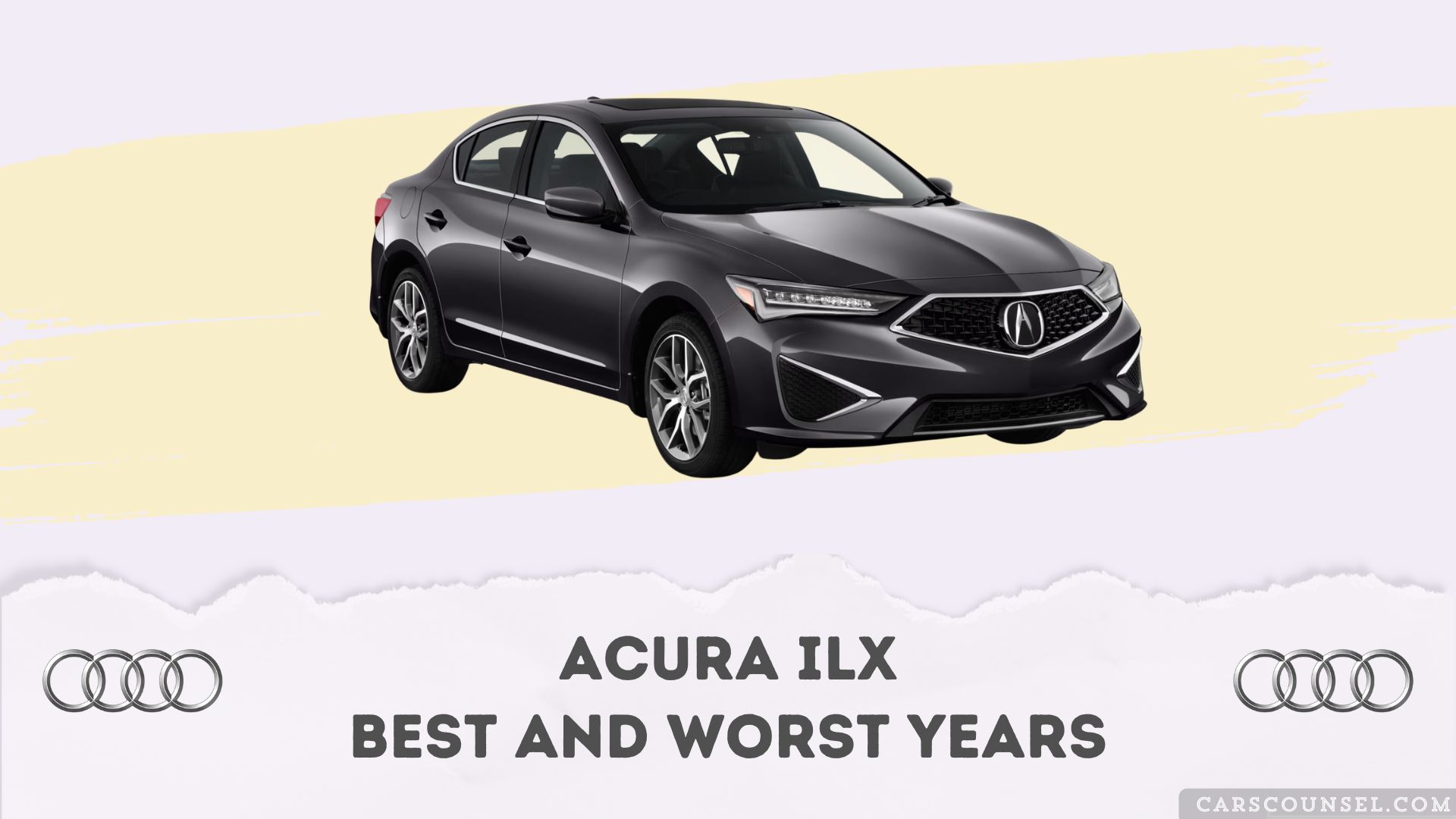
Rankings are comparative, and no used vehicle is flawless. Maintenance history, overall condition, and proper recall completion remain critical factors in your purchase decision.
Meaningful differences exist between early and late production runs. The 2016 refresh introduced a much stronger engine, while 2019 and newer models added standard driver-assistance technology.
Quick Navigation
Best and Worst Acura ILX Years at a Glance
| Model Year | Verdict | Main Reason | Buyer Guidance |
|---|---|---|---|
| 2019–2022 | Best Late-Generation Choice | Standard safety tech, refined powertrain | Prioritize these for daily driving |
| 2016–2018 | Good Choice | Strong 2.4L engine and 8-speed DCT | Verify DCT service history |
| 2014–2015 | Approach Carefully | Underpowered automatic, older tech | Only consider manual or low-mileage examples |
| 2013 | Avoid | First-year issues, hybrid risks, Takata recalls | Skip this model year entirely |
Key Takeaways
- The 2019–2022 models are the strongest choices, featuring standard AcuraWatch safety suites.
- The 2016 refresh introduced a vastly superior 2.4-liter engine and 8-speed dual-clutch transmission.
- Avoid the 2013 model year due to first-year build quirks, hybrid system concerns, and major airbag recalls.
- Early automatic models (2013–2015) use an underpowered 2.0-liter engine and a dated 5-speed transmission.
- Always verify that Takata airbag recalls have been completed on any 2013–2015 example.
- Long-term reliability heavily depends on consistent maintenance and a clean service history.
How We Evaluated the Acura ILX Model Years
Our analysis considers official safety recalls, manufacturer service campaigns, and long-term ownership data. We also track powertrain differences and generation changes to identify reliability patterns.
Consumer complaints help identify recurring issues, but they are not confirmed failure rates. A single recall does not automatically make a vehicle unreliable.
Recent model years naturally have less ownership history available. Therefore, our top recommendations reflect comparatively stronger reliability rather than absolute perfection.
Best Acura ILX Years
2019–2022: Best Late-Generation Choice
The 2019 through 2022 model years represent the most refined versions of the ILX. Acura made the AcuraWatch safety suite standard starting in 2019, adding automatic emergency braking and lane-keeping assist.
These final production years benefit from a mature 2.4-liter engine and an eight-speed dual-clutch transmission. Software updates over the years smoothed out early transmission hesitation.
Because the ILX was discontinued after 2022 to make way for the Acura Integra, these later models feature the most modern infotainment and interior materials available.
2016–2018: Good Choice
The 2016 model year introduced a massive mechanical refresh. Acura replaced the underpowered base engine with a 201-horsepower 2.4-liter four-cylinder paired with an eight-speed dual-clutch transmission.
This powertrain transformation turned the ILX into a genuinely engaging compact sedan. However, buyers should test drive these years to ensure the transmission shifts smoothly at low speeds.
Best Acura ILX Year by Buyer Type
- Best Overall: 2021. Offers mature technology, standard safety features, and a fully sorted powertrain.
- Best Budget Option: 2016. The first year of the superior 2.4-liter powertrain, often available at a lower price point.
- Best Enthusiast Alternative: Look for a used Acura TLX with the V6 if you need more power and space.
Years to Approach Carefully
2014–2015: Approach Carefully
The 2014 and 2015 model years carry over the older mechanical layout. If you want an automatic transmission, you are stuck with a 150-horsepower 2.0-liter engine and a five-speed automatic.
This powertrain feels sluggish and outdated compared to competitors. The 2.4-liter engine was available, but only with a six-speed manual transmission, limiting its appeal for most buyers.
Additionally, these years may be subject to ongoing Takata airbag recall campaigns. Always verify that all safety repairs have been completed before purchasing.
Worst Acura ILX Years
2013: Avoid
The inaugural 2013 model year is the most problematic. It suffers from typical first-year build quirks and an awkward powertrain lineup that includes a complex hybrid variant.
The hybrid system introduced potential battery and electric motor complications that are expensive to diagnose and repair. Most buyers are better served by conventional gasoline models.
Furthermore, the 2013 model year is heavily affected by critical Takata airbag inflator recalls. Combined with the lackluster base engine, this year poses unnecessary risks for used car shoppers.
Acura ILX Reliability by Production Era
Early Production (2013–2015)
The early ILX shares related architecture with the ninth-generation Honda Civic. While the underlying chassis is durable, the luxury appointments and early powertrains left much to be desired.
Reliability is heavily dependent on avoiding the hybrid model and ensuring all airbag recalls are addressed. The manual transmission models are generally robust but hard to find.
Refreshed Production (2016–2022)
Acura heavily revised the ILX for 2016, giving it new exterior styling and the excellent 2.4-liter EarthDreams engine. This era is significantly more reliable and enjoyable to drive.
Later years in this run benefit from incremental software updates that improved transmission mapping and infotainment responsiveness. These are the models that truly deliver on the compact luxury promise.
Common Acura ILX Problems
Takata Airbag Recalls
Models from the early production era are included in the massive Takata airbag recall expansion. Faulty inflators can rupture during deployment, posing a severe safety risk.
Buyers must run the vehicle identification number through the NHTSA database. Do not purchase an affected vehicle unless the dealer confirms the free repair is already completed.
Dual-Clutch Transmission Hesitation
The eight-speed dual-clutch transmission introduced in 2016 is unique because it uses a torque converter. While generally reliable, some owners report low-speed shudder or hesitation.
This issue is often resolved by software updates or fluid changes. A thorough test drive in stop-and-go traffic is essential to evaluate transmission smoothness.
Infotainment Glitches
Earlier models feature a dual-screen setup that is notoriously slow and prone to freezing. Even the updated systems in later years can lag when using smartphone integration.
While not a mechanical failure, an unresponsive screen is a daily frustration. Ensure all menus, climate controls, and backup cameras function perfectly during your inspection.
What to Check Before Buying a Used Acura ILX
- Verify the VIN for open safety recalls, especially the Takata airbag campaigns.
- Review service records to confirm regular engine oil and transmission fluid changes.
- Test drive the vehicle in heavy traffic to check for dual-clutch transmission shudder.
- Inspect the infotainment screen for dead pixels, lag, or unresponsive touch inputs.
- Listen for unusual suspension noises over speed bumps, as control arm bushings can wear.
- Arrange an independent pre-purchase inspection to check for underlying frame or engine issues.
Related Buying Guides
- Acura TSX years to avoid: A discontinued sport sedan that preceded the modern TLX.
- Acura TL years to avoid: A larger midsize sedan for buyers needing more rear legroom.
- Acura RDX years to avoid: A compact luxury crossover alternative if you prefer a higher ride height.
- Acura MDX years to avoid: A three-row family hauler from the same luxury brand.
Frequently Asked Questions
What is the most reliable Acura ILX year?
The 2021 model year is widely considered the most reliable. It benefits from years of powertrain refinements, standard safety technology, and resolved infotainment software bugs.
Why should I avoid the 2013 Acura ILX?
The 2013 model year features an underpowered base engine, complex hybrid system risks, and critical Takata airbag recalls. It is the least refined version of the compact sedan.
Does the Acura ILX have transmission problems?
The 2016 and newer models use an eight-speed dual-clutch transmission. While generally robust, some examples exhibit low-speed hesitation that may require software updates or fluid service.
Is the Acura ILX expensive to maintain?
Maintenance costs are reasonable for a luxury brand, as it shares many underlying components with mainstream Honda models. Routine servicing is straightforward and widely available.
What replaced the Acura ILX?
Acura discontinued the ILX after the 2022 model year. It was directly replaced by the reintroduced Acura Integra, which offers a more modern platform and a liftback body style.
Are used Acura ILX models good on gas?
Yes, the 2.4-liter engine delivers competitive fuel economy for the luxury compact segment. Expect around 24 mpg in the city and 35 mpg on the highway with regular unleaded fuel.
Choosing the Right Acura ILX Model Year
The Acura ILX offers an accessible entry into the luxury compact segment, provided you select the right production year. Focus your search on the 2019 through 2022 models.
These later years provide the best combination of standard safety features, refined powertrain performance, and modern technology. They represent the most sorted versions of this platform.
Strictly avoid the 2013 model year due to safety recalls and first-year engineering compromises. Always verify recall completion and secure an independent inspection before finalizing your purchase.

