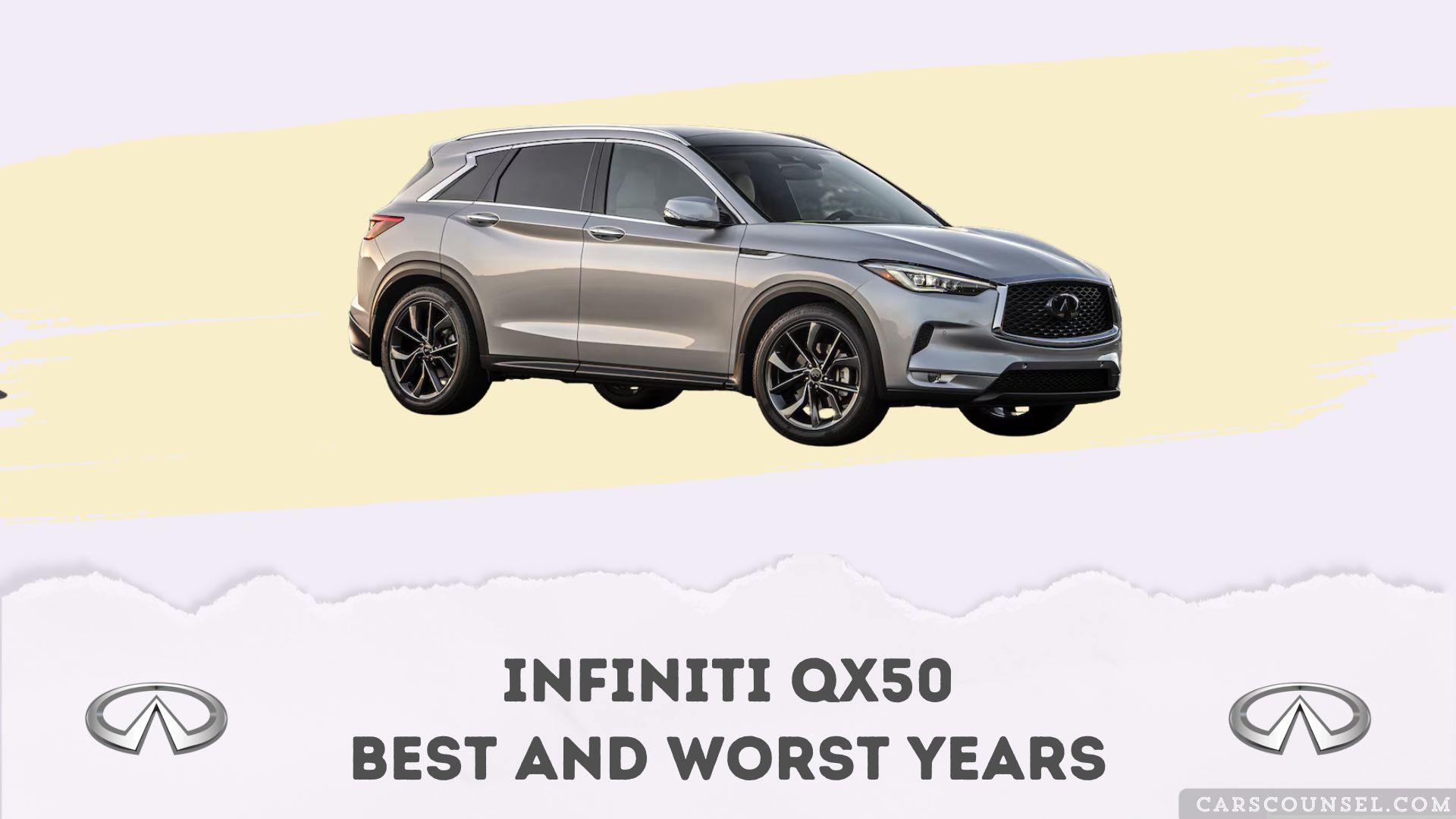
If you want a reliable used Infiniti QX50, the 2014 to 2017 model years are your best choice. These first-generation models use a proven naturally aspirated V6 and a conventional automatic transmission, offering excellent long-term dependability.
Conversely, you should approach the 2019 to 2021 models carefully. These years introduced a highly complex variable-compression turbocharged engine and a continuously variable transmission, leading to more frequent electrical and powertrain complaints.
Rankings are comparative, and no used luxury SUV is flawless. Always verify maintenance records, check for open recalls using the VIN, and arrange an independent pre-purchase inspection before buying.
Meaningful differences exist between generations. The first generation features a traditional powertrain, while the second generation relies on a complex turbocharged four-cylinder and a CVT, which significantly changes the reliability profile and driving experience.
Quick Navigation
Best and Worst Infiniti QX50 Years at a Glance
| Model Year | Verdict | Main Reason | Buyer Guidance |
|---|---|---|---|
| 2014 – 2017 | Best Older Choice | Proven V6 engine and conventional transmission | Inspect for oil gallery gasket leaks |
| 2019 | Avoid | First-year redesign with complex VC-Turbo engine | High risk of electrical and powertrain issues |
| 2020 – 2021 | Approach Carefully | VC-Turbo complexity and CVT hesitation | Verify software updates and warranty status |
| 2022 – 2024 | Too New to Judge | Limited long-term ownership data | Rely on remaining factory warranty |
Key Takeaways
- The 2014 through 2017 models are the most reliable, utilizing a proven 3.7L V6 engine.
- Avoid the 2019 model year due to first-year redesign gremlins and complex turbocharger issues.
- The 2020 and 2021 models require careful inspection of the CVT and engine software.
- Recent models (2022-2024) lack long-term reliability data and are too new to judge.
- Always check the VIN for open recalls, especially regarding airbags and fuel systems.
- An independent pre-purchase inspection is critical for any used luxury crossover.
How We Evaluated the Infiniti QX50 Model Years
Our analysis reviews official NHTSA recalls, manufacturer service campaigns, and verified owner complaints. We also track powertrain differences, generation changes, and long-term repair complexity.
Consumer complaints are not confirmed failure rates, and a single recall does not automatically make a vehicle unreliable. Recent model years have less ownership history, making long-term predictions difficult. “Best” means comparatively stronger, not flawless.
Best Infiniti QX50 Years
2014 – 2017: Best Older Choice
The first-generation QX50 is essentially a rebadged EX37, which is widely regarded as one of the most reliable vehicles Infiniti ever built. It features the legendary 3.7L VQ37VHR V6 engine paired with a robust 7-speed automatic transmission.
Because this powertrain was thoroughly tested in previous models, it avoids the teething issues of new technology. Owners report excellent longevity when routine maintenance is followed.
Buyers should still inspect the engine for potential oil gallery gasket degradation, a known issue on high-mileage VQ engines. Overall, these years offer the best blend of luxury and mechanical dependability.
Best Year by Buyer Type
- Best Overall Value: 2016 (Mature first-generation platform with updated infotainment).
- Best Enthusiast Choice: 2014 – 2017 (Naturally aspirated V6 and available rear-wheel-drive dynamics).
- Best Modern Alternative: 2022 – 2024 (For buyers who prioritize modern safety tech over long-term mechanical simplicity).
Years to Approach Carefully
2020 – 2021: Approach Carefully
By 2020, Infiniti had addressed some of the first-year software bugs, but the 2.0L VC-Turbo engine remains highly complex. This variable-compression system uses a multi-link mechanism that can be expensive to repair out of warranty.
Owners have also reported hesitation from the Xtronic CVT during low-speed acceleration. If you choose these years, ensure all technical service bulletins and software updates have been applied by a dealer.
Worst Infiniti QX50 Years
2019: Avoid
The 2019 model year marks a complete redesign and the introduction of the VC-Turbo engine. First-year redesigns frequently suffer from electrical gremlins, sensor failures, and powertrain calibration issues.
Early versions of the 2.0L turbo experienced stalling, rough idling, and check-engine lights related to the complex compression-changing mechanism. Combined with a newly programmed CVT, the 2019 model presents a higher risk of expensive out-of-warranty repairs.
Infiniti QX50 Reliability by Generation
First Generation (2014 – 2017)
This generation carries over the architecture of the highly successful Infiniti EX. It shares its platform and powertrain with the Infiniti G37, ensuring parts availability and proven reliability.
The 3.7L V6 is naturally aspirated, avoiding the heat and stress issues associated with modern turbochargers. The conventional automatic transmission is also far more durable than the CVTs found in later models.
Second Generation (2019 – Present)
Infiniti skipped the 2018 model year in the US before launching the completely redesigned J55 chassis. This generation focuses on fuel efficiency and interior technology, utilizing a 2.0L variable-compression turbocharged four-cylinder engine.
While it offers more cabin space and modern safety features, the mechanical complexity of the VC-Turbo and the Xtronic CVT makes long-term reliability more uncertain compared to the previous generation.
Common Infiniti QX50 Problems
VC-Turbo Engine Complexity (2019 – Present)
The variable-compression turbo engine uses an intricate multi-link system to alter the compression ratio on the fly. While innovative, this adds significant mechanical complexity and potential failure points that traditional engines do not have.
CVT Hesitation and Shuddering (2019 – Present)
The Xtronic continuously variable transmission is tuned for fuel economy, which can result in sluggish acceleration, artificial gear-shift feelings, and occasional shuddering at low speeds.
Oil Gallery Gasket Degradation (2014 – 2017)
High-mileage examples of the 3.7L V6 may experience failure of the paper oil gallery gaskets. If left unaddressed, this can lead to oil starvation and severe engine damage.
What to Check Before Buying a Used Infiniti QX50
- Verify the VIN for open NHTSA recalls and manufacturer service campaigns.
- Review service records to ensure strict adherence to oil change intervals.
- Inspect the engine bay and undercarriage for oil leaks, particularly around the oil cooler and gallery gaskets.
- Test drive the vehicle to check for CVT hesitation, shuddering, or rough idling.
- Scan the OBD-II port for pending diagnostic trouble codes or incomplete readiness monitors.
- Inspect the suspension components for premature wear, as these are heavy luxury crossovers.
- Arrange an independent pre-purchase inspection with a technician familiar with Infiniti powertrains.
Related Buying Guides
- Infiniti QX55 best and worst years: A coupe-like alternative with similar modern powertrains.
- Infiniti Q50 best and worst years: The sport sedan equivalent for buyers who prefer a lower ride height.
- Infiniti QX60 best and worst years: A larger, three-row alternative for families needing more passenger space.
Frequently Asked Questions
What is the most reliable Infiniti QX50 year?
The 2014 to 2017 model years are the most reliable. They use a proven naturally aspirated V6 engine and a conventional automatic transmission, avoiding the complex turbocharger and CVT issues found in newer models.
Why should I avoid the 2019 Infiniti QX50?
The 2019 model is a first-year redesign featuring a highly complex variable-compression turbo engine. Early production models suffered from electrical gremlins, stalling, and powertrain calibration issues that are expensive to repair.
Does the Infiniti QX50 have transmission problems?
First-generation models have a robust 7-speed automatic. However, second-generation models (2019 and newer) use a CVT that owners frequently report suffers from low-speed hesitation, shuddering, and artificial shifting sensations.
How long can an Infiniti QX50 last?
Well-maintained first-generation examples can easily reach high mileage due to their proven V6 engine. Longevity for newer VC-Turbo models depends heavily on strict maintenance, driving conditions, and long-term component durability.
Is the Infiniti QX50 expensive to maintain?
Maintenance costs are typical for a luxury compact SUV. First-generation models are relatively affordable to service because they share parts with older Infiniti sedans. Newer models may cost more due to turbo and CVT complexity.
What should I check before buying a used QX50?
Always check the VIN for open recalls and review maintenance records. For older models, inspect for oil leaks. For newer models, test drive for CVT hesitation and ensure all engine software updates have been performed.
Choosing the Right Infiniti QX50 Model Year
For used buyers prioritizing long-term dependability, the 2014 to 2017 models remain the strongest choice. Their proven V6 engine and conventional transmission offer a hassle-free ownership experience that newer models cannot currently match.
If you prefer modern technology and accept the risks of a complex turbocharged powertrain, the 2022 and newer models are reasonable options. However, keep them covered under an extended warranty or factory certification.
Avoid the 2019 model year due to first-year redesign flaws. Regardless of the year you choose, always verify the VIN for open recalls and secure an independent pre-purchase inspection before signing any paperwork.

