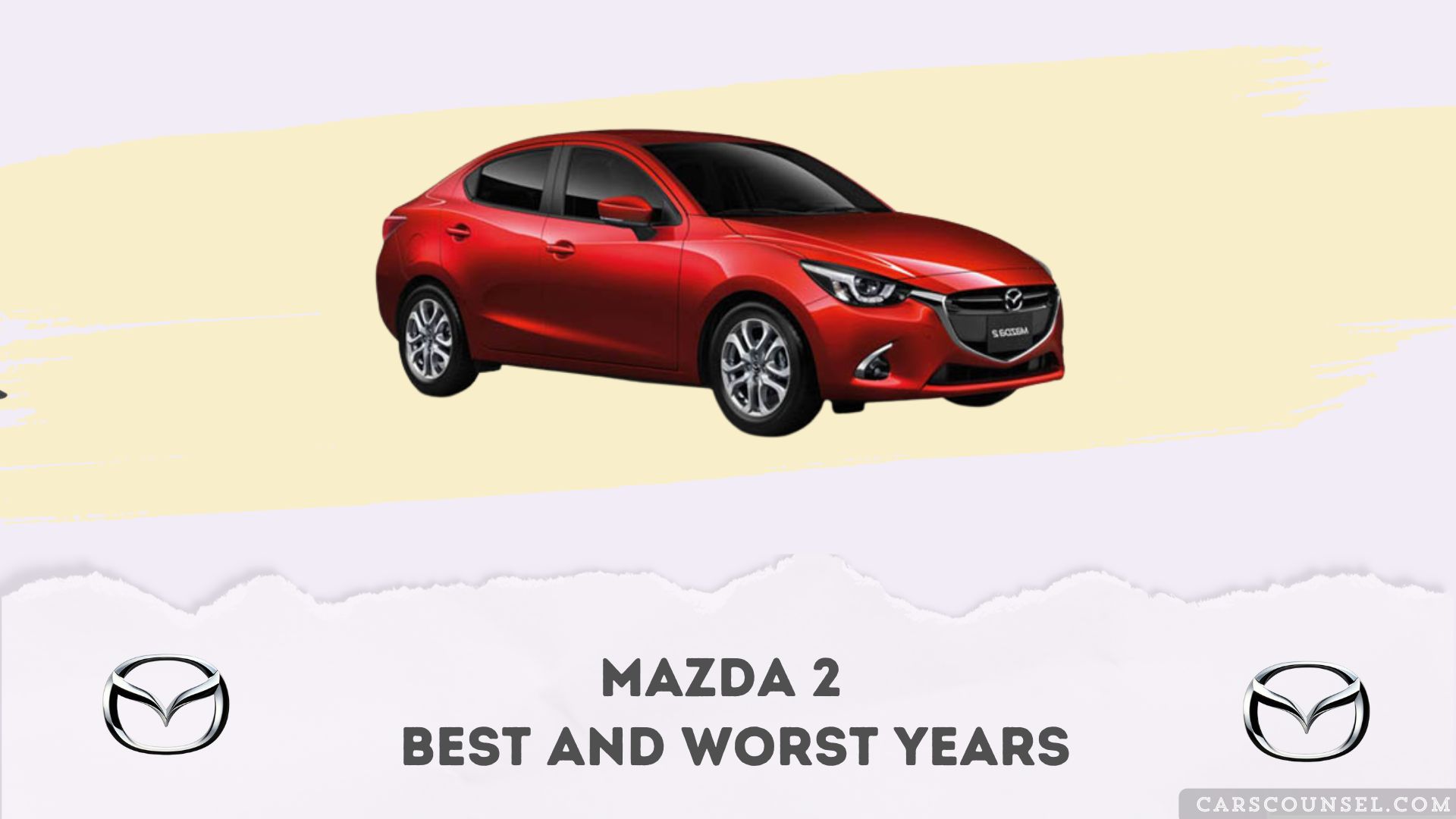
The best Mazda 2 model year for US buyers is the 2014 model, which serves as our Best Choice. The 2011 through 2013 model years are Good Choices. Mazda discontinued the Mazda 2 in the United States after 2014, making these four years the complete US lineup.
Rankings are comparative, and no used vehicle is flawless. Because the Mazda 2 is a simple, lightweight subcompact, maintenance history and overall condition matter far more than minor differences between model years.
Meaningful differences exist primarily in trim availability and first-year production quirks. All US models share the same 1.5-liter engine and transmission options, so your choice will largely depend on finding a well-maintained example with the right features.
Quick Navigation
Best and Worst Mazda 2 Years at a Glance
| Model Year | Verdict | Main Reason | Buyer Guidance |
|---|---|---|---|
| 2014 | Best Choice | Final production year with added Grand Touring trim | Look for well-maintained examples with service records |
| 2012–2013 | Good Choice | Mechanically identical to 2014 with strong reliability | Prioritize vehicles with consistent maintenance |
| 2011 | Good Choice | First US model year with minor early-production quirks | Inspect manual transmission clutch and electrical accessories |
Key Takeaways
- The 2014 Mazda 2 is the Best Choice, offering the most refined build and the addition of the premium Grand Touring trim.
- The 2011 through 2013 models are Good Choices, sharing the same reliable 1.5-liter powertrain.
- Mazda discontinued the Mazda 2 in the US after 2014, so there are no newer model years to evaluate.
- All US models use a conventional 1.5-liter four-cylinder engine, not the Skyactiv powertrain found in larger Mazda vehicles.
- Always verify the VIN for open recalls and arrange an independent pre-purchase inspection.
How We Evaluated the Mazda 2 Model Years
Our analysis considers official recalls, manufacturer service campaigns, and consumer complaint patterns alongside powertrain configurations and generation changes.
We clarify that consumer complaints are not confirmed failure rates, and a recall does not automatically make a vehicle unreliable. Because the US lineup ended in 2014, long-term ownership data is mature, but recent-market alternatives fall outside this specific Mazda-badged guide.
Best Mazda 2 Years
2014 Mazda 2 (Best Choice)
The 2014 model year represents the final and most refined version of the Mazda 2 sold in the United States. Mazda introduced the Grand Touring trim this year, adding premium features like leather upholstery, a navigation system, and automatic climate control.
Mechanically, it remains identical to the previous years, benefiting from a mature production cycle. Buyers seeking the most feature-rich and sorted example should target the 2014 model year.
2012–2013 Mazda 2 (Good Choice)
The 2012 and 2013 model years are mechanically identical to the 2014 version and carry the same strong reliability reputation. These years are limited to the Sport and Touring trims.
They offer the same engaging driving dynamics and fuel efficiency. Buyers should focus on the vehicle’s maintenance history and overall condition rather than choosing between 2012 and 2013.
2011 Mazda 2 (Good Choice)
As the first year the Mazda 2 was reintroduced to the US market, the 2011 model may exhibit minor first-year assembly quirks, such as interior rattles or early-production clutch switch issues on manual transmission models.
However, the core 1.5-liter powertrain is robust. A thorough pre-purchase inspection will easily identify any deferred maintenance or worn components.
Best Year by Buyer Type
- Best Overall: 2014 Mazda 2 (Grand Touring trim offers the best mix of features and refinement).
- Best Budget Option: 2011–2012 Mazda 2 Sport (Lower entry price while retaining the same reliable mechanicals).
- Best Enthusiast Choice: Any year with the 5-speed manual transmission (Maximizes the lightweight, tossable nature of the chassis).
Years to Approach Carefully
There are no Mazda 2 model years that require a strict “Avoid” verdict. The US-market DE generation is fundamentally sound.
However, buyers should approach heavily modified examples or those lacking service records with caution. The lightweight suspension components can wear prematurely if driven aggressively on poor roads.
Worst Mazda 2 Years
Because the US-market Mazda 2 was only sold from 2011 to 2014 and shares a simple, proven powertrain, there are no objectively “bad” years.
The 2011 model year has slightly more consumer complaints regarding minor electrical gremlins and manual transmission clutch pedal switches, but these are relatively inexpensive to repair.
Instead of avoiding a specific year, buyers should avoid any individual vehicle with a history of accidents, severe rust, or neglected fluid changes.
Mazda 2 Reliability by Generation
Second Generation / US Market (2011–2014)
While the Mazda 2 nameplate has a long global history, the United States only received the DE generation for the 2011 through 2014 model years. This generation uses Mazda’s own MZR 1.5-liter engine.
Unlike the Mazda 3 or Mazda 6, the US Mazda 2 never received the Skyactiv-G powertrain. Its reliability stems from its simplicity: a naturally aspirated engine, a conventional four-speed automatic or five-speed manual, and minimal complex electronics.
If you are looking for related Mazda vehicles from this era, our guide on the Mazda 3 covers the larger, Skyactiv-equipped compact sibling.
Common Mazda 2 Problems
Clutch Pedal Switch (Manual Transmission)
Some owners of manual transmission models, particularly from the 2011 model year, report issues with the clutch pedal position switch. Symptoms include the vehicle failing to start or the cruise control disengaging unexpectedly.
The repair is generally straightforward and inexpensive, involving the replacement of the switch assembly.
Suspension Wear
The Mazda 2 is very light, but its suspension components can wear out faster than expected if the vehicle is frequently driven on rough roads or used for aggressive commuting.
Owners may hear clunking noises from the front struts or sway bar links. Inspecting these components during a test drive is recommended.
Road Noise and Interior Rattles
While not a mechanical failure, the most common owner complaint is the lack of sound deadening. The lightweight doors and minimal insulation allow significant road and wind noise into the cabin at highway speeds.
Interior plastics may also develop rattles over time as the vehicle ages and accumulates mileage.
Repair-Cost Overview
| Problem | Commonly Affected Years | Approximate Repair Range | Important Notes |
|---|---|---|---|
| Clutch Pedal Switch | 2011–2012 | $100 – $200 | Primarily affects manual transmission models |
| Front Sway Bar Links | 2011–2014 | $150 – $300 | Cost varies based on aftermarket or OEM parts |
| AC Compressor | 2011–2014 | $700 – $1,100 | Requires system recharge and labor |
Repair costs vary significantly by region, labor rate, parts choice, and whether you visit a dealership or an independent repair shop. Always get a localized estimate before purchasing.
What to Check Before Buying a Used Mazda 2
- Verify the VIN for any open safety recalls.
- Review the service history to confirm regular oil and transmission fluid changes.
- Test the clutch pedal engagement on manual models to ensure the switch and hydraulics operate smoothly.
- Listen for clunking sounds from the front suspension during low-speed turns and over bumps.
- Inspect the undercarriage for rust, especially if the vehicle was driven in winter climates.
- Test all power accessories, including windows and locks, as early-model switches can fail.
- Arrange an independent pre-purchase inspection to verify the condition of the engine and transmission.
Related Buying Guides
- Mazda 3 best and worst years: The larger compact sibling that introduced Skyactiv technology to the US market.
- Mazda CX-5 best and worst years: Mazda’s popular compact crossover that shares later-generation Skyactiv architecture.
- Ford Fiesta best and worst years: The platform sibling to the US-market Mazda 2, offering a different driving experience and powertrain.
Frequently Asked Questions
What is the best year to buy a used Mazda 2?
The 2014 Mazda 2 is the best year to buy. It is the final US model year, meaning it benefits from a mature production cycle, and it introduced the premium Grand Touring trim level.
Did the US Mazda 2 have a Skyactiv engine?
No. The US-market Mazda 2 (2011–2014) used a conventional 1.5-liter MZR four-cylinder engine. The Skyactiv powertrain was reserved for larger models like the Mazda 3 and Mazda 6 during those years.
Why was the Mazda 2 discontinued in the US?
Mazda discontinued the Mazda 2 in the United States after 2014 due to slow sales and a strategic shift toward larger, more profitable crossover SUVs and compact cars with Skyactiv technology.
Are Mazda 2 models expensive to maintain?
No, the Mazda 2 is generally inexpensive to maintain. Its simple mechanical design, lightweight construction, and conventional powertrain keep routine service and repair costs very low compared to modern vehicles.
How long can a Mazda 2 last?
Well-maintained examples can easily reach high mileage. Longevity depends heavily on consistent fluid changes, rust prevention, and addressing minor suspension wear before it causes secondary damage.
Is the Mazda 2 a good car for a new driver?
Yes, its small dimensions, excellent visibility, and predictable handling make it a great choice for new drivers. However, its light weight means it offers less crash protection than larger, modern vehicles.
Choosing the Right Mazda 2 Model Year
The 2014 Mazda 2 stands out as the Best Choice for US buyers, offering the most refined build and the available Grand Touring trim. The 2011 through 2013 models remain Good Choices that share the same reliable mechanicals.
Because Mazda discontinued this model in the US over a decade ago, your focus should be on finding an individual vehicle with excellent maintenance records rather than obsessing over the specific model year.
Always verify the VIN for open recalls and invest in an independent pre-purchase inspection to ensure the lightweight suspension and clutch components are in good condition.

