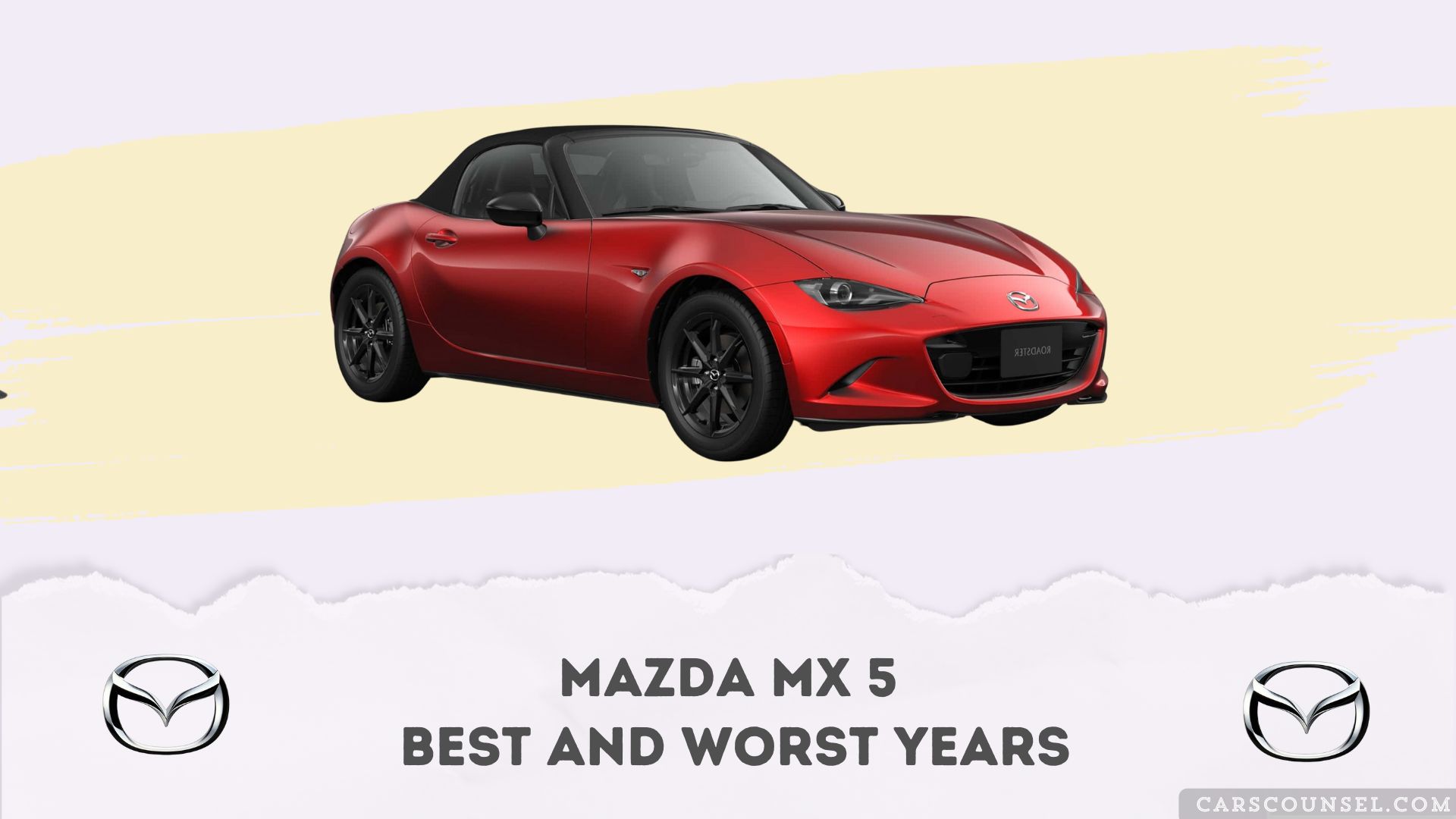
The best Mazda MX-5 Miata years include the 2001-2005 NB2 generation and the 2009-2015 NC models. Buyers should approach the 1999-2000 NB1 and early 2016 ND1 models carefully due to specific engine and infotainment concerns.
These rankings are comparative. No used sports car is flawless. Maintenance history, rust prevention, and previous ownership habits heavily influence the reliability of any lightweight roadster you consider buying today.
Reliability varies significantly by generation and powertrain. The MX-5 transitioned from classic pop-up headlights to modern safety structures, meaning engine management, transmission options, and electrical systems differ greatly across model years.
Quick Navigation
Best and Worst Mazda MX-5 Years at a Glance
| Model Year or Range | Verdict | Main Reason | Buyer Guidance |
|---|---|---|---|
| 1990-1997 (NA) | Good Older Choice | Classic appeal | Inspect for rust and aging electronics |
| 1999-2000 (NB1) | Approach Carefully | Early coil pack and thrust bearing risks | Verify oil maintenance and coil replacements |
| 2001-2005 (NB2) | Best Older Choice | Refined 1.8L VVT engine | Check soft top condition and rust |
| 2006-2008 (NC1) | Good Choice | Reliable 2.0L engine | Prefer the six-speed manual transmission |
| 2009-2015 (NC2/NC3) | Best Choice | Mature platform and strong reliability | Review service history and suspension |
| 2016-2018 (ND1) | Good With Inspection | Lightweight and agile | Test infotainment screen for ghost touches |
| 2019-Present (ND2) | Best Late-Gen Choice | Increased power and updated tech | Verify recall completion and steering rack |
Key Takeaways
- The 2001-2005 NB2 and 2009-2015 NC generations offer the strongest blend of reliability and driving enjoyment.
- Approach 1999-2000 models carefully due to potential thrust bearing and coil pack vulnerabilities.
- Early 2016 ND models require infotainment and steering rack inspections before purchase.
- Rust and soft top deterioration are common age-related concerns across older NA and NB generations.
- Always verify the VIN for open recalls, particularly regarding Takata airbag inflators on older models.
- The US market never received the 1.5-liter engine; all domestic models feature 1.6-liter, 1.8-liter, or 2.0-liter engines.
How We Evaluated the Mazda MX-5 Model Years
Our analysis reviews NHTSA records, manufacturer service campaigns, and long-term ownership data. We weigh powertrain durability, generation redesigns, and repair complexity.
Consumer complaints are not confirmed failure rates. A recall does not automatically make a vehicle unreliable, and recent models simply have less long-term ownership history.
Best Mazda MX-5 Years
2001-2005 (NB2 Generation)
The NB2 refresh introduced variable valve timing and a six-speed manual option. Mazda improved interior materials and resolved many early electrical gremlins, making these highly desirable.
2009-2015 (NC2 and NC3)
The 2.0-liter engine in the NC generation is highly durable. Later NC years received subtle suspension and interior refinements, making them excellent daily drivers or weekend cars.
2019-Present (ND2)
Mazda increased horsepower to 181 and updated the infotainment system for the ND2 refresh. This resolved earlier screen issues while maintaining the beloved lightweight formula.
Best Year by Buyer Type
Best Overall
The 2013-2015 NC3 models offer mature reliability, comfortable daily driving, and strong aftermarket support for modern enthusiasts.
Best Enthusiast Choice
The 2001-2005 NB2 provides a lightweight, analog feel and is highly capable of track use with basic maintenance and preparation.
Best Modern Alternative
The 2019 and newer ND2 models feature modern safety equipment, reliable infotainment, and the most power from a naturally aspirated engine in the lineup.
Years to Approach Carefully
1999-2000 (NB1)
Early 1.8-liter engines are known for crankshaft thrust bearing failures if oil levels drop. Ignition coil packs also fail frequently on these specific early models.
2016-2018 (ND1)
The first year of the ND generation introduced a new infotainment screen prone to ghost touching. Early models also had steering rack rattle complaints and a parking brake recall.
Worst Mazda MX-5 Years
Buyers should avoid specific neglected examples rather than entire years. However, the 1990-1991 NA models require extreme caution due to less robust early engines and severe rust risks.
Decades of exposure make brittle wiring and failing climate control components almost guaranteed on early models without meticulous, long-term preservation.
Mazda MX-5 Reliability by Generation
NA Generation (1990-1997)
The original pop-up headlight classic is mechanically simple but highly susceptible to rust and aging rubber components. Parts remain available, but finding clean examples is difficult.
NB Generation (1999-2005)
This era introduced fixed headlights and a stiffer chassis. The NB2 refresh significantly improved long-term engine reliability and interior quality over the initial NB1 release.
NC Generation (2006-2015)
Heavier but more refined, the NC uses a 2.0-liter engine shared with other models. Buyers cross-shopping Mazda reliability should note this engine is far more robust than those found in some Mazda 3 years to avoid.
ND Generation (2016-Present)
The ND returned to a strict lightweight philosophy. The ND2 refresh corrected early electronic and steering annoyances, resulting in a highly dependable modern sports car.
Common Mazda MX-5 Problems
Electrical and Infotainment
ND1 models frequently suffer from ghost-touch screens requiring replacement. Older NB models experience ignition coil pack failures, which cause misfires and check engine lights.
Rust and Body
NA and NB generations are notorious for rocker panel and fender rust. The soft top rear plastic windows also yellow and crack over time, requiring periodic replacement.
Engine and Drivetrain
Early NB thrust bearings fail if oil starves. Early ND steering racks may develop a rattle over uneven surfaces, though Mazda issued technical service bulletins to address this.
What to Check Before Buying a Used Mazda MX-5
- Verify the VIN for open Takata airbag and parking brake recalls.
- Inspect rocker panels, wheel arches, and trunk edges for structural rust.
- Check the soft top operation and inspect the rear window for cracks.
- Test the infotainment screen for ghost touches on 2016-2018 models.
- Listen for steering rack rattle on early ND models over bumps.
- Review service records to ensure frequent oil changes, especially on NB models.
- Arrange an independent pre-purchase inspection to verify clutch and suspension health.
Related Buying Guides
- Subaru BRZ years to avoid: The BRZ shares the lightweight, rear-wheel-drive sports car ethos but uses a Subaru boxer engine.
- Toyota GR86 best and worst years: The GR86 is the BRZ’s corporate twin and a primary alternative for buyers seeking modern coupe dynamics.
Frequently Asked Questions
What is the most reliable Mazda MX-5 generation?
The NC generation (2006-2015) is widely considered the most reliable. Its 2.0-liter engine is durable, and the platform benefited from years of continuous refinement before the ND redesign.
Are Mazda Miatas expensive to maintain?
No, they are generally inexpensive to maintain. Parts are abundant, the mechanicals are straightforward, and the aftermarket support is massive, keeping routine service costs very reasonable.
Did the US get the 1.5-liter MX-5?
No. Mazda only sold the 1.5-liter engine in select global markets. Every US-market MX-5 from 1990 to present features either a 1.6-liter, 1.8-liter, or 2.0-liter engine.
Why should I avoid the 1999-2000 MX-5?
These early NB models are prone to crankshaft thrust bearing failure if oil levels drop. They also suffer from frequent ignition coil pack failures compared to later NB2 models.
Do modern MX-5s have timing belts?
No. All US-market MX-5 engines use timing chains. They are designed to last the life of the engine, provided the owner follows strict oil change intervals to prevent chain stretch.
Is the 2016 MX-5 a bad year?
It is not inherently bad, but requires careful inspection. Early ND models had infotainment ghost-touch issues and a steering rack rattle that Mazda addressed in later production runs.
Choosing the Right Mazda MX-5 Model Year
The 2009-2015 NC models and 2001-2005 NB2 models offer the best blend of reliability and driving joy. They provide mature engineering without the high entry cost of brand-new sports cars.
Always verify the VIN for open recalls and inspect the body for rust. An independent pre-purchase inspection remains the best way to ensure your chosen roadster is ready for the road.

