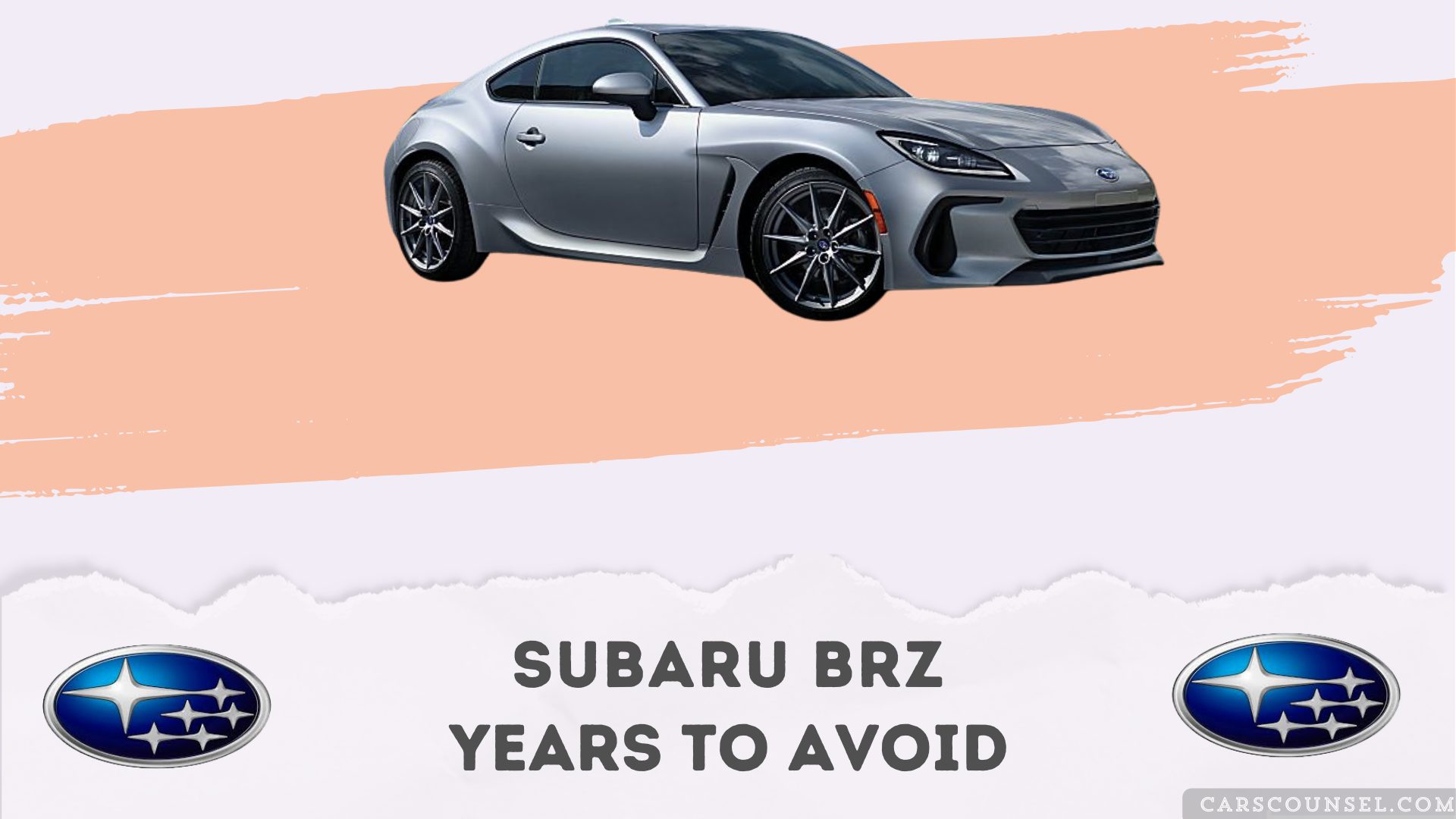
The best Subaru BRZ years are 2017 through 2020 and 2022 through 2024. Buyers should approach the 2013 model year carefully due to a critical engine recall and first-year production quirks.
These rankings are comparative, meaning no used sports car is entirely flawless. Long-term reliability depends heavily on maintenance records, previous ownership habits, and overall vehicle condition.
Significant differences exist between the first-generation 2.0-liter engine and the second-generation 2.4-liter powertrain. Transmission choices and available safety technology also vary widely by production era.
Quick Navigation
Best and Worst Subaru BRZ Years at a Glance
| Model Year Range | Verdict | Main Reason | Buyer Guidance |
|---|---|---|---|
| 2025 | Too New to Judge | Latest model year | Wait for long-term reliability data. |
| 2022–2024 | Best Late-Generation Choice | 2.4L engine fixes torque dip | Top pick for modern performance. |
| 2017–2020 | Best Choice | Facelift and sorted suspension | Excellent value for used buyers. |
| 2015–2016 | Good Choice | Reliable but lacks power | Inspect for carbon buildup. |
| 2014 | Good With Inspection | Early production quirks | Verify valve spring recall status. |
| 2013 | Approach Carefully | Valve spring recall and clutch issues | Strictly verify recall completion. |
| 2021 | N/A | Not sold in the US | Skip this year. |
Key Takeaways
- Strongest Choices: The 2017–2020 and 2022–2024 model years offer the best balance of handling and proven reliability.
- Caution Years: The 2013 model requires strict verification of the valve spring recall before purchase.
- Powertrain Shift: The 2022 redesign introduced a 2.4-liter engine that effectively eliminated the notorious midrange torque dip.
- Major Verified Concern: Direct injection engines in the first generation require periodic walnut blasting to remove carbon buildup.
- Recent-Year Limitation: The 2025 model year is too new to evaluate for long-term durability.
- Inspection Reminder: Always verify the VIN for open recalls, particularly regarding the fuel pump and valve springs.
How We Evaluated the Subaru BRZ Model Years
Our analysis examines official safety recalls, manufacturer service campaigns, and long-term ownership patterns. We weigh the severity and recurrence of mechanical failures against repair complexity.
Consumer complaints indicate owner frustration but do not automatically confirm a widespread mechanical defect. Similarly, a safety recall does not inherently make a specific model year unreliable if repaired.
Recent model years naturally possess less ownership history. Therefore, our top recommendations reflect comparative strength and proven maturity rather than absolute perfection.
Best Subaru BRZ Years
2017–2020 (Best Choice)
These years represent the mature phase of the first generation. Subaru refined the suspension tuning and increased power output for manual transmission models to 205 horsepower.
Buyers gain a highly capable rear-wheel-drive sports car with sharp handling. The 2.0-liter engine is highly durable with routine maintenance and timely carbon cleaning.
2022–2024 (Best Late-Generation Choice)
The second generation introduced the 2.4-liter FA24 engine, effectively eliminating the midrange torque dip that plagued earlier models. The chassis is stiffer and the interior is significantly upgraded.
Long-term evidence supports the longevity of this new powertrain. These years provide modern infotainment and improved daily drivability while retaining the core sports car ethos.
Best Year by Buyer Type
Best Overall Value: 2018 Subaru BRZ
The 2018 model year sits perfectly in the reliability curve. It features the updated first-generation chassis and manual powertrain improvements, avoiding the steep depreciation of newer models.
Best Performance Alternative: Subaru WRX
Buyers needing all-wheel drive and turbocharged acceleration should consider the Subaru WRX. It shares the brand’s performance heritage but offers a completely different rally-bred platform and practical sedan body.
Best Platform Sibling: Toyota GR86
Buyers seeking identical mechanicals with different styling should look at the Toyota GR86. It shares the exact same architecture and powertrain, with minor tuning differences in suspension and steering feel.
Years to Approach Carefully
2013 (Approach Carefully)
The inaugural model year is subject to a critical valve spring recall that can lead to catastrophic engine failure if the springs fracture. Manual models also featured a controversial clutch delay valve.
Buyers must verify the valve spring recall was completed by a dealer. The clutch delay valve was often removed by previous owners, so inspect the clutch operation carefully.
2014 (Good With Inspection)
While largely identical to 2013, later build dates may have the updated valve springs from the factory. However, the risk remains for early production examples.
Verify the VIN to ensure the valve spring recall is closed. The infotainment system remains outdated and sluggish compared to modern standards.
Common Subaru BRZ Problems
Engine Carbon Buildup
Affecting all 2013–2020 models with the 2.0-liter FA20 direct-injection engine. Fuel is sprayed directly into the cylinder, preventing intake valves from being cleaned by fuel. This requires walnut blasting every 80,000 miles.
Fuel Pump Impeller Failure
Affecting certain 2018–2019 and 2022 models. A defective Denso fuel pump impeller can deform and cause the pump to fail, leading to engine stalling. Subaru issued recalls to replace the affected pumps.
Thin Paint and Chipping
A widespread issue across all first-generation models. Subaru’s factory paint is notoriously thin and soft, making the front bumper and hood highly susceptible to rock chips and road debris damage.
Battery Drain and Parasitic Draw
Found mainly in models equipped with aftermarket alarms, tracking devices, or remote starters. The BRZ uses a small group-size battery that easily drains if the vehicle sits for extended periods.
What to Check Before Buying a Used Subaru BRZ
- Verify Recall Status: Enter the VIN on the NHTSA website to confirm the valve spring and fuel pump recalls are closed.
- Inspect for Carbon Buildup: Review maintenance records for walnut blasting or perform a borescope inspection of the intake valves.
- Test the Clutch: On manual models, check for smooth engagement and listen for transmission synchro crunching during cold shifts.
- Check the Battery: Test the battery health and inspect for aftermarket wiring that could cause parasitic draw.
- Evaluate Paint Condition: Inspect the front fascia for severe rock chipping and verify if paint protection film was installed.
Related Buying Guides
- Toyota GR86 best and worst years: A direct platform sibling that shares the exact same powertrain and chassis architecture with minor styling differences.
- Subaru Crosstrek years to avoid: A practical alternative for buyers who need standard all-wheel drive, increased ground clearance, and daily commuter comfort.
Frequently Asked Questions
What are the worst years for the Subaru BRZ?
The 2013 model year is the most problematic due to a critical valve spring recall and first-year clutch delay valve issues. Later first-generation models are significantly more reliable.
What is the most reliable Subaru BRZ year?
The 2019 model year is widely considered the most reliable. It features a mature first-generation platform, sorted suspension tuning, and the updated 205-horsepower manual configuration.
Do Subaru BRZs have engine problems?
The 2.0-liter engine is generally robust but requires periodic walnut blasting to remove carbon buildup from the intake valves. Early 2013 models also have a valve spring recall.
Is the Subaru BRZ good for daily driving?
Yes, but the first generation has a stiff ride, loud cabin, and basic infotainment. The 2022 and newer models offer significantly improved daily comfort and modern technology.
Why does the Subaru BRZ have a torque dip?
The first-generation 2.0-liter engine suffers from a midrange torque dip due to its intake manifold design. The second-generation 2.4-liter engine effectively eliminated this issue.
What causes Subaru BRZ battery drain?
The BRZ uses a small battery that easily drains if the car sits unused. Aftermarket alarms, tracking devices, and remote starters are the most common causes of parasitic draw.
Which Subaru BRZ Year Should You Buy?
For the best balance of handling and proven reliability, target the 2017 through 2020 or 2022 through 2024 model years. These generations offer sorted powertrains and exceptional driving dynamics.
Approach the 2013 model with careful inspection due to the critical valve spring recall. Always verify the VIN for open recalls and check for carbon buildup maintenance before finalizing any purchase.
Finally, arrange an independent pre-purchase inspection to assess clutch health, suspension components, and engine compression. Proper maintenance remains the most critical factor in preserving a sports car.

