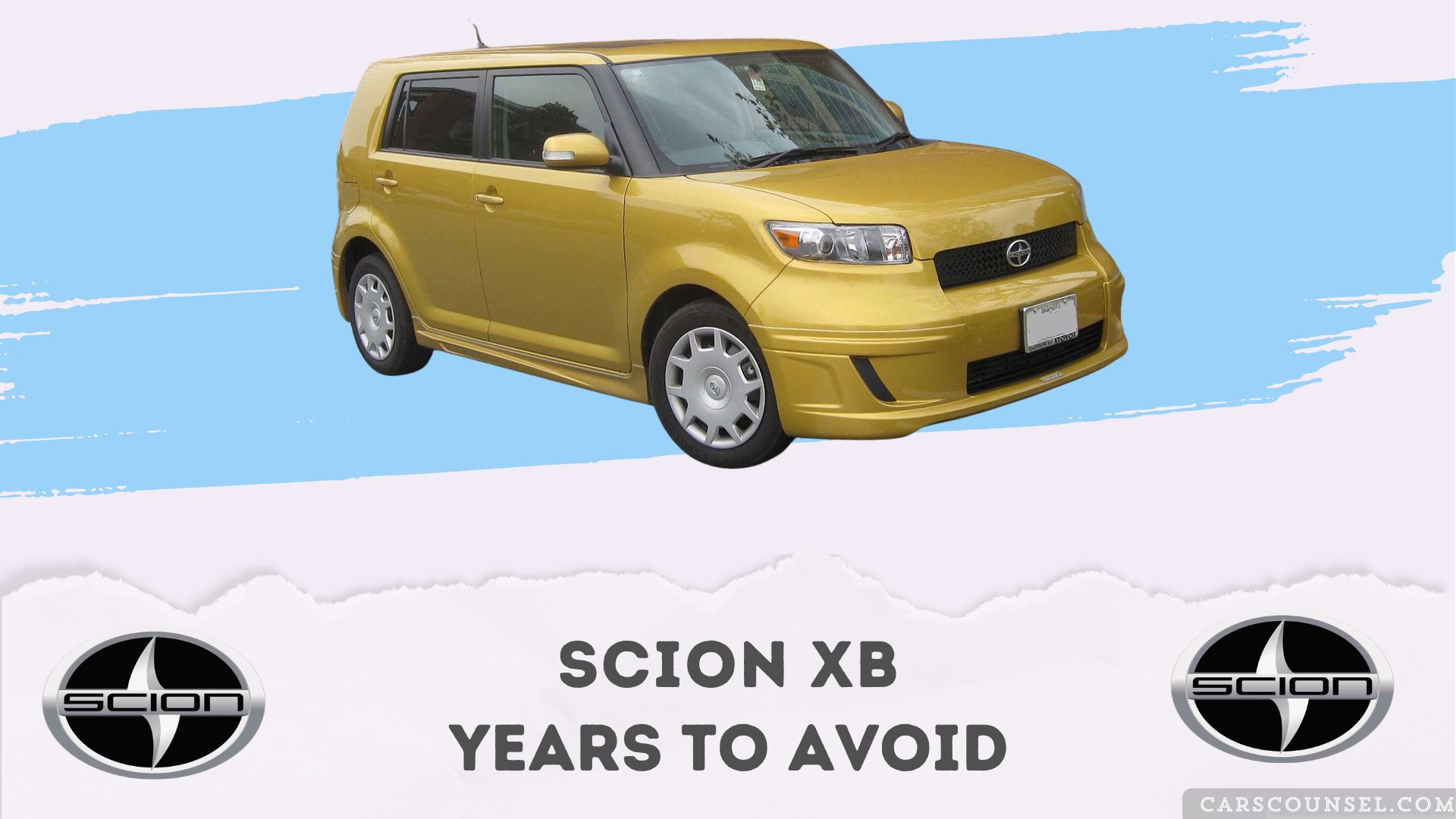
The best Scion xB years are 2013 through 2015, offering a reliable powertrain and mature platform. Buyers should approach the 2008 through 2010 models carefully due to excessive engine oil consumption and dashboard material defects.
These rankings are comparative, and no used compact wagon is entirely flawless. Long-term reliability heavily depends on strict maintenance records, previous ownership care, and whether critical engine revisions were implemented.
Reliability varies significantly by generation and engine configuration. The second-generation models with the revised piston rings are notably robust, while early examples require careful inspections for age-related wear.
Quick Navigation
Best and Worst Scion xB Years at a Glance
| Model Year or Range | Verdict | Main Reason | Buyer Guidance |
|---|---|---|---|
| 2013-2015 | Best Choice | Revised engine, sorted electronics | Verify maintenance records |
| 2011-2012 | Good Choice | Updated piston rings | Check for water pump leaks |
| 2008-2010 | Approach Carefully | 2AZ-FE oil consumption, dash cracking | Perform oil consumption test |
| 2007 | N/A | Gap year in US market | Not applicable |
| 2004-2006 | Good With Inspection | Aging components, hatch handle | Inspect AC and rust |
Key Takeaways
- The 2013-2015 models offer the best balance of utility, mature engineering, and proven long-term reliability.
- Approach 2008-2010 models carefully due to well-documented piston ring defects causing excessive oil consumption in the 2.4-liter engine.
- First-generation models require careful inspections for age-related wear, air conditioning function, and rear hatch handle integrity.
- Always verify the VIN for open recalls, particularly those involving frontal airbag inflators.
- The Scion brand was discontinued after 2015, making 2015 the final production year.
How We Evaluated the Scion xB Model Years
Our analysis considers official recalls, manufacturer service campaigns, consumer complaints, and powertrain differences across generations. We weigh the severity and recurrence of mechanical issues against the overall ownership experience.
Complaints are not confirmed failure rates, and a single recall does not automatically make a vehicle unreliable. Recent model years have less long-term ownership history, though the xB is now fully discontinued.
Ultimately, a Best Choice designation means a model year is comparatively stronger than its neighbors. It does not guarantee a trouble-free ownership experience, and a pre-purchase inspection remains essential.
Best Scion xB Years
2013-2015 (Best Choice)
The 2013 through 2015 models represent the most dependable era of the xB. Toyota updated the 2.4-liter engine with revised piston rings, effectively resolving the earlier oil consumption complaints.
These years feature mature electronics and standard safety features. Buyers should prioritize examples with complete service records and verify that all safety recalls have been properly addressed by a dealer.
2011-2012 (Good Choice)
The 2011 and 2012 models benefited from the updated engine internals, greatly reducing the risk of severe oil burning. The platform was well-sorted by this time, offering excellent cargo utility.
Ensure the water pump and serpentine belt tensioner have been inspected, as these are common age-related wear items on Toyota vehicles of this era.
Best Year by Buyer Type
The 2013-2015 models remain the Best Overall choice for used buyers seeking maximum reliability, modern safety features, and the unique boxy utility that defines the nameplate.
For buyers on a stricter budget, the 2004-2006 first-generation models serve as a Best Budget Option, provided the vehicle has been meticulously maintained and inspected for rust.
Years to Approach Carefully
2008-2010 (Approach Carefully)
The early second-generation models introduced the 2.4-liter engine, which suffered from defective piston rings leading to severe oil consumption. The dashboard materials are also prone to cracking and melting in hot climates.
Only consider these years if you can perform a thorough oil consumption test and inspect the dashboard. Budget accordingly for potential engine repairs before purchasing.
2004-2006 (Good With Inspection)
The first-generation models are mechanically robust but are now quite old. Original parts like the air conditioning compressor and rear hatch handle assemblies are susceptible to age-related failures.
Budget accordingly for suspension bushings, rust prevention, and basic electrical gremlins. Only consider these years as a secondary vehicle or for enthusiast restoration projects.
Scion xB Reliability by Generation
First Generation (2004-2006)
Built on an older subcompact platform, this generation established the boxy aesthetic. The 1.5-liter engine is highly reliable, but aging rubber components and basic accessories require immediate attention. Note that 2007 was a gap year.
Second Generation (2008-2015)
This generation moved to a larger compact platform, sharing related architecture with the Toyota Matrix. Early engines require strict monitoring for oil consumption, while the 2011+ refresh brought crucial internal engine revisions.
Common Scion xB Problems
Excessive Oil Consumption
Affecting primarily 2008 through 2010 models with the 2.4-liter engine, the piston rings are highly susceptible to clogging. This causes rapid oil loss, leading to engine damage if the owner ignores the low oil warning light.
Dashboard Cracking and Melting
Many 2008 through 2010 models experience severe dashboard material degradation. The vinyl surface cracks, becomes sticky, and reflects sunlight into the windshield, creating a safety hazard and requiring expensive replacement.
Water Pump Leaks
Across the second generation, the mechanical water pump is prone to premature bearing failure and coolant weeping. Owners should monitor for pink crusty residue around the engine block and replace the pump proactively.
What to Check Before Buying a Used Scion xB
- Verify the VIN for any open manufacturer recalls, especially the Takata airbag campaigns.
- Check the engine oil condition on 2008-2010 models for signs of excessive consumption or low levels.
- Inspect the dashboard material on second-generation models for severe cracking, melting, or previous replacement records.
- Examine the water pump and serpentine belt area for coolant leaks or bearing noise.
- Review service records for regular oil changes and verify if the piston ring warranty extension was utilized.
- Scan for hidden diagnostic trouble codes using an OBD2 scanner.
Related Buying Guides
- Toyota Matrix years to avoid: A compact wagon alternative sharing related architecture and powertrains, offering a more conventional hatchback design and available all-wheel drive.
- Toyota Corolla years to avoid: A compact sedan alternative sharing the exact same global platform and engines, offering a traditional trunk and superior highway comfort for commuters.
Frequently Asked Questions
Which year Scion xB is most reliable?
The 2013 through 2015 models are widely considered the most reliable choices. They feature the matured platform and the revised engine internals, avoiding the early production oil consumption and dashboard material issues.
What year Scion xB should you approach carefully?
You should approach the 2008 through 2010 models carefully. These specific years suffer from well-documented piston ring defects and dashboard material degradation that can lead to expensive repairs and safety hazards.
How long do Scion xBs last?
Well-maintained examples can easily reach high mileage. Longevity depends heavily on strict maintenance records, rust prevention, and whether critical engine components like the piston rings and water pump were properly addressed over time.
Does the Scion xB have a Toyota engine?
Yes, the Scion xB uses Toyota engines. The first generation uses a 1.5-liter engine, while the second generation uses a 2.4-liter engine, both sharing parts and service procedures with mainstream Toyota models.
Are Scion xBs expensive to maintain?
Routine maintenance costs are average for a compact car. Because it shares many components with mainstream Toyota models, parts are widely available and relatively affordable compared to discontinued niche competitors.
Why was the Scion xB discontinued?
Toyota discontinued the Scion brand in 2016 to consolidate its marketing efforts. The xB was not directly replaced, though its boxy utility and platform architecture lived on in related Toyota models globally.
Choosing the Right Scion xB Model Year
The safest used purchases are the 2013-2015 models, which offer the best balance of utility, standard safety features, and proven reliability. These years avoid the early production quirks and powertrain defects.
Approach the 2008-2010 models carefully due to critical engine oil consumption and dashboard defects. Always verify the VIN for open recalls, demand complete service records, and arrange an independent pre-purchase inspection before buying.

