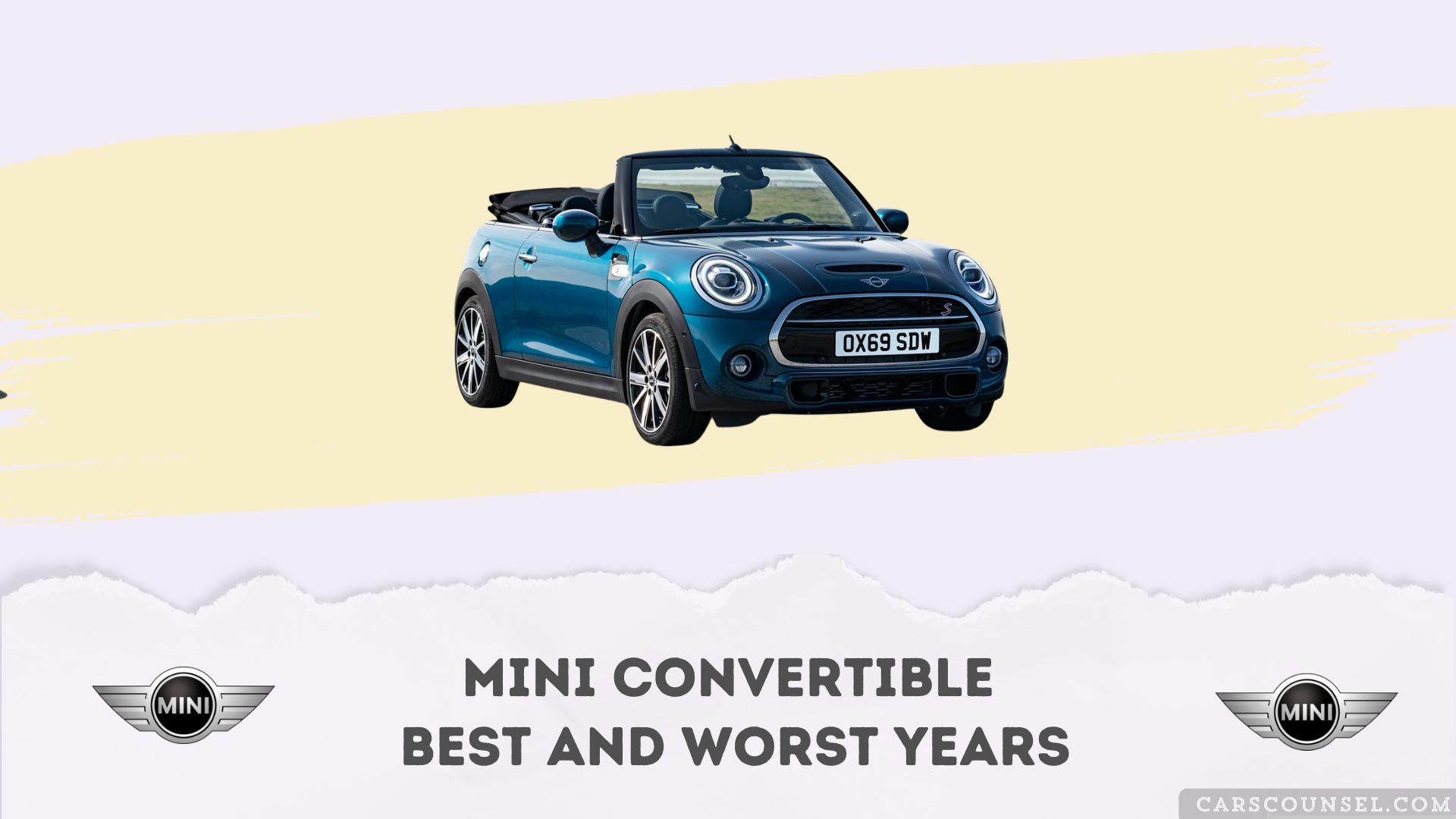
The best MINI Cooper Convertible years are 2017 through 2024, featuring the reliable F57 generation and robust B-family engines. Buyers should avoid the 2009 through 2011 model years due to severe timing chain and fuel system defects.
These rankings are comparative, as no used vehicle is entirely flawless. Long-term reliability depends heavily on strict maintenance records, previous ownership care, and the specific engine configuration installed in the car.
Reliability varies significantly by generation and powertrain. The older Prince engines require careful inspection for timing components, while the newer three-cylinder and four-cylinder turbocharged engines offer substantially improved durability and ownership experiences.
Quick Navigation
Best and Worst MINI Cooper Convertible Years at a Glance
| Model Year Range | Verdict | Main Reason | Buyer Guidance |
|---|---|---|---|
| 2017–2024 | Best Choice | Mature F57 platform with reliable B-family engines. | Prioritize the Cooper S with the 2.0L engine. |
| 2016 | Good Choice | First year of the F57 generation with solid powertrains. | Verify early-build software updates and engine mounts. |
| 2012–2015 | Good With Inspection | Refined N18 engine, but plastic cooling parts remain weak. | Inspect for oil consumption and timing chain wear. |
| 2005–2008 | Approach Carefully | Aging R52 chassis with vulnerable CVT and steering pumps. | Avoid the automatic CVT; check steering fluid. |
| 2009–2011 | Avoid | Early R57 models plagued by timing chain and HPFP failures. | Look elsewhere unless the engine was fully rebuilt. |
| 2025–2026 | Too New to Judge | Insufficient long-term ownership data available. | Wait for more reliability data to emerge. |
Key Takeaways
- The 2017 through 2024 model years are the strongest choices for reliability and driving dynamics.
- Avoid the 2009 through 2011 model years due to catastrophic timing chain and fuel pump defects.
- The 2005 through 2008 models feature an electric power steering pump that is highly vulnerable to water damage.
- Base models from 2005 through 2008 equipped with the CVT transmission carry a high risk of expensive failure.
- Later models (2016 and newer) use modular B-family engines, which largely resolved earlier oil consumption issues.
- Always verify the VIN for open recalls and insist on a pre-purchase inspection focusing on the cooling system.
How We Evaluated the MINI Cooper Convertible Model Years
Our analysis reviews official manufacturer recalls, government safety investigations, and verified consumer complaint patterns across various model years. We evaluate powertrain differences, generation redesigns, and the severity of recurring mechanical faults.
Complaint totals are not confirmed failure rates, and a single recall does not automatically condemn a vehicle. Recent models have limited long-term exposure, and our designations indicate comparatively stronger ownership experiences rather than absolute perfection.
Best MINI Cooper Convertible Years
2017–2024
These years represent the mature phase of the F57 generation. The switch to the B38 three-cylinder and B48 four-cylinder engines dramatically improved reliability. The 2.0L turbocharged engine in the Cooper S is particularly robust, offering excellent performance without severe timing chain vulnerabilities.
2016
As the first year of the F57 generation, 2016 models benefit from the improved B-family engines. While generally solid, first-year production vehicles can occasionally exhibit minor electrical quirks or early engine mount wear. A thorough inspection of service records is recommended.
2012–2015
These late R57 generation models use the updated N18 engine. While it features improvements over earlier versions, it still requires strict adherence to oil change intervals. Buyers who can verify that the timing chain assembly and water pump have been proactively replaced will find engaging vehicles.
Best Year by Buyer Type
Best Overall
The 2020 MINI Cooper Convertible stands out for combining the refined B48 engine, updated infotainment, and mature manufacturing quality, making it the most dependable choice for daily driving.
Best Budget Option
A well-maintained 2014 or 2015 Cooper S offers a compelling entry point. Ensure the plastic cooling components have been upgraded and verify that oil consumption remains within acceptable limits.
Best Enthusiast Choice
The 2018 John Cooper Works (JCW) Convertible delivers engaging modern performance. The B48 engine handles tuning well, provided the cooling system and brakes are maintained for aggressive street use.
Years to Approach Carefully
2005–2008
The R52 generation is a modern classic but requires dedicated maintenance. The base model’s continuously variable transmission (CVT) is prone to premature failure. Additionally, the electric power steering pump is mounted low, making it susceptible to water ingress and subsequent failure.
2012–2015
While better than their immediate predecessors, these years still rely on the Prince engine family. Plastic thermostat housings and water pumps are known to crack and leak. Buyers must budget for immediate cooling system overhauls if maintenance records do not show recent replacements.
Worst MINI Cooper Convertible Years
2009–2011
These early R57 model years are plagued by the notorious N14 and early N12 engines. The timing chain tensioner and plastic guides frequently fail, leading to a distinct rattling noise on cold starts and potential catastrophic engine damage.
Furthermore, the Cooper S models from this era suffer from high-pressure fuel pump failures and excessive carbon buildup on the intake valves. Unless the engine has been completely rebuilt with updated components, these years represent a significant financial risk.
MINI Cooper Convertible Reliability by Generation
First Generation Convertible (R52: 2005–2008)
Based on the early hatchback platform, the R52 uses the Chrysler-sourced Tritec engine. While mechanically simpler than later models, it suffers from aging electrical gremlins, supercharger belt issues on the Cooper S, and the fragile CVT transmission.
Second Generation Convertible (R57: 2009–2015)
The R57 introduced the Prince engine family. Early iterations are highly problematic. The later N18 engine improved reliability but retained a tendency for oil consumption and cooling system leaks. The MINI brand addressed many of these flaws in the subsequent redesign.
Third Generation Convertible (F57: 2016–Present)
The F57 utilizes a modern platform and modular B-family engines. This generation resolved the severe timing chain and fuel pump defects. The soft top mechanism is also more refined. If you are considering other vehicles on this platform, research the Mini Cooper hardtop for similar reliability patterns.
Common MINI Cooper Convertible Problems
Timing Chain and Tensioner Failures
Affecting primarily the 2007 through 2011 model years, the timing chain guides wear prematurely. This causes the chain to stretch and slap against the engine block, creating a rattling noise. If ignored, the chain can skip teeth and destroy the engine.
High-Pressure Fuel Pump (HPFP)
Common on the 2009 through 2012 Cooper S models, a failing HPFP causes long crank times, rough idling, and sudden limp-mode activation. Replacement requires specialized labor and precise fuel system calibration.
Cooling System Leaks
Across nearly all generations, the brand utilizes plastic components for the thermostat housing and water pumps. These parts become brittle from heat cycling and crack, leading to rapid coolant loss and potential overheating.
Electric Power Steering (EPS) Pump
The 2005 through 2008 models feature an EPS pump mounted near the front bumper. Water and road salt easily infiltrate the unit, causing the power steering to fail completely and triggering dashboard warning lights.
CVT Transmission Failure
The continuously variable transmission found in the 2005 through 2008 base models is notoriously fragile. Symptoms include shuddering during acceleration and complete loss of drive. Replacing or rebuilding this transmission often exceeds the vehicle’s residual value.
Repair-Cost Overview
| Problem | Commonly Affected Years | Approximate Repair Range | Important Notes |
|---|---|---|---|
| Timing Chain Assembly | 2007–2011 | $1,500 – $2,800 | Requires extensive engine disassembly. |
| High-Pressure Fuel Pump | 2009–2012 | $600 – $1,100 | Ensure updated software is flashed. |
| Water Pump and Thermostat | 2005–2015 | $800 – $1,400 | Often replaced together as a set. |
| CVT Transmission Replacement | 2005–2008 | $3,500 – $5,000 | Frequently totals the vehicle. |
Repair costs vary significantly by region, labor rates, parts choice, vehicle configuration, and whether you use a dealership or an independent European specialist.
What to Check Before Buying a Used MINI Cooper Convertible
- Verify the VIN to ensure all open manufacturer recalls have been completed.
- Listen for a rattling noise from the engine bay for three to five seconds during a cold start.
- Inspect the coolant expansion tank and thermostat housing for hairline cracks or crusty residue.
- Check the service history for strict adherence to 5,000-mile oil change intervals.
- Test the operation of the soft top roof through multiple complete open and close cycles.
- Scan the vehicle for hidden diagnostic trouble codes using a specialized scan tool.
- Inspect the front lower control arm bushings for tearing and excessive play.
- Arrange an independent pre-purchase inspection with a technician experienced in European vehicles.
Related Buying Guides
- Mini Clubman best and worst years: Explore the extended wheelbase wagon variant for buyers needing more cargo space and rear legroom.
- Mini Countryman best and worst years: Review the compact crossover alternative if you require all-wheel drive and a higher ride height.
Frequently Asked Questions
What is the most reliable MINI Cooper Convertible year?
The 2020 model year is among the most reliable, benefiting from the mature F57 platform and the robust B48 engine, which avoids the severe defects found in older generations.
Are MINI Cooper Convertibles expensive to maintain?
Yes, they generally cost more to maintain than average economy cars. Premium parts, specialized labor, and the frequent need to replace plastic cooling components contribute to higher ownership costs.
How long do MINI Cooper Convertibles last?
Well-maintained examples can reach high mileage, but longevity depends heavily on strict maintenance. Neglecting oil changes or cooling system repairs will drastically shorten the vehicle’s lifespan.
Did MINI fix the timing chain issues?
The brand largely resolved the severe timing chain defects by switching to the modular B-family engines for the 2016 model year and beyond, which feature much more durable internal components.
Is the manual transmission better than the automatic?
For older models (2005–2015), the manual transmission is highly preferred. The automatic options from those eras, particularly the early CVT, are prone to expensive and catastrophic failures.
Why is the power steering failing on my 2007 model?
The 2005–2008 models use an electric power steering pump mounted low in the front bumper. It is highly vulnerable to water ingress from rain and car washes, leading to premature failure.
Choosing the Right MINI Cooper Convertible Model Year
For the most dependable ownership experience, target the 2017 through 2024 model years. These vehicles feature the superior B-family engines and avoid the catastrophic timing chain and fuel system defects that plague earlier generations.
If your budget restricts you to older models, prioritize a manual transmission and verify that the cooling system and timing components have been proactively replaced. Always verify the VIN for open recalls and arrange an independent inspection before purchasing.

