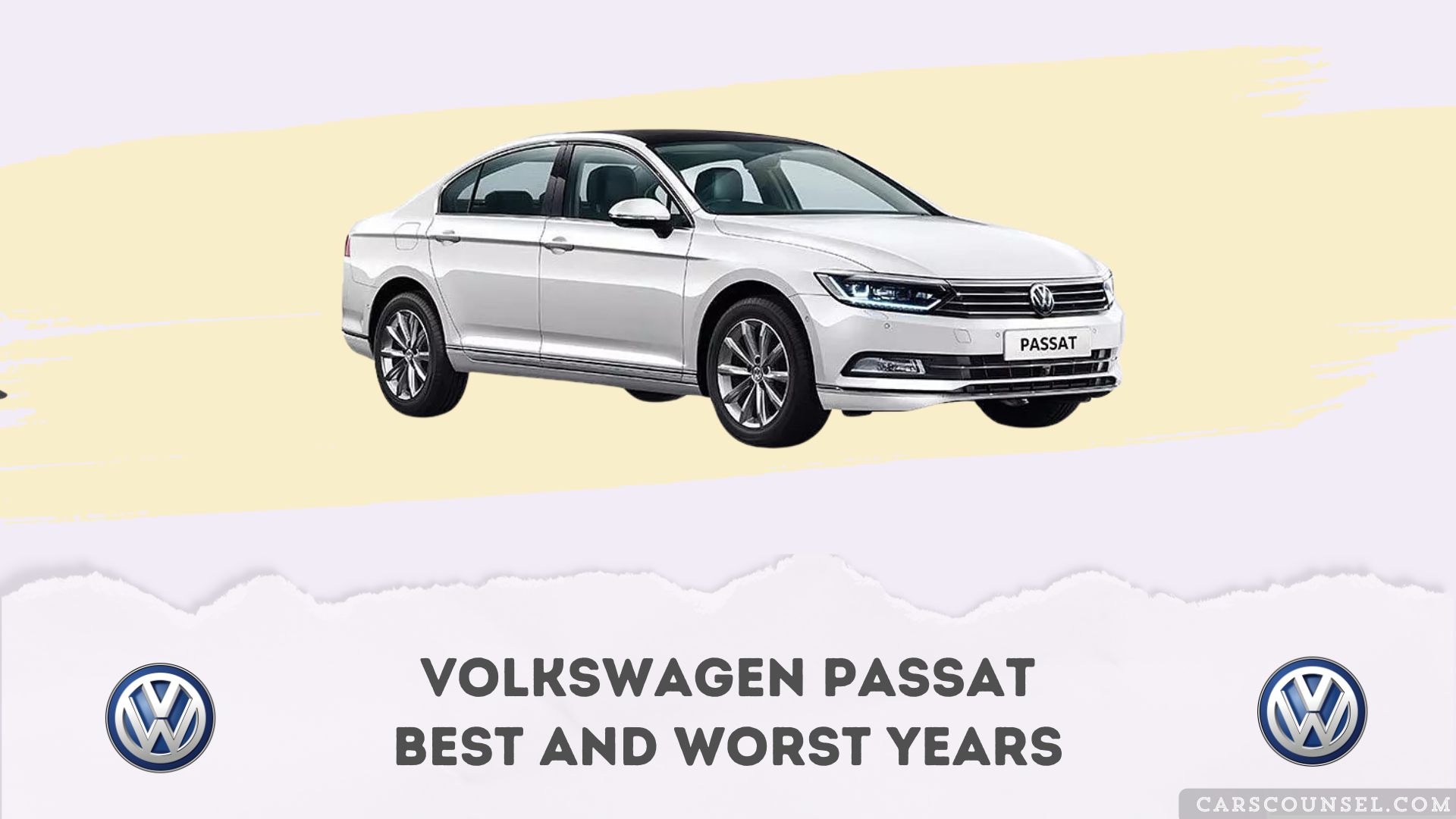
The best Volkswagen Passat model years are 2015 through 2022. These years feature the reliable EA888 Gen 3 engines. Buyers should avoid the 2002 through 2003 models due to severe engine defects and the 2012 through 2014 2.0T models due to timing chain failures.
Rankings are comparative, as no aging German sedan is entirely flawless. Proper maintenance history, immediate repair of fluid leaks, and a thorough pre-purchase inspection remain essential for any used vehicle.
Significant differences exist between engines and generations. Early models require strict oil change intervals to prevent sludge, while newer models feature updated turbocharged powertrains and modernized safety technology.
Quick Navigation
Best and Worst Volkswagen Passat Years at a Glance
| Model Year | Verdict | Main Reason | Buyer Guidance |
|---|---|---|---|
| 1998-2001 | Approach Carefully | 1.8T oil sludge, aging electronics | Verify timing belt and sludge |
| 2002-2003 | Avoid | 2.0L engine failure, severe sludge | Skip these model years |
| 2004-2005 | Good Choice | B5.5 facelift, sorted 1.8T | Check for rust and suspension |
| 2006-2008 | Approach Carefully | 2.0T FSI cam follower and chain | Inspect cam follower and chain |
| 2009-2011 | Good Choice | Improved 2.0T TSI, refined interior | Verify water pump and carbon |
| 2012-2014 | Mixed | 2.5L is robust, 2.0T chain fails | Prefer the 2.5L 5-cylinder |
| 2015-2019 | Best Older Choice | EA888 Gen 3, excellent reliability | Top pick for budget buyers |
| 2020-2022 | Best Late-Generation Choice | Final US years, mature powertrain | Top pick for modern comfort |
Key Takeaways
- The 2015 through 2022 model years offer the most balanced and reliable ownership experience.
- Avoid the 2002 through 2003 models due to severe engine defects and excessive oil consumption.
- The 2012 through 2014 models are mixed; the 2.5L five-cylinder is robust, but the 2.0T has timing chain issues.
- The Passat was discontinued in the United States after the 2022 model year.
- Always verify the VIN for open recalls, especially regarding airbags and fuel systems.
- Consult our guide on years to avoid for more details on problematic vehicles.
How We Evaluated the Volkswagen Passat Model Years
Our analysis considers official NHTSA recalls, manufacturer service campaigns, and consumer complaint patterns across the broader Volkswagen lineup. We evaluate powertrain differences, generation changes, and repair complexity.
Complaints are not confirmed failure rates, and a recall does not automatically ruin a vehicle’s reputation. Recent models have limited long-term exposure, meaning our top picks represent comparatively stronger options rather than flawless guarantees.
Best Volkswagen Passat Years
2015-2019 (Best Older Choice)
These years feature the EA888 Gen 3 engines, which resolved the timing chain and oil consumption issues of earlier generations. The 1.8T and 2.0T engines are robust, and the NMS platform offers excellent interior space.
2020-2022 (Best Late-Generation Choice)
The final US-market Passats received a comprehensive refresh, updated safety technology, and the mature EA888 Gen 3B powertrain. These years provide a comfortable, reliable highway cruiser with a modern infotainment system and excellent build quality.
Best Year by Buyer Type
Best Overall
The 2018 Passat combines the proven Gen 3 powertrain with standard blind-spot monitoring and a spacious, comfortable cabin, making it the safest used choice for daily commuters.
Best Family Alternative
Buyers needing significantly more cargo capacity and all-weather capability should consider the Volkswagen Tiguan, which offers a taller crossover footprint and available all-wheel drive.
Years to Approach Carefully
2012-2014 (Mixed)
The 2.5-liter five-cylinder engine is exceptionally durable and lacks complex turbochargers. However, the 2.0T models from these years suffer from the notorious EA888 Gen 1 and Gen 2 timing chain tensioner failures.
Buyers targeting these years should specifically seek out the 2.5L five-cylinder configuration. If considering the 2.0T, verify that the updated tensioner was installed and the carbon buildup was cleaned.
2006-2008 (Approach Carefully)
The B6 generation introduced the 2.0T FSI engine, which is prone to cam follower wear on the high-pressure fuel pump. Failure can destroy the camshaft. Buyers must inspect this component regularly.
Worst Volkswagen Passat Years
2002-2003 (Avoid)
These early B5.5 models are plagued by severe 1.8T oil sludge issues and the problematic 2.0-liter naturally aspirated engine. The 2.0L engines frequently suffer from catastrophic failure and excessive oil consumption.
Additionally, aging electronics, failing window regulators, and brittle vacuum lines make these years a financial liability. Unless the engine has been completely replaced and documented, buyers should look elsewhere.
Volkswagen Passat Reliability by Generation
B5 and B5.5 (1998-2005)
The first widely available US Passats feature complex multi-link suspensions and early turbocharged engines. While comfortable, they require strict maintenance to prevent oil sludge and expensive suspension repairs.
B6 (2006-2011)
This generation introduced the 2.0T FSI and TSI engines, along with the 3.2L and 3.6L VR6 options. The early FSI engines require cam follower inspections, while the later TSI engines are much more reliable.
NMS (2012-2022)
Designed specifically for North America, the NMS Passat offers massive rear legroom. Early models struggled with timing chains, but the 2015 introduction of the Gen 3 engine transformed it into a highly dependable family sedan.
Common Volkswagen Passat Problems
Timing Chain Tensioner Failure
The 2008 through 2014 models equipped with the 2.0T EA888 Gen 1 and Gen 2 engines suffer from weak timing chain tensioners. This defect can cause the chain to jump, resulting in catastrophic engine damage.
Carbon Buildup
Direct injection engines from 2006 through 2014 are prone to severe carbon buildup on the intake valves. This causes rough idling, misfires, and power loss, requiring an expensive manual walnut-blasting cleaning service.
Water Pump and Thermostat Leaks
The plastic water pump and thermostat housing assemblies on the Gen 3 engines frequently crack and leak coolant. Replacing this component with an updated aluminum-backed housing is a common and necessary repair.
What to Check Before Buying a Used Volkswagen Passat
- Verify the VIN for open NHTSA recalls, particularly the critical Takata airbag campaigns on older models.
- Inspect the 2.0T engine valley for timing chain rattle on cold starts for 2008 through 2014 models.
- Check the cam follower on the high-pressure fuel pump for 2006 through 2008 FSI models.
- Scan all control modules for stored transmission and chassis fault codes.
- Arrange an independent pre-purchase inspection with a European automotive specialist.
Related Buying Guides
- Volkswagen Tiguan: A compact SUV alternative for families who require higher ground clearance, available all-wheel drive, and a taller seating position.
- Volkswagen Touareg: A premium mid-size SUV alternative for buyers seeking a more luxurious interior, advanced air suspension, and serious towing capability.
- Volkswagen Golf GTI: A performance hatchback alternative for enthusiasts who prioritize sporty handling and a manual transmission over maximum rear passenger space.
- Volkswagen Taos: A subcompact crossover alternative for urban buyers who want a smaller footprint and better fuel efficiency for tight city parking.
Frequently Asked Questions
Which Volkswagen Passat year is the most reliable?
The 2015 through 2022 model years are the most reliable. They benefit from the robust EA888 Gen 3 engines, which resolved the timing chain and oil consumption issues found in earlier generations.
Does the Volkswagen Passat have engine problems?
The 2008 through 2014 models equipped with the 2.0T Gen 1 and Gen 2 engines suffer from timing chain tensioner failures. This is an expensive defect, making these specific years require careful inspection.
Why was the Passat discontinued in the US?
Volkswagen discontinued the Passat in the United States after the 2022 model year. The brand streamlined its lineup, shifting buyer focus toward the larger Atlas and the growing crossover SUV segments.
Is the 2.5-liter five-cylinder engine reliable?
Yes, the 2.5-liter five-cylinder engine used in the 2012 through 2014 models is exceptionally durable. It lacks complex turbochargers, producing adequate horsepower and torque for daily driving while minimizing maintenance costs.
Are older Volkswagen Passat models reliable?
The 1998 through 2005 models require careful inspection. Buyers must check for timing belt service, verify the absence of oil sludge, and inspect the complex multi-link suspension before purchasing.
What should I check on a used Passat?
Buyers must inspect the timing chain on early 2.0T models, verify the condition of the water pump, and ensure all aging electrical modules are functioning correctly. An independent inspection is mandatory.
Choosing the Right Volkswagen Passat Model Year
Target the 2015 through 2022 model years for a refined, reliable modern sedan experience with sorted electronics and robust turbocharged powertrains.
Avoid the 2002 through 2003 models due to severe engine defects. Always test the cooling system, scan for codes, and secure an independent inspection before purchasing.

