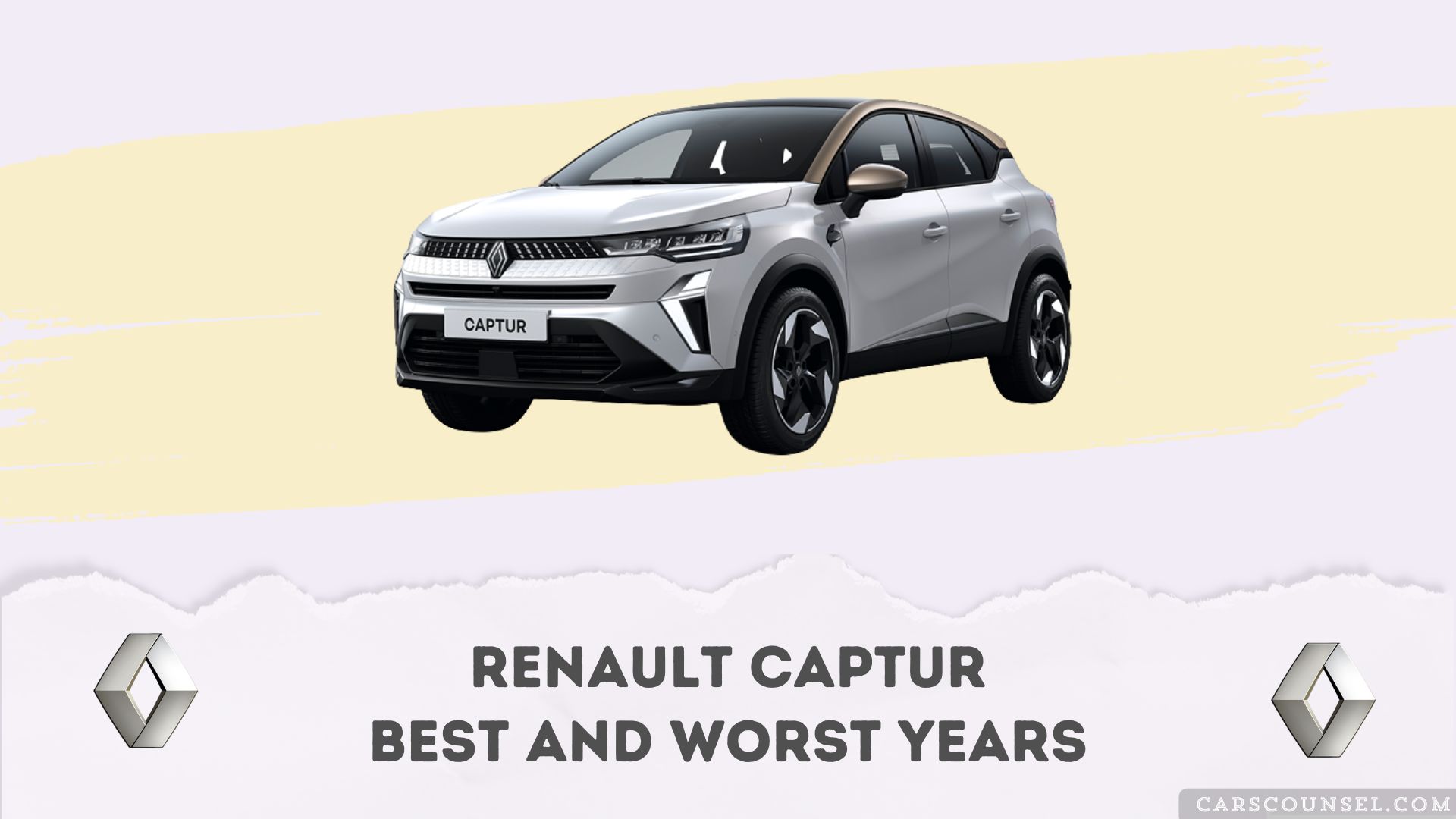
The best Renault Captur years are the facelifted 2017–2019 first-generation cars and the mature 2022–2023 second-generation models. Avoid 2013–2014 cars, which fall inside a brake hose recall build window and show the most early-production complaints.
These rankings are comparative within the European subcompact crossover segment, where the Captur was sold; it was never offered in the United States. No year is flawless, and condition, service history, and transmission type matter as much as the year.
Powertrain choice changes the risk picture: EDC dual-clutch models carry most transmission complaints, while manuals avoid them. The second generation added new turbo petrol engines, a plug-in hybrid from 2020, and a 2024 facelift with updated hybrid technology.
Quick Navigation
Best and Worst Renault Captur Years at a Glance
| Model Year | Verdict | Main Reason | Buyer Guidance |
|---|---|---|---|
| 2013–2014 | Avoid | Brake hose recall build window, early complaints | Prefer later builds unless recall work is documented |
| 2015–2016 | Approach Carefully | EDC and electrical reports continue | Prioritize manuals with full service history |
| 2017–2019 | Best Older Choice | Facelift maturity, resolved early issues | Check VIN for the wheel hub campaign |
| 2020–2021 | Good With Inspection | Early second-generation software teething | Verify updates and transmission behavior |
| 2022–2023 | Good Choice | Mature powertrains including plug-in hybrid | Review service and software history |
| 2024–2026 | Too New to Judge | Facelift launched 2024, limited history | Rely on warranty and dealer records |
Key Takeaways
- Facelifted 2017–2019 and mature 2022–2023 cars are the strongest used picks.
- 2013–2014 models fall inside a brake hose recall build window and rate Avoid.
- EDC dual-clutch gearboxes carry most transmission complaints; manuals sidestep them.
- A narrow September 2017 build window covers the wheel hub recall; check the VIN.
- Facelift cars from 2024 remain Too New to Judge for long-term reliability.
- Confirm recall and software update completion on any second-generation example.
- Arrange an independent inspection focusing on transmission behavior and suspension noise.
How We Evaluated the Renault Captur Model Years
Our analysis weighs official European recall campaigns, owner complaint patterns, specialist repair feedback, and generation changes. The Captur was never sold in the United States, so European records, including UK recall notices and Euro NCAP tests, form the evidence base.
Complaints are not failure rates, and a completed recall does not automatically make a year unreliable. Recent facelift cars simply have shorter ownership histories. Best means comparatively stronger within this lineup, not flawless.
Best Renault Captur Years
2017–2019 Renault Captur
The 2017 facelift brought restyled lights, revised trim, and a refreshed dashboard, and by this point most early-production issues had been addressed. These cars pair mature mechanics with lower prices than second-generation models.
Buyers should still verify VIN status for the narrow September 2017 wheel hub recall and test any EDC gearbox in stop-start traffic. Manual versions remain the lower-risk transmission choice in this generation.
2022–2023 Renault Captur
These mature pre-facelift second-generation cars combine established powertrains, including the 1.3-liter turbo and E-TECH plug-in hybrid, with resolved early software concerns. Build quality and interior materials improved over the first generation.
Long-term evidence is still building for second-generation cars, so inspect service history and confirm software updates were applied. EDC-equipped versions deserve a careful low-speed transmission test before purchase.
Best Year by Buyer Type
Best Overall
The 2022–2023 Captur offers the strongest mix of modern safety equipment, mature second-generation build, and established powertrains. Shoppers comparing this segment often cross-check the Nissan Juke as well.
Best Older Choice
Facelifted 2017–2019 cars deliver first-generation simplicity at lower prices, with most early issues resolved. They suit buyers who want an inexpensive small crossover and accept older safety technology.
Best Efficiency Configuration
The E-TECH plug-in hybrid, sold from 2020 through 2023, can cover short urban trips on electric power alone. Within that range, 2022–2023 cars pair the hybrid with the most settled software.
Years to Approach Carefully
2015–2016 Renault Captur (Approach Carefully)
These years sit outside the brake hose build window but still carry owner reports of EDC hesitation, jerky low-speed shifts, and electrical gremlins such as warning lights and battery drain.
Evidence stops short of an Avoid verdict because reports concentrate on EDC and electrical configurations rather than every car. Manual-transmission examples with full service history deserve a closer look.
2020–2021 Renault Captur (Good With Inspection)
Early second-generation cars introduced the CMF-B platform, new infotainment, and the E-TECH plug-in hybrid. Some early owners reported software and infotainment teething issues that dealer updates later addressed.
These cars are reasonable buys once you confirm recall and software work is complete and the transmission behaves smoothly in traffic. Hybrid examples also warrant a battery health check.
Worst Renault Captur Years
2013–2014 Renault Captur (Avoid)
Cars built from January 2013 through November 2014 fall inside an official recall in which incorrectly fitted wheel-arch liners could chafe flexible brake hoses, risking fluid loss and reduced braking.
First-year electrical complaints and EDC reports add to the burden. Completed recall work removes the hose risk, but early-production cars still compare unfavorably with later builds, so other years remain preferable.
Renault Captur Reliability by Generation
First Generation (2013–2019)
The first generation arrived in 2013 on architecture shared with the period Clio, offering turbo petrol and 1.5-liter diesel engines with manual or EDC dual-clutch gearboxes. A 2017 facelift refreshed styling and the dashboard.
Euro NCAP awarded the original car five stars in 2013. Late first-generation cars benefit from resolved teething issues, though age now brings suspension bushings, hoses, and electrical components into inspection scope.
Second Generation (2020–Present)
The second generation debuted in late 2019 on the CMF-B platform, with 1.0- and 1.3-liter turbo petrols, diesel options, and a 160-hp E-TECH plug-in hybrid from 2020. Euro NCAP again awarded five stars in 2019.
A substantial facelift arrived in 2024 with new lighting, grille, and cabin technology while production continued. Long-term data for facelift cars remains limited, so they stay in the Too New to Judge group.
Common Renault Captur Problems
Transmission Problems
Owners and gearbox specialists report EDC dual-clutch units hesitating, jerking at low speed, and triggering overheating warnings in stop-start traffic. Clutch packs and control components can require costly replacement as mileage climbs.
These reports affect EDC-equipped cars rather than manuals, and not every vehicle experiences them. A documented software update and a smooth low-speed test drive materially change the risk picture.
Electrical Problems
Owner reports across both generations highlight infotainment glitches, spurious dashboard warning lights, and battery-related drain, particularly on cars with keyless entry. Many cases trace back to weak batteries or outdated software.
These remain reports rather than confirmed defects, and dealer diagnostics or software updates resolved many cases. Battery health should be checked on any used example showing warning lights.
Steering and Suspension Problems
Knocking over bumps has been linked to worn suspension bushings and drop links, mostly on older first-generation cars. A smaller number of owners describe play or noise from the steering rack.
These wear items are inexpensive relative to transmission work but should be priced into any purchase of a high-mileage early car. Listen carefully during a test drive over uneven surfaces.
What to Check Before Buying a Used Renault Captur
- Verify the VIN against Renault recall campaigns, including brake hose and wheel hub actions.
- Review service history for transmission software updates and scheduled maintenance.
- Test EDC models in stop-start traffic for hesitation, jerking, or warning messages.
- Check clutch feel and pedal return on manual-transmission cars.
- Inspect suspension bushings, drop links, and steering for knocks or play.
- Test all electrical functions, infotainment, and warning lights after a cold start.
- On E-TECH models, verify charging function and hybrid battery health.
- Arrange an independent pre-purchase inspection before committing.
Related Buying Guides
- Ford EcoSport best and worst years: A former European segment rival worth comparing for budget small-SUV shoppers.
- Mazda CX-3 years to avoid: Another subcompact crossover alternative whose own caution years deserve a check before purchase.
Frequently Asked Questions
Is the Renault Captur reliable?
The Captur shows a mixed reliability picture that improves markedly after the 2017 facelift. Later first-generation and mature second-generation cars compare favorably, while early cars and EDC gearboxes need extra scrutiny.
What year of the Renault Captur is most dependable?
Facelifted 2017–2019 first-generation cars are the strongest older pick, while 2022–2023 lead the second generation. Both ranges benefit from mature production and resolved early issues, though inspection still matters.
What year Renault Captur should you avoid?
Avoid 2013–2014 cars. They sit inside the brake hose recall build window and carry the heaviest early-production complaint record. Later facelifted first-generation cars are the safer budget alternative.
What are the most common Renault Captur problems?
EDC dual-clutch hesitation and jerky low-speed shifts top owner reports, followed by electrical gremlins such as warning lights and battery drain, plus suspension bushing and drop link wear on older cars.
How long does a Renault Captur last?
Longevity depends on maintenance, driving conditions, and repair history rather than a fixed mileage ceiling. Well-maintained examples, especially manuals with documented service, can reach high mileage, while neglected EDC cars may need costly work.
Is the Captur E-TECH hybrid worth buying?
The 2020–2023 E-TECH plug-in hybrid suits short urban commutes on electric power. Within that range, 2022–2023 cars are the stronger pick; verify hybrid battery health, charging function, and software updates before purchase.
Which Renault Captur Year Should You Buy?
For most used buyers, the facelifted 2017–2019 Captur offers the best balance of price and maturity, while 2022–2023 models suit those wanting newer technology and hybrid options.
Steer away from 2013–2014 cars unless recall completion is documented and pricing reflects the risk. Treat 2015–2016 and 2020–2021 models as inspection-dependent purchases rather than default choices.
Whatever year you choose, verify the VIN against Renault recall campaigns, review service history, test the transmission in traffic, and arrange an independent pre-purchase inspection.

