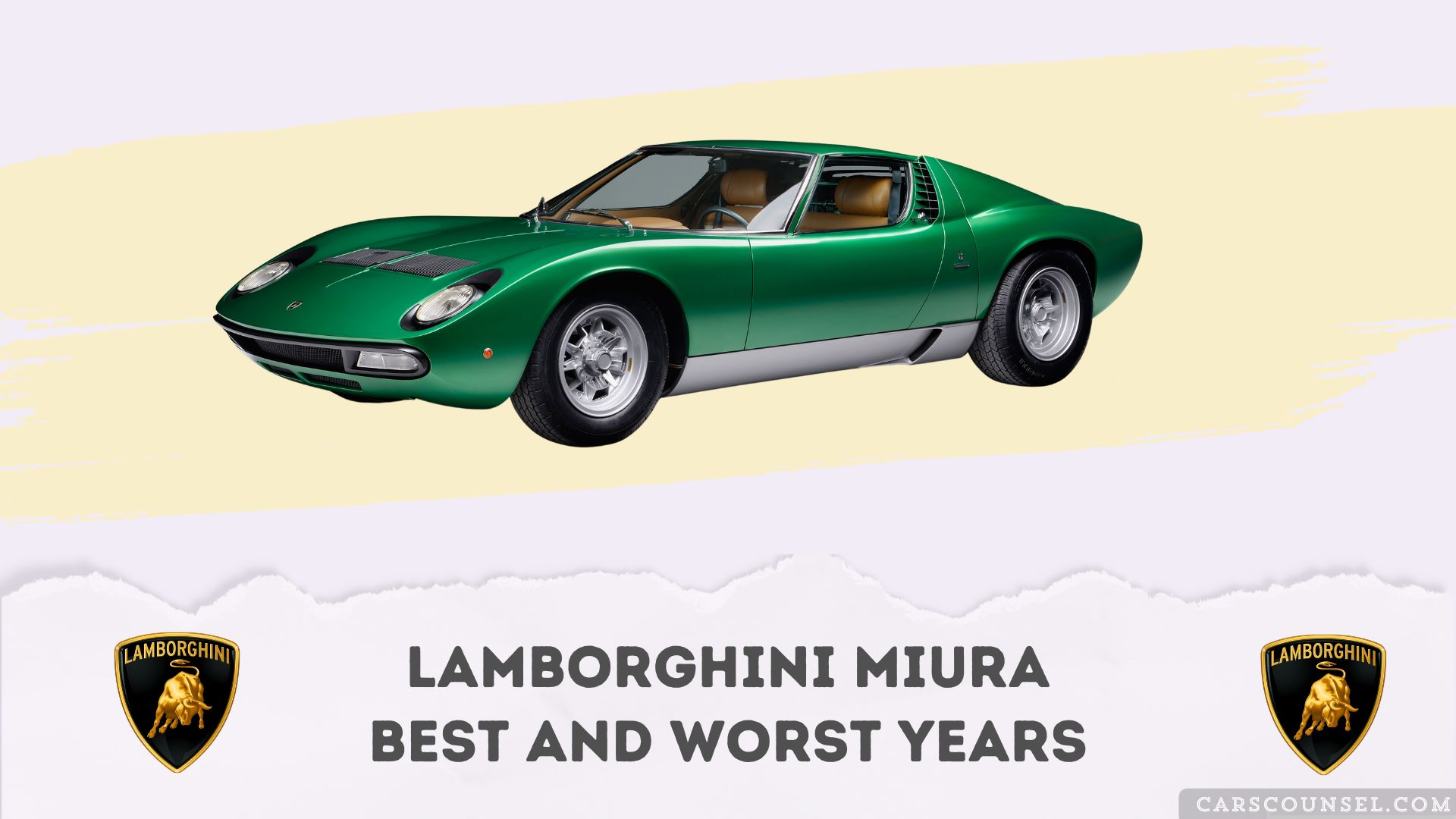
The best Lamborghini Miura model years are the 1971 through 1973 P400 SV variants, offering the most refined chassis and highest power output. Buyers should approach the 1966 through 1968 P400 models carefully due to early chassis flex and severe fuel system fire risks.
Rankings are comparative, and no vintage supercar is entirely flawless. Long-term survivability heavily depends on specialist maintenance, comprehensive safety updates, and careful storage away from modern ethanol-blended fuels.
Reliability varies significantly by production sequence and variant. The transition from the original P400 to the S and eventually the SV brought critical structural reinforcements and vital carburetor refinements.
Quick Navigation
Best and Worst Lamborghini Miura Years at a Glance
| Model Year / Variant | Verdict | Main Reason | Buyer Guidance |
|---|---|---|---|
| 1971–1973 (SV) | Best Enthusiast Choice | Stiffer chassis, wider track, 385 hp. | Verify specialist maintenance and fire-prevention updates. |
| 1969–1971 (S) | Good With Inspection | Improved 370 hp engine and reinforced chassis. | Inspect carburetors and fuel lines thoroughly. |
| 1966–1968 (P400) | Approach Carefully | Chassis flex, aerodynamic lift, high fire risk. | Demand documentation of modern safety upgrades. |
Key Takeaways
- The 1971–1973 P400 SV represents the ultimate and most sorted iteration of the Miura.
- Early 1966–1968 P400 models require intense scrutiny regarding chassis rigidity and fuel system safety.
- The transversely mounted 3.9-liter V12 demands specialized, expert maintenance to prevent catastrophic failures.
- Original Weber carburetors and aging fuel lines pose severe fire hazards if not properly updated.
- Always arrange a pre-purchase inspection exclusively through a recognized vintage Lamborghini specialist.
How We Evaluated the Lamborghini Miura Model Years
Our analysis considers historical engineering records, classic car auction data, and specialist restoration reports. We evaluate chassis revisions, powertrain updates, and the severity of inherent design flaws like fuel routing and aerodynamic lift.
Consumer complaints from the 1960s do not apply to modern ownership. Today, reliability is defined by how well a surviving example has been sorted and maintained by marque experts.
The term “best” indicates comparatively stronger engineering execution and survivability, rather than modern standards of daily dependability or trouble-free operation.
Best Lamborghini Miura Years
1971–1973 P400 SV (Best Enthusiast Choice)
The SV variant represents the final and most developed version of the Miura. It features a significantly stiffer chassis, wider wheels, and an upgraded 385-horsepower V12 engine.
These late-production models addressed the severe handling and structural flex issues of earlier cars. While the inherent fuel system risks remain, the SV offers the most planted and capable driving experience of the lineage.
1969–1971 P400 S (Good With Inspection)
The P400 S introduced a reinforced chassis and revised camshafts, boosting output to 370 horsepower. This variant successfully mitigated the worst of the original chassis flex issues.
Buyers must still carefully inspect the fuel system and electrical components. Examples that have received modern fuel line updates and carburetor tuning offer a compelling balance of classic aesthetics and improved structural integrity.
Best Year by Buyer Type
Best Enthusiast Choice: 1971–1973 P400 SV
The SV provides the ultimate vintage supercar experience. Its wider track and refined suspension deliver the most confident high-speed handling, making it the most desirable and capable configuration for collectors and drivers alike.
Years to Approach Carefully
1966–1968 P400 (Approach Carefully)
The earliest Miuras were rushed to production with a notably thin chassis that flexed under hard driving. Furthermore, the original aerodynamic profile generated dangerous front-end lift at high speeds.
The most critical concern is the fuel system. Early Weber carburetors and poorly routed fuel lines frequently caused engine bay fires. Any surviving example must have extensive, documented safety modifications to be considered for road use.
Lamborghini Miura Reliability by Generation
P400 (1966–1968)
The original Miura established the mid-engine supercar template but suffered from premature release. The thin steel chassis lacked rigidity, and the transverse V12 placement created severe cooling and maintenance access challenges.
P400 S (1969–1971)
Lamborghini reinforced the chassis and improved the engine breathing. While structurally superior to the base P400, the S still retained the fundamental aerodynamic quirks and complex electrical gremlins of the era.
P400 SV (1971–1973)
The SV featured revised suspension geometry, wider fenders, and a more powerful engine. It represents the mature execution of the platform, though the low-volume, hand-built nature of production means no two examples are exactly identical.
Common Lamborghini Miura Problems
Fuel System Fires
The original fuel routing placed lines and Weber carburetors dangerously close to hot exhaust components. Fuel pooling or leaking onto the engine bay frequently resulted in catastrophic fires. Modern replacement lines and fire suppression systems are mandatory.
Aerodynamic Instability
The original bodywork generated significant front-end lift at high speeds, making the steering dangerously light. While later models received minor tweaks, the fundamental aerodynamic profile requires extreme caution and respect from the driver.
Chassis Flex
Early P400 models utilized a lightweight but insufficiently braced tubular chassis. This led to noticeable flex during cornering and compromised the suspension geometry, a flaw only properly addressed with the introduction of the S and SV variants.
Electrical System Failures
The 1960s Ducellier electrical components and switches are notoriously fragile. Intermittent failures of lights, gauges, and power accessories are common, requiring specialized rewiring and component restoration to ensure basic functionality.
What to Check Before Buying a Used Lamborghini Miura
- Verify the chassis number and consult a marque historian to confirm the original variant and build specification.
- Inspect the engine bay for modern fuel line replacements, fire suppression systems, and carburetor overflow catch cans.
- Evaluate the tubular chassis for historical damage, improper repairs, or excessive structural flex.
- Test the unassisted steering and heavy clutch to ensure the mechanical linkages are properly sorted.
- Arrange a comprehensive inspection by a recognized vintage Lamborghini specialist before any purchase.
Related Buying Guides
- Lamborghini Countach best and worst years: Explore the direct successor to the Miura, which adopted the dramatic wedge styling and longitudinal engine layout.
- Lamborghini Aventador best and worst years: Consider this modern V12 flagship alternative if you desire contemporary reliability alongside extreme supercar performance.
Frequently Asked Questions
Is the Lamborghini Miura reliable?
As a 1960s hand-built supercar, it requires intense specialist maintenance. Late-production SV models offer the most sorted engineering, but all variants demand constant vigilance regarding fuel system safety and fragile electrical components.
Which Miura variant is most desirable?
The 1971–1973 P400 SV is the most desirable and capable variant. It features a stiffer chassis, wider wheels, and 385 horsepower, representing the ultimate evolution of the original mid-engine V12 platform.
Do all Miuras suffer from fire risks?
The original fuel system design posed severe fire hazards across all variants due to carburetor overflow and poorly routed lines. Surviving examples must feature comprehensive modern fuel system updates and fire suppression equipment to be driven safely.
What causes the high-speed handling issues?
The original aerodynamic design generated significant front-end lift at high speeds, making the unassisted steering dangerously light. This inherent flaw requires extreme driver caution and respect for the vehicle’s vintage engineering limitations.
Are Miura maintenance costs exceptionally high?
Yes, maintaining the transverse V12 and complex vintage systems requires exclusive specialist facilities. Routine services, carburetor balancing, and custom fabrication represent significant ongoing ownership expenses typical of elite classic cars.
How long can a Lamborghini Miura last?
Longevity depends entirely on climate-controlled storage, specialist maintenance, and safety upgrades. Most examples function as carefully preserved collector assets rather than high-mileage drivers, surviving indefinitely when properly curated by marque experts.
Choosing the Right Lamborghini Miura Model Year
The 1971–1973 P400 SV provides the most capable ownership experience, featuring vital chassis reinforcements and the most powerful engine configuration. These late-build examples minimize the severe structural and handling risks associated with early production.
Buyers targeting earlier P400 or S models must demand exhaustive documentation of fuel system safety upgrades and chassis inspections. Always rely exclusively on authorized vintage Lamborghini specialists for authentication and pre-purchase evaluation.

