The best Ford Explorer Sport Trac model years are 2009 and 2010, which benefit from late-production refinements and a more reliable powertrain. Buyers should avoid the 2001, 2002, and 2007 model years due to severe transmission defects, timing chain failures, and widespread water intrusion issues.
These rankings are comparative, as no used Sport Trac is entirely flawless. Long-term reliability heavily depends on strict maintenance records, rust-free condition, and whether previous owners addressed known factory defects.
Meaningful differences exist between the first-generation (2001–2005) and second-generation (2007–2010) models. Ford skipped the 2006 model year, and the second generation introduced an available 4.6L V8 engine alongside the standard 4.0L V6.
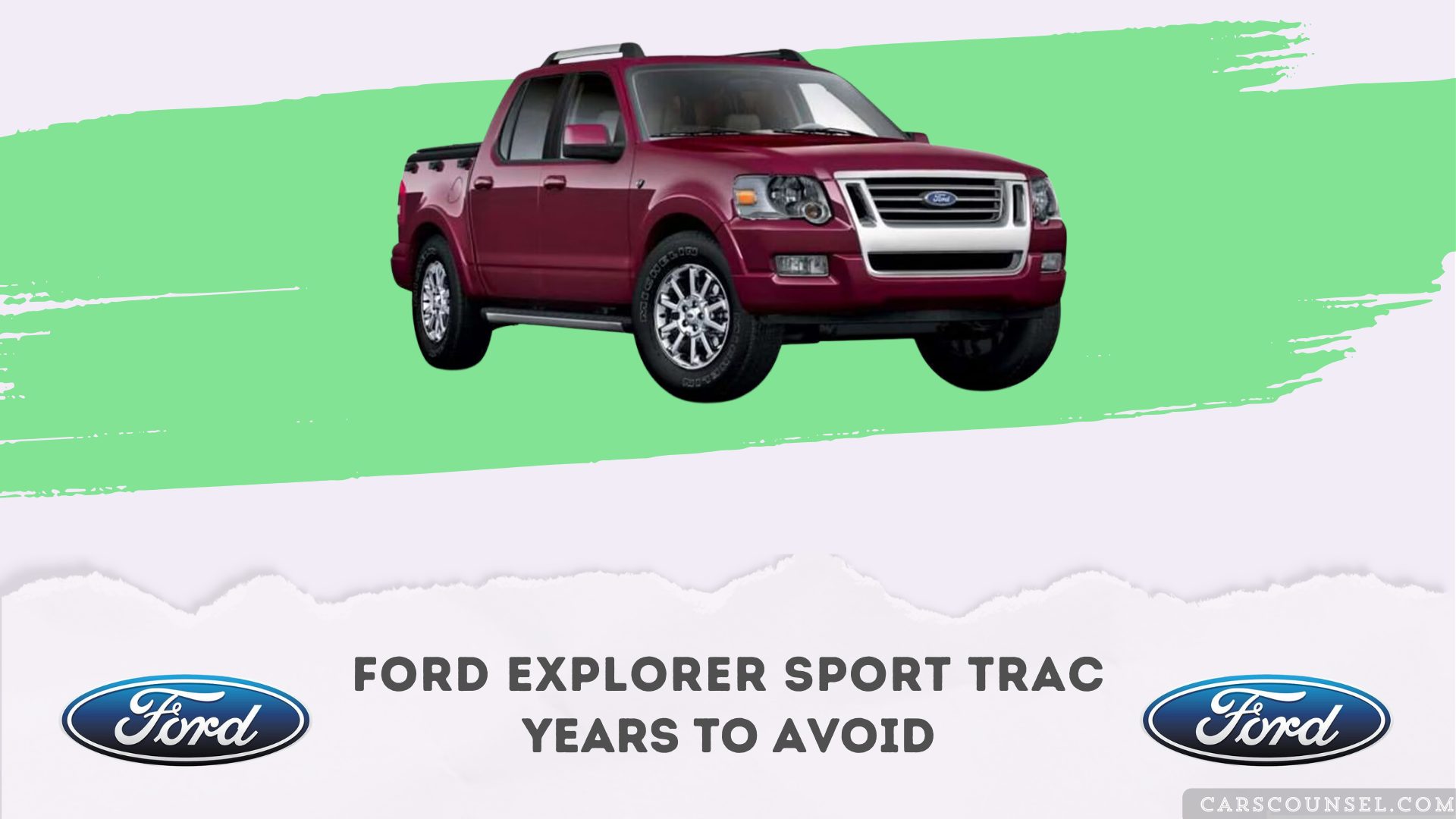
Quick Navigation
Best and Worst Ford Explorer Sport Trac Years at a Glance
| Model Year | Verdict | Main Reason | Buyer Guidance |
|---|---|---|---|
| 2001 | Avoid | Transmission failures and timing chain defects | Skip this year entirely |
| 2002 | Avoid | Severe transmission and engine issues | Skip this year entirely |
| 2003 | Approach Carefully | 4.0L V6 timing chain tensioner failures | Verify timing chain replacement |
| 2004 | Approach Carefully | Ongoing 4.0L V6 timing chain concerns | Verify timing chain replacement |
| 2005 | Approach Carefully | Final Gen 1 year with lingering engine risks | Verify timing chain replacement |
| 2007 | Avoid | First-year Gen 2 water leaks and transmission faults | Skip this year entirely |
| 2008 | Good Choice | Improved reliability but prone to cabin water leaks | Inspect third brake light seal |
| 2009 | Best Late-Generation Choice | Mature platform with fewer powertrain complaints | Prioritize V8 models with service history |
| 2010 | Best Late-Generation Choice | Final production year with strongest overall record | Check for open recalls and rust |
Key Takeaways
- The 2009 and 2010 models are the strongest choices for used buyers.
- Avoid the 2001, 2002, and 2007 model years due to severe mechanical and body defects.
- The 4.0L SOHC V6 engine requires strict timing chain maintenance to prevent catastrophic failure.
- Second-generation models (2007–2010) frequently suffer from water leaks originating at the third brake light seal.
- The 4.6L V8 engine requires specialized tools and care when replacing spark plugs to prevent cylinder head damage.
- Always verify the VIN for open recalls and arrange an independent pre-purchase inspection.
How We Evaluated the Ford Explorer Sport Trac Model Years
Our analysis considers official recalls, NHTSA investigations, manufacturer service campaigns, and verified owner complaints. We evaluate powertrain differences, generation changes, defect severity, and repair complexity.
Complaints are not failure rates, and high report volumes do not automatically confirm universal defects. Recalls do not inherently make vehicles unreliable if remedies are performed. Recent models have less ownership history, and a Best rating means a year is comparatively stronger, not flawless.
Best Ford Explorer Sport Trac Years
2009 and 2010 (Best Late-Generation Choice)
The 2009 and 2010 model years represent the final iterations of the second-generation Sport Trac. By this time, Ford had addressed many early-production quirks of the redesigned platform. The available 4.6L V8 provides robust towing capability, while the 4.0L V6 remains a serviceable daily driver option.
Buyers should still inspect the third brake light gasket for signs of water intrusion and verify that the transmission shifts smoothly. Examples with documented maintenance history offer the most secure ownership experience.
2008 (Good Choice)
The 2008 model year shows a notable drop in severe powertrain complaints compared to the inaugural 2007 redesign. It benefits from the same independent rear suspension and refined interior of the second generation.
The primary concern remains the third brake light seal, which can degrade and allow water into the rear cabin. Inspect the rear headliner and C-pillars for moisture or mold before purchasing.
Years to Approach Carefully
2003, 2004, and 2005 (Approach Carefully)
These first-generation models avoided the worst transmission statistics of the 2001 and 2002 launch years. However, they still utilize the 4.0L SOHC V6 engine, which is notorious for timing chain cassette failures.
If the plastic timing chain guides break, the chain can slap against the engine block or jump time, leading to catastrophic internal damage. Only consider these years if the seller has verifiable proof that the timing chain assembly was recently replaced with updated OEM parts.
Worst Ford Explorer Sport Trac Years
2001 and 2002 (Avoid)
The launch years of the Sport Trac are plagued by severe transmission and engine defects. The 5-speed automatic transmission in these early models is prone to harsh shifting, slipping, and premature failure.
Combined with the early iterations of the 4.0L V6 timing chain vulnerabilities, these years present a high risk of expensive drivetrain repairs. Most examples on the used market have exceeded their reliable service life.
2007 (Avoid)
As the first model year of the second generation, the 2007 Sport Trac suffers from typical first-year redesign issues. It accumulated a high volume of complaints regarding transmission hesitation and engine vibrations.
Additionally, the 2007 model is heavily affected by a defective third brake light seal that allows rain to pour into the cabin, damaging interior electronics and promoting rust. Later Gen 2 years are significantly safer investments.
Ford Explorer Sport Trac Reliability by Generation
First Generation (2001–2005)
The first-generation Sport Trac was based on the older 1995–2001 Explorer four-door platform, even after the standard Explorer was redesigned for 2002. This generation is defined by the 4.0L SOHC V6 and its associated timing chain risks.
While the 2003–2005 models show slight improvements in transmission durability over the launch years, the engine remains a liability if poorly maintained.
Second Generation (2007–2010)
Ford skipped the 2006 model year for the Sport Trac, returning in 2007 on the newer U251 platform with an independent rear suspension and an available 4.6L V8 engine. Early second-generation models struggled with water leaks and electronic gremlins.
By 2009, the platform had matured, making the final two years the most reliable options in the vehicle’s history. For buyers interested in similar mid-size trucks, our guides on the Ford Explorer and Ford Ranger cover alternative configurations and years.
Common Ford Explorer Sport Trac Problems
Engine Timing Chain Failure (4.0L V6)
The 4.0L SOHC V6 uses plastic timing chain cassettes that become brittle and break over time. Symptoms include a loud rattling noise from the front of the engine on cold starts.
If ignored, the chain can jump time or destroy the engine. Repair requires extensive teardown and is costly.
Transmission Slipping and Failure
Early first-generation models (2001–2002) and the 2007 redesign year report frequent automatic transmission failures. Symptoms include delayed engagement, harsh shifting, and a flashing overdrive light.
Rebuilding or replacing the 5R55E or 6R transmission is a major expense.
Third Brake Light Water Leak (2007–2010)
The foam gasket sealing the high-mount stop lamp degrades rapidly, allowing water to enter the cabin. This typically results in water pooling behind the rear seats, damaging the interior and potentially shorting out electronic modules.
Replacing the seal with an updated silicone gasket is a necessary preventative measure.
Spark Plug Seizure (4.6L V8)
The 4.6L V8 engine can suffer from spark plugs seizing in the cylinder head. When attempting routine maintenance, the lower half of the spark plug can break off inside the head, requiring specialized extraction tools or cylinder head removal.
Repair-Cost Overview
| Problem | Commonly Affected Years | Approximate Repair Range | Important Notes |
|---|---|---|---|
| Timing Chain Assembly | 2001–2005 | $1,500 – $2,500 | Requires updated OEM cassette and tensioner |
| Transmission Replacement | 2001–2002, 2007 | $2,500 – $4,000 | Remanufactured units are recommended |
| Third Brake Light Seal | 2007–2010 | $100 – $250 | DIY-friendly; prevents severe interior damage |
| Spark Plug Extraction | 2007–2010 (V8) | $400 – $900 | Requires specialized extraction tools |
Repair costs vary significantly by region, labor rate, parts choice, and vehicle configuration. Independent shops generally offer lower rates than dealerships, but complex engine work requires a technician familiar with Ford modular engines.
What to Check Before Buying a Used Ford Explorer Sport Trac
- Verify the VIN for open recalls and ensure all remedies are completed.
- Listen for a rattling noise on cold start to identify timing chain wear (4.0L V6).
- Inspect the rear headliner and C-pillars for water stains or mold.
- Check the third brake light gasket for cracking or missing foam.
- Review service records for transmission fluid changes and spark plug replacements.
- Test the four-wheel-drive system for binding or unusual noises.
- Inspect the frame and rear bed mounts for severe rust or corrosion.
- Arrange an independent pre-purchase inspection with a trusted mechanic.
Related Buying Guides
- Ford F-150 best and worst years: The F-150 offers a more traditional truck bed and broader powertrain options for buyers needing greater utility.
- Ford Explorer best and worst years: The standard Explorer shares the Sport Trac’s SUV lineage but provides enclosed cargo space and better family practicality.
- Honda Passport best and worst years: A modern mid-size SUV alternative that prioritizes unibody comfort and reliability over truck capability.
Frequently Asked Questions
What is the best year for a Ford Explorer Sport Trac?
The 2009 and 2010 model years are the best choices. They represent the final, most refined iterations of the second generation, offering improved reliability and the option of a capable 4.6L V8 engine.
What years of Ford Sport Trac to avoid?
Buyers should avoid the 2001, 2002, and 2007 model years. These years suffer from severe transmission defects, timing chain failures, and widespread water intrusion issues that lead to costly repairs.
Does the Ford Sport Trac have a timing belt or chain?
The Ford Explorer Sport Trac uses a timing chain on both its 4.0L V6 and 4.6L V8 engines. The 4.0L V6 is notorious for plastic timing chain guide failures that require expensive repairs.
Why was the Ford Explorer Sport Trac discontinued?
Ford discontinued the Sport Trac after the 2010 model year due to shifting consumer preferences toward traditional crossovers and standard mid-size SUVs, which offered better fuel economy and enclosed cargo space.
Are there any recalls for the Ford Explorer Sport Trac?
Yes, various model years have been subject to recalls for issues like rear axle fractures, wiper motor failures, and seat belt buckles. Always check the NHTSA database using the vehicle’s VIN for open recalls.
Can I fix the Sport Trac water leak myself?
Yes, the common third brake light water leak on 2007–2010 models is easily fixed by removing the high-mount stop lamp and replacing the degraded foam gasket with a new silicone seal.
Which Ford Explorer Sport Trac Year Should You Buy?
The 2009 and 2010 Ford Explorer Sport Trac models offer the most secure ownership experience, combining a mature platform with robust V8 availability. Avoid the 2001, 2002, and 2007 model years due to severe mechanical and water intrusion defects.
If you choose an earlier model, verify that the 4.0L V6 timing chain has been replaced with updated components. Always check the VIN for open recalls, review maintenance records, and arrange an independent inspection before finalizing your purchase.

