The 2010 Chevy Cobalt is the best model year to buy, offering the most sorted production run before the nameplate was discontinued. Buyers should strictly avoid the 2005 through 2007 models due to severe, widespread ignition switch defects and high complaint volumes.
Rankings are comparative, and no used Cobalt is entirely flawless. Maintenance records and current vehicle condition matter more than mileage alone.
Significant differences exist between early and late production years. The 2008 mid-cycle refresh brought styling updates, but powertrain vulnerabilities like timing chain stretch persisted across the entire generation.
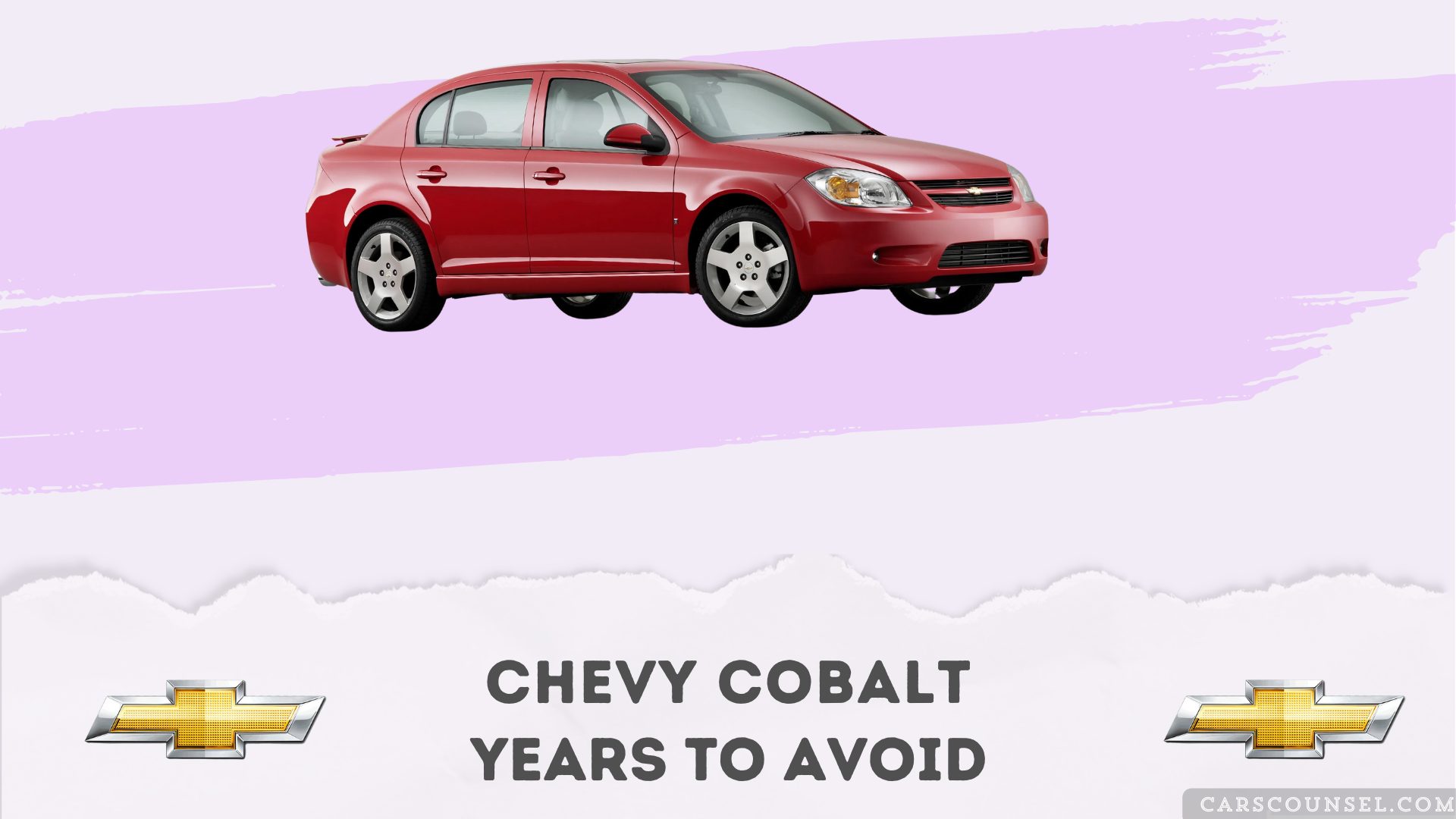
Quick Navigation
Best and Worst Chevy Cobalt Years at a Glance
| Model Year | Verdict | Main Reason | Buyer Guidance |
|---|---|---|---|
| 2010 | Best Older Choice | Final production year with fewer electrical gremlins | Verify timing chain and EPS condition |
| 2008-2009 | Approach Carefully | Mid-cycle refresh, but still prone to EPS and shifter issues | Check for completed recalls and service history |
| 2005-2007 | Avoid | Infamous ignition switch defect and high stall complaints | Look at newer alternatives or different models |
Key Takeaways
- The 2010 model year is the safest choice for a used Cobalt.
- Avoid 2005-2007 models due to the dangerous ignition switch recall.
- The 2.2L Ecotec engine requires strict oil change intervals to prevent timing chain stretch.
- Electric power steering (EPS) failures are a platform-wide concern.
- Always verify that all ignition and shifter cable recalls were performed.
- A pre-purchase inspection is mandatory for any used Cobalt.
How We Evaluated the Chevy Cobalt Model Years
Our analysis considers official NHTSA recalls, manufacturer service campaigns, and consumer complaint patterns. We evaluate powertrain differences, generation changes, and repair complexity.
Complaints are not failure rates, and a recall does not automatically make a year unreliable. Recent years have less ownership history, and Best means comparatively stronger, not flawless.
Best Chevy Cobalt Years
2010: Best Older Choice
As the final year of production, the 2010 Cobalt benefits from several years of manufacturing refinements. While it still shares the Delta platform and 2.2L Ecotec engine with earlier models, many early electrical issues were addressed.
Buyers must still inspect the timing chain and electric power steering system before purchasing.
Best Year by Buyer Type
Best Budget Commuter: 2010
The 2010 model offers the most reliable iteration of the Cobalt for daily driving. It avoids the severe ignition switch flaws of earlier years while maintaining good fuel economy.
Years to Approach Carefully
2008-2009: Approach Carefully
The 2008 model year introduced a mid-cycle refresh with updated styling, but it did not entirely eliminate mechanical weaknesses. The 2009 model year is subject to a specific shifter cable recall.
Both years require careful inspection of the electric power steering system and verification of all recall work.
Worst Chevy Cobalt Years
2005-2007: Avoid
The first three years of the Cobalt are plagued by the infamous GM ignition switch defect. This flaw could cause the engine to shut off while driving and disable the airbags.
These years also suffer from the highest volumes of owner complaints regarding engine stalling and power steering failures.
Chevy Cobalt Reliability by Generation
The Chevy Cobalt was built on GM’s Delta platform, replacing the Cavalier before eventually being succeeded by the Cruze.
The entire generation relies heavily on the 2.2L Ecotec four-cylinder engine. While adequate for commuting, this engine is notorious for timing chain stretch if oil changes are neglected.
Common Chevy Cobalt Problems
Ignition Switch Defects
Affecting primarily 2005-2007 models, the ignition switch could inadvertently turn off the engine if the keychain was heavy. This disabled power steering and airbags, leading to a massive safety recall.
Electric Power Steering Failures
The Cobalt uses an electric power steering system rather than a hydraulic one. The EPS motor or wiring harness can fail, causing a sudden loss of steering assist.
GM issued a recall for 2005-2010 models to address this, but failures still occur on used examples.
Timing Chain Stretch
The 2.2L Ecotec engine is prone to timing chain stretch and tensioner failure. Symptoms include a rattling noise on cold starts and a check engine light.
If left unaddressed, the chain can jump time and destroy the engine.
Shifter Cable Bushing Failure
Some models, particularly around 2009, experienced issues where the shifter cable detached from the transmission. This could result in the shifter indicating Park while the vehicle was actually in another gear.
What to Check Before Buying a Used Chevy Cobalt
- Verify the VIN for open ignition and EPS recalls.
- Listen for timing chain rattle on a cold start.
- Test the electric power steering for warning lights or heavy steering feel.
- Ensure the shifter firmly engages Park and holds the vehicle.
- Check for fuel leaks near the fuel pump and tank.
- Review service records for frequent oil changes.
- Arrange an independent pre-purchase inspection.
Related Buying Guides
- Chevy Cruze years to avoid: The direct successor to the Cobalt, offering improved safety and refinement.
- Chevy Malibu years to avoid: A larger midsize sedan alternative for buyers needing more space.
- Chevy Equinox years to avoid: A compact crossover option for those who prefer a higher ride height.
- Chevy Silverado years to avoid: For buyers who realize they need truck capability instead of a compact commuter.
- Years to avoid: See our complete database of unreliable model years across all brands.
Frequently Asked Questions
What is the best year for a Chevy Cobalt?
The 2010 model year is the best choice. As the final year of production, it has the most refined build quality and avoids the severe ignition switch defects found in earlier models.
Why should I avoid the 2005-2007 Chevy Cobalt?
These years are subject to the dangerous GM ignition switch recall. The defect can cause the engine to stall while driving and prevent the airbags from deploying in a crash.
Do all Chevy Cobalts have power steering problems?
The Cobalt uses an electric power steering system that is prone to failure across all years. While a recall addressed some issues, buyers should test the steering for heavy effort or warning lights.
What causes the engine rattling noise in a Cobalt?
A rattling noise on cold starts is often caused by timing chain stretch in the 2.2L Ecotec engine. This requires immediate attention to prevent catastrophic engine failure.
Is the Chevy Cobalt expensive to maintain?
Routine maintenance is affordable, but neglected Cobalts can become expensive. Ignoring oil changes leads to timing chain failure, which requires a costly engine rebuild or replacement.
Was the Chevy Cobalt replaced by the Cruze?
Yes, Chevrolet discontinued the Cobalt after the 2010 model year. It was replaced by the Chevy Cruze, which offered a more modern platform and improved safety features.
Which Chevy Cobalt Year Should You Buy?
If you are considering a used Chevy Cobalt, limit your search to the 2010 model year. It represents the most reliable version of this compact commuter car.
Avoid the 2005 through 2007 models entirely due to the life-threatening ignition switch defect. The 2008 and 2009 models are less risky but still require strict mechanical inspections.
Always verify that all safety recalls have been completed. Because of the Ecotec engine’s sensitivity to oil starvation, a pre-purchase inspection and a review of maintenance records are essential.

