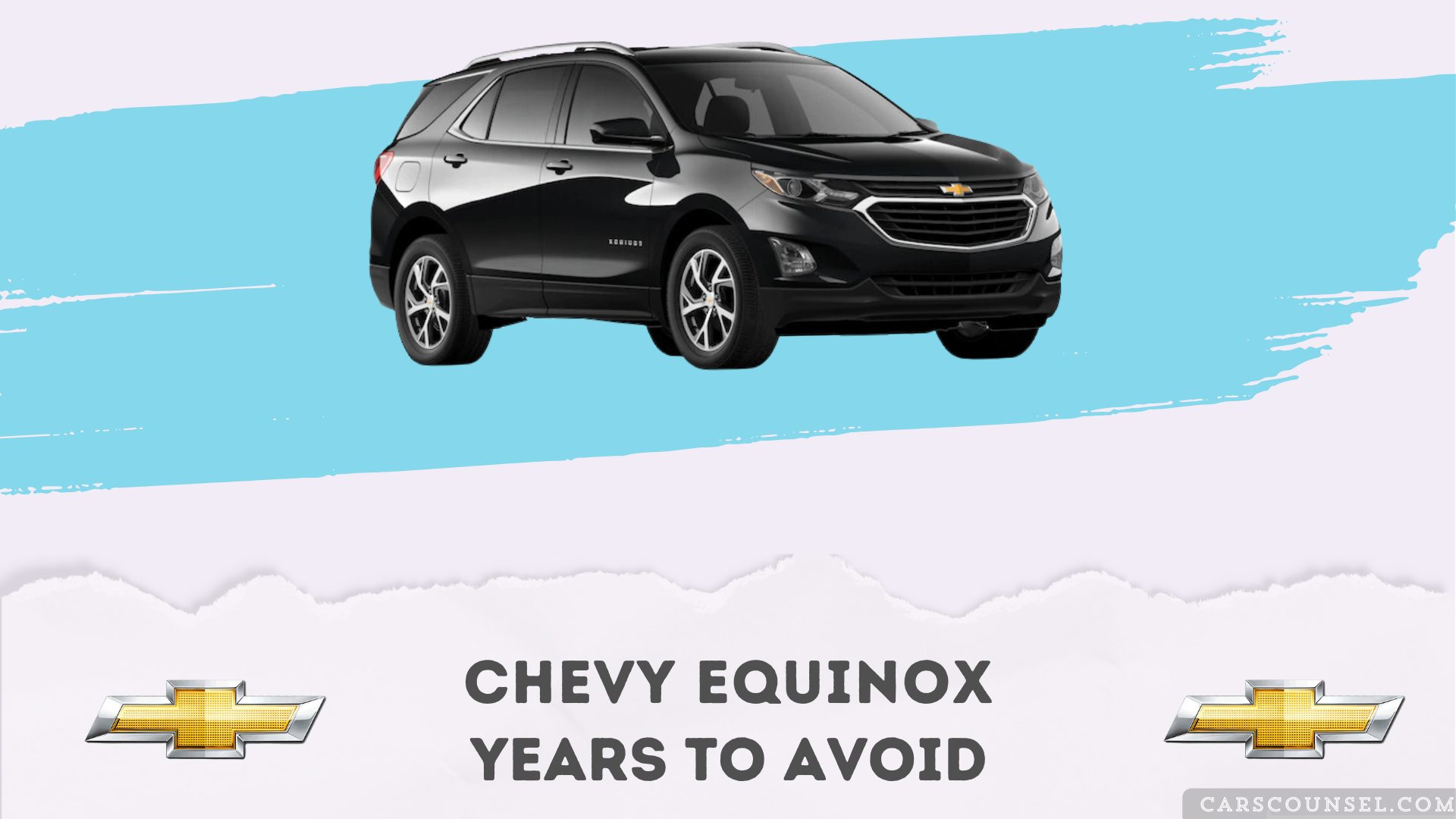
The best Chevrolet Equinox years are 2019 through 2024, offering sorted powertrains and modern safety features. Buyers should strictly avoid the 2010 through 2013 model years due to severe 2.4-liter engine oil consumption and timing chain failures.
These rankings are comparative, meaning no used vehicle is entirely flawless. Long-term reliability heavily depends on consistent maintenance, accident history, and how previous owners treated the powertrain. Always verify service records before purchasing.
Reliability varies significantly by engine choice. The 2.4-liter four-cylinder requires intense scrutiny, while the 3.6-liter V6 and newer turbocharged options generally provide much better ownership experiences and long-term durability.
Quick Navigation
Best and Worst Chevrolet Equinox Years at a Glance
| Model Year | Verdict | Main Reason | Buyer Guidance |
|---|---|---|---|
| 2025 | Too New to Judge | Redesigned generation | Wait for long-term data |
| 2019-2024 | Best Choice | Sorted turbo engines | Top recommendation |
| 2018 | Approach Carefully | First-year redesign bugs | Check infotainment and turbo |
| 2016-2017 | Good Choice | Mature platform | Prefer the 3.6L V6 |
| 2014-2015 | Approach Carefully | Lingering 2.4L issues | Inspect for oil burning |
| 2010-2013 | Avoid | Severe 2.4L engine failures | Look at newer alternatives |
| 2005-2009 | Mixed | Age and high mileage | Require strict inspection |
Key Takeaways
- The 2019-2024 models represent the safest used purchases with reliable turbocharged engines.
- Avoid 2010-2013 models equipped with the 2.4-liter Ecotec engine due to catastrophic oil consumption.
- The 3.6-liter V6 in 2013-2017 models is significantly more reliable than the four-cylinder.
- First-year redesigns like 2018 often have electrical and infotainment teething issues.
- Always check for open recalls and verify timing chain service on older four-cylinder models.
How We Evaluated the Chevrolet Equinox Model Years
Our analysis reviews official NHTSA recalls, manufacturer service campaigns, and verified owner complaint patterns. We separate confirmed mechanical defects from isolated incidents or general wear-and-tear items.
Consumer complaints are not automatic failure rates. A high complaint volume for an older year often reflects its age and mileage rather than a unique manufacturing defect compared to newer models.
We also evaluate powertrain configurations separately. A problematic four-cylinder engine does not automatically condemn a V6 or turbocharged variant from the exact same model year.
Best Chevrolet Equinox Years
2019-2024: Best Choice
The third-generation models from 2019 onward resolved earlier powertrain concerns. The 1.5-liter and 2.0-liter turbocharged engines offer a strong balance of efficiency and reliability when properly maintained.
These years feature updated infotainment systems and advanced safety technology. Buyers should still verify that all software updates and minor electrical recalls have been performed by a dealer.
2016-2017 (3.6L V6): Good Choice
The final years of the second generation benefit from a mature platform and resolved early assembly issues. Models equipped with the 3.6-liter V6 are particularly robust and avoid the four-cylinder oil issues.
While fuel economy is lower than the turbocharged models, the V6 provides excellent longevity. Ensure the transmission fluid was changed regularly, especially on all-wheel-drive examples.
Best Chevrolet Equinox Year by Buyer Type
- Best Overall: 2021 offers a great blend of modern safety features, sorted turbo engines, and reasonable used market depreciation.
- Best Budget Option: 2017 with the 3.6L V6 provides reliable transportation without the premium of the newer third-generation body style.
- Best Family Alternative: 2022 provides excellent rear-seat space and standard active safety features crucial for family hauling.
Years to Approach Carefully
2018: First-Year Redesign
The 2018 model launched the third generation. While the platform is solid, first-year models often suffer from infotainment glitches, rough-shifting nine-speed transmissions, and minor sensor faults.
Buyers should thoroughly test all electronic features and ensure the transmission shifts smoothly during a cold test drive. A pre-purchase inspection is highly recommended.
2014-2015: Lingering Engine Concerns
While improved over earlier models, the 2.4-liter engine in these years can still consume oil between changes. The 3.6-liter V6 remains the much safer configuration for these specific years.
If considering a four-cylinder model, check the dipstick immediately and review service records for timing chain or oil pump replacements. Proceed with caution.
Worst Chevrolet Equinox Years
2010-2013: Avoid
These years are notorious for the 2.4-liter Ecotec engine’s excessive oil consumption. The piston ring design allows oil to burn rapidly, leading to low oil levels, timing chain stretch, and catastrophic engine failure.
Repairing or replacing these engines is expensive and often exceeds the vehicle’s value. Even with meticulous maintenance, the inherent design flaw makes these four-cylinder models a major financial risk.
Chevrolet Equinox Reliability by Generation
First Generation (2005-2009)
These older models are generally mixed. While the V6 engines are durable, age, high mileage, and worn suspension components are the primary concerns today.
Second Generation (2010-2017)
This generation is heavily defined by engine choice. The 2.4-liter four-cylinder is a major liability, while the V6 engines are quite reliable. The 2016 facelift improved interior quality.
Third Generation (2018-2024)
Built on a lighter, more efficient platform, this generation dropped the V6 for turbocharged four-cylinders. After the 2018 launch year, reliability improved significantly, making it the best generation for used buyers.
Fourth Generation (2025-Present)
The latest redesign introduces new styling, updated interior technology, and revised powertrain tuning. Because these vehicles are brand new, long-term reliability data is currently unavailable. They remain too new to judge for used buyers.
Common Chevrolet Equinox Problems
Engine Oil Consumption (2010-2015)
The 2.4-liter Ecotec engine is prone to severe oil consumption due to faulty piston rings. This leads to oil starvation, timing chain stretch, and eventual engine seizure if not monitored constantly.
Infotainment and Electrical Glitches (2018-2019)
Early third-generation models frequently experience freezing touchscreens, Bluetooth pairing failures, and backup camera delays. Software updates from the dealer often resolve these frustrating but non-mechanical issues.
Transmission Shuddering (Various Years)
Some owners report shuddering or hesitation from the automatic transmissions. This is often traced to degraded transmission fluid or torque converter wear, requiring a fluid flush or component replacement.
What to Check Before Buying a Used Chevrolet Equinox
- Verify the VIN for any open NHTSA recalls, especially regarding airbags or fuel system components.
- Check the oil level and condition immediately; low oil on a 2.4L engine is a major red flag.
- Inspect the timing chain cover for leaks or evidence of recent, expensive timing chain replacements.
- Test all infotainment features, including Apple CarPlay, Android Auto, and the backup camera.
- Feel for transmission shuddering during light acceleration at highway speeds.
- Arrange an independent pre-purchase inspection to check for suspension wear and hidden rust.
Related Buying Guides
- GMC Terrain years to avoid: The Equinox’s platform sibling shares similar mechanical histories and engine configurations.
- Chevrolet Blazer best and worst years: A sportier, midsize alternative for buyers needing more power and aggressive styling.
- Chevrolet Traverse best and worst years: A larger, three-row family alternative for buyers who outgrow the Equinox’s cargo space.
Frequently Asked Questions
What is the most reliable Chevy Equinox year?
The 2021 model year is highly recommended. It benefits from a sorted third-generation platform, reliable turbocharged engines, and modern safety features without the first-year redesign bugs of 2018.
Why should I avoid the 2010-2013 Equinox?
These years feature a 2.4-liter engine notorious for excessive oil consumption. This design flaw frequently leads to timing chain failure and catastrophic engine damage, resulting in very expensive repairs.
Is the Chevy Equinox 3.6L V6 reliable?
Yes, the 3.6-liter V6 found in 2013-2017 models is generally robust and avoids the severe oil consumption issues that plague the four-cylinder engines from the same era.
Do newer Equinox models have transmission problems?
While less common than older engine issues, some 2018-2019 models reported rough shifting with the nine-speed automatic. Ensuring the transmission software is updated and fluid is clean helps prevent this.
How long do Chevrolet Equinox SUVs typically last?
Well-maintained examples, particularly those with the V6 or newer turbo engines, can reach high mileage. Longevity strictly depends on consistent oil changes, timely repairs, and avoiding the problematic 2.4-liter engine.
Is the GMC Terrain the same as the Equinox?
They share related architecture and powertrains, making them mechanical siblings. However, they feature different exterior styling, interior materials, and suspension tuning, so their ownership experiences can vary slightly.
Which Chevrolet Equinox Year Should You Buy?
For the best used experience, target the 2019-2024 model years. These third-generation SUVs offer excellent fuel economy, modern safety technology, and sorted turbocharged powertrains that avoid earlier mechanical flaws.
Buyers on a stricter budget should look for 2016-2017 models equipped with the 3.6-liter V6. Strictly avoid the 2010-2013 four-cylinder models to prevent catastrophic engine repair bills.
Always verify the VIN for open recalls, demand complete service records, and hire an independent mechanic for a thorough pre-purchase inspection before signing any paperwork.

