The best GMC Terrain years are 2015 through 2017 for the first generation, and 2020 through 2023 for the second generation. These model years offer mature powertrains and fewer mechanical complaints.
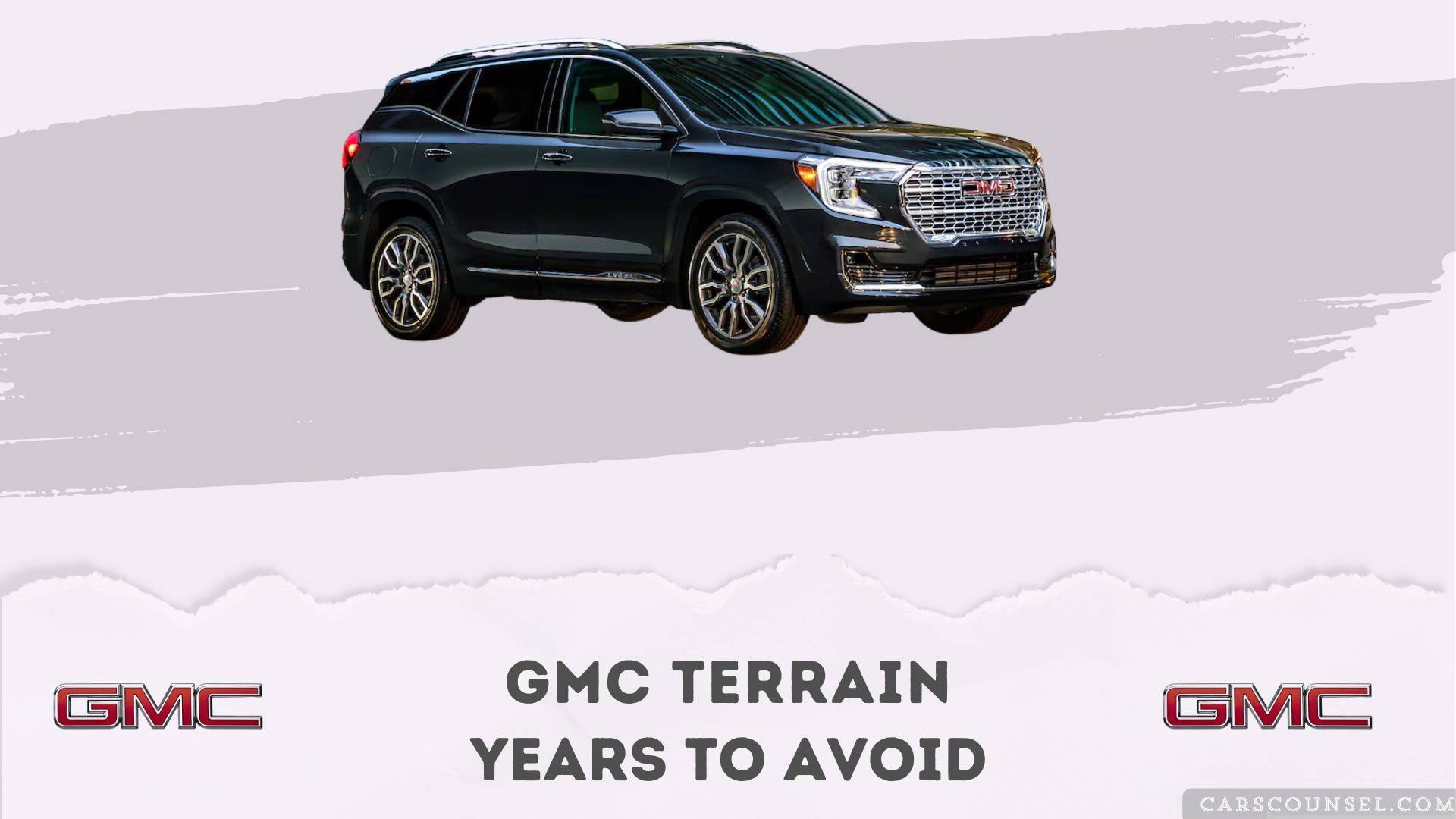
Buyers should avoid the 2010, 2011, and 2012 model years. These early first-generation models suffer from severe engine timing chain failures and excessive oil consumption that lead to costly repairs.
Reliability varies significantly by engine choice. The 3.6-liter V6 and newer 2.0-liter turbocharged engines are generally much more dependable than the problematic early 2.4-liter four-cylinder and base 1.5-liter turbo options.
Quick Navigation
Best and Worst GMC Terrain Years at a Glance
| Model Year | Verdict | Main Reason | Buyer Guidance |
|---|---|---|---|
| 2010-2012 | Avoid | Timing chain and oil consumption | Skip these early models entirely |
| 2013 | Approach Carefully | Mixed engine reliability | Inspect the 2.4L engine closely |
| 2014-2017 | Good Choice | Mature first generation | 2015-2017 are Best Older Choices |
| 2018 | Approach Carefully | First-year redesign issues | Check for transmission and electrical bugs |
| 2019 | Good Choice | Improved second generation | Verify maintenance records |
| 2020-2023 | Best Late-Generation Choice | Refined powertrains | Prioritize the 2.0L turbo engine |
| 2024-2025 | Too New to Judge | Limited long-term data | Wait for more ownership history |
Key Takeaways
- The 2010, 2011, and 2012 model years are the worst due to catastrophic 2.4-liter engine failures.
- Late first-generation models (2015-2017) offer the best value and reliability for budget buyers.
- The 2018 redesign year introduced new electrical and transmission quirks that require careful inspection.
- Second-generation models with the 2.0-liter turbocharged engine are the most dependable modern choices.
- Always verify open recalls and check the VIN before purchasing any used Terrain.
- A pre-purchase inspection is critical, especially for models equipped with the early 2.4-liter engine.
How We Evaluated the GMC Terrain Model Years
We analyze official NHTSA recalls, manufacturer service campaigns, and verified consumer complaint patterns. We also track powertrain changes, generation redesigns, and long-term ownership costs.
It is important to remember that raw complaint totals do not equal confirmed failure rates. A single recall does not automatically make a vehicle unreliable, and recent models simply have less road exposure.
Best GMC Terrain Years
2015, 2016, and 2017 (Best Older Choice)
These late first-generation years benefit from resolved early mechanical bugs. The available 3.6-liter V6 is robust, and the updated 2.4-liter engine received crucial timing chain revisions.
Buyers get a comfortable, spacious compact SUV without the severe financial risks of the 2010-2012 models. Always verify that the timing chain and water pump have been serviced on four-cylinder examples.
2020, 2022, and 2023 (Best Late-Generation Choice)
The second generation hit its stride by 2020. The available 2.0-liter turbocharged engine provides excellent power and avoids the hesitation issues found in the base 1.5-liter engine and early nine-speed automatic transmissions.
These years feature updated infotainment systems and refined safety technology. They represent the most dependable modern options for buyers wanting current styling and advanced driver assistance features.
Best Year by Buyer Type
- Best Overall: 2022 (Introduction of the highly reliable new 2.0L turbo engine).
- Best Budget Option: 2016 (Mature first-generation platform with lower depreciation).
- Best Family Alternative: 2020 (Spacious interior with proven safety ratings).
- Best Towing Configuration: 2017 (Equipped with the 3.6L V6 and factory tow package).
Years to Approach Carefully
2013 (Approach Carefully)
This transition year introduced the excellent 3.6-liter V6, but the base 2.4-liter four-cylinder still carried over some oil consumption risks. Buyers must strictly verify which engine is under the hood.
If the vehicle has the four-cylinder, demand extensive maintenance records proving the timing chain was replaced. Choosing a V6 example completely bypasses this major mechanical vulnerability.
2018 (Approach Carefully)
As the first year of the second generation, the 2018 model experienced typical redesign teething issues. Owners reported infotainment glitches, rough shifting from the new nine-speed automatic, and minor electrical gremlins.
While not mechanically catastrophic like the early first-generation models, these electronic frustrations can be annoying. Have a technician scan the modules and test drive the vehicle thoroughly to check transmission behavior.
Worst GMC Terrain Years
2010, 2011, and 2012 (Avoid)
These early first-generation years are plagued by the notorious 2.4-liter Ecotec engine. Faulty timing chains stretch and fail prematurely, often destroying the engine and requiring replacements costing thousands of dollars.
Excessive oil consumption is another major issue, leading to starved lubrication and seized internal components. The six-speed automatic transmissions in these years also suffer from premature wave plate failures.
Repair costs frequently exceed the vehicle’s actual cash value. Because GM extended some warranties for these specific defects, many original owners already scrapped these vehicles. Buyers should strictly avoid them.
GMC Terrain Reliability by Generation
First Generation (2010–2017)
The first generation rides on the Theta platform, sharing architecture with the Chevrolet Equinox. Early years are highly problematic, but reliability improved drastically after the 2013 introduction of the 3.6-liter V6.
Late models from 2015 to 2017 are solid used choices. If you are cross-shopping, you might also consider our guide on the GMC Acadia, which shares similar GM V6 powertrains but offers three rows of seating.
Second Generation (2018–Present)
Built on the lighter D2UX platform, the second generation dropped the V6 in favor of turbocharged four-cylinder engines. The 1.5-liter turbo is adequate, but the 2.0-liter turbo is the clear reliability and performance winner.
This generation shares its underlying architecture with the Chevrolet Equinox. Recent models are generally dependable, provided buyers avoid the base engine and prioritize the upgraded 2.0-liter configuration.
Common GMC Terrain Problems
Engine Timing Chain Failures
The 2.4-liter Ecotec engine in 2010-2012 models is infamous for timing chain stretch. Symptoms include a check engine light, rough idling, and eventual catastrophic engine failure if ignored.
Excessive Oil Consumption
Many early four-cylinder Terrains burn oil rapidly due to defective piston rings. This leads to low oil levels between changes, accelerating engine wear and potentially seizing the motor.
Transmission Wave Plate Failures
The early six-speed automatic transmissions use brittle wave plates that can shatter. The resulting metal debris destroys the transmission internals, requiring a complete and very expensive replacement.
Repair-Cost Overview
| Problem | Commonly Affected Years | Approximate Repair Range | Important Notes |
|---|---|---|---|
| Timing Chain Replacement | 2010-2012 | $1,500 – $2,500 | Requires extensive engine teardown |
| Engine Replacement | 2010-2013 | $4,000 – $6,500 | Often needed after oil starvation |
| Transmission Rebuild | 2010-2012 | $2,500 – $4,000 | Wave plate debris causes total failure |
Actual repair costs vary significantly by region, local labor rates, parts availability, and whether you use a dealership or an independent mechanic. Always get multiple quotes before authorizing major powertrain repairs.
What to Check Before Buying a Used GMC Terrain
- Verify the VIN for open NHTSA recalls and incomplete software updates.
- Check the oil level and condition; dark or low oil indicates neglect or consumption issues.
- Inspect the timing chain service history on any 2.4-liter four-cylinder model.
- Test the transmission for smooth shifting, especially from a cold start.
- Scan the infotainment and body control modules for stored electrical fault codes.
- Inspect the suspension components for worn bushings and leaking struts.
- Arrange an independent pre-purchase inspection with a trusted technician.
Related Buying Guides
- GMC Canyon best and worst years: Explore our reliability breakdown for GMC’s midsize pickup truck if you need open-bed utility instead of an enclosed SUV.
- GMC Acadia best and worst years: Check our guide on the larger Acadia if you require third-row seating and more cargo space for a growing family.
Frequently Asked Questions
What is the best used GMC Terrain year to buy?
The 2016 and 2017 models are the best older choices, offering refined first-generation reliability. For newer vehicles, the 2022 and 2023 models with the 2.0-liter turbo engine are the strongest options.
Which GMC Terrain years have the most engine problems?
The 2010, 2011, and 2012 model years suffer from severe 2.4-liter engine defects. Timing chain stretch and excessive oil consumption frequently lead to complete engine failure in these early versions.
Is the GMC Terrain expensive to maintain?
Maintenance costs are average for the compact SUV segment. However, early 2010-2012 models can become financial liabilities due to catastrophic engine and transmission failures that require expensive out-of-pocket repairs.
Does the GMC Terrain have transmission problems?
Early first-generation models (2010-2012) feature a six-speed automatic prone to wave plate failure. Later models and the second generation use much more reliable transmissions, though early nine-speed units can exhibit hesitation.
How long does a GMC Terrain typically last?
A well-maintained Terrain with a reliable engine, like the 3.6-liter V6 or 2.0-liter turbo, can easily reach high mileage. Longevity ultimately depends on strict adherence to service schedules and driving conditions.
Should I buy a four-cylinder or V6 GMC Terrain?
For first-generation models, the 3.6-liter V6 is vastly superior to the problematic 2.4-liter four-cylinder. In the second generation, the 2.0-liter turbocharged four-cylinder is the recommended choice over the base 1.5-liter engine.
Which GMC Terrain Year Should You Buy?
The best strategy is to target the late first-generation models (2015-2017) or the mature second-generation examples (2020-2023). These years avoid the catastrophic mechanical flaws that plagued the earliest releases.
Strictly avoid the 2010 through 2012 model years due to their severe engine and transmission vulnerabilities. Always prioritize the larger available engines, verify the service history, and secure an independent inspection.

