The Alfa Romeo 4C is a lightweight, two-seat sports car produced from 2013 to 2020, offered as a coupe and later as a Spider. It uses a carbon fiber tub, aluminum subframes, and a small turbocharged engine to keep weight low while delivering strong performance.
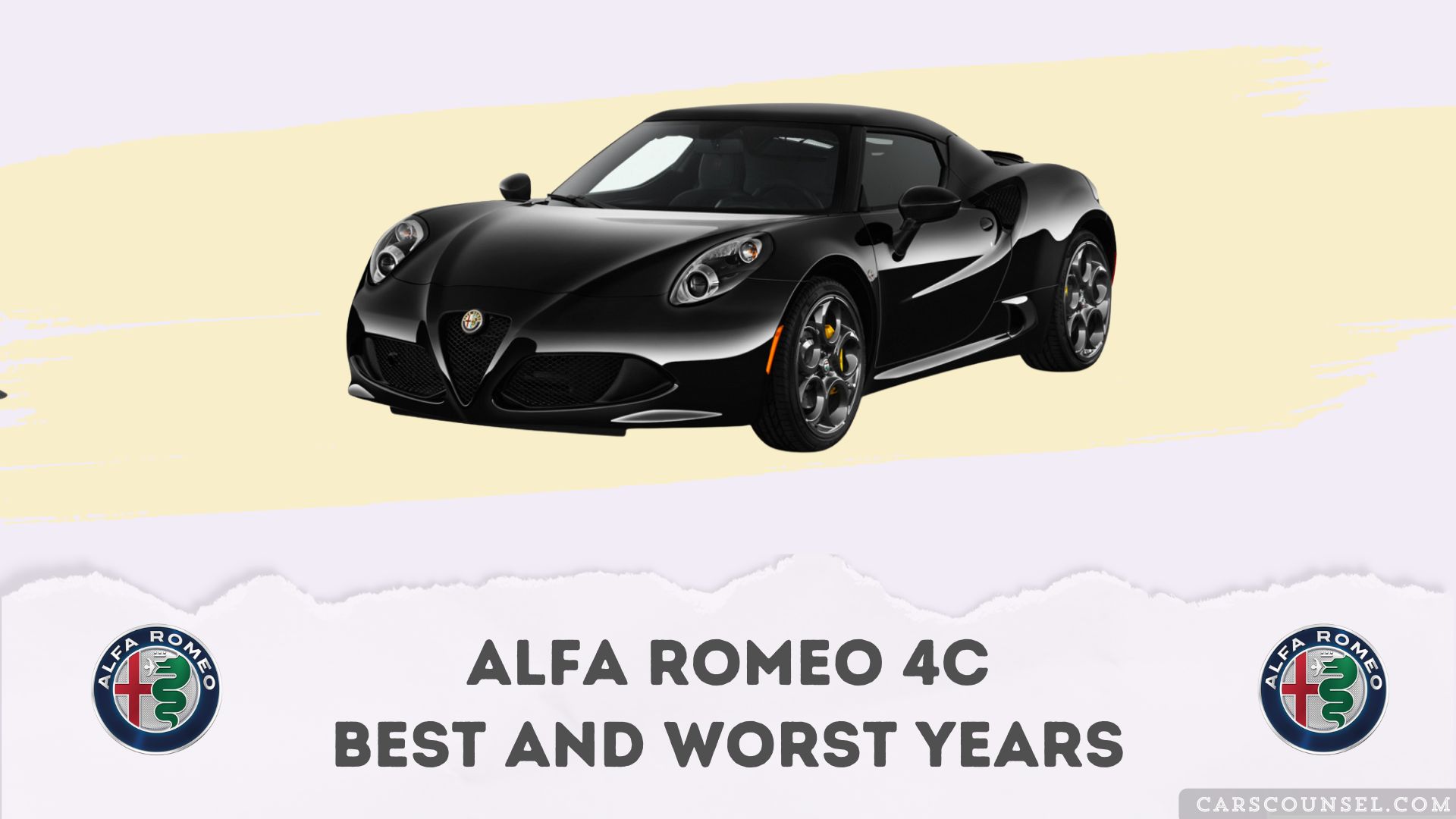
This guide breaks down the best and worst Alfa Romeo 4C years using reliability data, owner complaints, common problems, and long-term dependability signals. It also summarizes recurring defects, ownership costs, and what used buyers should look for before committing to a 4C.
Quick Navigation
Alfa Romeo 4C Generational Overview
2013–2016 Alfa Romeo 4C (Launch phase)
The Alfa Romeo 4C launched in Europe in 2013, with early cars setting the template: carbon fiber monocoque, mid-mounted 1.75 liter turbo four, and a 6 speed dual-clutch TCT gearbox driving the rear wheels. Early production focused on coupes with very few options, and some owners reported minor software issues, alignment concerns, and occasional oil pump or water ingress problems rather than serious mechanical failures.
These early years established a reputation for strong core powertrain reliability thanks to the use of proven engines and gearboxes shared with other Alfa Romeo models. Complaints in this period mostly centered around NVH, tramlining, headlight performance, and interior durability rather than critical drivetrain failures.
2015–2018 Alfa Romeo 4C Spider and updates
The 4C Spider arrived around 2015, adding a removable roof and small detail changes to suspension tuning, options, and trim while keeping the same basic engine and TCT gearbox. Mechanical hardware remained largely unchanged, but Alfa and dealers refined software updates and addressed early alignment and suspension setup concerns.
By this time many common bugs were better understood by the community, and aftermarket solutions existed for issues such as tramlining, suspension geometry, and headlight lighting performance. Owners still reported problems such as A/C compressor failures, ball joint wear, CV boot leaks, and some electrical gremlins, but catastrophic failures remained relatively rare.
2019–2020 Alfa Romeo 4C (Run-out models)
The final production years mainly consisted of limited and run-out editions, retaining the same basic powertrain and chassis but benefitting from accumulated running changes and updated components. These cars tend to show the most mature build quality and software calibration simply because they were produced after years of field experience.
Reliability feedback for late models suggests fewer random issues, though they still carry the same inherent weaknesses around NVH, practicality, and some wear items like suspension and minor electrical components. Low production numbers mean less data than mass-market cars, but surveyed owners generally report trouble-free drivetrains when maintenance is kept up to date.
Best Years for the Alfa Romeo 4C
The best years for the Alfa Romeo 4C are generally the later production models, which benefit from running improvements and accumulated dealer experience. For most buyers, 2016, 2017, 2018, and 2019–2020 stand out for balanced reliability, fewer early-production bugs, and better support knowledge.
2016 Alfa Romeo 4C
2016 sits at the point where early teething issues had been largely identified and addressed, but the cars were still relatively simple and lightly optioned. Reports indicate very few major engine or gearbox failures, with most issues limited to alignment, suspension setup, or cosmetic quirks. Owners who maintain bolt-tightening intervals and keep up with timing belt service generally see strong long-term dependability.2017 Alfa Romeo 4C
By 2017, more production had shifted to the Spider, but overall hardware stability remained strong and reliability feedback was positive. Common problems such as tramlining and minor electrical issues were well-known, and many cars were serviced by dealers familiar with the model. As long as the cooling system, suspension joints, and gearbox servicing are handled correctly, 2017 cars tend to have few serious complaints.2018 Alfa Romeo 4C
2018 models benefit from being among the newer examples while still retaining the same core mechanical package with proven components. Owner reports highlight minimal drivetrain failures, with most expenses related to wear items like brakes, suspension, and occasional A/C system work. High build dates also mean less age-related deterioration of interior and electrical components, improving dependability.2019–2020 Alfa Romeo 4C
Late run-out cars from 2019 and 2020 are some of the most desirable from a reliability perspective simply because they are the newest and run the latest software and minor production updates. Survey-based reliability data shows solid powertrain durability and relatively few major complaints considering the enthusiast usage these cars see. Limited numbers can make data sparse, but available reports suggest strong mechanical robustness when maintenance is followed.
Worst Years for the Alfa Romeo 4C
Even the “worst” Alfa Romeo 4C years are not known for widespread catastrophic failures, but some model years show more owner complaints and nuisance issues. Early production examples in particular require more careful inspection for software glitches, alignment problems, and trim or water ingress issues.
2013 Alfa Romeo 4C (early European cars)
First-year European 4C coupes reported the highest number of small but annoying defects such as computer update issues, oil pump concerns, and suspension alignment problems. These cars also suffered from early build-quality variances typical of a low-volume sports car. Buyers should check for documented campaign work, updated software, and proof of corrected alignment and water leaks.2014 Alfa Romeo 4C
2014 cars still sit in the early production window and can exhibit more frequent minor electrical faults, interior trim problems, and NVH complaints. Some owners mention tramlining, steering sensitivity, and headlight performance concerns that may require aftermarket solutions or careful setup. While the engine and gearbox are usually reliable, these additional annoyances can drive up ownership costs if not addressed.High-mileage 2015–2016 cars with deferred maintenance
Mid-decade cars are mechanically sound, but examples that missed scheduled timing belt changes, gearbox servicing, or suspension checks can become expensive. Owners report failures of A/C compressors, ball joints, and CV boots around higher mileage if these components were neglected. When maintenance is poor, even otherwise good years can behave like “worst years” in terms of repair frequency and cost.
Common Problems Across the Alfa Romeo 4C Lineup
Engine cooling and overheating
One of the more frequently discussed issues involves engine overheating, often linked to cooling system problems such as clogged radiators, faulty water pumps, or air in the system. Overheating can cause power loss and, if ignored, lead to engine damage and costly repairs, so buyers should verify proper cooling system service and check for history of overheating warnings.
Turbo and boost-related issues
The 1.75 liter turbo engine can suffer from turbo lag, boost leaks, and related performance issues, particularly on older or modified cars. Symptoms include loss of power, whistling noises under throttle, and warning lights, often traced to hoses, intercooler connections, or wastegate control. Addressing these issues quickly is important for maintaining reliability and avoiding long-term stress on the engine.
Transmission and clutch problems
The 6 speed TCT dual-clutch gearbox is generally durable but can develop jerky shifting, hesitation, or clutch overheating if not serviced properly. Owners describe delayed engagement in drive or reverse, harsh shifts, and occasional gearbox warnings that may require software updates or clutch-related repair. Regular fluid changes and careful driving in heavy traffic help improve long-term dependability.
Electrical system faults
Electrical issues such as battery problems, warning lights, and intermittent sensor faults are reported across multiple years. These can stem from alternator issues, weak batteries, or wiring and sensor malfunctions, sometimes leading to random error messages or non-start conditions. While often minor, diagnosis and repair costs can add up over time on older 4Cs.
Suspension wear and alignment issues
Suspension and steering complaints are common, including premature wear of ball joints, alignment drift, and tramlining on poor roads. Some owners report needing suspension realignment shortly after delivery and replacing front control arm ball joints or arms at higher mileage. Poor alignment can increase tire wear and make the car feel nervous, so a proper geometry setup is critical.
Fuel system and misfire problems
Fuel pump failures, injector issues, and related fuel system faults can cause misfiring, stalling, or rough running. These problems may trigger warning lights and can make the car difficult to drive until repaired. Keeping up with fuel system maintenance and using quality fuel reduces the likelihood of such issues.
Interior and trim durability
Owners have reported interior concerns such as shrinking leather on the dashboard, rattles, and general wear on trim pieces over time. These issues do not usually affect drivability but can impact perceived quality and resale value. Cars stored indoors and treated with appropriate care products tend to age better.
Comfort, NVH, and headlight performance
High noise levels, stiff ride, poor long-distance comfort, and weak headlight output are recurring owner complaints rather than defects. The 4C’s minimal insulation and firm suspension make long trips tiring, and some owners consider nighttime visibility in rain to be below expectations. These traits are inherent to the design, so buyers must accept them as part of the ownership experience.
Reliability Breakdown by Year
2020 Alfa Romeo 4C Reliability Rating
The 2020 4C is one of the newest and lowest-mileage model years, with limited but generally positive reliability data. Powertrain components are well-proven, and most reported issues relate to comfort, NVH, and typical wear items rather than major failures.
2019 Alfa Romeo 4C Reliability Rating
2019 models show strong reliability thanks to years of incremental refinements and updated components. Owners report few serious engine or gearbox problems, though the same known issues with suspension wear, electrical quirks, and comfort limitations still apply.
2018 Alfa Romeo 4C Reliability Rating
The 2018 4C benefits from mid-cycle maturity, with tried-and-tested engine and gearbox combinations that have proven durable in other Alfa models. Warranty-era complaints focus more on minor electrical issues, headlight performance, and interior wear than on core mechanical failures.
2017 Alfa Romeo 4C Reliability Rating
Reliability for 2017 cars is generally good, with most owners citing a trouble-free drivetrain if routine maintenance is followed. Some vehicles experience gearbox hesitation, suspension realignment needs, or occasional A/C and electrical issues as mileage accumulates.
2016 Alfa Romeo 4C Reliability Rating
By 2016, many early software and setup issues from launch had been addressed, resulting in stable reliability for most examples. Problems tend to revolve around wear components such as ball joints, bushings, and brakes, as well as sporadic electrical warnings rather than fundamental defects.
2015 Alfa Romeo 4C Reliability Rating
2015 introduces larger volumes and the Spider for some markets, with mixed but acceptable reliability. High-mileage cars from this year may show more frequent A/C compressor failures, CV boot leaks, and suspension wear if used as daily drivers or tracked often.
2014 Alfa Romeo 4C Reliability Rating
Second-year 4Cs still show some early-production quirks, including minor software bugs, occasional oil pump concerns, and alignment issues. While catastrophic engine or gearbox failures are rare, owner complaints about tramlining, interior quality, and lighting remain more common in this period.
2013 Alfa Romeo 4C Reliability Rating
Launch-year European cars have the highest concentration of small reliability and quality complaints, though their core powertrains are generally robust. Buyers should be cautious about incomplete service histories, unresolved water ingress, and outdated software, all of which can undermine long-term dependability.
Warranty & Ownership Costs
Typical maintenance costs for an Alfa Romeo 4C sit above average small-car levels due to specialized parts, carbon fiber construction, and performance-oriented components. Regular service, including timing belt replacement, gearbox fluid changes, and suspension checks, is essential to prevent larger, more expensive failures.
Common repair expenses include A/C compressor replacement, ball joint or control arm work, cooling system repairs, and occasional electrical diagnostics. Parts for the turbocharged engine and TCT gearbox can be costly, but the relative simplicity and low weight of the car reduce stress on some components.
Factory warranty coverage varied by market but typically ended years ago for all 4C model years, meaning most cars now rely on independent specialists or extended service contracts. Ownership costs are significantly influenced by driving style, with track use and harsh conditions accelerating wear on brakes, suspension, and tires.
For used buyers, budgeting for higher insurance premiums, performance tires, and occasional specialist repairs is important. Cars with complete service records, recent timing belt changes, and documented cooling and suspension work will usually cost less to own over time than cheaper, poorly maintained examples.
Buying Guide: What to Look For
The best value tends to come from well-maintained 2016–2018 cars with full service histories, moderate mileage, and evidence of careful ownership. These years balance maturity, parts availability, and strong reliability while avoiding the earliest build-quality glitches.
Years to approach carefully include 2013–2014 launch cars and any 4C with missing maintenance records or signs of track abuse. Buyers should verify that all recall or software campaign work has been completed and that common problems have been addressed.
Key components and systems to inspect include:
Cooling system (radiator, water pump, evidence of overheating)
Suspension and steering (ball joints, alignment, tramlining, uneven tire wear)
TCT gearbox behavior (smooth shifts, no hesitation, no warning messages)
A/C performance and compressor noise
Electrical system (battery health, warning lights, lighting operation)
Expected mileage thresholds vary, but by 60,000–80,000 km many cars will have required at least some suspension work and possibly A/C or minor drivetrain attention. At higher mileage, pay close attention to timing belt replacement intervals, turbo performance, and any signs of oil leaks or coolant loss.
Known trouble spots that deserve extra scrutiny include headlight condition and performance, dash leather shrinkage, interior rattles, and trunk heat affecting stored items. While these issues are not catastrophic, they influence comfort and running costs and can be leverage points in price negotiations.
When looking at performance cars, make sure to check out our guides on models like the Alfa Romeo Stelvio, Alfa Romeo Giulietta, Alfa Romeo Giulia Quadrifoglio and Alfa Romeo MiTo. Knowing which model years to target and which to avoid is crucial. Our expert reviews break down these models, providing insights into the years that are celebrated for their engineering excellence and driving satisfaction, as well as those that are best to avoid due to potential issues.
FAQs
Is the Alfa Romeo 4C reliable?
The Alfa Romeo 4C has a better-than-expected reliability record for a low-volume sports car, with few reports of major engine or gearbox failures. Most issues relate to cooling systems, suspension wear, A/C components, and minor electrical faults rather than fundamental mechanical weaknesses.
What year of the Alfa Romeo 4C is most dependable?
Later production years such as 2016–2018 and the final 2019–2020 cars are generally considered the most dependable due to cumulative updates and younger age. These models tend to have fewer early-production glitches and benefit from more experienced dealer and specialist support.
Which Alfa Romeo 4C years should you avoid?
Early 2013–2014 cars and any example with poor or incomplete maintenance history carry higher risk. Buyers should also be cautious with high-mileage 2015–2016 cars that have seen heavy track use or show signs of deferred cooling, suspension, or gearbox service.
What are the most common problems with the Alfa Romeo 4C?
Common problems include engine overheating, turbo or boost leaks, TCT gearbox hesitation, A/C compressor failures, and suspension alignment or ball joint wear. Owners also report intermittent electrical issues, NVH concerns, and interior trim wear such as shrinking dash leather.
How long does an Alfa Romeo 4C last?
With proper maintenance, many Alfa Romeo 4Cs can cover high mileage without major powertrain failures because the engine and gearbox are shared with other Alfa models and are well-proven. Longevity depends heavily on timely timing belt changes, cooling system care, and regular servicing of the gearbox and suspension.
Is the Alfa Romeo 4C expensive to maintain?
Maintenance and repair costs are higher than average compact cars due to specialized parts, performance hardware, and limited production. However, avoiding neglected examples and choosing cars with strong records of routine service can keep long-term costs predictable.
Conclusion
Overall, the Alfa Romeo 4C shows strong core reliability for its engine and gearbox, with the best years generally being 2016–2018 and late run-out models in 2019–2020. Early 2013–2014 cars and poorly maintained high-mileage examples carry more risk due to minor defects, alignment issues, and deferred repairs.
Common problems focus on cooling, suspension wear, A/C components, and electrical quirks, but catastrophic failures are uncommon when maintenance is kept up to date. Buyers who prioritize complete service histories, thorough pre-purchase inspections, and realistic maintenance budgets can enjoy a dependable and engaging 4C ownership experience.

