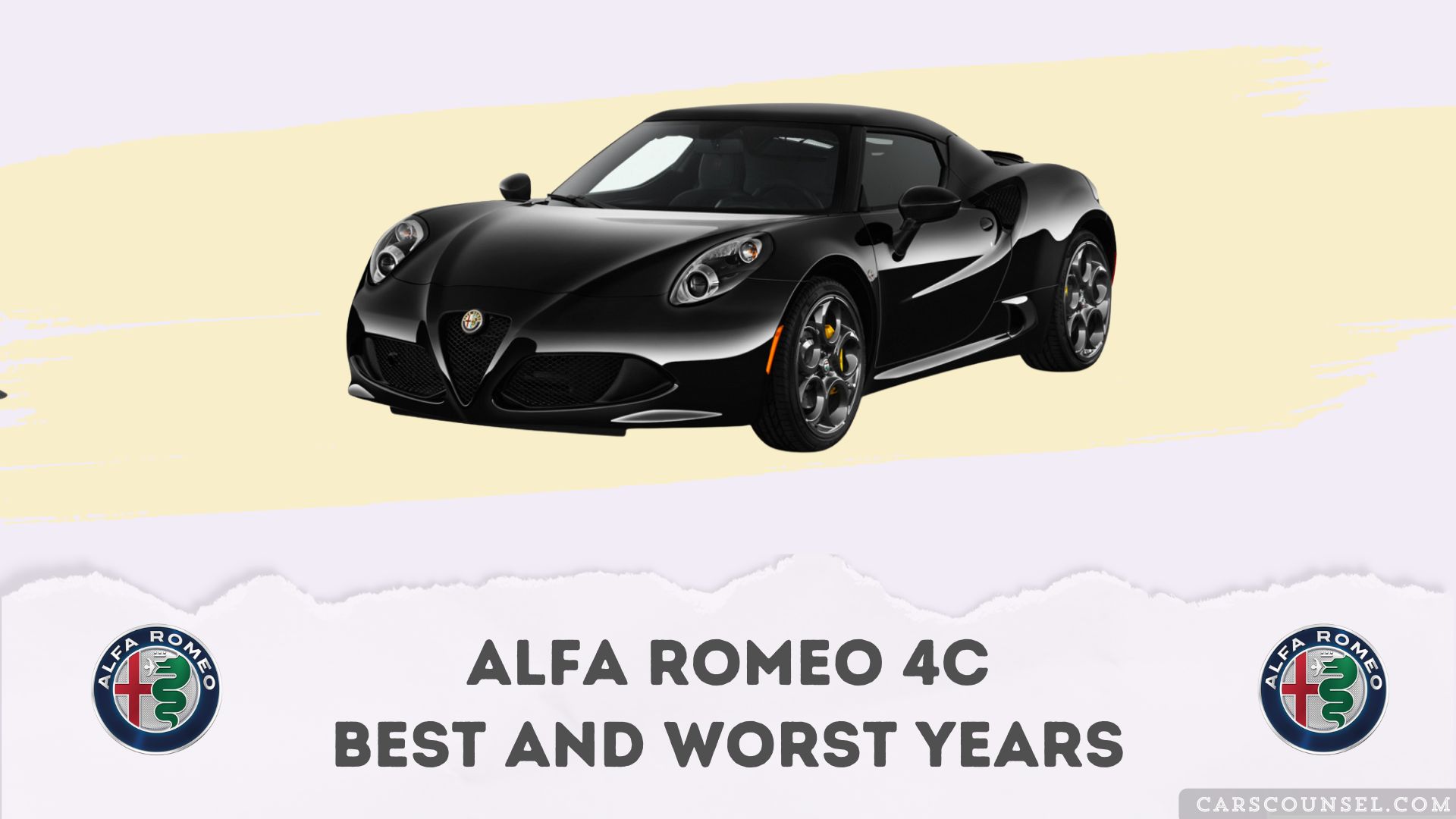
The best Alfa Romeo 4C model years are 2017 and 2018. These years offer peak production maturity and fewer early build quirks. Buyers should approach 2015 models carefully due to first-year US market teething issues and potential cooling system faults.
Rankings are comparative, and no sports car is flawless. Maintenance history matters more than mileage for this lightweight platform. A thorough pre-purchase inspection is essential before buying any used example.
The 4C was sold as a coupe and a Spider. The coupe ended after 2018 in the US market. Later Spider models share the same reliable powertrain but feature slight suspension refinements.
Quick Navigation
Best and Worst Alfa Romeo 4C Years at a Glance
| Model Year | Verdict | Main Reason |
|---|---|---|
| 2015 | Approach Carefully | First US year with early cooling and electrical quirks. |
| 2016 | Good With Inspection | Improved build quality but requires strict maintenance verification. |
| 2017–2018 | Best Choice | Peak production maturity with both coupe and Spider options. |
| 2019–2020 | Good Choice | Spider-only run-out models with proven powertrain durability. |
Key Takeaways
- 2017 and 2018 are the strongest choices for overall reliability.
- 2015 models need careful inspection for early production faults.
- The coupe was discontinued after 2018 in the United States.
- Engine oil cooler and water pump failures are the primary mechanical concerns.
- Parasitic battery drain requires owners to use a trickle charger.
- Always verify the VIN for open recalls and service campaigns.
How We Evaluated the Alfa Romeo 4C Model Years
Our analysis considers official recalls, manufacturer service campaigns, and long-term ownership data. We track powertrain durability and carbon fiber chassis integrity.
Consumer complaints are not confirmed defects or failure rates. A recall does not automatically make a vehicle unreliable. Recent years have less long-term exposure.
Best Alfa Romeo 4C Years
2017–2018 Alfa Romeo 4C
These years represent the best choices for used buyers. Alfa Romeo resolved most early assembly quirks by this point in the production cycle.
Both coupe and Spider body styles were available in 2017. The coupe was discontinued after 2018, making it the final year for that configuration.
Owners report strong powertrain durability when routine fluid changes are performed. The dual-clutch transmission operates smoothly when properly maintained.
2019–2020 Alfa Romeo 4C Spider
These final model years are good choices for open-top enthusiasts. Only the Spider body style was sold in the United States during this period.
The powertrain remains the proven 1.75-liter turbocharged engine. Long-term reliability data is solid, though these cars have less overall road exposure than earlier models.
Best Alfa Romeo 4C Year by Buyer Type
- Best Overall: 2017 (Matured production with coupe and Spider options)
- Best Enthusiast Choice: 2018 Coupe (Final US year for the fixed-roof model)
- Best Modern Alternative: 2020 Spider (Newest available examples with proven durability)
Years to Approach Carefully
2015 Alfa Romeo 4C
The 2015 model year was the launch year for the United States market. First-year examples often exhibit early production teething issues.
Owners reported more frequent electrical gremlins and cooling system faults. The engine oil cooler was prone to cracking on some early builds.
Buyers should only consider 2015 models with extensive service records. Verify that the oil cooler and water pump have been updated or replaced.
2016 Alfa Romeo 4C
The 2016 model year shows improved build quality over the launch year. However, it still requires careful inspection before purchase.
Some examples still experience premature motor mount wear. The interior dashboard leather is also known to shrink and peel in hot climates.
A thorough pre-purchase inspection is mandatory. Ensure the carbon fiber tub has no prior accident damage or improper repair history.
Alfa Romeo 4C Reliability by Generation
2015–2020 (North American Market)
The North American 4C features a 1.75-liter turbocharged inline-four engine. It pairs exclusively with a six-speed dual-clutch automatic transmission.
Early models used halogen headlights, which drew heavy criticism for poor visibility. Later models and aftermarket upgrades addressed this lighting complaint.
The carbon fiber monocoque chassis is incredibly rigid. Unlike the later Alfa Romeo Giulia, the 4C shares very few parts with mainstream Fiat models.
Common Alfa Romeo 4C Problems
Engine Cooling and Oil Cooler Faults
The engine oil cooler is a known weak point on early models. Cracks can develop, leading to rapid oil loss and potential engine damage.
Water pump failures are also reported across multiple years. Buyers should check for coolant leaks and verify the cooling system service history.
Battery Drain and Electrical Issues
The 4C suffers from parasitic battery drain when parked. Owners must use a trickle charger to prevent the battery from dying between drives.
Intermittent sensor faults and warning lights occasionally appear. Most electrical issues stem from weak batteries rather than fundamental wiring harness defects.
Interior Trim and Dashboard Shrinkage
The leather dashboard material is prone to shrinking and peeling. This issue is most common in cars regularly parked in direct sunlight.
While purely cosmetic, dashboard replacement is costly. Buyers should inspect the dash carefully for bubbling, warping, or separation from the underlying structure.
Motor Mount and Suspension Wear
The engine and transmission mounts endure significant stress. Worn mounts cause excessive cabin vibration and harsh shifting sensations during normal driving.
Suspension ball joints and control arm bushings require regular inspection. Aggressive track use or poor road surfaces accelerate wear on these components.
Repair-Cost Overview
| Problem | Affected Years | Approximate Range |
|---|---|---|
| Engine Oil Cooler Replacement | 2015–2017 | $800 – $1,400 |
| Water Pump Assembly | 2015–2020 | $600 – $1,100 |
| Motor Mount Replacement | 2015–2020 | $500 – $900 |
Repair costs vary significantly by region, labor rates, and parts availability. Independent specialists often charge less than dealerships for these specialized sports cars.
What to Check Before Buying a Used Alfa Romeo 4C
- Verify the VIN for open recalls and service campaigns.
- Inspect the carbon fiber tub for any signs of prior crash damage.
- Check the engine oil cooler and water pump for leaks or replacement records.
- Test the dual-clutch transmission for smooth engagement and shifting.
- Examine the dashboard leather for shrinking, bubbling, or peeling.
- Review service records for timely engine oil and transmission fluid changes.
- Arrange an independent pre-purchase inspection with an Alfa Romeo specialist.
Related Buying Guides
- Alfa Romeo Stelvio best and worst years (Practical SUV alternative with similar brand DNA)
- Alfa Romeo Giulia Quadrifoglio best and worst years (High-performance sedan alternative)
- Alfa Romeo Spider best and worst years (Classic open-top predecessor)
Frequently Asked Questions
Is the Alfa Romeo 4C reliable?
The 4C is relatively reliable for a low-volume sports car. The engine and transmission are durable, but cooling system and electrical quirks require strict maintenance.
What year of the Alfa Romeo 4C is most dependable?
The 2017 and 2018 model years are the most dependable. They benefit from matured production processes and fewer early-build cooling system faults.
Which Alfa Romeo 4C years should you avoid?
Buyers should approach 2015 models carefully. As the first US model year, they exhibit more frequent oil cooler and electrical teething issues.
What are the most common problems with the Alfa Romeo 4C?
Common issues include engine oil cooler cracks, water pump failures, parasitic battery drain, and dashboard leather shrinkage. Carbon fiber repairs are also very expensive.
How long does an Alfa Romeo 4C last?
Well-maintained examples can reach high mileage. Longevity depends heavily on timely fluid changes, cooling system care, and avoiding track abuse without proper preparation.
Is the Alfa Romeo 4C expensive to maintain?
Maintenance costs are higher than average compact cars. Specialized parts, carbon fiber construction, and performance hardware require skilled technicians and premium fluids.
Which Alfa Romeo 4C Year Should You Buy?
The 2017 and 2018 model years offer the best balance of reliability and maturity. They avoid the early cooling faults found in launch models.
Approach 2015 examples carefully and demand extensive service records. Always verify the VIN and hire a specialist to inspect the carbon fiber chassis.

