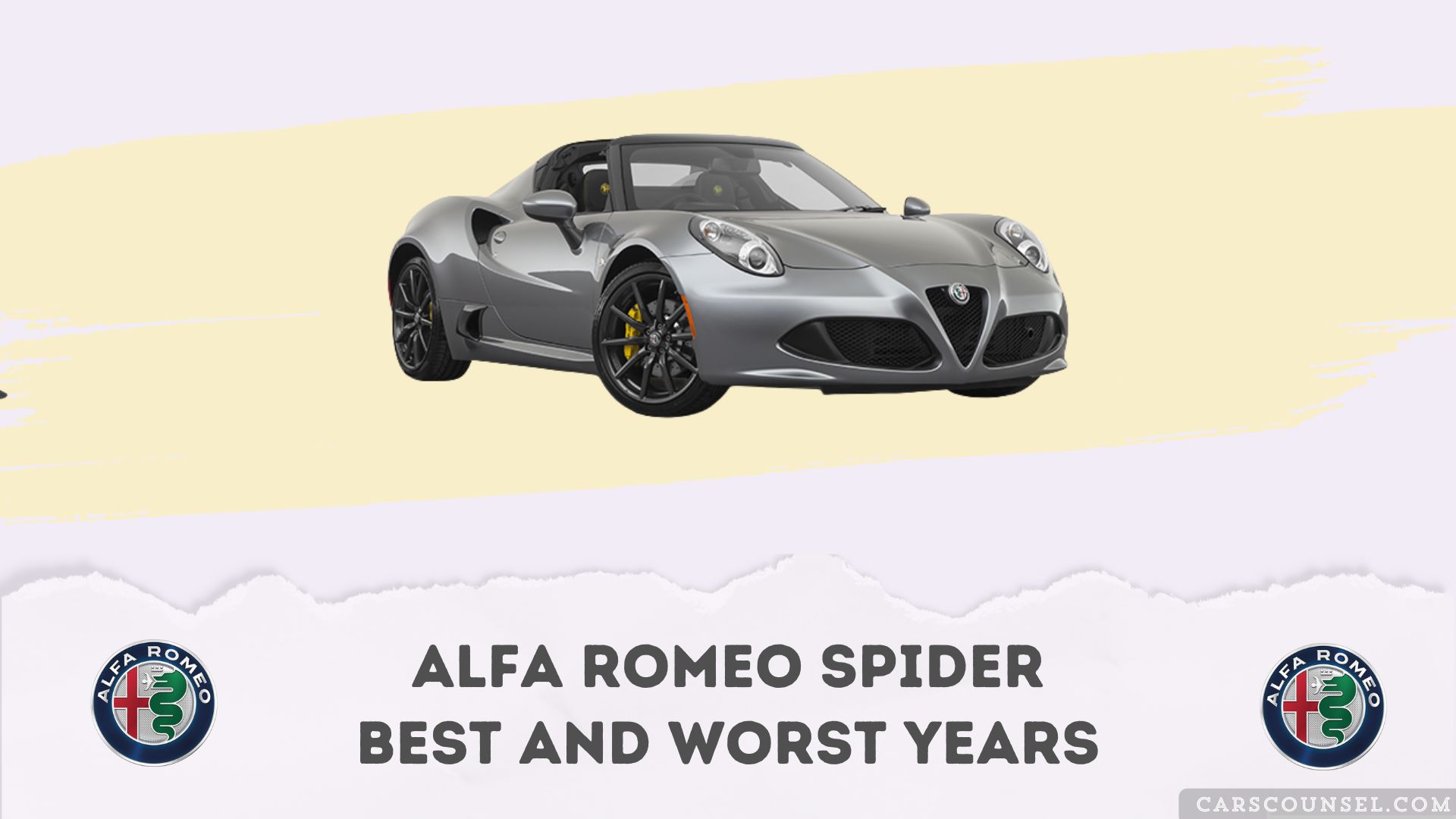
The best Alfa Romeo Spider years are 1991–1994, featuring modern fuel injection and improved rustproofing. Buyers should approach 1970–1981 models carefully due to complex mechanical fuel injection and severe rust risks.
Rankings are comparative. No classic Italian sports car is flawless. Long-term reliability depends entirely on previous ownership, maintenance records, and climate exposure.
United States market models feature unique emissions equipment. Early models used complex mechanical fuel injection, while later generations adopted reliable electronic systems, significantly changing the ownership experience.
Quick Navigation
Best and Worst Alfa Romeo Spider Years at a Glance
| Model Year | Verdict | Main Reason | Buyer Guidance |
|---|---|---|---|
| 1991–1994 | Best Choice | Bosch Motronic injection, power steering | Most usable classic |
| 1982–1989 | Good Choice | Bosch L-Jetronic injection, better drivability | Inspect electrical grounds |
| 1970–1981 | Approach Carefully | SPICA mechanical injection, high rust risk | Verify injection system |
| 1966–1969 | Best Enthusiast Choice | Classic styling, Weber carburetors | Expect high restoration costs |
Key Takeaways
- 1991–1994 models are the most reliable and practical.
- 1970–1981 US models use the troublesome SPICA fuel injection system.
- Rust is the primary enemy of all classic Spiders.
- The Twin Cam engine uses a timing chain, not a belt.
- Always verify the VIN and check for open recalls.
- An independent pre-purchase inspection is mandatory.
How We Evaluated the Alfa Romeo Spider Model Years
Our analysis considers official records, manufacturer campaigns, and enthusiast consensus. We evaluate powertrain differences, generation changes, and repair complexity.
Complaints are not failure rates. A recall does not automatically make a year unreliable. Best means comparatively stronger, not flawless.
Best Alfa Romeo Spider Years
1991–1994 (Series 4)
The Series 4 represents the pinnacle of the classic Spider lineage. Bosch Motronic fuel injection provides reliable cold starts and smooth idling. Power steering and a driver-side airbag add modern usability.
Rustproofing was improved, though buyers must still inspect the undercarriage. These years offer the most dependable driving experience for regular classic car use.
1982–1989 (Series 3)
The introduction of Bosch L-Jetronic electronic fuel injection solved many carburetor issues. These models offer a great balance of classic aesthetics and improved drivability.
Electrical grounds and aging sensors require attention. Well-maintained examples provide a rewarding analog driving experience without the severe tuning headaches of earlier emissions equipment.
Best Year by Buyer Type
Best Overall: 1991–1994
The Series 4 offers the best blend of classic styling and modern reliability. It is the most practical choice for regular driving.
Best Enthusiast Choice: 1966–1969
The original Duetto features pure styling and Weber carburetors. It is ideal for collectors willing to perform meticulous restorations and accept high maintenance costs.
Years to Approach Carefully
1970–1981 (Series 2)
United States models from this era used the SPICA mechanical fuel injection system. This complex system was designed to meet early emissions standards but is notoriously difficult to tune.
Specialized tools and knowledge are required for repairs. Many owners swap to carburetors or later electronic systems, which can affect originality and value.
Worst Alfa Romeo Spider Years
Least Desirable Configurations
No model year carries a strict Avoid verdict for dedicated collectors. However, the 1970–1974 models are often considered the least desirable.
These years combine the troublesome early SPICA injection system with heavy, ungainly US-market bumper mandates. Finding unmodified, rust-free examples from this specific window is exceptionally difficult.
Alfa Romeo Spider Reliability by Generation
Series 1 (1966–1969)
The original design is highly collectible but lacks modern rustproofing. Weber carburetors are easy to tune but require frequent maintenance.
Series 2 (1970–1981)
This generation introduced the Kamm tail and larger engines. The US-market SPICA fuel injection system remains the primary reliability hurdle for modern owners.
Series 3 (1982–1989)
Bosch electronic fuel injection vastly improved cold-start reliability. The addition of black rubber bumpers and a sloped nose updated the styling for the 1980s.
Series 4 (1991–1994)
The final classic generation features the most reliable electronics and best factory corrosion protection. It remains the most practical choice for enthusiasts seeking a usable classic.
Modern Alternatives
The classic front-engine Spider ended in 1994. Modern buyers might consider the mid-engine Alfa Romeo 4C for a completely different, track-focused experience.
Common Alfa Romeo Spider Problems
Rust and Corrosion
The unibody structure is highly susceptible to rust. The spare tire well, rocker panels, and floor pans are critical inspection areas. Repairing structural rust requires specialized fabrication skills.
Electrical Faults
Aging wiring harnesses and poor ground connections cause erratic gauge behavior and lighting issues. The Series 3 and 4 fuel injection systems rely on sensors that degrade over time.
Cooling System Failures
The aluminum Twin Cam engine is sensitive to overheating. Old radiators, failing water pumps, and degraded coolant hoses can lead to severe engine damage in stop-and-go traffic.
SPICA Fuel Injection
Exclusive to 1970–1981 US models, this mechanical system is prone to vacuum leaks and internal wear. Proper tuning requires specialized expertise that is increasingly rare.
Suspension Wear
Rear trailing arm bushings and front control arm bushings deteriorate with age. Worn bushings cause vague handling and uneven tire wear, requiring a complete suspension refresh.
What to Check Before Buying a Used Alfa Romeo Spider
- Inspect the spare tire well and rocker panels for structural rust.
- Verify the condition and tuning of the fuel injection system.
- Check the timing chain tensioner and valve clearances.
- Test the cooling system under load to prevent overheating.
- Inspect the convertible top mechanism and rear window seal.
- Arrange an independent inspection by a classic Italian car specialist.
Related Buying Guides
- Alfa Romeo Giulia Quadrifoglio: A modern high-performance sedan with a completely different powertrain and technology profile.
- Alfa Romeo Tonale: A practical modern hybrid crossover for buyers needing daily family space.
- Alfa Romeo Stelvio: A performance-oriented SUV that shares modern architecture with the Giulia.
Frequently Asked Questions
Is the Alfa Romeo Spider reliable?
The Spider requires dedicated maintenance. Reliability depends entirely on previous ownership, rust prevention, and specialized care rather than modern factory dependability.
What year of the Alfa Romeo Spider is most dependable?
The 1991–1994 Series 4 models are the most dependable. They feature modern Bosch Motronic fuel injection, power steering, and improved factory rustproofing.
What year should you avoid?
Casual buyers should approach 1970–1981 models carefully. The complex US-market SPICA mechanical fuel injection system is notoriously difficult and expensive to maintain.
Does the Alfa Romeo Spider have a timing belt?
No, the classic Alfa Romeo Twin Cam engine uses a timing chain. Buyers should inspect the chain tensioner and guides rather than looking for a belt.
How long does an Alfa Romeo Spider last?
Well-maintained examples easily reach high mileage. Longevity depends entirely on rust prevention, cooling system maintenance, and consistent mechanical upkeep.
Are parts expensive for the classic Spider?
Mechanical parts are generally available through specialist suppliers. However, custom fabrication for rust repair and sourcing rare trim pieces can become very expensive.
Which Alfa Romeo Spider Year Should You Buy?
The 1991–1994 Series 4 models offer the best balance of classic character and modern usability. They provide reliable fuel injection and better corrosion protection.
Buyers seeking a pure collector piece will appreciate the 1966–1969 Series 1, provided they accept high restoration costs. Always prioritize rust-free examples with documented service history.
An independent inspection by a classic Italian car specialist is essential before purchasing any vintage Alfa Romeo.

