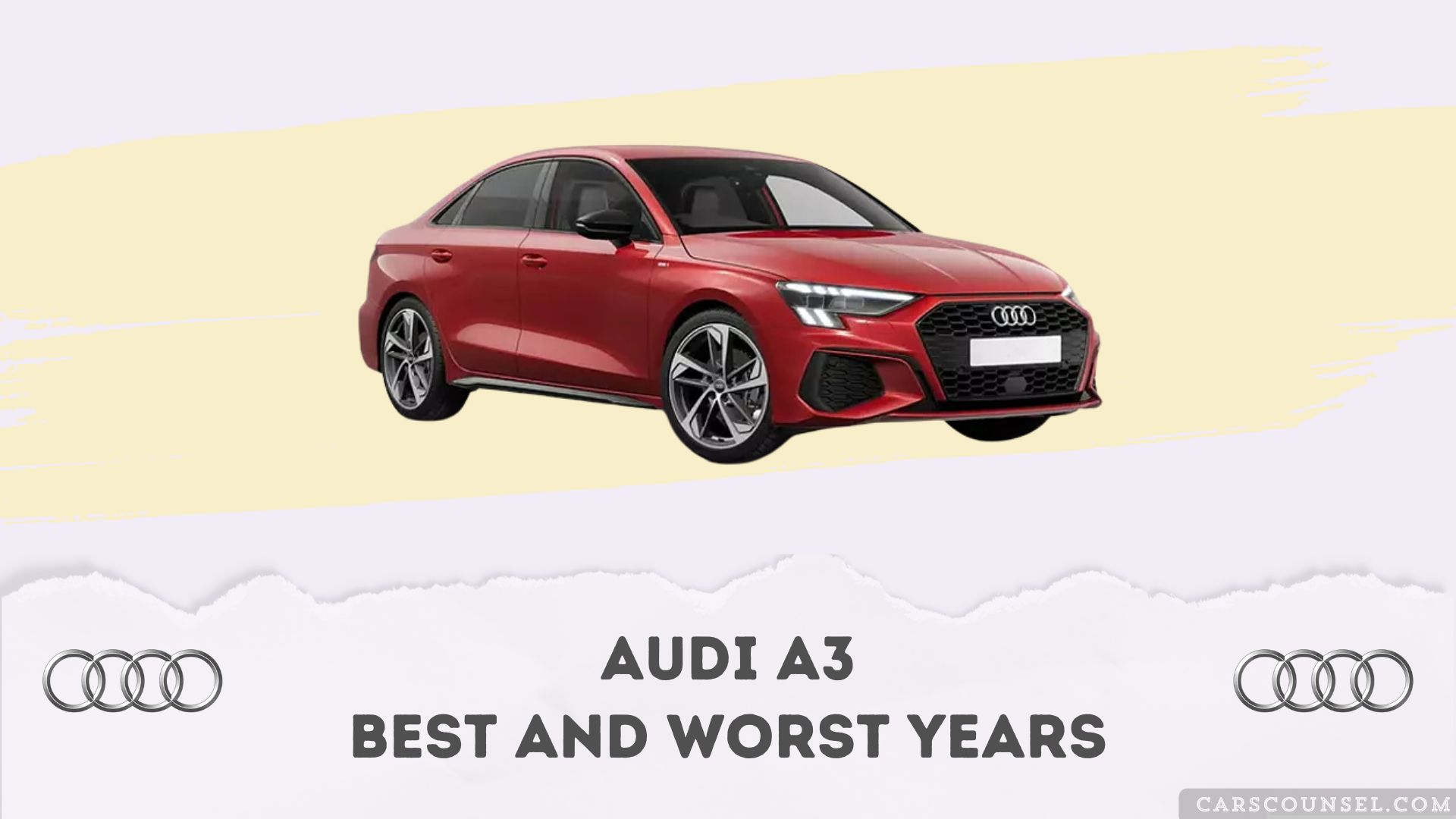
The best Audi A3 model years are 2018 through 2020. These late third-generation models feature the updated EA888 Gen 3 engine, offering excellent reliability. Buyers should strictly avoid the 2009 through 2012 model years due to catastrophic timing chain tensioner failures.
Reliability rankings are comparative, and no used luxury compact car is completely flawless. Proper maintenance history, rust-free condition, and verified repair records matter just as much as the specific model year you choose to purchase.
The Audi A3 varies significantly by powertrain and generation. The 2.0T gasoline engines require strict oil intervals, while early dual-clutch automatic transmissions need verified fluid services. Always check the exact engine code before buying.
Quick Navigation
Best and Worst Audi A3 Years at a Glance
| Model Year | Verdict | Main Reason | Buyer Guidance |
|---|---|---|---|
| 2022-2024 | Too New to Judge | Limited long-term data | Wait for more reliability history. |
| 2018-2020 | Best Choice | Mature EA888 Gen 3 engine | Top pick for daily driving. |
| 2015-2017 | Good Choice | Solid but early 8V chassis | Inspect for water pump leaks. |
| 2013 | Mixed | Carbon buildup risks | Check for walnut-blasting service. |
| 2009-2012 | Avoid | Timing chain tensioner failure | High risk of engine destruction. |
| 2006-2008 | Approach Carefully | Early cam follower wear | Inspect high-pressure fuel pump. |
Key Takeaways
- Best years are 2018-2020 for their reliable EA888 Gen 3 engines.
- Avoid 2009-2012 models due to severe timing chain tensioner defects.
- The 2.0T engine requires strict 5,000-mile synthetic oil change intervals.
- Dual-clutch automatic transmissions require exact fluid and filter services.
- Always verify open recalls and complete service history before purchasing.
How We Evaluated the Audi A3 Model Years
Our analysis reviews official NHTSA recalls, manufacturer service campaigns, and verified owner complaint patterns. We separate confirmed mechanical defects from isolated incidents and normal wear items.
Consumer complaints are not automatic failure rates, and a recall does not inherently make a vehicle unreliable. We prioritize exact-model evidence over shared-platform assumptions.
Recent model years naturally have fewer complaints due to lower road exposure. We evaluate long-term ownership costs, repair complexity, and generation-specific engineering changes.
Best Audi A3 Years
2018-2020
The 2018 through 2020 model years represent the best Audi A3 options on the used market. These late third-generation models benefit from the highly refined EA888 Gen 3 2.0T engine.
Audi resolved most earlier oil consumption and timing chain issues by this generation. The seven-speed dual-clutch automatic transmission also operates more smoothly and reliably than earlier units.
While no European luxury car is maintenance-free, these years offer a strong balance of modern technology and mechanical dependability. Prioritize examples with documented dealership service records.
Best Year by Buyer Type
Best Overall: 2019
The 2019 Audi A3 stands out as the best overall choice. It features the fully sorted EA888 Gen 3 powertrain and updated infotainment, avoiding first-year redesign quirks.
Best Budget Option: 2013
If you need a lower entry price, the 2013 model is a reasonable older choice. Ensure the carbon buildup has been cleaned and the timing chain tensioner was updated.
Years to Approach Carefully
2015-2017 (Good Choice)
The 2015 through 2017 models introduced the third-generation chassis. While generally solid, the 2015 model year had some early-production electrical gremlins and was affected by the diesel emissions scandal.
Gasoline models from these years are mostly reliable but require strict adherence to maintenance schedules. Inspect the water pump and thermostat housing, which are known to crack and leak coolant.
2006-2008 (Approach Carefully)
Early second-generation models with the 2.0T BPY engine suffer from cam follower wear on the high-pressure fuel pump. If this component fails, it can destroy the camshaft and fuel pump.
Buyers must physically inspect the cam follower thickness before purchase. The early six-speed DSG automatic transmissions also require strict 40,000-mile fluid services to avoid mechatronic failures.
Worst Audi A3 Years
2009-2012 (Avoid)
You should avoid the 2009 through 2012 Audi A3 models. These years utilize the EA888 Gen 1 and Gen 2 engines, which are notorious for defective timing chain tensioners.
The original tensioner can fail prematurely, allowing the timing chain to slip. This causes the engine valves to collide with the pistons, resulting in catastrophic engine destruction and massive repair bills.
Additionally, these specific model years suffer from severe piston ring defects leading to excessive oil consumption. Fixing the oil consumption issue requires a complete engine teardown and new pistons.
Audi A3 Reliability by Generation
Second Generation (2006-2013)
The second generation introduced the A3 to the US market. Reliability is heavily dependent on the specific engine code. Early models require cam follower inspections, while later models risk timing chain failure.
If you are considering this generation, look for a manual transmission or verify the DSG service history. You might also compare it to the Audi TT, which shares similar mechanicals.
Third Generation (2015-2020)
The third generation brought a major redesign and the much-improved EA888 Gen 3 engine. This generation resolved the catastrophic timing chain and severe oil consumption issues that plagued earlier models.
Build quality and interior materials saw significant improvements. The Audi A4 shares many underlying components, but the A3 remains a more agile, compact alternative for city driving.
Fourth Generation (2022-Present)
The current fourth generation features updated styling and the latest EA888 Evo4 engine. Because these vehicles have limited long-term road exposure, they remain too new to judge for extended durability.
Common Audi A3 Problems
Timing Chain Tensioner Failure
The most severe issue affects the 2009 through 2012 models. The factory timing chain tensioner lacks sufficient teeth and can collapse, causing the chain to jump time and destroy the engine.
Excessive Oil Consumption
Models from 2009 to 2012 often suffer from defective piston rings. This allows oil to enter the combustion chamber, requiring owners to add a quart of oil every few thousand miles.
Carbon Buildup
All direct-injection 2.0T engines accumulate carbon deposits on the intake valves. This causes rough idling, misfires, and power loss. A professional walnut-blasting service is required every 60,000 miles to clean the valves.
Water Pump and Thermostat Housing Leaks
The plastic water pump and thermostat housing assembly is prone to cracking and warping. This leads to slow coolant leaks and potential overheating. Expect to replace this assembly around 80,000 miles.
Repair-Cost Overview
| Problem | Commonly Affected Years | Approximate Repair Range | Important Notes |
|---|---|---|---|
| Timing Chain Tensioner | 2009-2012 | $1,500 – $4,000+ | Engine replacement if valves bend. |
| Carbon Buildup Cleaning | All 2.0T | $400 – $700 | Required every 60,000 miles. |
| Water Pump Assembly | 2015-2020 | $800 – $1,200 | Labor intensive due to location. |
| DSG Fluid Service | All DSG | $250 – $400 | Strict 40,000-mile interval required. |
Repair costs vary significantly by region, labor rates, and whether you use an independent European specialist or a dealership. Always get multiple quotes and verify the exact part numbers required for your engine code.
What to Check Before Buying a Used Audi A3
- Verify the VIN for open safety recalls and emissions campaigns.
- Review service records to confirm strict 5,000-mile oil change intervals.
- Inspect the timing chain tensioner part number on 2009-2012 models.
- Check the high-pressure fuel pump cam follower on 2006-2008 models.
- Scan for hidden diagnostic codes using a VW/Audi-specific scanner.
- Test the dual-clutch transmission for shuddering during low-speed takeoffs.
- Inspect the water pump housing for crusty pink or purple coolant residue.
- Arrange a pre-purchase inspection with an independent Audi specialist.
Related Buying Guides
- Audi A4 best and worst years: The A4 offers more rear seat space and a larger trunk for buyers needing a practical family sedan.
- Audi TT best and worst years: The TT shares the A3 core architecture but provides a sportier coupe or roadster body style for enthusiasts.
- Audi Q5 best and worst years: The Q5 is a strong alternative if you require higher ground clearance and all-wheel-drive capability for harsh winters.
Frequently Asked Questions
What is the best Audi A3 model year to buy?
The 2018 through 2020 model years are the best choices. They feature the highly reliable EA888 Gen 3 engine and avoid the catastrophic timing chain defects found in earlier generations.
Which Audi A3 years should I avoid?
You should avoid the 2009 through 2012 model years. These vehicles suffer from defective timing chain tensioners and excessive oil consumption, which can lead to complete engine failure.
Are Audi A3s expensive to maintain?
Yes, the A3 requires premium synthetic oil, specialized fluids, and European-spec parts. Maintenance is more expensive than mainstream compact cars, but independent specialists can help reduce long-term ownership costs.
Does the Audi A3 have transmission problems?
The early dual-clutch automatic transmissions can experience mechatronic failures if the fluid is neglected. Ensure the strict 40,000-mile DSG fluid and filter service has been performed on any used model.
How long do Audi A3 engines last?
Well-maintained examples can reach high mileage. Longevity depends entirely on strict oil intervals, timely carbon cleaning, and addressing cooling system leaks before they cause overheating or internal damage.
Is the Audi A3 a reliable daily driver?
The 2015 and newer gasoline models are generally reliable daily drivers when properly maintained. Older models require enthusiast-level attention to specific engine flaws and are better suited as secondary vehicles.
Which Audi A3 Year Should You Buy?
Focus your search on the 2018 through 2020 model years for the most dependable ownership experience. These late third-generation vehicles offer modern technology without the severe mechanical flaws of older models.
If you must consider an older model to fit a tighter budget, thoroughly inspect the timing chain components and demand complete service records. Always verify the VIN and hire an independent specialist for a pre-purchase inspection.

