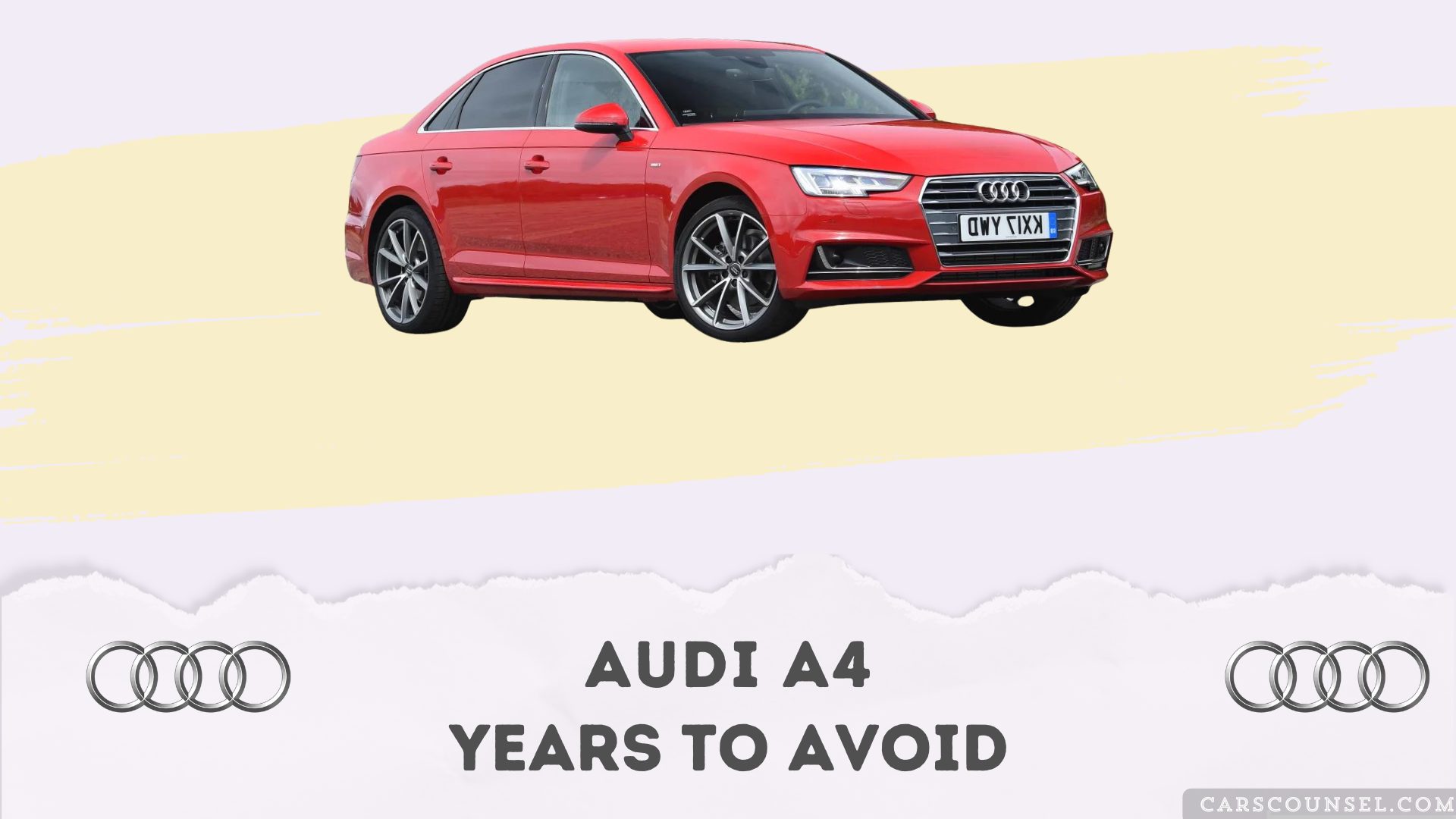
The best Audi A4 model years are 2018 through 2023, offering mature engineering and strong reliability. Buyers should strictly avoid the 2009 through 2011 models due to severe engine defects.
These rankings are comparative, meaning no used vehicle is entirely flawless. Maintenance history, overall condition, and rust play massive roles in long-term ownership satisfaction.
Reliability varies significantly by generation and powertrain. The transition from early direct-injection engines to modern turbocharged setups created distinct ownership experiences across different production eras.
Quick Navigation
Best and Worst Audi A4 Years at a Glance
| Model Year Range | Verdict | Main Reason | Buyer Guidance |
|---|---|---|---|
| 2024 – 2025 | Too New to Judge | Limited long-term data | Wait for reliability patterns |
| 2018 – 2023 | Best Choice | Mature B9 platform, reliable EA888 Gen 3B/4 | Top recommendation for used buyers |
| 2017 | Approach Carefully | First-year B9 glitches, water pump issues | Verify infotainment and cooling system |
| 2015 – 2016 | Best Older Choice | Refined B8.5, ZF 8-speed transmission | Check for carbon buildup and leaks |
| 2013 – 2014 | Good With Inspection | Improved oil control, lingering water pump flaws | Inspect thermostat housing and timing chain |
| 2012 | Mixed | Transition year for engine revisions | Verify exact engine build date |
| 2009 – 2011 | Avoid | Severe oil consumption, timing chain tensioner failure | Do not purchase without engine replacement proof |
| 2005 – 2008 | Avoid | Cam follower wear, HPFP failure, carbon buildup | High risk of expensive fuel system repairs |
Key Takeaways
- The 2018 through 2023 model years represent the strongest used options available.
- Avoid 2009 through 2011 models due to catastrophic timing chain and oil consumption defects.
- Direct-injection engines require strict maintenance to prevent carbon buildup.
- Plastic water pump and thermostat housings are common failure points across multiple generations.
- Always verify open recalls and complete service history before purchasing.
How We Evaluated the Audi A4 Model Years
Our analysis reviews official recalls, manufacturer service campaigns, and long-term ownership data for the Audi brand. We weigh defect severity, repair complexity, and powertrain revisions heavily.
Consumer complaints are not confirmed failure rates. A recall does not automatically make a vehicle unreliable, and recent models simply have less road exposure.
Best Audi A4 Years
2018 – 2023: Best Choice
The B9 generation hit its stride by 2018. Audi resolved early infotainment bugs and refined the EA888 Gen 3B engine. These models offer excellent reliability and modern safety features.
The ZF 8-speed automatic transmission is robust and smooth. Buyers should still inspect for standard water pump leaks, but major engine flaws are largely absent.
2015 – 2016: Best Older Choice
The late B8.5 generation benefits from crucial powertrain updates. Audi introduced the ZF 8-speed automatic and revised piston rings to address earlier oil consumption complaints.
These years provide a premium driving experience at a lower entry price. Ensure the timing chain tensioner was updated and inspect for carbon buildup.
Best Audi A4 Years by Buyer Type
- Best Overall: 2020 offers a great balance of modern tech, mild-hybrid efficiency, and proven reliability.
- Best Budget Option: 2015 provides the refined B8.5 chassis without the premium pricing of newer models.
- Best Enthusiast Choice: 2018 S-line trims deliver sharp handling and the highly tunable Gen 3 engine.
Years to Approach Carefully
2017: Approach Carefully
The 2017 model launched the new B9 platform. First-year models often suffer from electrical gremlins and early production cooling system defects.
Infotainment screens and digital clusters experienced software bugs. Verify that all software updates were applied and inspect the water pump housing for cracks.
2013 – 2014: Good With Inspection
Audi significantly improved the 2.0T engine during these years. However, the plastic water pump and thermostat housing assembly remains a notorious weak point.
These cars are generally solid if the cooling system has been proactively replaced with updated parts. Always scan for hidden diagnostic codes before buying.
Worst Audi A4 Years
2009 – 2011: Avoid
These B8 generation models are plagued by excessive oil consumption. They represent some of the most problematic years to avoid when shopping for a used luxury sedan.
More critically, the early timing chain tensioner can fail without warning. This causes the timing chain to skip, resulting in catastrophic engine destruction and massive repair bills.
2005 – 2008: Avoid
The earlier 2.0T FSI engines suffer from severe carbon buildup on the intake valves. Direct injection prevents fuel from cleaning the valves, requiring expensive manual walnut blasting.
Additionally, the high-pressure fuel pump cam follower wears down rapidly. If ignored, it can destroy the camshaft and the fuel pump, leaving you stranded.
Audi A4 Reliability by Generation
B8 and B8.5 (2009 – 2016)
This generation introduced the problematic early EA888 engines. While the 2013 refresh brought necessary mechanical revisions, the platform shares architecture with the Audi A5.
Both models suffer from identical cooling system and oil consumption flaws. Buyers must verify that the engine received the factory piston ring and tensioner updates.
B9 and B9.5 (2017 – Present)
The current generation represents a massive leap in build quality. The powertrain is vastly improved, making it a far safer used purchase than older models.
It shares its underpinnings with the Audi Q5. While the SUV is heavier, both benefit from the reliable Gen 3 engine and ZF transmission.
Common Audi A4 Problems
Excessive Oil Consumption
Models from 2009 to 2011 are infamous for burning oil. Faulty piston rings cause oil to bypass the combustion chamber, triggering the low oil level warning frequently.
This issue often requires a complete engine teardown or replacement. Audi faced a class-action lawsuit regarding this specific defect on early B8 models.
Timing Chain Tensioner Failure
Early 2.0T engines used a defective timing chain tensioner. The part can collapse, allowing the chain to slack and jump teeth on the camshaft gears.
This causes the pistons to strike the valves, destroying the engine instantly. Listen for a distinct rattling noise on cold starts, which indicates impending failure.
Water Pump and Thermostat Housing Leaks
Audi uses a plastic housing for the water pump and thermostat assembly. Engine heat cycles cause the plastic to warp and crack over time.
Coolant leaks onto the engine bay components and can trigger the check engine light. Replacing this assembly with an updated aluminum-backed part is a common necessary repair.
Carbon Buildup
Direct-injection engines spray fuel directly into the cylinder, bypassing the intake valves. Over time, oil vapors bake onto the valves, restricting airflow.
This causes rough idling, misfires, and reduced power. Owners must budget for professional walnut blasting every 60,000 to 80,000 miles to restore performance.
Repair-Cost Overview
| Problem | Commonly Affected Years | Approximate Repair Range | Important Notes |
|---|---|---|---|
| Timing Chain Tensioner | 2009 – 2012 | $1,500 – $2,500 | Must be done preventatively to avoid engine destruction. |
| Water Pump Assembly | 2013 – 2019 | $800 – $1,300 | Requires draining coolant and removing front engine covers. |
| Carbon Walnut Blasting | 2005 – 2016 | $500 – $800 | Required maintenance for direct-injection engines. |
| Engine Replacement (Oil Issue) | 2009 – 2011 | $6,000 – $9,000 | Often exceeds the vehicle’s actual cash value. |
Repair costs vary significantly by region, labor rates, and whether you choose a dealership or an independent European specialist. Parts choice and damage severity also impact final pricing.
What to Check Before Buying a Used Audi A4
- Verify the VIN for open recalls and original build specifications.
- Confirm the timing chain tensioner was updated on 2009-2012 models.
- Inspect the water pump housing for crusty white or pink coolant residue.
- Review service records for regular oil changes using exact European specifications.
- Check for documentation of recent walnut blasting or carbon cleaning.
- Test the infotainment system and digital cluster for dead pixels or reboots.
- Arrange an independent pre-purchase inspection with a VAG specialist.
Related Buying Guides
- Audi A6 best and worst years: A larger, more comfortable luxury sedan alternative for buyers needing extra rear legroom.
- Audi A3 best and worst years: A smaller, more fuel-efficient option for urban commuters who want premium badges.
Frequently Asked Questions
Which Audi A4 year is the most reliable?
The 2020 model year is widely considered the most reliable. It features the mature B9 platform, updated mild-hybrid software, and a proven powertrain combination.
Do Audi A4s have expensive maintenance costs?
Yes, European luxury cars require premium fluids and specialized labor. Budget for higher routine maintenance costs compared to mainstream Japanese or American sedans.
What is the Audi A4 oil consumption lawsuit about?
Audi settled a class-action lawsuit covering 2009 through 2011 models. The settlement addressed defective piston rings that caused excessive oil burning and engine damage.
How long can a modern Audi A4 last?
Well-maintained examples from 2015 onward can easily reach 150,000 miles. Longevity depends strictly on timely oil changes, cooling system repairs, and carbon cleaning.
Is the Audi A4 a good daily driver?
Yes, the 2018 and newer models make excellent daily drivers. They offer a refined ride, great fuel economy, and modern safety technology without major mechanical flaws.
Should I buy an Audi A4 or A5?
They share identical mechanical underpinnings. Choose the A4 for rear passenger space and trunk utility, or the A5 if you prefer a sleeker coupe or Sportback design.
Which Audi A4 Year Should You Buy?
Target the 2018 through 2023 model years for the best ownership experience. These vehicles offer modern technology, excellent safety ratings, and a highly reliable powertrain.
Strictly avoid the 2009 through 2011 models unless the engine has been completely replaced under warranty. The risk of catastrophic timing chain failure is simply too high.
Always verify the VIN for open recalls and hire an independent specialist for a pre-purchase inspection. Proper maintenance is the key to enjoying this German sports sedan.

