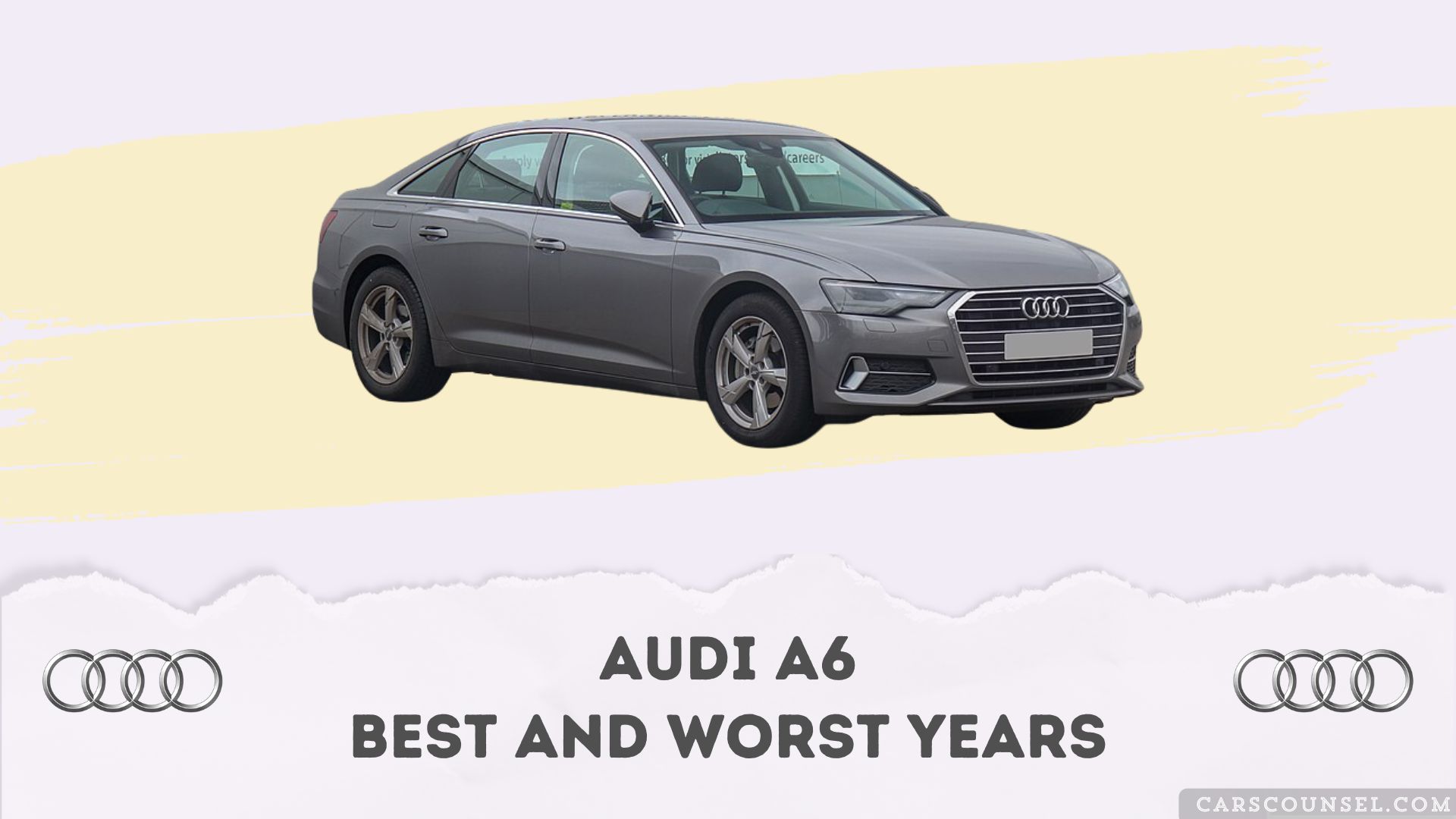
The best Audi A6 years are 2014 through 2018, particularly those equipped with the supercharged 3.0T V6. These models offer a strong blend of reliability and performance. Buyers should generally avoid the 2005 through 2008 models and early 2012 to 2013 four-cylinder variants.
Rankings are comparative, and no luxury German sedan is entirely flawless. Long-term reliability heavily depends on strict maintenance records, previous ownership care, and addressing common wear items before they cause secondary damage.
Meaningful differences exist between engine choices. The supercharged V6 is notably more robust than the early turbocharged four-cylinder or the older V8. Always verify the exact powertrain, as reliability varies significantly by configuration.
Quick Navigation
Best and Worst Audi A6 Years at a Glance
| Model Year Range | Verdict | Main Reason | Buyer Guidance |
|---|---|---|---|
| 2014-2018 | Best Choice | Mature 3.0T V6 and improved 2.0T | Prioritize 3.0T models with service records |
| 2009-2011 | Good With Inspection | Introduction of the 3.0T engine | Check for carbon buildup and supercharger issues |
| 2012-2013 | Approach Carefully | Early 2.0T oil consumption concerns | Verify engine history and timing chain components |
| 2019-Present | Too New to Judge | Limited long-term ownership data | Watch for mild-hybrid electrical gremlins |
| 2005-2008 | Avoid | 4.2L V8 timing chain guide failures | Seek newer alternatives to avoid massive repair bills |
| 1998-2004 | Avoid | Aging electronics and vacuum leaks | Only consider if meticulously maintained by specialists |
Key Takeaways
- The 2014-2018 models with the 3.0T supercharged V6 are the strongest choices for used buyers.
- Avoid the 2005-2008 models equipped with the 4.2L V8 due to catastrophic timing chain guide failures.
- Early 2012-2013 four-cylinder models require careful inspection for excessive oil consumption.
- The 2009-2011 generation introduced the reliable 3.0T engine but still needs thorough pre-purchase checks.
- Recent 2019 and newer models remain too new to judge for long-term durability and face mild-hybrid faults.
- Always verify the exact engine configuration, as reliability varies drastically between the V6, V8, and four-cylinder options.
How We Evaluated the Audi A6 Model Years
Our analysis considers official recalls, manufacturer service campaigns, and verified owner complaint patterns. We separate confirmed mechanical defects from isolated incidents and weigh repair complexity heavily.
Consumer complaints are not automatic failure rates, and a recall does not automatically make a vehicle unreliable. Recent models have less ownership history, meaning long-term durability remains unproven.
Best means comparatively stronger within the luxury segment, not flawless. Strict maintenance is mandatory for any German vehicle, and condition always matters more than mileage alone.
Best Audi A6 Years
2014-2018 (C7 Generation)
The 2014 through 2018 model years represent the best options for used buyers. The supercharged 3.0T V6 engine is widely regarded as one of the most robust modern Audi powertrains.
While the 3.0T is strong, buyers should still inspect the water pump and thermostat housing assembly, which are prone to coolant leaks. The eight-speed automatic transmission is generally reliable when serviced.
2016-2018 (2.0T Gen 3)
For buyers preferring a four-cylinder, the 2016 through 2018 models feature the third-generation EA888 engine. This updated design largely resolved the severe oil consumption issues that plagued earlier versions.
These later C7 models benefit from updated infotainment and refined interior materials. Ensure the previous owner adhered to strict oil change intervals to prevent carbon buildup on the intake valves.
2009-2011 (C6 Generation 3.0T)
The 2009 through 2011 models introduced the 3.0T supercharged V6, replacing the problematic V8. This configuration offers a good balance of performance and improved mechanical longevity.
Buyers must verify that the carbon buildup has been cleaned and that the supercharger isolator is not rattling. Air suspension components may also require replacement at this age.
Best Audi A6 Year by Buyer Type
Best Overall
The 2016 Audi A6 3.0T Quattro stands out as the best overall choice. It combines the proven supercharged V6 with updated technology and refined interior appointments.
Best Budget Option
The 2011 Audi A6 3.0T serves as a capable budget option. It avoids the earlier V8 pitfalls but requires a dedicated maintenance budget for aging suspension and cooling components.
Years to Approach Carefully
2012-2013 (Early C7 2.0T)
The 2012 and 2013 models equipped with the early second-generation 2.0T engine require careful evaluation. These engines are known for excessive oil consumption and timing chain tensioner vulnerabilities.
If considering these years, demand extensive service records proving that the timing chain tensioner has been updated and that oil consumption has been monitored and addressed by a specialist.
2019-Present (C8 Generation)
The current generation features advanced mild-hybrid systems and complex touch-screen interfaces. Early models have reported issues with 12-volt battery drain and infotainment software glitches.
Long-term powertrain data remains limited. Buyers should prioritize certified pre-owned examples with active warranty coverage to mitigate the risk of expensive electrical repairs.
Worst Audi A6 Years
2005-2008 (C6 Generation 4.2L V8)
Buyers should strictly avoid the 2005 through 2008 models equipped with the 4.2-liter V8 engine. This specific engine is notorious for premature timing chain guide failures.
The timing chains are located at the rear of the engine, requiring complete engine removal for repairs. This design flaw frequently leads to catastrophic engine damage and massive repair bills.
1998-2004 (C5 Generation)
The earliest C5 generation models are generally best avoided by average used car shoppers. Aging wiring harnesses, brittle plastic cooling components, and complex vacuum systems lead to persistent electrical and drivability gremlins.
While enthusiasts may appreciate these older models, the financial risk of deferred maintenance makes them a poor choice for daily transportation. Only consider examples with exhaustive specialist service history.
Audi A6 Reliability by Generation
C5 Generation (1998-2004)
The C5 generation introduced advanced aluminum construction and complex electronics. While comfortable, these vehicles suffer from aging rubber and plastic components, leading to frequent vacuum leaks and cooling system failures.
C6 Generation (2005-2011)
The C6 generation is a tale of two engines. The 4.2L V8 is a major liability, while the later 3.0T supercharged V6 introduced in 2009 is significantly more dependable. MMI screen failures are common.
C7 Generation (2012-2018)
The C7 generation marks a significant improvement in powertrain reliability, especially with the 3.0T engine. The primary concerns shift toward water pump leaks and standard wear items like control arm bushings.
C8 Generation (2019-Present)
The current C8 generation relies heavily on dual touchscreens and 48-volt mild-hybrid systems. Early reliability is mixed, with most complaints centered around software bugs and parasitic battery drain rather than mechanical failures.
Common Audi A6 Problems
Timing Chain Guide Failure (4.2L V8)
Affecting the 2005 through 2008 models, the plastic timing chain guides become brittle and shatter. Because the chains are at the back of the engine, repairs require engine removal and often result in total engine replacement.
Water Pump and Thermostat Housing Leaks
Common across the 3.0T supercharged V6 engines, the plastic housing cracks or the gasket fails. Coolant leaks onto the accessory belt, which can slip or snap, potentially causing severe engine damage.
Excessive Oil Consumption (Early 2.0T)
The 2012 and 2013 models with the EA888 Gen 2 engine frequently suffer from stuck piston rings. This leads to rapid oil depletion, which can starve the engine of lubrication and destroy the timing chain tensioner.
Carbon Buildup
Direct injection engines, including the 3.0T and 2.0T, do not wash the intake valves with fuel. Over time, carbon accumulates, causing rough idling, misfires, and reduced performance until manually cleaned.
What to Check Before Buying a Used Audi A6
- Verify the exact engine configuration and cross-reference it with known problem areas.
- Check for open recalls and ensure all manufacturer service campaigns have been completed.
- Inspect the water pump and thermostat housing for crusty coolant residue or active leaks.
- Listen for a rattling noise from the supercharger isolator on 3.0T models during cold starts.
- Review service records to confirm strict adherence to shortened oil change intervals.
- Scan the vehicle for hidden diagnostic trouble codes using a Volkswagen/Audi-specific scanner.
- Test the air suspension by cycling through ride height settings and checking for sagging corners.
- Arrange an independent pre-purchase inspection with a certified European automotive specialist.
Related Buying Guides
- Audi A5 best and worst years: The A5 shares similar powertrains and maintenance requirements, making its reliability patterns highly relevant for A6 shoppers.
- Audi Q5 years to avoid: If you need more cargo space and ride height, the Q5 SUV shares many mechanical components and common failure points with the A6 sedan.
- Audi A3 best and worst years: For buyers who want Audi luxury in a smaller, more fuel-efficient package, the A3 offers a different perspective on the brand’s four-cylinder engines.
- Audi TT years to avoid: The TT coupe shares earlier platform architecture and engine configurations, providing useful context on the evolution of Audi’s turbocharged powertrains.
Frequently Asked Questions
What is the most reliable Audi A6 engine?
The supercharged 3.0T V6, found primarily in the 2014 through 2018 models, is widely considered the most reliable modern Audi A6 engine due to its robust internal design and proven longevity.
Should I buy an Audi A6 with over 100,000 miles?
High mileage is acceptable only if extensive service records prove that major wear items like the water pump, carbon cleaning, and transmission services were completed by a qualified specialist.
Are Audi A6 maintenance costs expensive?
Yes, the Audi A6 requires premium fluids, specialized tools, and European-specification parts. Routine maintenance and unexpected repairs cost significantly more than average mainstream sedans.
Why did Audi change from supercharged to turbocharged?
Audi transitioned to turbocharged V6 engines in the newer C8 generation to improve fuel economy and integrate 48-volt mild-hybrid systems, prioritizing emissions compliance over the immediate throttle response of a supercharger.
Do all Audi A6 models have Quattro all-wheel drive?
No, while Quattro is standard on most V6 configurations and highly recommended for performance, some base four-cylinder models in specific years were offered with front-wheel drive in the United States market.
Is the Audi A6 a good daily driver?
The A6 is an excellent, comfortable daily driver when properly maintained. However, buyers must budget for higher-than-average running costs and address minor issues before they become major failures.
Choosing the Right Audi A6 Model Year
The 2014 through 2018 Audi A6 models equipped with the 3.0T supercharged V6 offer the best combination of reliability and luxury for used buyers. They avoid the catastrophic flaws of earlier generations.
Shoppers should strictly avoid the 2005 through 2008 V8 models and approach early four-cylinder variants with caution. Always verify the exact powertrain and demand exhaustive maintenance records.
Because luxury German vehicles are highly sensitive to deferred maintenance, an independent pre-purchase inspection is mandatory. Check the VIN for open recalls and ensure all specialized services are up to date.

