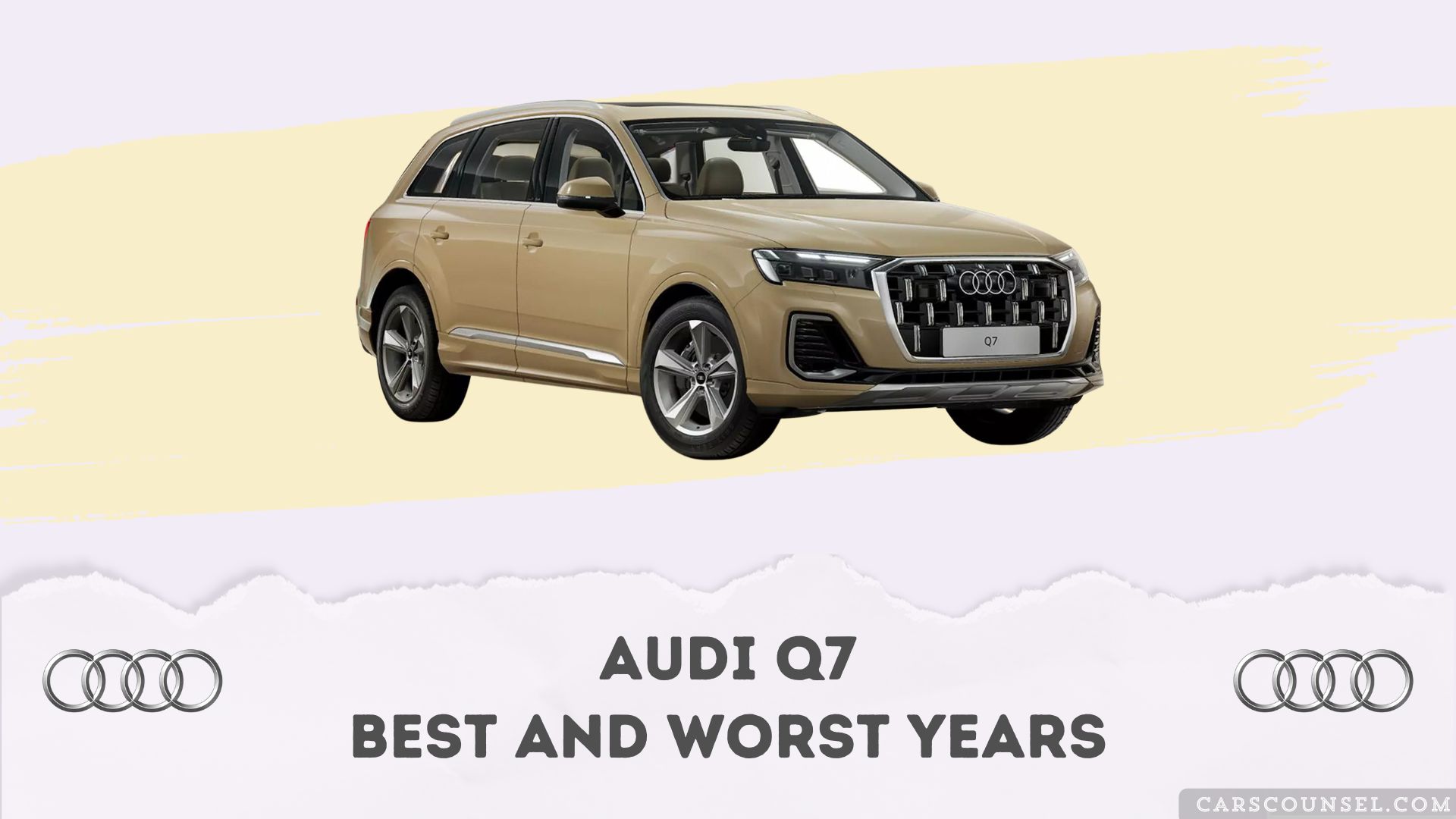
The best Audi Q7 years are 2014-2015 and 2018-2019. These model years offer a strong balance of luxury and mechanical reliability. Buyers should avoid the 2007-2009 models due to severe V8 engine defects and approach the 2020-2021 models carefully because of mild-hybrid electrical issues.
Rankings are comparative, and no used luxury SUV is entirely flawless. Long-term reliability heavily depends on strict maintenance records, timely recall completion, and overall vehicle condition before purchase.
Meaningful differences exist between the supercharged V6, turbocharged V6, and diesel configurations. The transition between the first and second generations also brings distinct infotainment and suspension characteristics that affect ownership costs.
Quick Navigation
Best and Worst Audi Q7 Years at a Glance
| Model Year | Verdict | Main Reason | Buyer Guidance |
|---|---|---|---|
| 2007-2009 | Avoid | 4.2L V8 timing chain guide failures | Seek later V6 models |
| 2010-2013 | Approach Carefully | Diesel emissions fallout and early supercharger issues | Verify TDI repairs and PCV valves |
| 2014-2015 | Best Older Choice | Sorted 3.0T supercharged V6 | Inspect air suspension |
| 2017-2019 | Good Choice | Reliable second-generation launch | Check for infotainment updates |
| 2020-2021 | Approach Carefully | Mild-hybrid system electrical faults | Scan for 48V battery codes |
| 2022-2024 | Too New to Judge | Limited long-term ownership data | Rely on certified pre-owned warranties |
Key Takeaways
- The 2014-2015 and 2018-2019 model years are the strongest recommendations for used buyers.
- Avoid the 2007-2009 models equipped with the 4.2L V8 due to catastrophic timing chain guide failures.
- The 3.0T supercharged V6 is generally the most dependable engine in the Q7 lineup.
- The 2020 introduction of the 48-volt mild-hybrid system brought new electrical complexities.
- The 2016 model year was skipped in the United States market.
- Always verify open recalls and service history using the vehicle’s VIN before purchasing.
- An independent pre-purchase inspection is essential for any used air-suspension vehicle.
How We Evaluated the Audi Q7 Model Years
Our analysis considers official NHTSA recalls, manufacturer service campaigns, and verified consumer complaint patterns. We evaluate powertrain differences, generation changes, and repair complexity.
Complaints are not failure rates, nor are they confirmed defects. A recall does not automatically make a year unreliable. Recent years have less ownership history. Best means comparatively stronger, not flawless.
Best Audi Q7 Years
2014-2015 (Best Older Choice)
The final years of the first generation represent the peak of the original Q7 platform. Audi resolved many early electrical and mechanical gremlins by this point.
The 3.0T supercharged V6 is robust and avoids the catastrophic timing chain issues of the earlier V8. Buyers should still budget for potential air suspension repairs.
2018-2019 (Best Late-Generation Choice)
The second generation launched for the 2017 model year, but the 2018-2019 models are the sweet spot. These years retain the reliable 3.0T supercharged V6 engine.
They also avoid the 48-volt mild-hybrid electrical complexities introduced in 2020. The MIB2 infotainment system in these years is generally more stable than later touch-screen iterations.
Best Year by Buyer Type
Best Overall: The 2019 model combines modern second-generation styling with the proven supercharged V6 and avoids mild-hybrid electrical risks.
Best Budget Option: The 2014 model offers first-generation value with the dependable 3.0T V6, provided the air suspension is thoroughly inspected before purchase.
Years to Approach Carefully
2010-2013 (Approach Carefully)
This era is complicated by the 3.0 TDI diesel emissions scandal and subsequent modifications. While the 3.0T gasoline V6 is strong, early supercharged models had PCV valve issues.
Buyers must verify that all emissions modifications were completed and that the supercharger clutch is functioning properly. Service records are essential for these specific model years.
2020-2021 (Approach Carefully)
Audi updated the Q7 with a turbocharged V6 and a 48-volt mild-hybrid system. Early iterations of this new electrical architecture experienced software glitches and battery fault codes.
The MIB3 infotainment system also suffered from freezing screens. Ensure all software updates have been applied by a dealer before finalizing your purchase.
Worst Audi Q7 Years
2007-2009 (Avoid)
The earliest Q7 models equipped with the 4.2L V8 are notorious for timing chain tensioner and guide failures. When the plastic guides break, the engine can suffer catastrophic internal damage.
Repairing this requires extensive engine disassembly, leading to massive repair bills. Early models also suffer from water pump leaks and expensive electrical module failures.
Audi Q7 Reliability by Generation
First Generation (2007-2015)
The original Q7 shared its underlying architecture with the Volkswagen Touareg and Porsche Cayenne. While the platform is capable, the early V8 engines are a major liability.
The later 3.0T V6 models are much more dependable. Air suspension struts and compressors are common wear items across all first-generation years.
Second Generation (2017-Present)
Audi skipped the 2016 model year in the US before launching the lighter, more refined second generation. The switch to the MLB Evo platform improved driving dynamics.
Later models introduced mild-hybrid technology and plug-in hybrid variants, which add diagnostic complexity for independent repair shops.
Common Audi Q7 Problems
Timing Chain Guide Failures
The 4.2L V8 in the 2007-2009 models uses plastic timing chain guides that become brittle and break. This can cause the timing chain to jump, destroying the engine.
Symptoms include a rattling noise on cold starts. Buyers should strictly avoid this engine configuration to prevent catastrophic financial exposure.
Air Suspension Leaks
The adaptive air suspension provides a smooth ride, but the air struts and compressors frequently fail as the vehicle ages and accumulates mileage.
Replacement costs are high, especially at the dealership. Some owners opt for aftermarket conversion kits, but this alters the factory ride quality.
Electrical and Infotainment Glitches
Second-generation models, particularly from 2020 onward, have reported issues with the central touchscreen freezing or rebooting unexpectedly.
The 48-volt mild-hybrid system can also trigger dashboard warning lights if the secondary battery or voltage converter experiences a fault.
Repair-Cost Overview
| Problem | Commonly Affected Years | Approximate Repair Range | Important Notes |
|---|---|---|---|
| Timing Chain Guides | 2007-2009 | $4,000 – $7,000 | Requires extensive engine teardown |
| Air Suspension Strut | 2007-2019 | $1,200 – $2,500 per corner | OEM parts are significantly more expensive |
| Water Pump Replacement | 2007-2015 | $800 – $1,500 | Plastic housing cracks and leaks coolant |
| 48V Battery / Mild-Hybrid | 2020-2021 | $1,500 – $3,000 | Requires specialized dealer diagnostics |
Repair costs vary significantly by region, labor rate, parts choice, and vehicle configuration. Dealership repairs will always cost more than independent European specialists.
These estimates are approximate and do not include diagnostic fees or taxes. Always get multiple quotes before approving major mechanical work.
What to Check Before Buying a Used Audi Q7
- Verify the VIN for open NHTSA recalls and manufacturer service campaigns.
- Review the service history to confirm regular oil changes and supercharger belt maintenance.
- Inspect the air suspension by cycling through all ride heights and checking for sagging corners.
- Listen for timing chain rattle on cold starts if evaluating an early V8 model.
- Test all infotainment features, including Apple CarPlay, Android Auto, and navigation.
- Scan the vehicle for stored 48-volt electrical codes using an advanced OBD2 tool.
- Arrange an independent pre-purchase inspection with a technician experienced in German luxury vehicles.
Related Buying Guides
- Volkswagen Touareg best and worst years: Shares first-generation architecture with the Q7, offering similar capability with different styling and maintenance patterns.
- Audi Q8 best and worst years: A stylish, two-row alternative that shares the modern MLB Evo platform and many mechanical components with the second-generation Q7.
- Audi A6 best and worst years: A luxury sedan alternative for buyers who prioritize highway comfort and do not require SUV cargo capacity or three rows of seating.
- Audi Q3 best and worst years: A subcompact crossover option that offers the Audi premium experience with significantly lower maintenance costs and better fuel economy.
Frequently Asked Questions
What is the best used Audi Q7 year to buy?
The 2019 model year is the best overall choice. It features the reliable supercharged V6 and modern second-generation styling, avoiding the mild-hybrid electrical issues of newer models.
Which Audi Q7 years should I avoid?
Avoid the 2007-2009 models equipped with the 4.2L V8. These years suffer from catastrophic timing chain guide failures that can destroy the engine and require massive repair bills.
Did Audi make a 2016 Q7?
Audi skipped the 2016 model year for the Q7 in the United States market. The first generation ended in 2015, and the second generation debuted for the 2017 model year.
Is the Audi Q7 expensive to maintain?
Yes, the Q7 has higher-than-average maintenance costs. Complex features like air suspension, superchargers, and advanced electrical systems require expensive parts and specialized independent mechanics.
Are the air suspension problems common on all years?
Air suspension leaks are a common wear item across almost all model years. As the rubber air struts age and accumulate mileage, they eventually fail and require costly replacement.
Does the Q7 have a reliable V6 engine?
The 3.0T V6 is generally very reliable, especially in the 2014-2015 and 2018-2019 model years. It avoids the severe timing chain defects found in the older 4.2L V8 engine.
Choosing the Right Audi Q7 Model Year
The Audi Q7 offers exceptional luxury and capability, but model year selection is critical for long-term reliability. The 2014-2015 and 2018-2019 model years provide the best balance of performance and dependability.
Avoid the earliest V8 models and approach the initial mild-hybrid years with caution. Always verify the VIN for open recalls and invest in a thorough independent pre-purchase inspection.

