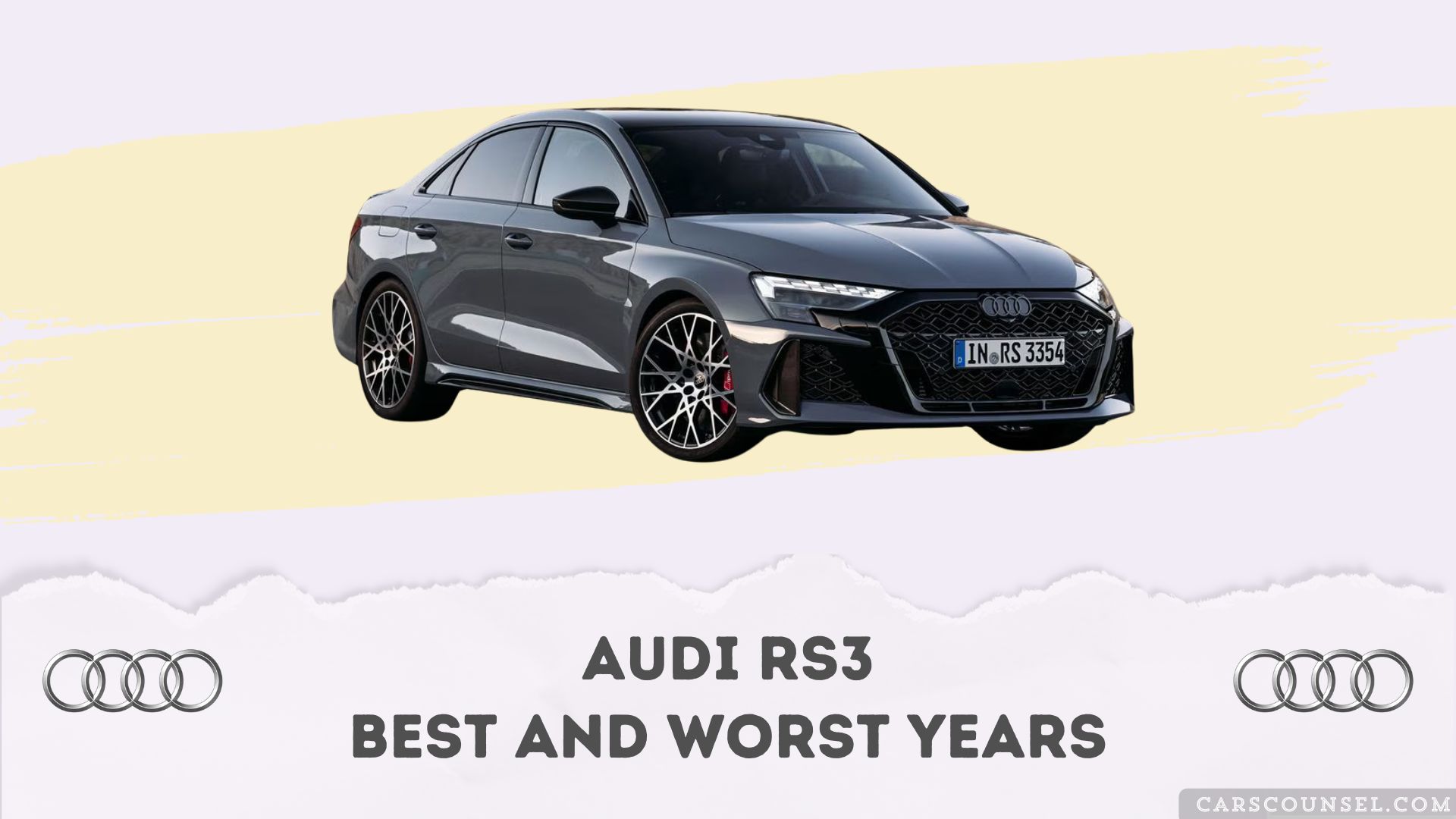
The best Audi RS3 model years are 2017 through 2020, representing the first generation with a proven 2.5-liter inline-five engine. There are no strictly terrible years, but buyers should approach 2022 models carefully to ensure early-production recalls and software updates were completed.
These rankings are comparative, as no high-performance vehicle is flawless. Long-term reliability depends entirely on strict adherence to specialized maintenance schedules, particularly for the all-wheel-drive system and dual-clutch transmission.
Meaningful differences exist between generations. The first generation uses a traditional Haldex all-wheel-drive system, while the second generation introduced a complex rear torque-vectoring splitter. Both require specific, frequent fluid services to avoid catastrophic drivetrain failures.
Quick Navigation
Best and Worst Audi RS3 Years at a Glance
| Model Year | Verdict | Main Reason | Buyer Guidance |
|---|---|---|---|
| 2017-2020 | Best Older Choice | Proven 2.5L engine, analog driving feel | Verify Haldex and DSG service history |
| 2021 | N/A | Not sold in the United States | Skip this year |
| 2022-2023 | Good With Inspection | Excellent performance, new torque splitter | Confirm recall completion and MIB3 updates |
| 2024-2026 | Too New to Judge | Limited long-term ownership data | Rely on certified pre-owned warranties |
Key Takeaways
- The 2017-2020 models offer the most proven ownership experience for used buyers.
- The 2021 model year was a gap year and not sold in the U.S. market.
- Neglecting Haldex or rear differential fluid services will destroy the all-wheel-drive system.
- Carbon buildup on the intake valves requires periodic walnut blasting.
- Water pump and thermostat housing failures are common across both generations.
- Always verify that seatbelt and airbag recalls have been completed on 2022+ models.
- An independent pre-purchase inspection is mandatory for any modified example.
How We Evaluated the Audi RS3 Model Years
Our analysis considers official NHTSA recalls, manufacturer service campaigns, consumer complaints, and powertrain-specific reliability data. We separate verified mechanical defects from routine maintenance requirements.
Complaints are not failure rates, and a recall does not automatically make a year unreliable. Recent models have less ownership history, so “Best” means comparatively stronger, not flawless.
Best Audi RS3 Years
2017-2020: Best Older Choice
The first-generation RS3 (8V chassis) arrived in the U.S. for the 2017 model year and quickly became a modern classic. It features the highly regarded DAZA 2.5-liter turbocharged inline-five engine, producing 400 horsepower. This powertrain is exceptionally stout when properly maintained.
The traditional Haldex-based quattro system provides predictable grip, though it demands fluid and filter changes every 20,000 to 30,000 miles. Buyers prioritizing a raw, analog driving experience and proven engine longevity will find these years to be the strongest used options.
Best Year by Buyer Type
- Best Overall: 2018 (Mature first-year production, widely celebrated engine).
- Best Enthusiast Choice: 2017-2020 (Analog steering feel, highly tunable 2.5L inline-five).
- Best Modern Alternative: 2022+ (Torque vectoring, modern interior, but higher complexity).
Years to Approach Carefully
2022-2023: Good With Inspection
The second-generation RS3 (8Y chassis) debuted for 2022 with an updated 401-horsepower DNWA engine and a revolutionary RS Torque Splitter rear axle. While performance is stellar, first-year models introduced new electronic architectures and complex drivetrain components.
Early 8Y models were subject to seatbelt pretensioner and passenger airbag recalls. Additionally, the MIB3 infotainment system experienced software bugs in early production. These years are excellent but require strict verification of recall completion and software updates before purchase.
Worst Audi RS3 Years
There are no universally terrible Audi RS3 model years that warrant a strict “Avoid” verdict. The primary risk is not the manufacturing year, but the previous owner’s maintenance habits.
An RS3 of any year with missing records for dual-clutch transmission fluid services or rear differential maintenance is a massive financial risk. The high-performance components are intolerant of neglect. Buyers should avoid any example lacking a comprehensive, documented service history.
Audi RS3 Reliability by Generation
First Generation (2017-2020): Built on the MQB platform, this generation is celebrated for its mechanical maturity. The 2.5L inline-five is one of the most reliable modern performance engines. The primary weaknesses are auxiliary components like the water pump and PCV valve.
Second Generation (2022-Present): The 8Y generation brought a comprehensive redesign and the RS Torque Splitter, replacing the Haldex unit with twin multi-plate clutches for true torque vectoring. While the engine remains robust, the added complexity requires specialized diagnostic tools and stricter maintenance.
The Audi RS3 shares its underlying MQB architecture with the Audi A3, though their powertrains and performance capabilities differ drastically.
Common Audi RS3 Problems
Engine Cooling System
The water pump and thermostat housing are known failure points across both generations. The plastic components can warp or crack, leading to slow coolant leaks. Owners should monitor coolant levels and replace the assembly with updated parts if a leak develops.
Carbon Buildup
Like all modern direct-injection engines, the 2.5L TFSI does not wash the intake valves with fuel. Over time, carbon accumulates on the valves, causing rough idles and misfires. A professional walnut blasting service is typically required every 60,000 to 80,000 miles.
AWD System Neglect
The first-generation Haldex system requires fluid and strainer cleaning every 20,000 miles. The second-generation Torque Splitter also requires specific fluid intervals. Neglecting these services causes sludge buildup, leading to pump failure and a loss of all-wheel-drive traction.
Repair-Cost Overview
| Problem | Commonly Affected Years | Approximate Repair Range | Important Notes |
|---|---|---|---|
| Water Pump / Thermostat | 2017-2026 | $800 – $1,400 | Plastic housings are prone to cracking |
| Carbon Cleaning (Walnut Blast) | 2017-2026 | $400 – $700 | Required every 60k-80k miles |
| DSG Fluid Service | 2017-2026 | $300 – $500 | Mandatory every 40,000 miles |
| Haldex / Diff Fluid Service | 2017-2026 | $200 – $400 | Critical for AWD longevity |
Repair costs vary significantly by region, labor rates, parts choice, and whether the work is performed at a dealership or an independent European specialist.
What to Check Before Buying a Used Audi RS3
- Verify the VIN for open NHTSA recalls, especially seatbelt pretensioners and airbag systems.
- Demand physical receipts for Haldex or rear differential fluid services.
- Confirm DSG transmission fluid was changed every 40,000 miles.
- Inspect the engine bay for crusty coolant residue near the water pump.
- Scan for misfire codes that may indicate severe carbon buildup.
- Check the condition of the OEM brake pads and rotors, as replacements are costly.
- Look for signs of aggressive track use or unverified aftermarket tuning.
- Arrange an independent pre-purchase inspection with a VAG specialist.
Related Buying Guides
- Audi A3 best and worst years: The RS3’s platform sibling, offering a more practical and affordable daily driving experience.
- Audi TT years to avoid: A related performance coupe that shares underlying architecture and similar maintenance requirements.
Frequently Asked Questions
Which Audi RS3 generation is the most reliable?
The first generation (2017-2020) is widely considered the most reliable due to its proven DAZA engine and simpler Haldex all-wheel-drive system. It requires strict maintenance but suffers from fewer complex electronic issues than the newer 8Y generation.
Did Audi sell the RS3 in the United States in 2021?
No, Audi did not sell the RS3 in the U.S. market for the 2021 model year. The first generation ended in 2020, and the redesigned second generation arrived for 2022.
What is the most expensive maintenance item on an RS3?
The dual-clutch transmission and rear differential require specialized fluids and frequent service intervals. Neglecting these services can lead to mechatronic unit or differential failures, which cost several thousand dollars to replace.
Are water pump failures common on the Audi RS3?
Yes, the water pump and thermostat housing assembly is a known weak point. The plastic housing can crack or warp over time, leading to coolant leaks. It is a manageable repair but should be budgeted for by prospective owners.
Does the Audi RS3 require premium fuel?
Yes, the turbocharged 2.5-liter inline-five engine requires premium 91-octane or higher fuel to prevent engine knock and protect the turbocharger and internal components under high boost pressures.
Can I use the Audi RS3 as a daily driver?
The RS3 is an excellent daily driver, offering a comfortable interior and practical trunk space. However, its stiff suspension, high fuel consumption, and expensive consumable parts like tires and brakes make it a costly daily proposition.
Choosing the Right Audi RS3 Model Year
The 2017 through 2020 model years remain the best older choices for used buyers seeking a proven, analog performance sedan. The 2022 and 2023 models offer incredible technology but require careful inspection of early-production recalls.
Regardless of the year, maintenance history is the single most important factor. Never purchase an RS3 without documented proof of differential and transmission services. Always verify the VIN for open recalls and secure an independent inspection before finalizing your purchase.

