The Audi S5 is a performance sports car produced from 2008 to present. Available as a coupe, cabriolet, and sportback, the S5 combines quattro all-wheel drive with turbocharged engines.
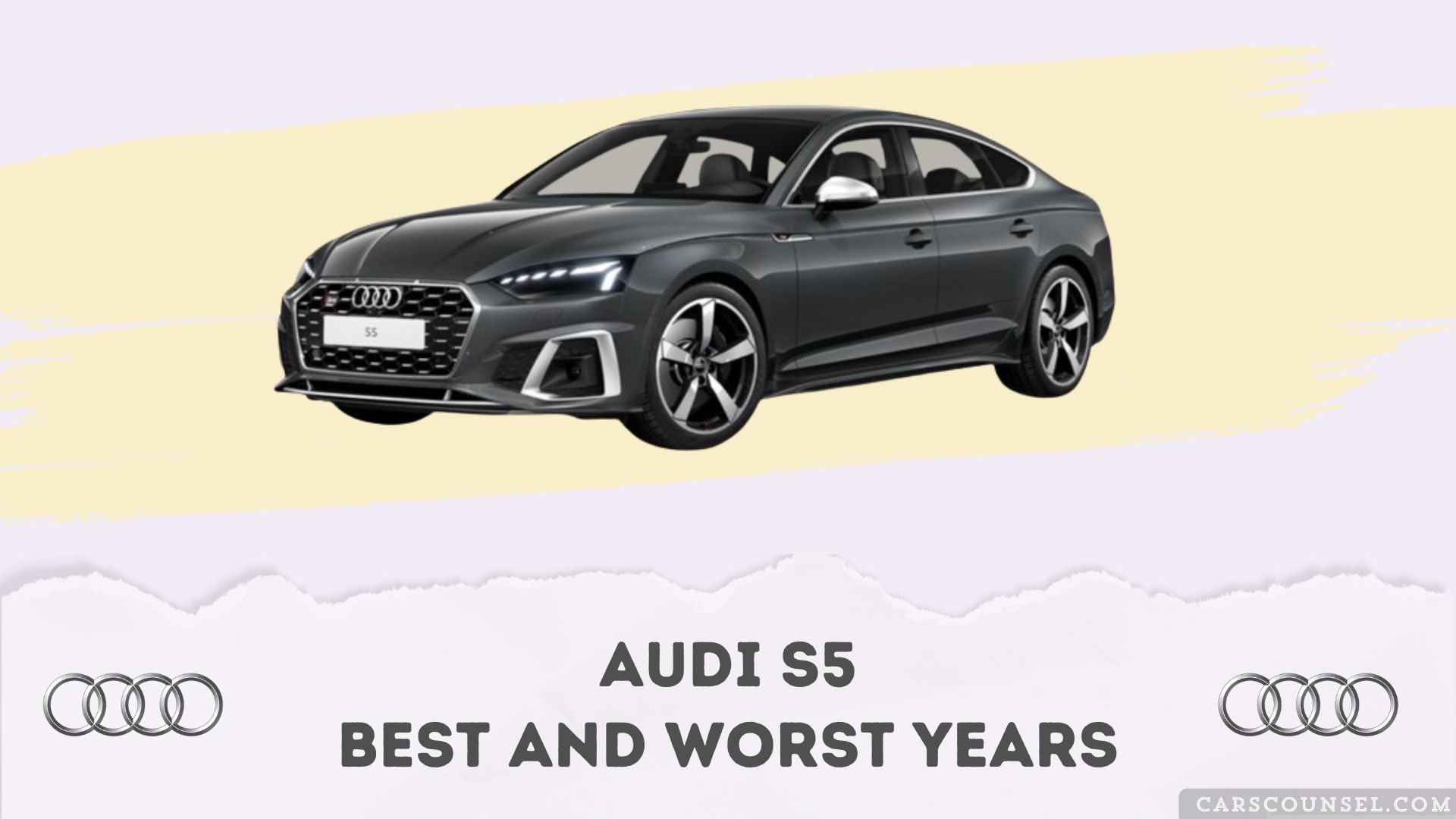
This article breaks down the best and worst model years based on reliability, performance, owner complaints, and long-term dependability. Understanding which years to target helps buyers avoid expensive repairs and maintenance issues.
Quick Navigation
Audi S5 Generational Overview
First Generation B8 (2008-2012)
The first generation S5 launched in 2008 with a naturally aspirated 4.2-liter V8 engine producing 354 horsepower. This generation came with either a six-speed manual or six-speed automatic transmission. The B8 featured quattro all-wheel drive with a Torsen-based center differential.
Early models suffered from carbon buildup on intake valves, high-pressure fuel pump failures, and coolant leaks. Timing chain guides wore prematurely, and electrical issues were common. Control arm bushings failed frequently, and sunroof leaks plagued many owners.
Mid-Cycle Update B8.5 (2013-2017)
The 2013 refresh replaced the V8 with a supercharged 3.0-liter V6 engine producing similar power. This engine downsizing improved fuel economy while maintaining performance. Transmission options included a six-speed manual or seven-speed dual-clutch automatic.
Carbon buildup remained an issue on the direct-injection V6. Coolant leaks continued, often from water pumps and thermostats. Valve cover gaskets leaked oil, and PCV valve failures increased oil consumption. Hydraulic engine mounts failed both physically and electronically.
Second Generation B9 (2017-2024)
The redesigned S5 debuted at the 2016 Paris Motor Show with updated styling and technology. The coupe launched first, followed by the Sportback in 2018 and cabriolet in 2020. The supercharged V6 carried over with refinements.
This generation significantly reduced mechanical problems. Interior rattles, particularly around B&O speakers, became the most common complaint. Thermostat failures persisted from earlier generations. The 2018 model year received 26 complaints, the highest for any S5 year.
Third Generation B9.5 (2025-Present)
The redesigned 2025 S5 consolidates the previous A4 and A5 into one model. The new generation features a turbocharged 3.0-liter V6 and seven-speed dual-clutch transmission. Standard features include quattro all-wheel drive and enhanced technology.
Best Years for the Audi S5
The most reliable S5 models come from the later B8.5 and B9 generations.
2017-2024 (B9 Generation): The second-generation S5 offers the best reliability with substantially fewer mechanical issues. These models feature updated technology and improved build quality. The shorter list of common problems makes this the top choice for dependability.
2019-2024: These later B9 models avoid the 2018 interior rattle issues while maintaining strong reliability. Engine and transmission components prove durable with proper maintenance. Fewer recalls and owner complaints make these years standout options.
2016-2017 (Late B8.5): These final first-generation models benefit from years of refinement. Audi addressed many earlier problems by this point in production. The supercharged V6 delivers reliable performance when maintained.
Worst Years for the Audi S5
Early production years present the most reliability concerns.
2008-2010: The first three model years suffer from carbon buildup, high-pressure fuel pump failures, and coolant leaks. Timing chain guides fail prematurely, requiring expensive engine disassembly. Control arm bushings wear quickly, and electrical problems are common. Sunroof leaks and interior wear add to ownership frustrations.
2018: This model year logged 26 complaints, the most of any S5 year. Rattling B&O speakers and failed engine mounts top the complaint list. First-year redesign issues make this a year to avoid despite overall B9 generation improvements.
2013-2015: These early B8.5 models experienced low coolant levels, air conditioning malfunctions, and turbo failures. Carbon buildup continued affecting the new direct-injection V6. Water pump and thermostat failures occurred frequently.
Common Problems Across the Audi S5 Lineup
Carbon Buildup on Intake Valves
Direct-injection engines accumulate carbon deposits on intake valves. This reduces power and causes rough idling. Walnut blasting every 40,000-60,000 miles prevents performance loss.
Coolant Leaks
Brittle plastic parts and aged rubber seals cause coolant leaks, especially on earlier models. Water pumps and thermostats fail frequently around 100,000 miles. Leaks can lead to overheating and expensive engine damage.
Thermostat Failures
All generations suffer from thermostat failures that cause engines to run too hot or too cold. The B9 generation continues experiencing this issue. Replacement is necessary to prevent temperature-related problems.
High-Pressure Fuel Pump Failures
Early B8 models experienced fuel pump failures that leave cars unable to start. This requires towing and expensive replacement. A recall addressed some affected vehicles.
Valve Cover Gasket Leaks
Aging valve cover gaskets leak oil in B8.5 models. Burned oil smell indicates active leaking. Oil leaks onto exhaust components create fire risks.
PCV Valve Failures
Failed PCV valves increase oil consumption noticeably. This problem affects B8.5 generation engines. Replacement restores normal oil consumption levels.
Engine Mount Failures
Hydraulic engine mounts fail physically and electronically on B8.5 models. Increased vibrations indicate physical failure. Electronic monitoring detects internal failures triggering warning lights.
Interior Rattles
B9 generation models develop rattles around B&O speaker installations. This occurs in a high-end vehicle where such issues are unexpected. Dealer service addresses speaker mounting problems.
Reliability Breakdown by Year
2025 Audi S5 Reliability Rating
The redesigned 2025 S5 debuts with a new platform and updated powertrain. Enhanced technology and refined design mark this generation. Long-term reliability data remains unavailable for this first model year.
2024 Audi S5 Reliability Rating
The 2024 model carries over with minimal changes from 2023. This mature B9 generation demonstrates solid reliability. Few owner complaints and established repair procedures make this a dependable choice.
2023 Audi S5 Reliability Rating
The 2023 S5 continues the strong reliability of late B9 models. Carbon buildup requires periodic cleaning but no major mechanical issues surface. Engine and transmission prove durable with proper maintenance.
2022 Audi S5 Reliability Rating
This model year maintains the B9 generation’s reliability reputation. Thermostat failures remain the primary concern. Regular maintenance prevents most problems.
2021 Audi S5 Reliability Rating
The 2021 S5 demonstrates above-average reliability for the segment. Fewer complaints compared to earlier years make this a solid option. Interior quality improvements reduce rattle complaints.
2020 Audi S5 Reliability Rating
The cabriolet returns to the lineup in 2020. B9 generation reliability continues with minimal issues. This mid-cycle year benefits from earlier refinements.
2019 Audi S5 Reliability Rating
This model year avoids the 2018 first-year issues while maintaining B9 improvements. Engine and transmission components prove reliable. Lower complaint rates make this a recommended year.
2018 Audi S5 Reliability Rating
The Sportback body style debuts for North American markets. This year logged 26 complaints, the highest for any S5. Rattling B&O speakers and engine mount failures top the issue list.
2017 Audi S5 Reliability Rating
The redesigned B9 generation launches with improved technology and styling. Substantially fewer mechanical problems compared to B8.5 models. First year of the new generation shows strong engineering.
2016 Audi S5 Reliability Rating
This final B8.5 year benefits from production refinements. Carbon buildup and coolant leaks remain concerns. Overall reliability improves compared to earlier B8.5 years.
2015 Audi S5 Reliability Rating
This model year experiences air conditioning problems and turbo failures. Carbon buildup affects performance. Water pump and thermostat replacements are common.
2014 Audi S5 Reliability Rating
The 2014 model continues B8.5 generation issues. Coolant leaks and valve cover gasket failures occur frequently. PCV valve problems increase oil consumption.
2013 Audi S5 Reliability Rating
The first year with the supercharged V6 experiences teething issues. Low coolant levels and failed thermostats plague early adopters. One complaint involves steering system failure.
2012 Audi S5 Reliability Rating
The final V8 year includes fuel system recalls. Airbag recalls affect cabriolet models. Three complaints about transmission jerking surface.
2011 Audi S5 Reliability Rating
This model year faces fuel injection leaks requiring recalls. Transmission jerking complaints continue. Carbon buildup becomes more apparent as mileage accumulates.
2010 Audi S5 Reliability Rating
Airbag recalls affect cabriolet variants. Carbon buildup, coolant leaks, and timing chain guide wear remain problematic. This year marks the beginning of improved reliability over 2008-2009.
2009 Audi S5 Reliability Rating
Early production issues continue affecting reliability. Carbon buildup and fuel pump failures occur frequently. Electrical problems and worn bushings add to maintenance costs.
2008 Audi S5 Reliability Rating
The first production year experiences engine mount failures and LED lighting issues. Carbon buildup starts affecting performance early. High-pressure fuel pump failures leave vehicles stranded.
Warranty & Ownership Costs
The Audi S5 costs approximately $10,422 for maintenance and repairs during its first 10 years. Annual repair costs average $1,164, indicating poor ownership costs compared to competitors. A 29.26% chance of major repairs exists within 10 years.
First five years of ownership cost approximately $3,337 for maintenance and repairs. This beats the luxury coupe segment average by $2,206. The chance of major repairs in the first five years is 29%, performing 4% better than similar vehicles.
RepairPal rates the S5 reliability at 2.0 out of 5.0, ranking it 30th out of 31 luxury midsize cars. The frequency and severity of repairs exceed average vehicles. Extended warranties are recommended given the repair probability.
Oil changes and transmission fluid changes are expensive for parts alone. Water pump and thermostat repairs under 75,000 miles may be covered by a lawsuit settlement. Maintenance costs add up quickly without DIY ability.
Buying Guide: What to Look For
Which Years Offer the Best Value
Target 2017-2024 B9 generation models for the best reliability. These years have substantially fewer mechanical issues. Avoid 2018 if possible due to higher complaint rates.
The 2016-2017 B8.5 models provide good value with the refined supercharged V6. These later first-generation years fixed many early problems. Lower purchase prices offset potential maintenance costs.
Years to Avoid
Steer clear of 2008-2010 models with extensive mechanical problems. Carbon buildup, fuel pump failures, and timing chain issues plague these years. The 2013-2015 years also experience significant problems including turbo failures and cooling system leaks.
The 2018 model year logs the most complaints despite being a newer B9 generation. Interior quality issues and engine mount failures detract from ownership experience.
Key Components to Inspect
Check for carbon buildup by reviewing service records showing walnut blasting. Inspect coolant system components including water pump and thermostat for leaks. Test drive should reveal no unusual engine vibrations indicating mount failures.
Examine valve covers for oil seepage indicating gasket leaks. Listen for interior rattles, especially around speaker locations in B9 models. Verify all recall work has been completed using VIN lookup.
Expected Mileage Thresholds
Water pumps typically fail around 100,000 miles requiring replacement. Carbon cleaning becomes necessary every 40,000-60,000 miles. Engine mounts may fail anywhere from 60,000-100,000 miles on B8.5 models.
Higher mileage examples require documented maintenance history. The engine and transmission prove reliable with proper care. Deferred maintenance makes high-mileage S5 models risky investments.
Known Trouble Spots
Direct-injection engines accumulate carbon deposits reducing performance. Cooling system components use brittle plastics prone to failure. Early V8 models experience timing chain guide wear requiring extensive repairs.
PCV valves fail causing increased oil consumption on supercharged V6 models. Hydraulic engine mounts fail both mechanically and electronically. Interior speakers develop rattles in B9 generation.
FAQs
Is the Audi S5 reliable?
The Audi S5 receives a 2.0 out of 5.0 reliability rating from RepairPal, ranking 30th out of 31 luxury midsize cars. B9 generation models from 2017-2024 demonstrate significantly better reliability than earlier years. Proper maintenance improves long-term dependability.
What year of the Audi S5 is most dependable?
The 2019-2024 model years provide the best dependability. These late B9 generation models avoid first-year issues while maintaining improved reliability. The engine and transmission are near bulletproof with maintenance.
What year should you avoid?
Avoid 2008-2010 and 2013-2015 model years due to extensive problems. The 2018 model also logs the most complaints despite being a newer generation. These years experience mechanical failures and expensive repairs.
What are the most common problems?
Carbon buildup on intake valves, coolant leaks, and thermostat failures are most common. Early models suffer from high-pressure fuel pump failures and timing chain guide wear. B9 generation models primarily experience interior rattles and occasional thermostat issues.
How long does an Audi S5 last?
With proper maintenance, an Audi S5 can exceed 150,000 miles. The engine and transmission prove durable when serviced regularly. Higher maintenance costs compared to mainstream brands affect long-term ownership.
Are maintenance costs high for the S5?
Annual repair costs average $1,164, higher than most competitors. Ten-year ownership costs approximately $10,422. Parts and labor for German performance cars command premium pricing.
Conclusion
The Audi S5 offers strong performance and quattro all-wheel drive across three generations. Best years include 2017-2024 B9 models and 2016-2017 late B8.5 models. Worst years are 2008-2010, 2013-2015, and 2018 due to mechanical problems and high complaint rates.
Common issues include carbon buildup, coolant leaks, thermostat failures, and interior rattles. Maintenance costs run higher than average luxury cars at $1,164 annually. B9 generation models provide the best reliability with substantially fewer problems.
Target 2019-2024 model years for optimal dependability while avoiding early production years. The S5 requires dedicated maintenance but rewards owners with performance and handling. Buyers should budget for premium repair costs and perform thorough pre-purchase inspections.

