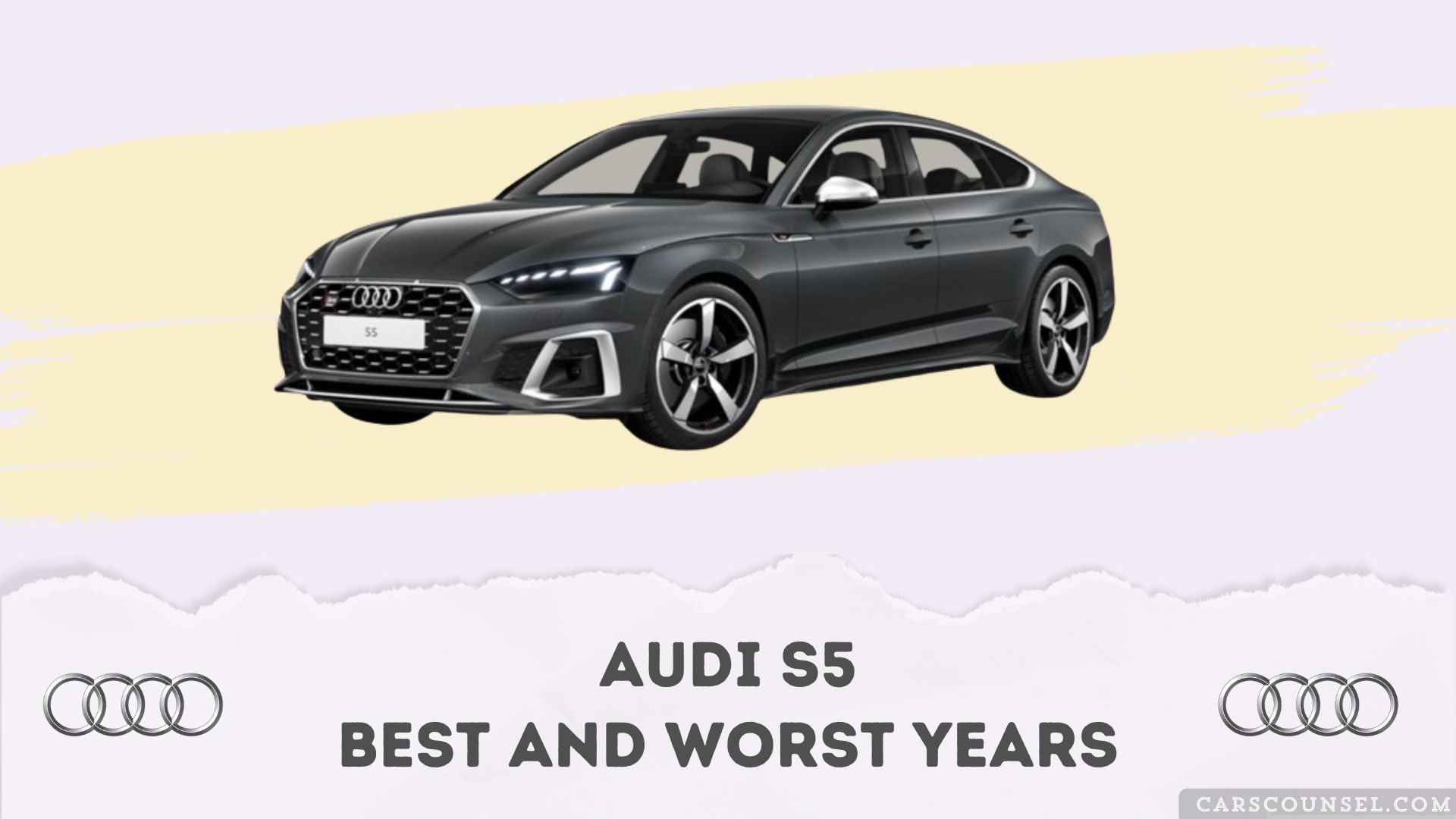
The best Audi S5 model years are 2019 through 2024, offering mature engineering and fewer mechanical surprises. Approach early first-generation and early second-generation models carefully due to expensive timing chain and cooling system failures.
Rankings are comparative and no German performance car is flawless. Strict maintenance history and overall condition matter far more than the specific model year badge.
Reliability varies heavily by engine configuration. The supercharged and turbocharged V6 engines demand strict upkeep, while the older V8 coupe requires specialized care for its timing components.
Quick Navigation
Best and Worst Audi S5 Years at a Glance
| Model Year or Range | Verdict | Main Reason | Buyer Guidance |
|---|---|---|---|
| 2019–2024 | Best Late-Generation Choice | Refined turbo V6 with sorted electronics | Verify water pump and thermostat condition |
| 2016–2017 | Good Choice | Late supercharged V6 with most bugs fixed | Inspect PCV valve and engine mounts |
| 2013–2015 | Approach Carefully | Early supercharged V6 cooling system flaws | Check for water pump settlement eligibility |
| 2011–2012 | Good With Inspection | Late V8 coupe with improved electronics | Confirm timing chain tensioner service |
| 2008–2010 | Avoid | V8 timing chain failures and carbon buildup | High risk of catastrophic engine repair bills |
| 2018 | Approach Carefully | First-year B9 redesign with interior rattles | Test drive for cabin noise and mount issues |
| 2025–Present | Too New to Judge | All-new generation with mild-hybrid V6 | Long-term reliability data remains unavailable |
Key Takeaways
- Strongest choices include the 2019 through 2024 model years.
- Avoid 2008 through 2010 coupes due to catastrophic V8 timing chain risks.
- Approach 2013 through 2015 models carefully regarding cooling system failures.
- The 3.0L V6 engines require strict carbon cleaning and fluid maintenance.
- Verify VIN eligibility for the Audi water pump and thermostat class action settlement.
- Always arrange an independent pre-purchase inspection focusing on the drivetrain.
- Recent models lack sufficient long-term ownership data for definitive judgments.
How We Evaluated the Audi S5 Model Years
Our analysis considers official safety campaigns, class action settlements, and long-term ownership data. We separate genuine engineering flaws from normal wear on complex German performance vehicles.
Complaints do not equal confirmed defects, and a recall does not automatically ruin a vehicle. Recent models have less road exposure, making long-term reliability harder to predict. Best means comparatively stronger, not trouble-free.
Best Audi S5 Years
2019–2024
These late-production B9 models benefit from established manufacturing processes and updated turbocharged V6 engines. They avoided the first-year interior rattles and early electronic gremlins that plagued the 2018 launch.
Buyers should still verify that all scheduled maintenance was performed. The turbocharged V6 requires strict adherence to service intervals to protect the turbocharger and emissions systems.
Best Year by Buyer Type
Best Late-Generation Choice
The 2019 through 2024 models offer the best balance of modern technology, refined interiors, and sorted mechanicals. They provide reliable grand touring performance when properly maintained.
Best Enthusiast Choice
The 2016 and 2017 models represent the peak of the supercharged V6 era. They offer immediate throttle response and a distinctive exhaust note that the newer turbocharged engines lack.
Years to Approach Carefully
2013–2015 (Approach Carefully)
Early B8.5 models introduced the supercharged 3.0L V6 across the lineup. These years experienced frequent water pump and thermostat housing failures due to brittle plastic components.
Many owners faced premature PCV valve failures and increased oil consumption. Buyers must verify if the vehicle is covered by the recent water pump class action settlement.
2018 (Approach Carefully)
The first year of the B9 generation introduced the new turbocharged V6 and updated interior. Owners reported frustrating interior rattles, particularly around the premium audio speakers.
Hydraulic engine mount failures also surfaced during this launch year. Buyers should negotiate the price down to reflect these early-production quality concerns.
2011–2012 (Good With Inspection)
These late first-generation models refined the electronics and addressed some early fuel system complaints. However, the 4.2L V8 coupe still carries the risk of timing chain tensioner failure.
Inspection of the timing chain components is mandatory. Cabriolet models from these years use the more reliable supercharged V6 and avoid the V8 timing risks.
Worst Audi S5 Years
2008–2010 (Avoid)
The launch years of the S5 coupe featured the 4.2L V8 engine, which is notorious for timing chain tensioner and guide failures. Repairing this requires engine removal, leading to massive repair bills.
These early models also suffered from severe carbon buildup, high-pressure fuel pump failures, and excessive oil consumption. The cost of bringing these early examples up to a reliable standard often exceeds their current market value.
Audi S5 Reliability by Generation
First Generation (2008–2012)
The original S5 coupe utilized a naturally aspirated V8, while the Cabriolet eventually received a supercharged V6. The V8 is mechanically overbuilt but suffers from inaccessible timing components.
Mid-Cycle Refresh (2013–2017)
Audi unified the lineup with the supercharged 3.0L V6. This engine is highly tunable and generally robust, though the plastic cooling system components require proactive replacement.
Second Generation (2018–2024)
The B9 generation switched to a turbocharged V6 and adopted the MLB Evo platform. It offers vastly improved infotainment and fuel economy, though the cooling system remains a weak point.
Latest Generation (2025–Present)
The newest S5 adopts a mild-hybrid turbocharged V6 and shares its architecture with the newly renamed A5 lineup. Long-term reliability remains entirely unproven for this fresh design.
Common Audi S5 Problems
Cooling System and Water Pump Failures
The plastic water pump and thermostat housings crack and leak coolant on both supercharged and turbocharged V6 engines. This issue is widespread enough to trigger a class action settlement for affected models.
Carbon Buildup on Intake Valves
Direct injection prevents fuel from washing the intake valves, leading to heavy carbon deposits. This causes rough idling and power loss, requiring manual walnut blasting every 40,000 to 60,000 miles.
Timing Chain Tensioner Failure (V8 Models)
The 4.2L V8 engines in early coupes suffer from failing timing chain tensioners and guides. Because the chains are located at the rear of the engine, repairs require pulling the entire motor.
Hydraulic Engine Mount Degradation
The electronic hydraulic engine mounts collapse over time, transmitting excessive vibration into the cabin. Replacement is expensive due to the cost of the OEM electronic mounts and labor.
What to Check Before Buying a Used Audi S5
- Verify the VIN for open safety campaigns and water pump settlement eligibility.
- Inspect the cooling system for crusty coolant residue around the water pump housing.
- Review service records for recent walnut blasting to remove intake valve carbon.
- Listen for cold-start rattling from the rear of the engine bay on V8 models.
- Test the transmission for smooth shifting and verify the fluid service history.
- Check the condition of the electronic hydraulic engine mounts for excessive cabin vibration.
- Scan the vehicle for hidden fault codes using a VW/Audi specific diagnostic tool.
- Arrange an independent pre-purchase inspection by a qualified European car specialist.
Related Buying Guides
- Audi A5 best and worst years: Explore the standard A5 if you want the same elegant styling and chassis with significantly lower maintenance costs and better fuel economy.
- BMW M4 best and worst years: Consider the M4 if you prefer a rear-wheel-drive biased platform with a more aggressive track focus and sharper steering feedback.
- Audi S6 best and worst years: Look at the S6 sedan if you need four doors and rear passenger space without sacrificing the prestigious Audi V6 performance and quattro all-wheel drive.
Frequently Asked Questions
Is the Audi S5 reliable?
The S5 offers average reliability for a German performance car when strictly maintained. The B9 generation models from 2019 onward demonstrate significantly better dependability than the early V8 and supercharged V6 examples.
What year of the Audi S5 is most dependable?
The 2019 through 2024 model years represent the most dependable choices. These late-production vehicles benefited from sorted manufacturing processes and updated turbocharged engines that resolved earlier cooling system complaints.
What Audi S5 years should you avoid?
Buyers should avoid the 2008 through 2010 coupe models due to the catastrophic risk of V8 timing chain failure. Early 2013 through 2015 models also require careful inspection to ensure cooling system flaws were addressed.
What are the most common Audi S5 problems?
Water pump and thermostat housing failures, intake valve carbon buildup, and electronic engine mount collapses are the most frequent complaints. Early V8 models also face extremely expensive timing chain tensioner repairs.
How long does an Audi S5 last?
Well-maintained examples can reach high mileage, but longevity depends entirely on strict upkeep. The engines are robust if the cooling system is upgraded and the timing components are monitored closely.
Are Audi S5 repairs expensive?
Maintenance costs are significantly higher than typical mainstream vehicles. Owners should budget for expensive drivetrain repairs, specialized European labor rates, and the rising cost of proprietary electronic components.
Choosing the Right Audi S5 Model Year
The Audi S5 delivers its best ownership experience in the 2019 through 2024 model years. These mature examples offer a refined blend of modern technology, grand touring comfort, and sorted mechanicals.
Avoid the problematic 2008 through 2010 V8 coupes entirely due to timing chain risks. Always verify the VIN for outstanding campaigns, inspect the cooling system, and arrange an independent inspection before finalizing your purchase.