The Bugatti Chiron was produced from 2016 to 2024 as the successor to the Veyron. This hypercar featured an 8.0-liter quad-turbocharged W16 engine and was limited to 500 units worldwide.
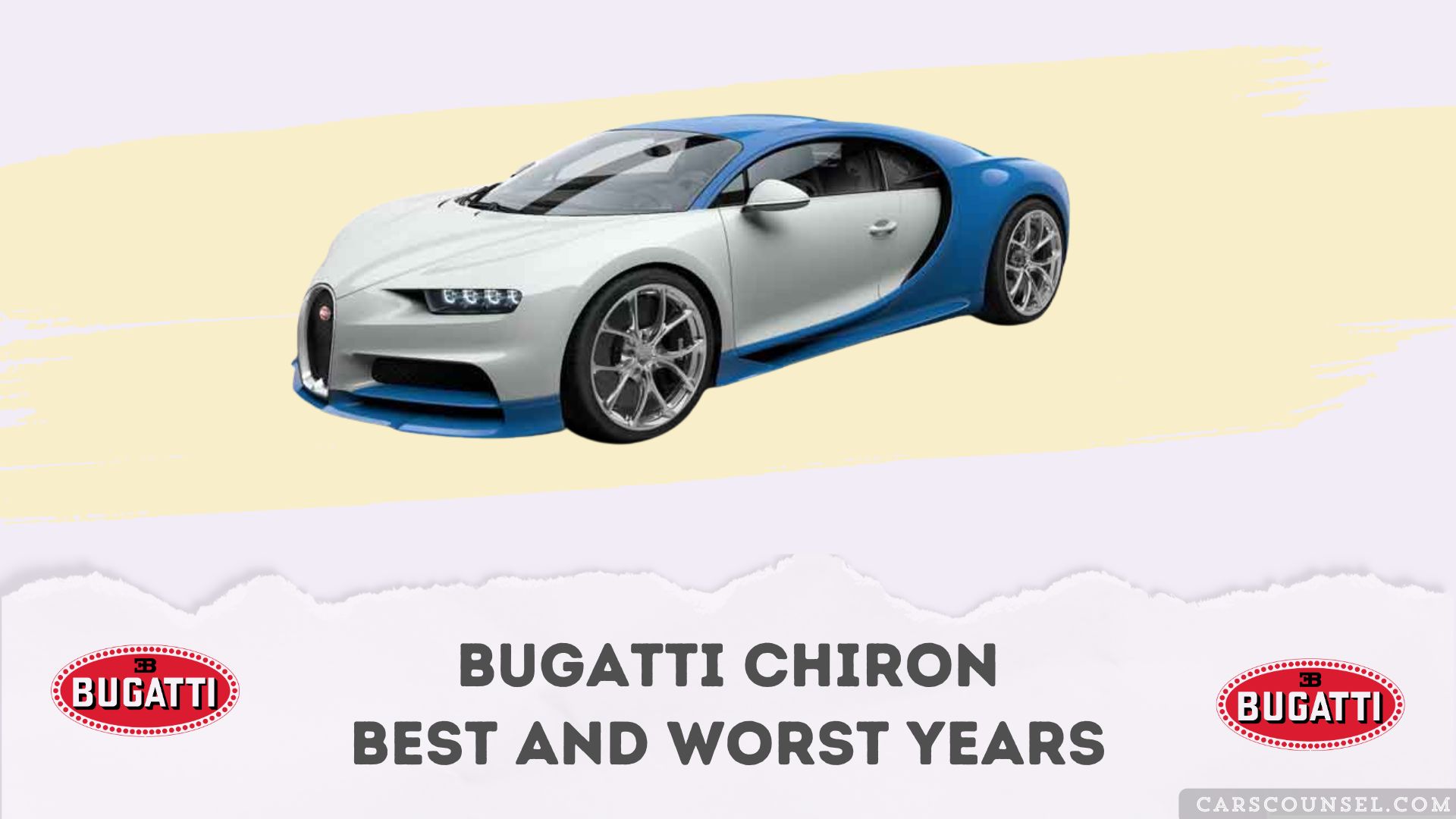
This article breaks down the best and worst model years of the Bugatti Chiron based on reliability, performance, owner complaints, and long-term dependability. Understanding which variants offer superior engineering and which present maintenance challenges can help buyers make informed decisions.
Quick Navigation
Bugatti Chiron Generational Overview
First Generation Base Chiron (2016-2023)
The base Chiron debuted at the 2016 Geneva Motor Show with 1,479 horsepower and 1,180 lb-ft of torque from its 8.0-liter W16 engine. Production was limited to 200 units of the standard specification. The base model featured a seven-speed dual-clutch transmission with all-wheel drive and weighed 4,587 pounds. Early production years experienced seat recliner bracket welding defects that led to a 2017 recall affecting 47 units globally.
Chiron Sport (2018)
Bugatti unveiled the Chiron Sport in 2018 as a handling-focused variant with 60 units produced. This version was mechanically identical to the base model but weighed 40 pounds less and featured stiffer suspension tuning. The Sport maintained the same 1,479 horsepower output while improving agility through revised damping and steering calibration.
Chiron Sport 110 Ans Bugatti (2019)
The 110 Ans Bugatti was a limited edition celebrating 110 years of the brand with only 20 units built. This variant featured unique styling elements and commemorative badging while retaining the Sport’s mechanical specifications.
Chiron Pur Sport (2020-2024)
The Pur Sport prioritized track performance with gear ratios shortened by 15 percent across all seven gears. Power output was rated at 1,500 horsepower with torque remaining at 1,180 lb-ft. Weight was reduced to 4,285 pounds, making it 50 pounds lighter than the Super Sport variant. The Pur Sport achieved 0-62 mph in 2.3 seconds but had a limited top speed of 218 mph due to its track-oriented gearing.
Chiron Super Sport 300+ (2021-2022)
Bugatti produced 30 units of the Super Sport 300+ based on the record-setting car that exceeded 300 mph. The final unit was delivered in July 2022. This variant featured longtail aerodynamics and was engineered specifically for straight-line speed records.
Chiron Super Sport (2021-2024)
The Super Sport became the most powerful production Chiron with 1,600 horsepower and 1,600 Nm of torque. It weighed 4,399 pounds and featured revised aerodynamics with a longtail design that reduced drag. The Super Sport reached 0-62 mph in 2.4 seconds and achieved a top speed exceeding 273 mph. Production continued until May 2024 when the final Chiron L’Ultime was completed.
Chiron Noire (2020)
The Noire was a design-focused limited edition with 20 units produced featuring unique exterior finishes. Mechanical specifications remained identical to the base Chiron.
Best Years for the Bugatti Chiron
The 2020-2024 production years represent the most refined Chiron variants with improved quality control and advanced engineering.
2021-2022 Chiron Super Sport 300+: This variant benefited from lessons learned during the 300 mph record attempt with enhanced aerodynamics and proven high-speed stability. The longtail design improved airflow management and reduced drag more effectively than earlier models. Only 30 units were produced, making it highly exclusive with superior engineering refinement.
2021-2024 Chiron Super Sport: The most powerful production variant with 1,600 horsepower offered peak performance with mature engineering. Late production models avoided early manufacturing issues like the 2017 seat bracket recall. These final production years incorporated all accumulated development improvements and benefited from Bugatti’s established quality control processes.
2020-2024 Chiron Pur Sport: This track-focused variant featured shorter gear ratios that improved acceleration response and driver engagement. Weight reduction to 4,285 pounds enhanced handling dynamics compared to earlier models. The Pur Sport represented Bugatti’s most refined approach to driving dynamics rather than just top speed.
Worst Years for the Bugatti Chiron
The 2016-2017 production years experienced the most reported issues during the model’s early development phase.
2016: The inaugural production year faced typical new model challenges including limited service experience and unproven long-term reliability. As the first year of production, these units served as real-world testing for the W16 powertrain and complex systems. Buyers of first-year models faced the highest uncertainty regarding potential undiscovered defects.
2017: This model year was affected by a significant safety recall involving 47 units with front seat recliner bracket welding defects. The faulty welds could cause sudden driver position changes at high speeds, creating dangerous situations. Twelve units in the United States required retrieval and transport to dealers for complete seat assembly replacement. This recall represented the most serious documented safety issue in Chiron production history.
2016-2018 Base Chiron: Early base models lacked the refinements incorporated into later Sport and Super Sport variants. These units had the longest service history, potentially facing more accumulated wear on expensive components like turbos and transmissions. Early production examples also commanded lower resale values compared to later limited-edition variants.
Common Problems Across the Bugatti Chiron Lineup
Tire and Wheel Wear
The Chiron uses custom Michelin Pilot Sport Cup 2 tires designed for speeds exceeding 260 mph. Tires wear quickly under hard driving and must be replaced every few years regardless of usage due to heat cycle degradation. Tire pressure monitoring systems frequently generate warning messages even with properly inflated tires.
Brake System Wear
Brake components experience accelerated wear due to the car’s 4,400-pound weight and extreme performance capability. Carbon-ceramic brake rotors and pads require replacement at strict service intervals. Brake fluid must be changed annually to maintain system integrity under high-temperature conditions.
Engine Oil Leaks
Oil leaks occur in approximately 12 percent of Chiron models, appearing as white or brownish spots in the engine compartment and undercarriage. Repair costs average $800 but can increase significantly depending on leak location and component accessibility.
Transmission Problems
Transmission issues affect 8.5 percent of Chiron models with symptoms including erratic shifting, slipping, and hesitation during gear changes. The seven-speed dual-clutch transmission requires specialized service that averages $2,000 for repairs. Transmission problems increase in frequency as mileage accumulates beyond manufacturer service intervals.
Turbocharger Issues
The quad-turbocharger system can develop problems including reduced boost pressure and oil seal failures. Turbocharger components require inspection during major service intervals and may need replacement before 50,000 miles under hard use.
Rear Axle Issues
Rear axle problems occur in 7.8 percent of Chiron models, causing vibration, unusual noises, and excessive rear tire wear. Repair costs average $1,800 and require specialized diagnostic equipment.
Engine Mechanical Issues
Engine mechanical problems affect 5.9 percent of models with symptoms including pinging sounds, excessive oil consumption, and reduced performance. Repair costs average $2,500 and can escalate if internal engine components require replacement.
Reliability Breakdown by Year
2024 Bugatti Chiron Reliability Rating
The final production year included only Super Sport and Pur Sport variants representing the most refined engineering in Chiron history. These models benefited from eight years of production improvements and quality control refinement. The L’Ultime final edition represented peak build quality as the culminating achievement of the Chiron program.
2023 Bugatti Chiron Reliability Rating
The 2023 model year saw completion of the last base-specification Chiron in September, a Nocturne Black and Copper example. Production focused exclusively on Super Sport and Pur Sport variants with fewer than 40 build slots remaining. Late production models incorporated all design improvements and avoided early production defects like the 2017 seat bracket recall.
2022 Bugatti Chiron Reliability Rating
The final Super Sport 300+ was delivered in July 2022, marking the end of this exclusive 30-unit variant. Fuel economy was rated at 9 mpg city and 14 mpg highway for standard models, while Pur Sport and Super Sport achieved 8 mpg city and 11 highway. Models from this year demonstrated mature engineering with established service procedures.
2021 Bugatti Chiron Reliability Rating
Bugatti announced that Chiron production would enter its final phase with only Pur Sport and Super Sport variants continuing. The first eight Super Sport 300+ units were delivered in September 2021. This year marked the transition to exclusively high-performance variants with refined specifications.
2020 Bugatti Chiron Reliability Rating
The Chiron Pur Sport was introduced as a track-focused variant with shorter gear ratios and reduced weight. The Chiron Noire limited edition was also released with unique styling. Mid-production models from this year avoided early manufacturing issues while maintaining warranty coverage.
2019 Bugatti Chiron Reliability Rating
The Chiron Sport 110 Ans Bugatti commemorative edition was introduced with 20 units produced. This year represented stable production with established quality control processes and no major recalls reported. Service procedures were well-documented and technicians gained experience with W16 maintenance requirements.
2018 Bugatti Chiron Reliability Rating
Bugatti unveiled the Chiron Sport with improved handling and 40-pound weight reduction. The 100th Chiron was delivered during this year, demonstrating growing production confidence. Models from 2018 had better long-term reliability prospects than 2016-2017 units due to resolved early issues.
2017 Bugatti Chiron Reliability Rating
Seventy Chiron units were delivered in 2017, representing the first full production year. A significant recall affected 47 units globally due to front seat recliner bracket welding defects. This safety issue required complete seat assembly replacement for affected vehicles.
2016 Bugatti Chiron Reliability Rating
The inaugural production year began after the Geneva Motor Show debut in March. First-year models faced typical new car challenges including unproven long-term durability and limited service experience. Early adopters paid premium prices for unproven technology with the highest uncertainty regarding potential issues.
Warranty & Ownership Costs
The Bugatti Chiron includes a standard four-year bumper-to-bumper warranty covering basic maintenance, fluid changes, and wheel damage. Annual service costs $11,500 and includes oil changes, brake fluid replacement, coolant inspection, and diagnostic system checks. Major service required every four years costs $34,000 and covers comprehensive fluid replacement and mechanical inspection.
Extended warranty coverage for an additional four years costs $204,000 and maintains comprehensive bumper-to-bumper protection. A four-year service plan alone costs between $60,000 and $70,000 without warranty coverage. Total maintenance costs over 10 years of ownership, including six years beyond the initial warranty, average $91,500 for routine service alone.
Additional costs include tire replacement every few years regardless of mileage at several thousand dollars per set. Brake system maintenance requires carbon-ceramic rotor and pad replacement at manufacturer intervals. Biennial major services cost approximately $40,000 or more for deep mechanical work including full fluid system replacement.
Buying Guide: What to Look For
The 2021-2024 Super Sport and Pur Sport variants offer the best combination of refinement, performance, and long-term reliability. These late production models incorporate all engineering improvements and avoid early production defects. Buyers prioritizing top speed should target Super Sport models with 1,600 horsepower, while those seeking track performance should choose Pur Sport variants with shorter gearing.
Avoid 2016-2017 model years due to first-year production issues and the 2017 seat bracket recall affecting 47 units. Verify that any 2017 model has completed the seat assembly replacement recall service before purchase. Early base Chiron models from 2016-2018 lack the refinements of later variants and may face higher maintenance costs due to accumulated mileage.
Inspect tire condition carefully as Michelin Pilot Sport Cup 2 tires require replacement every few years regardless of mileage. Check service records to confirm all annual $11,500 services and four-year $34,000 major services were completed at authorized Bugatti facilities. Examine engine compartment for oil leaks, which affect 12 percent of models and indicate potential seal degradation.
Request diagnostic scans for transmission problems, which occur in 8.5 percent of Chiron models and cause erratic shifting. Test drive the car to detect rear axle vibration or unusual noises that indicate potential $1,800 repairs. Budget for extended warranty coverage at $204,000 for four years or plan for $11,500 annual service costs plus unexpected repairs.
FAQs
Is the Bugatti Chiron reliable?
The Chiron demonstrates good reliability for a hypercar with mature production years from 2020-2024 showing fewer issues than early models. Common problems include tire wear, brake system maintenance, and oil leaks affecting approximately 12 percent of vehicles. Proper maintenance through authorized Bugatti service centers minimizes mechanical problems.
What year of the Bugatti Chiron is most dependable?
The 2021-2024 Super Sport and Pur Sport variants are the most dependable due to refined engineering and resolution of early production issues. These late production models avoided the 2017 seat bracket recall and incorporated eight years of continuous improvement. The final 2024 L’Ultime edition represents peak Chiron build quality.
What year should you avoid?
Avoid 2016-2017 model years due to first-year production challenges and the serious 2017 seat bracket welding recall affecting 47 units. Early base Chiron models from 2016-2018 also lack the engineering refinements found in later Sport and Super Sport variants.
What are the most common problems?
The most common problems include engine oil leaks affecting 12 percent of models, transmission issues in 8.5 percent of vehicles, and rear axle problems in 7.8 percent. Tire wear occurs rapidly requiring replacement every few years regardless of use, and brake system components need frequent servicing due to extreme performance demands.
How long does a Bugatti Chiron last?
The Chiron can last decades with proper maintenance through authorized Bugatti service centers, though annual service costs $11,500 and major services every four years cost $34,000. Total 10-year ownership maintenance costs exceed $90,000 beyond the initial four-year warranty period. Component replacement including tires, brakes, and turbos must occur at manufacturer intervals regardless of mileage.
What is the difference between Chiron Super Sport and Pur Sport?
The Super Sport produces 1,600 horsepower and targets maximum top speed exceeding 273 mph with longtail aerodynamics, while the Pur Sport generates 1,500 horsepower with gear ratios shortened 15 percent for track performance. The Pur Sport weighs 50 pounds less at 4,285 pounds and prioritizes handling with a 218 mph top speed limit. Super Sport focuses on high-speed stability while Pur Sport delivers sharper acceleration and corner-carving capability.
Conclusion
The Bugatti Chiron’s best years span 2021-2024 with Super Sport and Pur Sport variants offering peak engineering refinement and reliability. Worst years include 2016-2017 due to early production challenges and the serious 2017 seat bracket recall affecting 47 units. Overall dependability is good for a hypercar when maintained through authorized service centers, though annual costs of $11,500 and major services at $34,000 every four years represent significant ongoing expenses.
Buyers should target late production Super Sport models for maximum performance or Pur Sport variants for track-focused driving dynamics. Avoid early base models from 2016-2018 and verify that any 2017 model has completed recall service before purchase. The Chiron’s limited production of 500 units and comprehensive engineering make it a dependable hypercar when budget allows for proper maintenance and component replacement at manufacturer intervals.