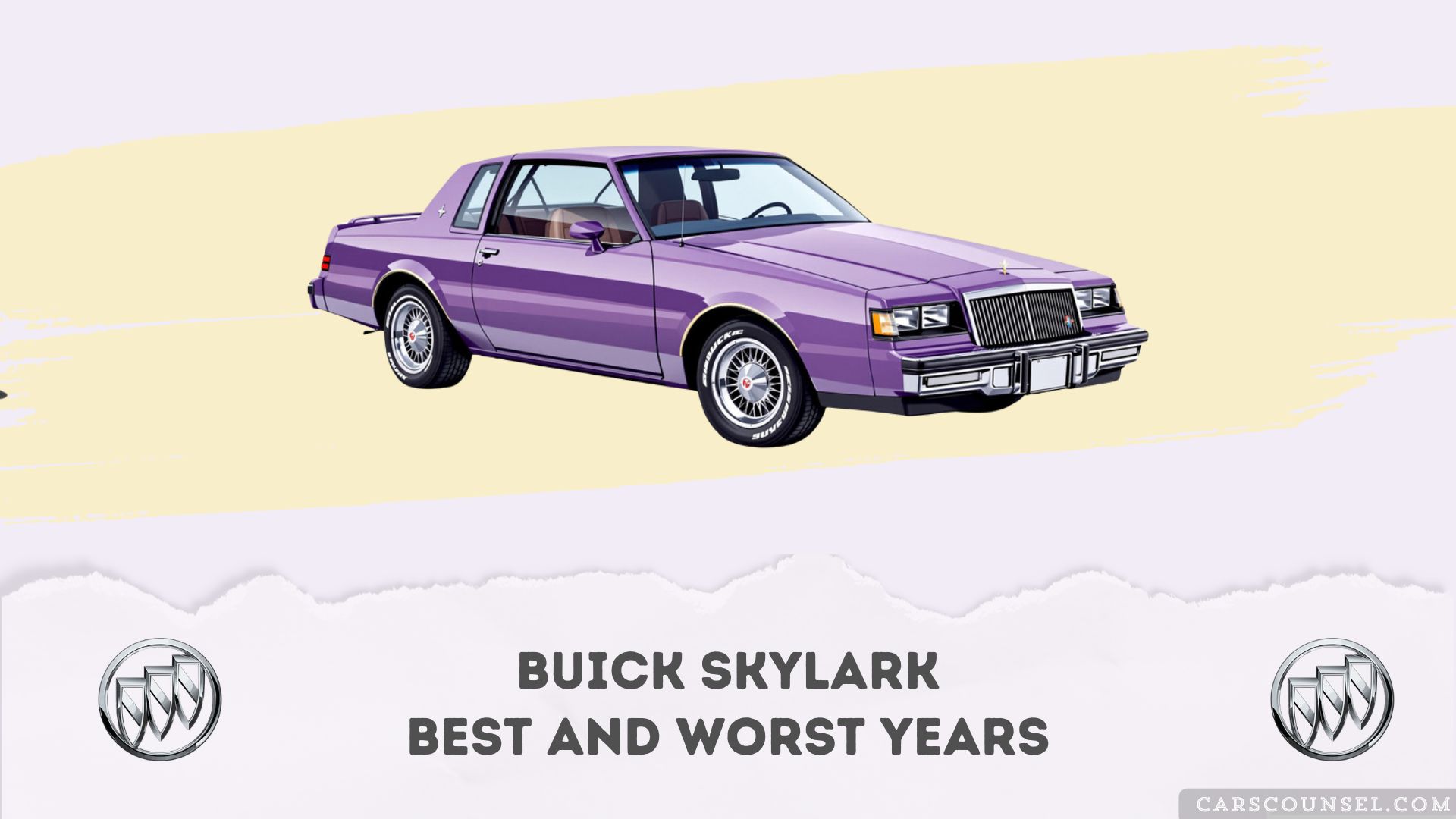
The best Buick Skylark years for enthusiasts are the 1965 through 1967 models, offering classic muscle car performance. For modern commuters, the 1997 and 1998 models represent the best late-generation choices. Buyers should generally avoid the 1992 through 1994 model years due to widespread engine issues.
These rankings are comparative, as no vintage or compact car is entirely flawless. Long-term reliability depends heavily on maintenance records, rust prevention, and how previous owners treated the vehicle. A thorough pre-purchase inspection remains essential for any used Skylark.
The Skylark nameplate spans multiple distinct generations, meaning reliability varies drastically. You will encounter vastly different engines, drivetrains, and body styles depending on the decade. Always verify the specific generation and powertrain configuration before making a purchasing decision.
Quick Navigation
Best and Worst Buick Skylark Years at a Glance
| Model Year Range | Verdict | Main Reason | Buyer Guidance |
|---|---|---|---|
| 1965–1967 | Best Enthusiast Choice | Peak A-body muscle car era with robust V8 options. | Inspect for rust and original drivetrain matching. |
| 1997–1998 | Best Late-Generation Choice | Final production years with refined N-body engineering. | Check for 3.1L V6 intake manifold gasket leaks. |
| 1968–1972 | Good Choice | Classic styling with strong chassis dynamics. | Verify emissions equipment and carburetor tuning. |
| 1995–1996 | Good With Inspection | Improved late N-body reliability over earlier 1990s models. | Test power window motors and turn signal switches. |
| 1980–1985 | Mixed | Early FWD X-body; survival depends on careful older owners. | Check transaxle operation and suspension bushings. |
| 1973–1979 | Approach Carefully | Heavy malaise-era styling with smog-choked, underpowered engines. | Inspect thoroughly for severe frame and body rust. |
| 1986–1991 | Approach Carefully | Early N-body electrical gremlins and Quad-4 timing issues. | Listen for timing chain rattle on cold starts. |
| 1992–1994 | Avoid | Widespread 2.3L Quad OHC and early 3.1L V6 failures. | Look for later 1995+ models instead. |
Key Takeaways
- Strongest Choices: The 1965–1967 Gran Sport models and the final 1997–1998 N-body compacts.
- Years to Avoid: The 1992–1994 models suffer from expensive, recurring engine failures.
- Powertrain Distinctions: The 3.1L V6 is generally smoother but prone to intake gasket leaks, while the 2.4L Twin Cam requires strict timing chain maintenance.
- Generational Shifts: The Skylark transitioned from a RWD muscle car to a FWD compact, drastically changing its reliability profile.
- Inspection Reminder: Always verify VIN-specific recall completions and check for frame rust on 1970s models.
How We Evaluated the Buick Skylark Model Years
Our analysis considers official manufacturer recalls, NHTSA investigations, and long-term ownership patterns across the Skylark’s fragmented history.
We weigh powertrain differences, generation redesigns, and the severity of recurring mechanical failures.
Consumer complaints are reviewed carefully, but they are not confirmed defect rates or automatic proof of unreliability.
A recall does not automatically make a vehicle a bad purchase, and recent models simply have less long-term exposure.
Ultimately, our verdicts identify comparatively stronger years, not flawless vehicles.
Best Buick Skylark Years
1965–1967: Best Enthusiast Choice
The mid-1960s A-body Skylark, particularly the Gran Sport variants, represents the peak of the brand’s muscle car era.
These models feature robust chassis engineering and straightforward mechanics that are highly desirable today.
The 1965 introduction of the 401 cubic-inch V8 produced exceptional horsepower and straight-line performance.
Buyers should prioritize examples with matching-numbers drivetrains and inspect the cowl and trunk areas for structural rust.
1997–1998: Best Late-Generation Choice
The final years of the N-body Skylark benefit from decades of General Motors compact platform refinements.
These models offer improved interior ergonomics and more mature electronic systems compared to earlier 1990s versions.
The available 3.1L V6 provides adequate cruising power, though it requires strict maintenance.
Verify that the intake manifold gaskets have been updated to the revised design to prevent leaks.
Best Buick Skylark Year by Buyer Type
Best Enthusiast Choice: 1965 Gran Sport
Offers classic American V8 performance, distinct styling, and strong aftermarket support for restoration parts.
Best Budget Commuter: 1998
Provides basic, affordable transportation with widely available parts, provided the engine cooling system is verified.
Years to Approach Carefully
1973–1979: Approach Carefully
The Colonnade-styled intermediate models suffered from heavy curb weights and increasingly restrictive emissions equipment.
The 1975 introduction of catalytic converters and Exhaust Gas Recirculation (EGR) systems further restricted engine output.
These models are also highly susceptible to severe body and frame rust if stored outdoors.
1986–1991: Approach Carefully
The transition to the front-wheel-drive N-body platform introduced new electrical gremlins and build inconsistencies.
Models equipped with the early Quad-4 engine often suffer from timing chain guide wear and gear rattle.
Listen carefully for unusual valvetrain noise during cold starts before committing to a purchase.
Worst Buick Skylark Years
1992–1994: Avoid
The early 1990s N-body redesign introduced powertrains that struggled with long-term durability in daily use.
The 2.3L Quad OHC engine is notorious for timing chain failures and difficult valvetrain servicing.
Early 3.1L V6 engines from this period experienced widespread intake manifold gasket failures, leading to fluid mixing.
These repairs are labor-intensive and often exceed the vehicle’s current market value.
Buyers are much better served by seeking out the revised 1995 or later models.
Buick Skylark Reliability by Generation
1964–1972: A-Body Intermediate
This generation established the nameplate as a premium intermediate, sharing architecture with the Chevelle and Tempest.
Mechanical reliability is generally excellent, provided the carburetor and ignition systems are properly maintained.
1980–1985: X-Body FWD Compact
GM’s first front-wheel-drive X-body compacts faced significant early teething issues with transaxles and suspension components.
However, these cars often survived longer than their Citation siblings due to conservative older demographics who maintained them meticulously.
1992–1998: N-Body Compact
The final generation focused on aerodynamic styling and shared platforms with the Pontiac Grand Am and Oldsmobile Cutlass Calais.
While the exterior design aged quickly, the later engines offered decent reliability if cooling systems were flushed regularly.
Common Buick Skylark Problems
Engine Problems
The 3.1L V6 found in 1990s models is prone to lower intake manifold gasket failures.
This defect allows coolant to leak externally or mix with engine oil, requiring a lengthy teardown to repair.
The 2.4L Twin Cam engine requires strict adherence to timing chain replacement intervals to prevent catastrophic interference.
Electrical and Fuel Problems
Owners of 1990s N-body models frequently report failures with the multi-function turn signal switch.
This component controls the hazard lights and turn signals, and internal solder joints tend to crack over time.
High-mileage examples may also require new spark plugs or a replacement fuel pump.
Test the ignition switch to ensure the vehicle starts reliably under all conditions.
What to Check Before Buying a Used Buick Skylark
- Verify the VIN for any open safety recalls or unresolved manufacturer campaigns.
- Inspect the lower intake manifold on 3.1L V6 models for crusty residue.
- Listen for timing chain rattle on cold starts for Quad-4 and Twin Cam engines.
- Check the cowl, trunk floor, and rear wheel arches for structural rust on classic models.
- Test all power window switches and the multi-function turn signal stalk.
- Review service records to confirm regular fluid changes and transmission maintenance.
- Arrange an independent pre-purchase inspection to evaluate the transaxle and suspension bushings.
Related Buying Guides
Understanding which years to avoid is critical when shopping for any Buick. Explore our other reliability guides below:
- Buick Century best and worst years: Explore the reliability of the Skylark’s larger, more comfort-oriented sibling.
- Buick Verano best and worst years: Discover how Buick’s modern compact hatchback compares to the classic Skylark.
- Buick Electra best and worst years: Investigate the full-size luxury alternative from the same classic eras.
- Buick Envista best and worst years: Review Buick’s newest subcompact crossover for modern city driving.
Frequently Asked Questions
What is the most reliable Buick Skylark engine?
The classic 350 and 401 cubic-inch V8s from the 1960s are incredibly robust. For modern compacts, the 3.1L V6 is reliable if the intake gaskets are updated.
Is the Buick Skylark a good daily driver?
Only the 1997 and 1998 models are practical for modern daily driving. Older generations lack modern safety features and fuel efficiency.
Why did Buick stop making the Skylark?
General Motors discontinued the nameplate after 1998 to consolidate its compact lineup, eventually replacing it with models like the Century and later the Verano.
Do 1990s Skylarks have transmission problems?
The 4T60-E automatic transaxle is generally durable, but it requires regular fluid changes to prevent premature clutch wear and harsh shifting.
Are classic Skylarks expensive to maintain?
Routine maintenance is affordable, but sourcing specific trim pieces or restoring rusted body panels can become very costly for collectors.
How do I check for Skylark recalls?
Enter the vehicle’s 17-digit VIN on the official NHTSA website to view any open safety recalls that require dealer attention.
Choosing the Right Buick Skylark Model Year
The Buick Skylark offers a fascinating journey through American automotive history, from 1960s muscle to 1990s compact commuting.
Enthusiasts should target the 1965 through 1967 Gran Sport models for their robust V8 performance and classic styling.
Practical buyers seeking affordable transportation should focus exclusively on the 1997 and 1998 models.
Avoid the 1992 through 1994 model years due to widespread and expensive engine failures.
Always verify the vehicle’s maintenance history, check for open recalls using the VIN, and secure an independent inspection before purchasing.


Comments are closed.