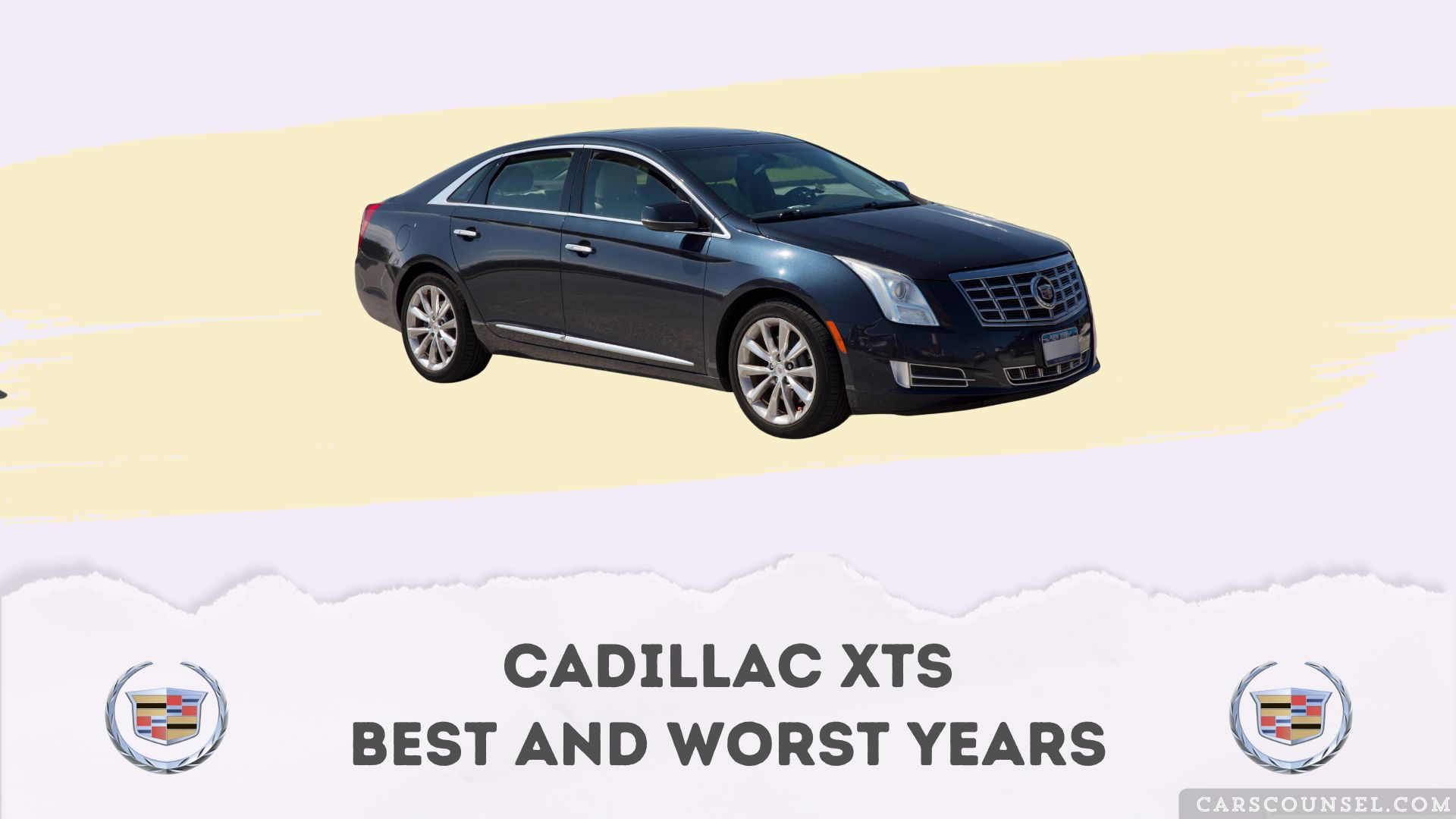
The 2018 and 2019 Cadillac XTS model years are the best choices, offering the most refined experience and fewer complaints. Buyers should avoid the 2013 model year due to first-year production issues and higher complaint volumes.
Rankings are comparative, meaning no used luxury sedan is entirely flawless. Routine maintenance, service history, and overall vehicle condition remain critical factors in any purchase decision.
Reliability can vary depending on the engine and trim level. The twin-turbo VSport models offer more performance but require stricter maintenance than the naturally aspirated V6 configurations.
Quick Navigation
Best and Worst Cadillac XTS Years at a Glance
| Model Year | Verdict | Main Reason | Buyer Guidance |
|---|---|---|---|
| 2018–2019 | Best Late-Generation Choice | Fewest complaints and mature production | Top recommendation for used buyers |
| 2015–2016 | Good Choice | Generally reliable with some infotainment quirks | Test all electronics before buying |
| 2017 | Good With Inspection | Included in rear coil spring recall | Verify recall completion via VIN |
| 2014 | Approach Carefully | Higher electrical and CUE screen complaints | Inspect infotainment and steering |
| 2013 | Avoid | First-year issues and highest complaint volume | Look for later model years instead |
Key Takeaways
- The 2018 and 2019 model years are the strongest choices for a used XTS.
- The 2013 model year should be avoided due to first-year reliability struggles.
- CUE infotainment screen delamination is a widespread issue across most years.
- A rear coil spring recall affects 2013 through 2017 models.
- Always verify open recalls and service history using the vehicle’s VIN.
How We Evaluated the Cadillac XTS Model Years
Our analysis reviews official recalls, manufacturer service campaigns, and consumer complaint patterns. We also track powertrain differences and generation changes over the vehicle’s production run.
Complaints are not confirmed failure rates, and a recall does not automatically make a vehicle unreliable. Recent years have less long-term exposure, and our best ratings mean comparatively stronger, not flawless.
Best Cadillac XTS Years
2018–2019: Best Late-Generation Choice
The final production years of the XTS represent the most refined versions of the platform. By 2018, Cadillac had addressed many early electrical and build-quality concerns.
These models generally show the lowest complaint volumes. They remain the top recommendation for buyers seeking a reliable full-size luxury sedan from this generation.
2015–2016: Good Choice
The 2015 and 2016 model years offer a solid balance of luxury and reliability. They avoided the worst first-year issues and benefited from mid-cycle manufacturing adjustments.
Buyers should still test the infotainment system thoroughly, as CUE screen bubbling can occur on any year. Overall, these are dependable options with proper maintenance.
Best Year by Buyer Type
Best Overall: 2019
The 2019 model year is the safest bet for most buyers. As the final production year, it benefits from all prior engineering revisions and shows excellent reliability.
Best Budget Option: 2015
For buyers wanting a lower price point without the highest risk, the 2015 XTS is a smart choice. It avoids the 2013 pitfalls while remaining affordable on the used market.
Years to Approach Carefully
2017: Good With Inspection
The 2017 model is generally reliable but requires specific recall verification. It is included in the manufacturer campaign for rear coil spring fractures.
Before purchasing, confirm that the rear springs have been inspected or replaced under the official recall. If the repair is complete, this year remains a solid choice.
2014: Approach Carefully
The 2014 model year shows elevated complaints regarding the electrical system and infotainment screen. While not as problematic as the launch year, it requires careful scrutiny.
Have a technician inspect the power steering and CUE system. Only proceed if the vehicle has a flawless service history and all electronics function perfectly.
Worst Cadillac XTS Years
2013: Avoid
The 2013 Cadillac XTS is the launch year for the nameplate and shows the highest volume of consumer complaints. Owners frequently report issues with the CUE infotainment system and electrical gremlins.
Additionally, early production models are more susceptible to suspension and powertrain complaints. Buyers are better served by looking at later, more refined model years.
Cadillac XTS Reliability by Generation
First Generation (2013–2019)
The XTS was produced for a single generation on the Epsilon II platform. It shares related architecture with other full-size sedans, though its luxury tuning is unique to Cadillac.
Early years suffered from first-year growing pains, while later years are much more dependable. Reliability improves significantly as the generation matures toward its final production cycles.
Common Cadillac XTS Problems
CUE Infotainment Screen Delamination
The Cadillac User Experience (CUE) touchscreen is prone to delamination, where the top layer of the screen bubbles, cracks, or becomes unresponsive to touch.
This issue affects multiple model years and can render the navigation and climate controls difficult to use. Replacement screens are available, but buyers should test touch responsiveness carefully.
Rear Coil Spring Fracture
Certain 2013 through 2017 models are subject to a recall for rear coil springs that may fracture. A broken spring can affect ride quality and potentially damage surrounding components.
This is an official manufacturer recall. Buyers must verify the VIN to ensure the remedy has been performed by an authorized dealer.
Transmission Shudder
Some owners report a shudder or hesitation from the six-speed automatic transmission during light acceleration or gear changes. This is often related to torque converter wear or fluid degradation.
A simple transmission fluid flush may resolve minor cases. However, persistent shuddering requires professional diagnosis to prevent long-term drivetrain damage.
What to Check Before Buying a Used Cadillac XTS
- Verify the VIN for any open recalls, especially the rear coil spring campaign.
- Test the CUE touchscreen for dead zones, bubbling, or unresponsive areas.
- Check for smooth transmission shifts without hesitation or shuddering.
- Inspect the suspension for unusual noises or uneven tire wear.
- Review the service history for regular fluid changes and maintenance.
- Arrange an independent pre-purchase inspection to check for hidden electrical faults.
Related Buying Guides
- Cadillac XT5 best and worst years: A practical mid-size luxury SUV alternative for buyers needing more cargo space than the XTS sedan offers.
- Cadillac XT6 best and worst years: A three-row luxury SUV alternative for families requiring maximum passenger capacity and modern safety features.
- Cadillac XT4 best and worst years: A compact luxury crossover option for urban buyers who prefer smaller dimensions and better fuel economy.
- Cadillac DTS best and worst years: The historical predecessor to the XTS, offering classic front-wheel-drive Cadillac comfort for traditional luxury buyers.
Frequently Asked Questions
What is the best year to buy a Cadillac XTS?
The 2019 Cadillac XTS is the best year to buy. As the final production year, it benefits from all prior engineering revisions and shows the lowest complaint volumes.
What years of Cadillac XTS should be avoided?
Buyers should avoid the 2013 Cadillac XTS. It is the first model year and shows the highest volume of consumer complaints regarding electrical and infotainment issues.
Does the Cadillac XTS have transmission problems?
Some XTS models experience transmission shudder during light acceleration. This is often linked to torque converter wear or old fluid, requiring professional diagnosis if a flush fails.
Is the Cadillac XTS expensive to maintain?
Maintenance costs are typical for a full-size luxury sedan. Routine services are reasonable, but out-of-warranty repairs for complex electronics or suspension components can be costly.
Why is the Cadillac XTS screen bubbling?
The CUE infotainment screen suffers from a known delamination defect. Heat and age cause the top digitizer layer to separate and bubble, often requiring a screen replacement.
How long can a Cadillac XTS last?
Well-maintained examples can reach high mileage. Longevity depends heavily on routine maintenance, driving conditions, rust prevention, and prompt repairs of any electrical or suspension faults.
Which Cadillac XTS Year Should You Buy?
The 2018 and 2019 Cadillac XTS models are the strongest choices for used buyers. They offer the most refined experience and avoid the early-generation pitfalls.
Avoid the 2013 launch year due to higher complaint volumes. Always verify the VIN for open recalls, test the CUE touchscreen, and arrange an independent inspection before purchasing.

